Turborepo vs Nx | Features CI and Best Fit
Turborepo vs Nx
Features CI and Best Fit
Publishing brief
| Primary keyword | Turborepo vs Nx |
|---|---|
| Secondary keywords | Nx vs Turborepo Turborepo alternative Nx alternative monorepo build tool |
| Search intent | Commercial investigation and technical evaluation |
| SEO title | Turborepo vs Nx Features CI and Best Fit |
| Suggested slug | /blog/turborepo-vs-nx |
| Meta description | Compare Turborepo vs Nx on setup caching CI governance polyglot support pricing and migration to choose the right monorepo tool. |
Quick answer
Turborepo and Nx overlap on the fundamentals: both orchestrate tasks, cache results, and can be introduced incrementally. Turborepo is usually the cleaner fit for a JavaScript or TypeScript monorepo that needs fast task execution, straightforward configuration, and tight Vercel integration. Nx is usually the stronger fit when the repository is becoming an internal developer platform: several stacks, many teams, slower CI, code generation, architectural rules, migrations, or a need to distribute work dynamically across CI agents.
The choice is not about which tool can run a build. It is about how much operating complexity the build system should absorb. If task running and caching are the main requirements, Turborepo keeps the model small. If the repository needs automation and governance that deepen over time, Nx provides more first-party layers to adopt.
Turborepo vs Nx comparison
| Dimension | Turborepo | Nx |
|---|---|---|
| Primary scope | A high-performance build system and task runner optimized for JavaScript and TypeScript monorepos. | A broader monorepo build system with task orchestration, plugins, code generation, migrations, governance features, and an integrated CI product. |
| Best fit | Straightforward JavaScript or TypeScript repositories, especially Vercel-first teams that want a narrow operating model. | Growing or complex repositories with multiple teams, polyglot services, platform engineering needs, or significant CI pressure. |
| Adoption | Add Turborepo to an existing package-manager workspace and define the task pipeline in turbo.json. | Run nx init in an existing repository and adopt additional plugins or Nx Cloud incrementally. |
| Task configuration | Tasks and their dependencies, inputs, outputs, and cache behavior are defined in turbo.json, with package-level overrides when needed. | Package scripts can be run through Nx; plugins can infer tasks, inputs, outputs, and dependencies from existing tool configuration. |
| Project model | Uses the package-manager workspace and task definitions to understand package relationships and execution order. | Builds project and task graphs that can include dependencies discovered by plugins across tools and languages. |
| Local caching | Built in. Task outputs and logs can be restored instead of recomputed. | Built in. Nx hashes declared inputs and restores reusable task results. |
| Remote caching | Vercel Remote Cache is the default hosted path; Turborepo also exposes a Remote Cache API for compatible alternatives. | Nx Cloud provides hosted remote caching; teams can also implement the Nx remote-cache OpenAPI specification themselves. |
| Affected work | Supports filtering and change-aware execution to reduce the tasks that run. | nx affected uses the project graph to run tasks only for projects affected by a change. |
| Distributed CI | Teams generally compose parallel jobs and sharding in their CI system; remote caching avoids repeated work. | Nx Agents distributes individual tasks across machines and dynamically packs work using task history and resource needs. |
| Test splitting and retries | Usually delegated to the CI provider or test framework. | Nx Cloud can split large test targets, detect flaky tasks, and retry work. |
| Sandboxed execution | Official Turborepo materials reviewed emphasize task hashing and cache configuration rather than a comparable first-party sandbox product. | Nx Cloud offers optional dedicated compute and sandboxed execution as a paid add-on. |
| Code generation | Provides turbo gen and supports custom generators for repository-specific scaffolding. | Generators are a core plugin capability and can create or update code, configuration, and project structure. |
| Architecture boundaries | Turborepo Boundaries checks package-manager workspace violations. | Nx supports tag-based module boundaries for JavaScript and TypeScript; language-agnostic conformance is an Enterprise feature. |
| Language support | Optimized for JavaScript and TypeScript, with official multi-language guidance and experimental support in areas such as Rust. | Plugins extend Nx beyond JavaScript and TypeScript, including official Gradle, Maven, and .NET integrations plus community ecosystems. |
| Upgrades | The CLI and repository configuration stay relatively compact, but project-specific upgrades remain the team’s responsibility. | nx migrate can update packages, configuration, and source through plugin-provided migrations and codemods. |
| Vercel experience | First-party Vercel integration and the path of least resistance for many Vercel-hosted monorepos. | Supported on Vercel, but its strongest differentiation is broader repository and CI orchestration rather than Vercel-native simplicity. |
| Open-source core | MIT-licensed Turborepo CLI. | MIT-licensed Nx core. |
| Commercial layer | Vercel plans and Remote Cache services surround the open-source CLI; Turborepo is available across Vercel plans. | Nx Cloud has free, usage-based Team, and custom Enterprise tiers that add hosted CI capabilities and governance. |
Table 1 Turborepo and Nx compared across the operating decisions that matter
The core difference
The simplest useful framing is narrow build orchestration versus an extensible monorepo platform. Turborepo concentrates on running tasks quickly and predictably across a package workspace. Nx covers that same foundation, then layers on a richer project graph, plugins, generators, automated migrations, architecture rules, and Nx Cloud.
That difference is easy to miss in a small repository because both tools can feel similarly lightweight at first. Juri Strumpflohner, Sr. Director of Developer Experience at Nx, described the basic task-running and caching level as an area of substantial overlap. His main argument was that Nx becomes more distinct as the repo, language mix, and CI workload grow.
That is also the fairest way to read the comparison. Turborepo’s smaller scope is not a missing feature list for every team; it is often the reason to choose it. Nx’s broader scope is useful when the organization would otherwise build and maintain those layers itself.
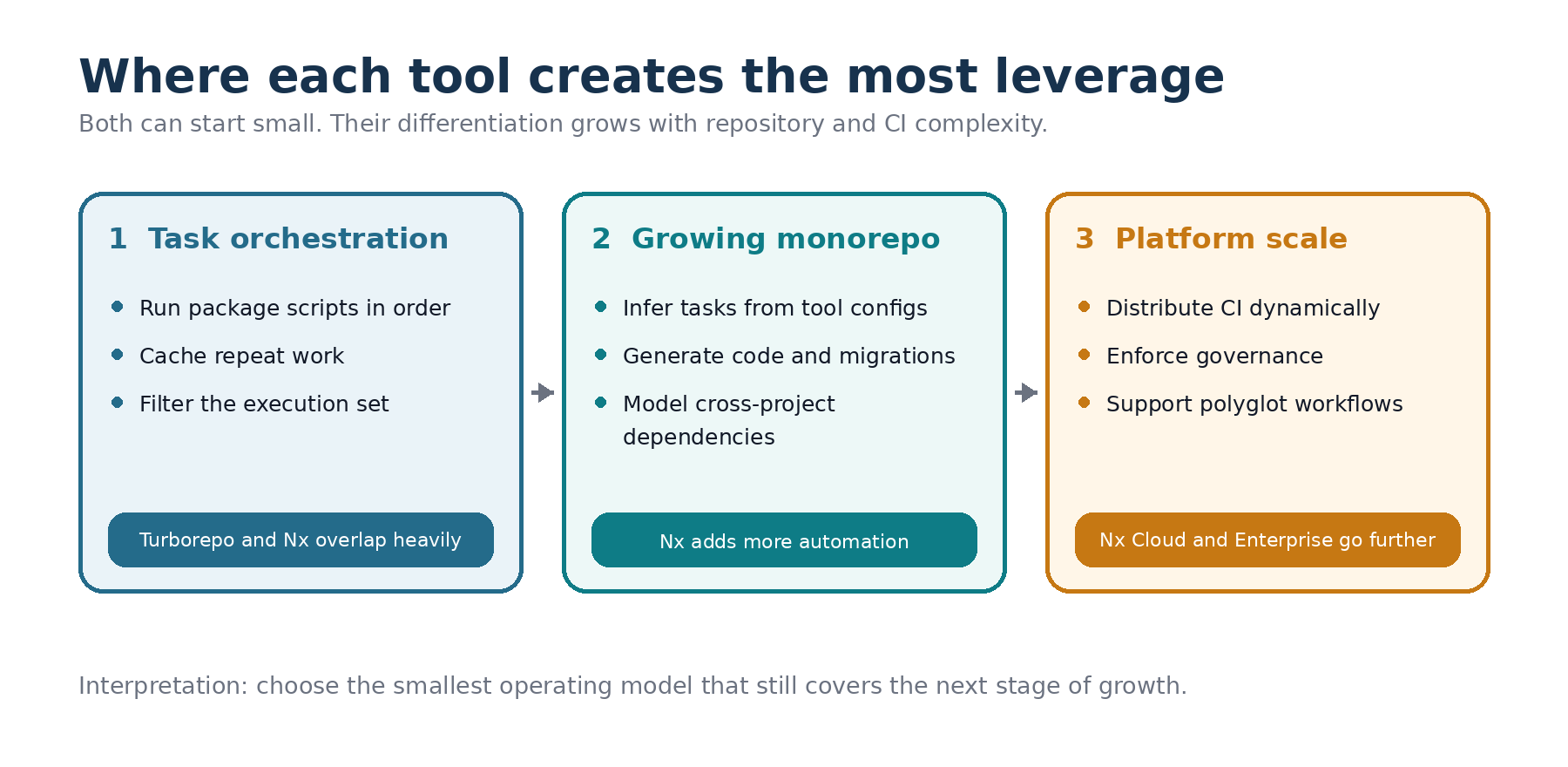
Figure 1 The tools overlap most at basic orchestration and diverge as automation and governance requirements grow
Setup and configuration
Turborepo keeps the operating model explicit
Turborepo starts with the package-manager workspace and a turbo.json pipeline. Teams define which tasks depend on other tasks, what inputs affect the hash, what outputs should be cached, and when caching should be disabled. This makes the execution model direct and easy to inspect.
The tradeoff appears as task types and package-specific exceptions accumulate. More of the repository’s behavior has to be reflected in the Turborepo configuration, and teams need a process for keeping cache inputs and outputs correct as tools evolve. For a stable JavaScript or TypeScript workspace, that can remain entirely manageable.
Official reference Turborepo task configuration
Nx uses inference to remove repeated configuration
Nx can run package.json scripts without requiring a second declaration for every task. Its plugins can also inspect tool configuration and infer tasks, inputs, outputs, and dependencies. The official Nx plugin documentation uses Vite as an example: the plugin reads vite.config.ts and configures the build task around the tool’s existing settings.
Inference reduces duplication, but it adds a concept teams must understand. When behavior is inferred, platform engineers need to know which plugin produced a target and how local overrides interact with it. The result can be less configuration to maintain, but the system is broader than a single pipeline file.
Official reference How Nx plugins work
Caching and continuous integration
Both products support local and remote caching. A fair proof of concept should therefore test cache correctness, not just cache-hit percentage. Use the same representative tasks, environment variables, generated files, dependency changes, and failure cases. A fast cache that returns stale output is worse than no cache.
Turborepo remote caching
Turborepo integrates directly with Vercel Remote Cache and can use a compatible custom cache through its documented API. That is attractive for teams already deploying on Vercel because local development, CI, and deployment can share artifacts without introducing another build platform.
Turborepo’s CI guidance centers on adding Remote Cache credentials to the chosen CI provider and composing the pipeline there. Teams keep control of job layout and sharding, but they also own the work of rebalancing those jobs as the repository changes.
Official references Turborepo remote caching and Vercel monorepo deployment
Nx Cloud orchestration
Nx Cloud adds remote caching, task-level distribution through Nx Agents, test splitting, flaky-task handling, run history, and CI observability. Instead of assigning static bins of work to machines, Nx Agents schedules tasks as capacity becomes available. That distinction matters when task durations vary or the project graph changes frequently.
These capabilities are a separate commercial layer from the open-source Nx core. Nx itself includes local caching, task graphs, affected execution, generators, and migrations without an Nx Cloud account. Buyers should compare the combined Nx plus Nx Cloud operating cost with the CI engineering and machine time they expect to save.
Official reference Nx Cloud continuous integration
Language and ecosystem support
Turborepo remains optimized for JavaScript and TypeScript. Its documentation includes multi-language guidance and experimental support for additional ecosystems, but the core mental model still begins with package-manager workspaces and scripts. This is a sensible fit when the monorepo is primarily web-focused and other languages are limited.
Nx’s plugin model is designed to extend its project and task graph. Official integrations cover Gradle, Maven, and .NET, while community plugins cover additional ecosystems. This becomes valuable when a frontend, backend, mobile app, and JVM or .NET service must share the same affected logic, cache strategy, and CI orchestration.
Official references Turborepo multi-language guide and Nx multi-language support
Governance and architecture
The two products use the word boundaries differently. Turborepo Boundaries checks whether packages follow workspace rules expected by the package manager. Nx module boundaries let teams tag projects and restrict which categories may depend on one another.
For JavaScript and TypeScript, Nx can enforce import rules through ESLint or Oxlint. Language-agnostic conformance checks are part of Nx Enterprise. This is important for an objective comparison: the governance advantage is real, but not every form of enforcement belongs to the free core.
Official references Turborepo Boundaries and Nx module boundaries
Maintenance and upgrades
Turborepo’s compact model can mean fewer product-specific concepts to operate. The team still owns the surrounding toolchain, package upgrades, generators, policy checks, and CI topology. For smaller repositories, that ownership may be preferable to adopting a larger platform.
Nx plugins can bundle generators and migrations alongside task inference. The nx migrate workflow can update dependencies, configuration files, and source code through version-specific migrations. This can reduce repeated platform work, though teams should review generated changes and keep official and community plugin versions compatible.
Official reference Nx automated migrations
Pricing and commercial model
Both command-line tools are MIT licensed. Turborepo is available across Vercel plans, and Vercel advertises Remote Cache as available without a separate Turborepo license. Costs can still arise from the surrounding Vercel and CI usage, so model the full workload rather than treating the CLI price as total cost.
Nx core is also free and open source. Nx Cloud currently offers a free Hobby tier with monthly credits, a Team plan with a base subscription plus usage and contributor charges, and custom Enterprise pricing. Enterprise adds items such as organization-wide conformance, cross-repository visibility, isolated deployment options, and dedicated support.
Prices and packaging change. Before buying, model a full year that includes CI minutes, cache storage and transfer, paid contributors, concurrency, implementation effort, maintenance, and the engineering cost of features your team would otherwise build.
Official references Nx Cloud pricing Vercel monorepo FAQ Nx license Turborepo license
Which platform should you choose
Choose Turborepo when
- The repository is mainly JavaScript or TypeScript and task orchestration plus caching solve the real problem.
- The team wants a compact, explicit configuration model and is comfortable owning CI sharding and surrounding automation.
- Vercel is the primary deployment platform and first-party integration materially reduces setup.
- Repository growth is expected to be moderate and architecture governance can stay in existing linting or platform tools.
- A broader build platform would add concepts the team is unlikely to use.
Choose Nx when
- The repository spans multiple stacks or is likely to consolidate more services over time.
- CI is already slow or expensive enough to justify dynamic task distribution and deeper observability.
- Platform engineers want plugins that infer tasks and centralize generators, migrations, and conventions.
- The organization needs enforceable architectural boundaries across many projects or teams.
- The cost of maintaining custom CI and repository automation is becoming higher than adopting Nx Cloud or Enterprise.
Shortlist both when
- The monorepo is JavaScript or TypeScript today but its growth path is uncertain.
- Both tools meet the functional requirement and the deciding factor is configuration effort, cache behavior, or total cost.
- The team can run a two-week proof of concept with production-like tasks and CI data.
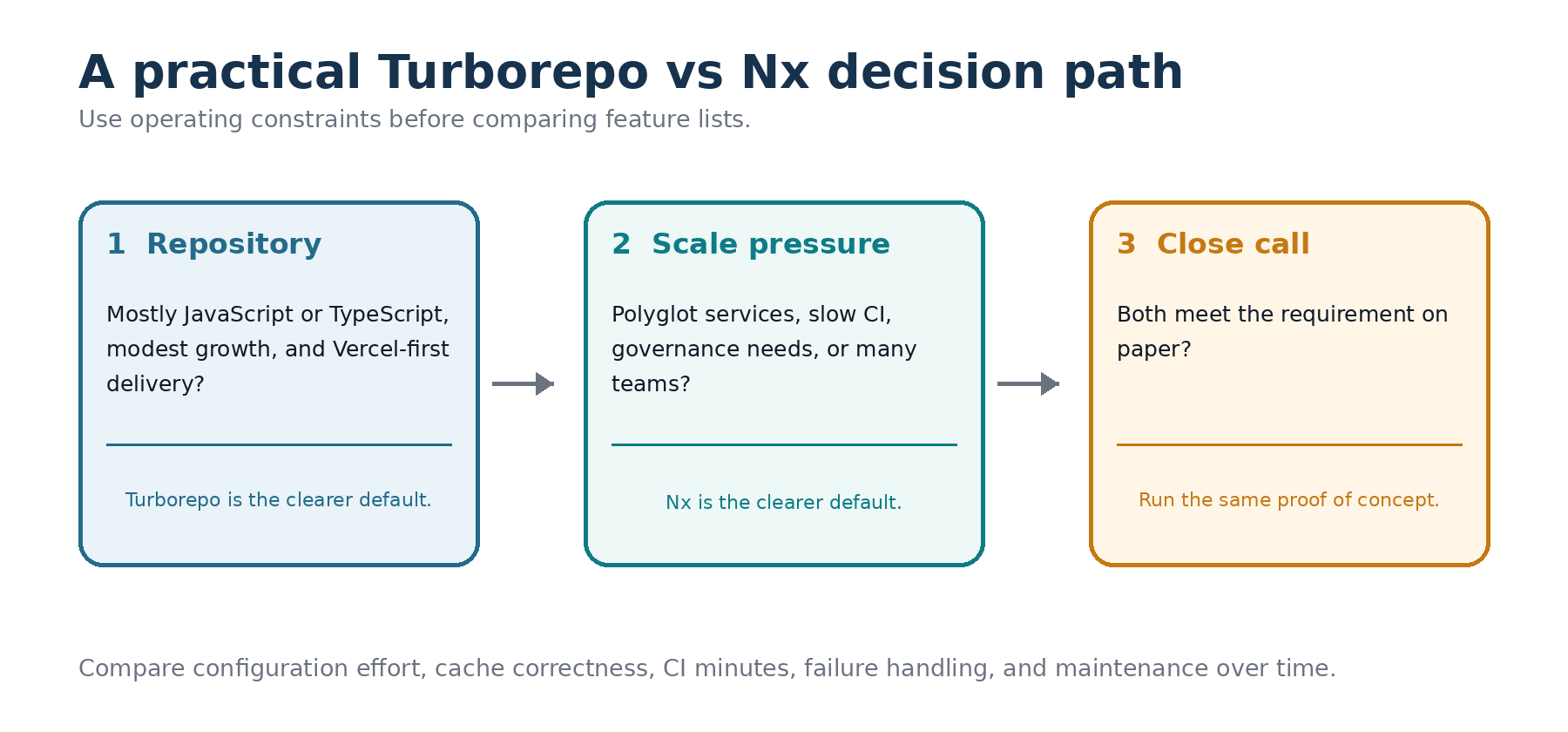
Figure 2 Start with repository shape and operating burden then validate the close call with real work
How to evaluate Turborepo and Nx
Use the same repository slice and acceptance criteria for both products. A useful evaluation produces evidence that engineering, platform, and finance teams can review, not a checklist of advertised features.
- Define the workload. List projects, languages, package managers, task types, generated files, environment variables, CI providers, and current pipeline bottlenecks.
- Create a representative task graph. Include build, lint, typecheck, unit, integration, and end-to-end work with realistic dependencies.
- Test cold and warm execution. Measure local time, CI wall time, machine-minutes, cache hit rate, cache transfer, and failure recovery.
- Challenge cache correctness. Change undeclared inputs, environment variables, lockfiles, generated files, and tool configuration to confirm invalidation behaves as expected.
- Measure configuration ownership. Record every file, override, custom script, generator, and CI job the team must maintain after the proof of concept.
- Test change at scale. Add a project, split a project, introduce a new task type, and simulate a new language or framework.
- Model the exit. Verify cache portability, configuration ownership, data export, self-hosting options, and the effort to return to plain package scripts.
Questions to ask during evaluation
- Which tasks and dependencies are inferred, and which must be declared manually?
- How does the tool prevent false cache hits when tasks read undeclared files or environment variables?
- What happens when a CI agent fails halfway through the pipeline?
- Which features require a paid cloud or enterprise plan?
- How are test splitting, flaky-test retries, and CI rebalancing implemented?
- What data leaves our CI environment, where is it stored, and what self-hosted options exist?
- How are package and tool upgrades automated, reviewed, and rolled back?
- Can our platform team encode repository conventions without forking the tool?
Frequently asked questions
Is Nx better than Turborepo?
Nx is not universally better. It is usually more capable for complex CI, polyglot repositories, generators, migrations, and governance. Turborepo is often the better choice when a team wants fast task orchestration and caching with fewer platform concepts.
Is Turborepo faster than Nx?
There is no reliable universal winner. Performance depends on the task graph, cache inputs, project graph, CI topology, and how much work can be skipped or distributed. Benchmark both tools on the same repository and report wall time, machine-minutes, cache correctness, and maintenance effort.
Which tool is easier to set up?
Turborepo often has the smaller initial mental model for a JavaScript or TypeScript package workspace. Nx can also be added incrementally with nx init, and plugins may reduce later configuration by inferring tasks from existing tool files.
Does Nx require Nx Cloud?
No. Nx core is free and open source and includes task running, local caching, the project graph, affected execution, generators, and migrations. Nx Cloud adds hosted remote caching, distributed execution, CI observability, and other commercial capabilities.
Does Turborepo require Vercel?
No. Turborepo can run in any CI environment, and its Remote Cache API allows compatible alternatives. Vercel provides the most direct hosted integration, which is a practical advantage for teams already on the platform.
Which is better for a polyglot monorepo?
Nx has the clearer first-party story when Java or .NET projects must participate in one project graph and CI model. Turborepo publishes multi-language guidance, but its core remains optimized for JavaScript and TypeScript and some additional language support is experimental.
Can a team migrate from Turborepo to Nx?
Yes. Nx documents an incremental adoption path from Turborepo, and the basic task concepts map reasonably well. The real migration effort depends on custom CI sharding, package overrides, cache inputs, generators, and repository conventions.
Can a team migrate from Nx to Turborepo?
Yes. Turborepo publishes a migration guide from Nx. Teams should inventory Nx-specific generators, migrations, boundary rules, affected logic, and Nx Cloud orchestration first because those capabilities may need replacement.
Are Nx and Turborepo open source?
Yes. The Nx core repository and the Turborepo repository are both published under the MIT license. Their hosted commercial services and enterprise features have separate terms.
What is the best way to decide between Nx and Turborepo?
Run the same proof of concept on production-like work. Compare time to first success, configuration volume, cache correctness, CI wall time, machine-minutes, failure recovery, upgrade workflow, and the cost of ongoing ownership.
Conclusion
The Turborepo vs Nx decision is a choice about operating scope. Turborepo is compelling when a team wants a focused task runner, reliable caching, and a smooth Vercel path without adopting a wider monorepo platform. Nx is compelling when repository growth creates demand for inference, generators, automated migrations, governance, polyglot graphs, and dynamic CI orchestration.
Choose the smaller model that still covers the next stage of growth. If that answer is unclear, do not decide from a feature matrix. Run the same task graph through both tools, break the cache deliberately, change the repository structure, and measure who owns the work after the demo.
Contributors
This comparison was informed by written responses coordinated by Heidi Grütter ([email protected]), VP Product Marketing at Nx, with technical answers from Juri Strumpflohner ([email protected]), Sr. Director of Developer Experience at Nx. Their input covered product scope, configuration, language support, CI, migration, governance, and customer fit. Product claims were independently checked against current official Nx, Turborepo, Vercel, and GitHub documentation.
Connect with Heidi Grütter on LinkedIn and Juri Strumpflohner on LinkedIn.
Sources
- Turborepo documentation
- Turborepo task configuration
- Turborepo remote caching
- Turborepo Boundaries
- Turborepo multi-language guide
- Turborepo migration from Nx
- Vercel Turborepo deployment
- Vercel monorepo FAQ
- Nx introduction
- Nx plugins
- Nx Cloud CI
- Nx module boundaries
- Nx multi-language support
- Nx automated migrations
- Nx Cloud pricing
- Nx migration from Turborepo
- Nx MIT license
- Turborepo MIT license
Editorial note Features, pricing, and commercial terms can change. Verify the current scope and contract directly with each vendor before making a purchase decision.