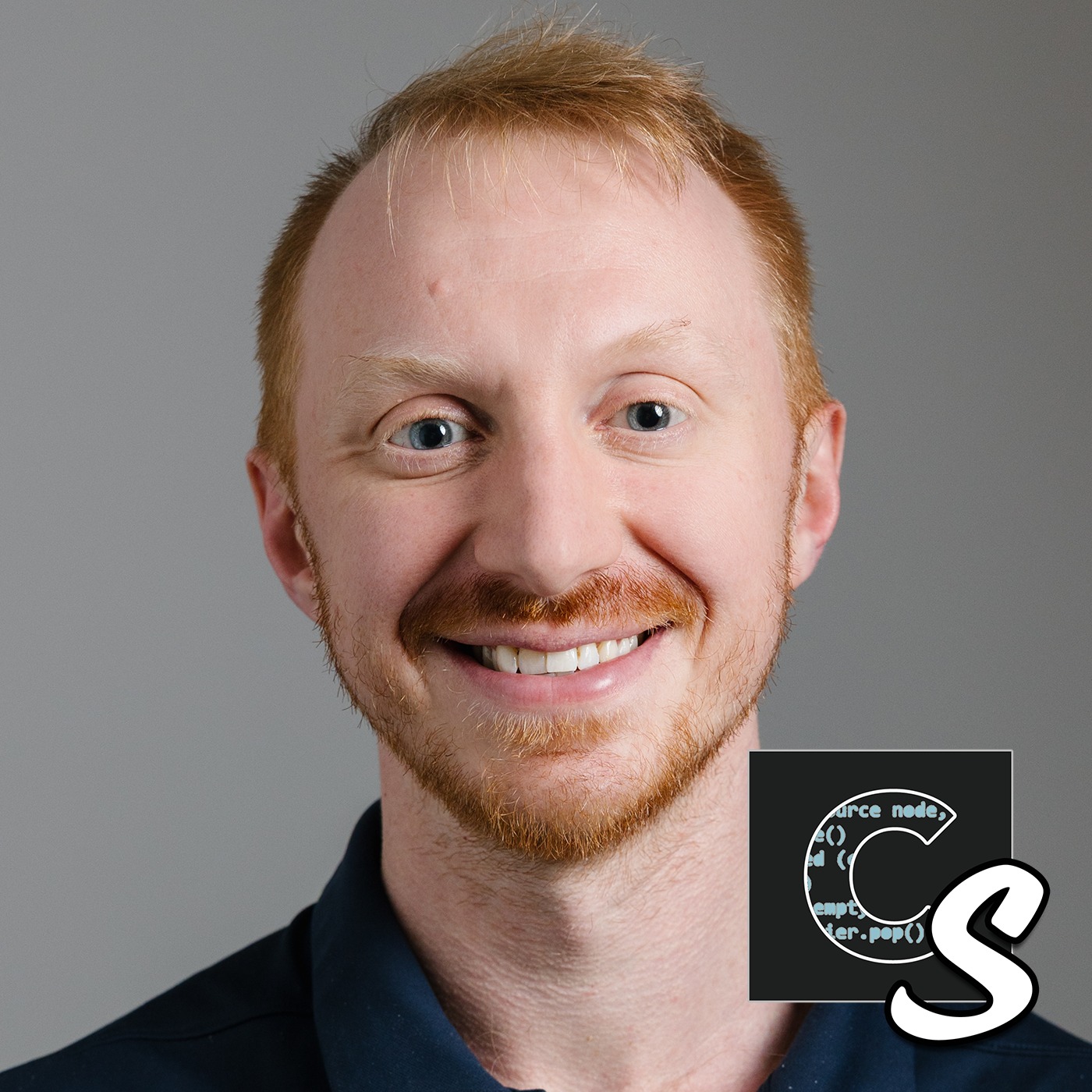
S12 E19: The Real Estate Draw Nightmare: Automating Underwriting and Risk Mitigation Across $3T in Real Estate Finance Data with Thomas Schlegel, Principal Software Engineer at Built
In this episode
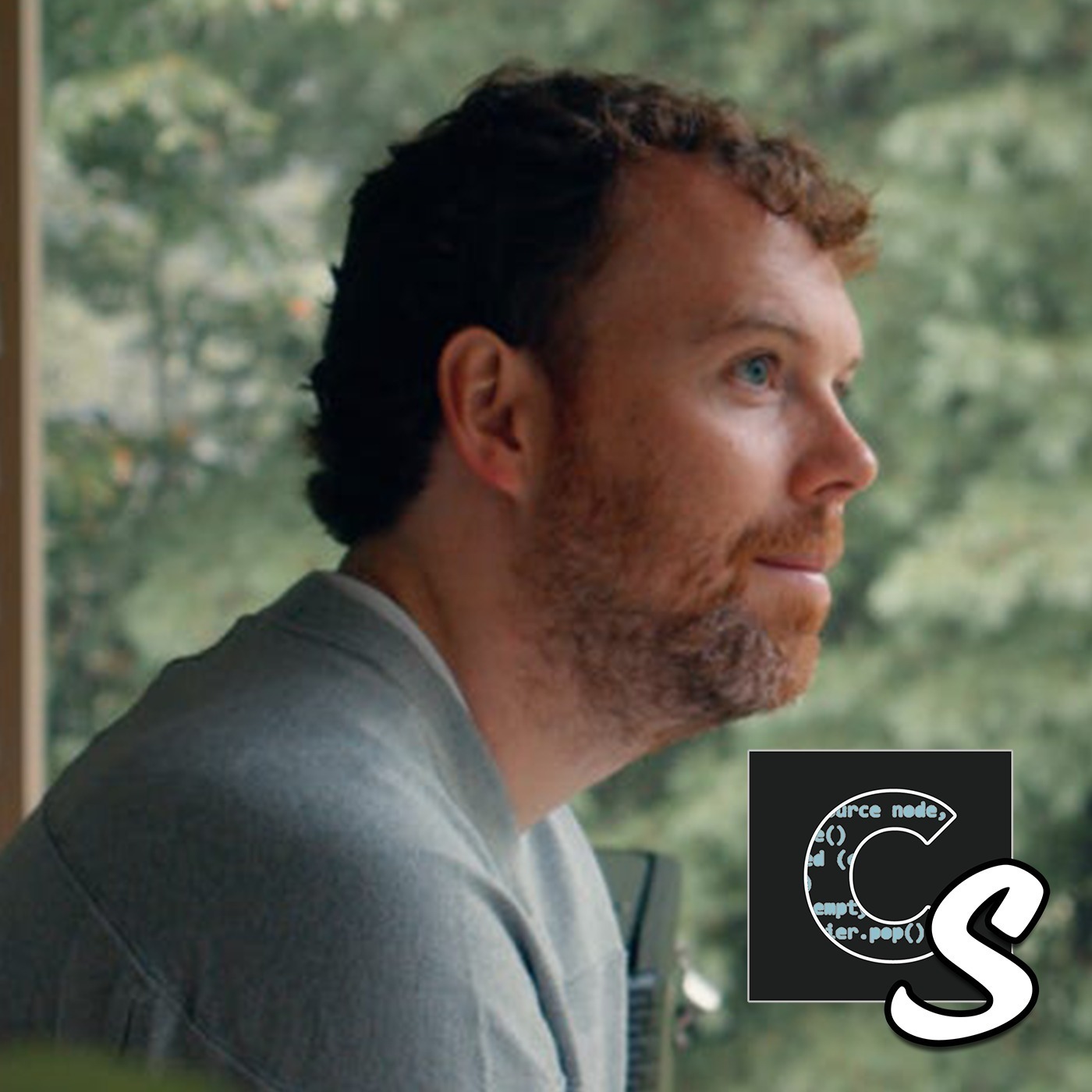
Thomas Schlegel lives in Nashville, TN, but grew up in rural Virginia. He didn't have the internet for a large portion of his childhood - but, his friends did! So that meant he was spending more time at his friends place, and eventually when MySpace came around, he was the guy to build everyone's custom site. He's always been the wild idea guy amongst his friends, always the tinkerer. Today, he's married with twins on the way. He loves to run, either on the road or the trails. And when he gets the chance, he enjoys a good conversation with good people, contemplating or pondering the bigger things in life.
In the past, Thomas was a lead engineer at a professional services organization in Tennessee. While at a conference, he met the CEO of his current venture, and they hit it off. He was intrigued by their company, and several years later, he started working for the company as an individual contributor - and quickly activated his entrepreneur DNA to solve ALL the problems.
This is the creation story of Built.
Sponsors
Links
Current Sponsors:
Checkout our Stacklist! https://stacks.codestory.co/
Check out our Patreon!
Hosted by Noah Labhart | Technical Founder & Startup Mentor.
Our Sponsors:
* Check out Granola and use my code granola.ai/CODESTORY for a great deal: https://granola.ai
* Check out Perplexity and use my code pplx.ai/codestory for a great deal: https://www.perplexity.ai
Advertising Inquiries: https://redcircle.com/brands
Privacy & Opt-Out: https://redcircle.com/privacy
[Thomas Schlegel]: You need to be aware of the scale of the type of thing that you're going to deal with, but you're certainly not optimizing for a scale. [Thomas Schlegel]: And most of that is because you've got to have low pride of all their ship, because again, you're going to probably aid out of 10 ideas you have to put them away. [Thomas Schlegel]: The pride of all their ship thing comes into play in kind of two components, right? [Thomas Schlegel]: So there's the, hey, we're, we're exploring right now.
[Thomas Schlegel]: So we might totally be on a wild goose hunt, and so because of that, how much are you going to invest in scale during that phase? [Thomas Schlegel]: Not much. [Thomas Schlegel]: And the other aspect of pride of authorship is the way this Guncork model works is if something works, even if I love it, I've got to give it away because my job is onto the next one. [Thomas Schlegel]: My name is Thomas Schlegel, I'm a VP of Engineering and Head of Innovation at Bill Technologies.
[Noah Labhart]: This is Co-Story. [Noah Labhart]: a podcast bringing you interviews with tech visionaries. [Noah Labhart]: Six, six months moonlighting goes. [Noah Labhart]: It's the last and all of the backgrounds who share what it takes to change an industry. [Noah Labhart]: I don't exactly know what to do. [Noah Labhart]: It doesn't go as to get right. [Noah Labhart]: who built the teams that have their bad company is its team's help each other, which is proud of our team. [Noah Labhart]: Keeping scalability top of mind, all that infrastructure was up there.
[Noah Labhart]: Yes, we've been fighting it as we grew up. [Noah Labhart]: Total waste of time. [Noah Labhart]: The stories you don't read in the headlines. [Noah Labhart]: It's not an easy thing to achieve. [Noah Labhart]: To get yourself a deficit of off, try to begin to ride the ups and downs of the start-up line. [Noah Labhart]: Need to really want it. [Noah Labhart]: Not just about technology. [Noah Labhart]: All this and more on code story. [Noah Labhart]: I'm your host, Noah Labpart, and today how Thomas Slegle is building the platform to connect the active stakeholders to fund, develop, and manage your real estate project.
[Noah Labhart]: Thomas Lago lived in Nashville, Tennessee, but grew up in rural Virginia. [Noah Labhart]: He didn't have the internet for a large portion of his childhood, but his friends did. [Noah Labhart]: So that meant he was spending more time at his friend's place. [Noah Labhart]: And eventually, when my space came around, he was the guy to build everyone's custom site. [Noah Labhart]: He's always been the wild idea guy amongst his friends, always the tinkerer. [Noah Labhart]: Today he's married with twins on the way.
[Noah Labhart]: He loves to run, either on the road or the trails. [Noah Labhart]: And when he gets the chance, he enjoys a good conversation with good people, contemplating or pondering the bigger things in life.
[Noah Labhart]: In the past, Thomas was a lead engineer at a professional services organization in Tennessee. [Noah Labhart]: While at a conference, he met the CEO of his current venture and they hit it off. [Noah Labhart]: He was intrigued by their company in several years later, he started working for that company as an individual contributor. [Noah Labhart]: And quickly, activated his entrepreneurial DNA to attempt to solve all the problems.
[Noah Labhart]: This is his creation story at Built.
[Thomas Schlegel]: So build technologies is a end-end real-state slash construction finance platform. [Thomas Schlegel]: It's really like the back office slash operational side of real-state and construction. [Thomas Schlegel]: And we do a lot of things so it can get pretty complicated pretty quick. [Thomas Schlegel]: But I would say our bread and butter really has been part of the kind of construction role process. [Thomas Schlegel]: Or anyone who's not familiar with that? [Thomas Schlegel]: If you get an asset back loan, so you get a traditional mortgage, or you're taking out a loan from a bank, [Thomas Schlegel]: In construction, it's a little different, because there's not really an asset that is worth the amount of the load but you intend to build the asset as part of the construction process.
[Thomas Schlegel]: And so the main thing that changes is you don't get all the money up front. [Thomas Schlegel]: In fact, the process is actually much more of a reimbursement process so you put some equity up front and you start the project with your own money and then eventually you're out of pocket. [Thomas Schlegel]: you're doing the building and then the financial institution is reimbursing you. [Thomas Schlegel]: And then ultimately, since we've got a tech audience here with that draw request, easiest way to think about it is a pull request.
[Thomas Schlegel]: So subcontractors are submitting pull requests to general contractors who are submitting pull request, who developers who are submitting pull request, lenders, and we manage that entire [Thomas Schlegel]: process. [Thomas Schlegel]: So we tend to think about lender and owner is more of this peer-to-peer and then from owner to GC to sub as more of a kind of hierarchical up and down relationship. [Thomas Schlegel]: But it's all the compliance around the payment, it's all the proof of what happened in construction and then ultimately it's the flow of money.
[Thomas Schlegel]: And I like to describe it to people as it's a very large problem hidden in plain sight. [Thomas Schlegel]: I'm sure you have at some point in your life driven past something and thought to yourself, wow, that used to be a hole in the ground and it looks like they're almost done. [Thomas Schlegel]: And a month goes by, two months go by and you're like, oh, no, maybe it wasn't almost done. [Thomas Schlegel]: It's still where it was a couple of months ago. [Thomas Schlegel]: That is the problem where solving's.
[Thomas Schlegel]: Ultimately, it is the flow of money that keeps the people on the job site building the things and because it's such an archaic and digitized process, without us, things sit and wait and what's happening behind the scenes is emails, phone calls, spreadsheets, hundreds of, sometimes thousands of documents that are proving that things were done, people been paid, [Thomas Schlegel]: Yeah, we're really digitizing that. [Thomas Schlegel]: I think first and foremost, and then streamlining it as a last part.
[Thomas Schlegel]: Built was actually a customer of mine. [Thomas Schlegel]: So prior to built, I was the lead engineer at a professional services organization based in Franklin, Tennessee, just south of Nashville. [Thomas Schlegel]: And one of our customers was Jack Henry and Associates. [Thomas Schlegel]: They're one of the largest core banking providers in the country. [Thomas Schlegel]: I think we were working with PinnacleBag and Jack Henry, and we were at this big conference called Jackets, Jack Henry's annual conference at Aubreyland.
[Thomas Schlegel]: And I remember I was doing some demos for Jack Henry for their customers and then Chase and who's the CEO built. [Thomas Schlegel]: And a few other leaders at Bill were out there conference and they approached me and they're like, what are you doing with Jack Henry and Pena Cole because I think at the time they were trying to get Pena Cole's a customer. [Thomas Schlegel]: And it'll meet those guys there, we hit it off, and then eventually ended up selling them a sprint team. [Thomas Schlegel]: We did a couple of projects for built.
[Thomas Schlegel]: And then five or six years later, as I was looking for my next opportunity, the original idea was to take a break from owning a business. [Thomas Schlegel]: It's a difficult job to be in a services business. [Thomas Schlegel]: So I was originally taking the idea was to take a step back, but I'm a big in-person culture guy. [Thomas Schlegel]: Don't give me wrong. [Thomas Schlegel]: I love the work from home day here and there where I can just be heads down, but something about the office and the people really draws me in.
[Thomas Schlegel]: So I knew the next... [Thomas Schlegel]: thing I wanted to do, I wanted it to be local and built was just such an intriguing thing to me when I first learned about it. [Thomas Schlegel]: So I approached Jason, applied and, yeah, had lasted about probably about six weeks when I started moving like, it changed from, I'm just going to write code to, oh my god, there's so many problems to solve. [Thomas Schlegel]: When else can I do? [Thomas Schlegel]: And I would say that's part of that entrepreneur DNA as I really like to wear a lot of hats.
[Thomas Schlegel]: I feel
[Noah Labhart]: I'm curious what you would consider, you know, your MVP at Bill, right? [Noah Labhart]: So, you know, I ask about MVP builds on this show from founders and creators, and which you obviously were, you were an entrepreneur. [Noah Labhart]: I'm curious what you would consider that first like big project you had to take on the first problem that you saw, that you went to saw. [Noah Labhart]: How'd you do it? [Noah Labhart]: How'd you go about it? [Noah Labhart]: What sort of tools you were using to make it happen?
[Noah Labhart]: Tell me about that. [Thomas Schlegel]: So we'll have to go back in time a little bit because this would have been circa 2019. [Thomas Schlegel]: Yeah, we had this awesome team room where we sat in this one pod here in the office. [Thomas Schlegel]: And the way the office is laid out as we have, it's used to be a restaurant warehouse. [Thomas Schlegel]: And so they they carved it up and they built these little wooden rooms that had open ceilings but barn door style sliding doors and you could fit a team in the pot.
[Thomas Schlegel]: So there was like a 10 of us in a pod. [Thomas Schlegel]: We would come in every day. [Thomas Schlegel]: We sat near the window. [Thomas Schlegel]: There's a taco place across the street we used to get. [Thomas Schlegel]: breakfast burritos that would probably upset your stomach, but it was a tinier ritual. [Thomas Schlegel]: I think the company at the time was like 30 employees and a few million dollars in revenue, obviously, very different from where we're at today. [Thomas Schlegel]: We were solving this problem called homebuilder finance, which if you're not familiar with it, this is for very large production homebuilders.
[Thomas Schlegel]: And the easiest way to think about it is they build subdivisions. [Thomas Schlegel]: So, they take a big piece of land that most of the time is just trees, cut all the trees down, carve up all the lots, fill in all the infrastructure that phase is called A&D acquisition and development. [Thomas Schlegel]: Also, sometimes referred to as a horizontal development of the land, so you're turning a big piece of land into a bunch of little lots. [Thomas Schlegel]: and then they build homes assembly style.
[Thomas Schlegel]: They might build 500 homes at a time. [Thomas Schlegel]: They'll build the foundation for all 500. [Thomas Schlegel]: Then they'll do the framing for all 500. [Thomas Schlegel]: So if you've ever seen a neighborhood pop-up out of nowhere, that's this type of builder. [Thomas Schlegel]: And yeah, they're doing it at scale. [Thomas Schlegel]: and so that in itself introduces a ton of challenges because even though they're building these units in bulk, every unit has its own economics behind it, and ultimately the financing vehicle that this product sits on top of, you can think of it as a very fancy credit card.
[Thomas Schlegel]: It's called a borrowing base or sometimes a master guidance line of credit. [Thomas Schlegel]: And the whole purpose of this is if you're a big builder and you're going to build 10,000 homes a year, you do not want to have to go back to the well, meaning you don't want to have to go back to the bank, every time you want to build something. [Thomas Schlegel]: Right? [Thomas Schlegel]: Because you're the gift that keeps giving, you just build and when you're done, you sell, you build, you never stop.
[Thomas Schlegel]: And so they get this very large line of credit and then there's all these kind of rules and conditions around what they're allowed to build and how many and whatnot. [Thomas Schlegel]: and then ultimately as they build things, the bank will give them a portion of the credit back towards their line because the bank knows they will sell that home eventually. [Thomas Schlegel]: And so the different skews of different homes have different weights and balances. [Thomas Schlegel]: So there's a lot of events storming that happens where you update 500 things and they all have cascading mathematical implications back onto how credit worthy are you under your current line of credit and what 10 you [Thomas Schlegel]: reasonably request money for what you got a man at your paying down the principle.
[Thomas Schlegel]: So the math and management of that is just complicated. [Thomas Schlegel]: It's probably the most complicated product. [Thomas Schlegel]: We have still to the to this day and it's a very niche market. [Thomas Schlegel]: But as you can imagine, the very large home builders are a significant portion of all homes that get built in America. [Thomas Schlegel]: And so even though it's a very niche concentrated market, it's a big market and a [Thomas Schlegel]: There's not any other platform that I know of that does this type of lending today, and that was the very first thing I built to build.
[Thomas Schlegel]: And at the time, I was like, I think we had tried three or four different versions of that product and hadn't really quite. [Thomas Schlegel]: One, we didn't fully understand the problem yet because it's not like you can go, look, maybe you can today with all these AI tools, but previously, you couldn't, there's not something you can go look up and really get an actual detailed answer around. [Thomas Schlegel]: So we had a handful of design partners, regions back, comes to mind, is one of the biggest, most prevalent on building boards that we work with, regions in the US back.
[Thomas Schlegel]: And we would just, we would go to their offices and spend time there learning. [Thomas Schlegel]: They would come to our offices, spend time learning. [Thomas Schlegel]: It was a lot of build it, and we did we get it right. [Thomas Schlegel]: But it was originally scoped at a 14-month project. [Thomas Schlegel]: I think we got it done in six months. [Thomas Schlegel]: But it was definitely one of those things that that team was one of the most special teams [Thomas Schlegel]: Still to this day, friends with everybody on that team.
[Thomas Schlegel]: Still to a lot of great relationships. [Thomas Schlegel]: We saw a ton of problems. [Thomas Schlegel]: It was like, yeah, very, that memory will stick with me for the rest of my life. [Noah Labhart]: Okay then let's move forward then so you say you're done with the home builder finance project right that team has done well You've done well there the product is where you want it. [Noah Labhart]: What did you do next and and how did you progress into what was next at built and how to build progress I think what I'm kind of asking about is like how do you go about building your roadmap at built right how do you decide what is the next most important thing to build or to address [Thomas Schlegel]: kind of the way our org chart is set up as we have our technology organization and we have we call it PD&E product engineering design and then we have innovation and it's not that my group has exclusive access to innovate that's not the case it's just like where do we spend our time and what do we focus on?
[Thomas Schlegel]: We used something called the Horizons Framework, just a way to think about the business over time. [Thomas Schlegel]: We have a lot of big ideas, go explore them, but we're not expecting them to impact the business this year or next year. [Thomas Schlegel]: And then the rest of the year is currently focused on, this is the, we have our annual operating plan. [Thomas Schlegel]: We'll these are the biggest problems we want to solve, and we work backwards from the customer value and customer outcomes to say, all right, what do we do next and where we spend our time there?
[Thomas Schlegel]: It's a work backwards mentality and then there's a few different. [Thomas Schlegel]: You got to put on different lenses of time and you got to look at problems through when you need to solve these problems by and there's a little bit of an order of operations. [Thomas Schlegel]: But my job is to run out in front, fall in the holes, step on the land mines. [Thomas Schlegel]: Probably 80% of the things I do, I put them down and it's like this fail-fast mentality, which can be really hard because at least for me I fall in love with every idea.
[Thomas Schlegel]: So it's like I have 30 days to get to production and see if it's got teeth. [Thomas Schlegel]: and doesn't I need to like, okay, maybe not this long, what about this one? [Thomas Schlegel]: And sometimes I'll go prove it and then I, there's another team that kind of is in that space and we accelerate the road map, and other times we're just putting ideas back in the if the refrigerator or whatever. [Thomas Schlegel]: So after I solved home builder finance, we were talking about what all the things the business wanted to do.
[Thomas Schlegel]: And there's three primary business units for us. [Thomas Schlegel]: So there's residential construction. [Thomas Schlegel]: That's ill-dream home, dual kitchen renovation, building your secondary home, that type of construction. [Thomas Schlegel]: Then you have the home builder finance, which we described. [Thomas Schlegel]: And that's actually like residential and commercial construction. [Thomas Schlegel]: It's residential because the assets are residential, but it's commercial because it's a business [Thomas Schlegel]: Sell it as an asset.
[Thomas Schlegel]: They're like essentially the homes or their products and then you have commercial real estate Which are more like it's really anything and everything from a dentist office to a strip mall to a skyscraper [Thomas Schlegel]: But at the time, we hadn't really cracked the nut on commercial real estate either. [Thomas Schlegel]: And so, after Humberland Finance, we'd step out, obviously when we're building a home of the HGF, we ran into a lot of challenges with the tech. [Thomas Schlegel]: And so, our next pitch was like, okay, cool, if we wanna go do these other business units, and we had this vision to work with lenders, but eventually we'll sell to developers and GCs and subs.
[Thomas Schlegel]: I was like, all right, this is actually much more of a platform play than it is a product play. [Thomas Schlegel]: And we really didn't have any elements of the platform built. [Thomas Schlegel]: But that's the next thing I did. [Thomas Schlegel]: I sounded a platform engineering at built, a wet and higher the team, and stood up what today we call the reference architecture, which you can think of that as a descriptive. [Thomas Schlegel]: Here's how we build things at built, but also it's more or less like a pot of ingredients.
[Thomas Schlegel]: So you can mix and match these of the tools, the frameworks, the techniques, the architecture. [Thomas Schlegel]: If it's in here, you can just go build whatever you want. [Thomas Schlegel]: The teams have A's and C to just go build. [Thomas Schlegel]: And then if it's not in the Reapons Architecture, we have an RFC process. [Thomas Schlegel]: And so even building all of that process was something that I did as part of that. [Thomas Schlegel]: No, I didn't, I don't want to, I didn't do all of that on my own.
[Thomas Schlegel]: There was a large group of people, a bunch of super smart people, principal engineers, directors of engineer and, but we put that together, built that and then we started this multi-sided platform, multi-product platform. [Thomas Schlegel]: build out. [Thomas Schlegel]: So that was the next phase after that. [Thomas Schlegel]: And I was the CTO for a little while. [Thomas Schlegel]: That one was more based out of need than desire. [Thomas Schlegel]: I really like the building.
[Thomas Schlegel]: The way I like working with people is through solving problems. [Thomas Schlegel]: And that team environment where you're designing and building an iterate that's just like my happy place and some of the other aspects of the job were less desirable So pretty much my role there was like hold down the ship. [Thomas Schlegel]: We're gonna hire somebody and then hand it off and try to help me that transition as smooth as possible [Thomas Schlegel]: So did that for about a year, after that I led product for a while.
[Thomas Schlegel]: I led product for almost a year. [Thomas Schlegel]: That was about, okay, we're now ready to go conquer commercial real estate. [Thomas Schlegel]: And I think what we learned, we had taken a few stabs of this, but what we learned is that that dentist office and strip mall thing is very different than the skyscraper thing. [Thomas Schlegel]: So we now have two commercial real estate products. [Thomas Schlegel]: One is for a kind of that mid-market, small business and smaller. [Thomas Schlegel]: They franchise these dentist office that kind of stuff.
[Thomas Schlegel]: And then now we have this other product that's like the enterprise commercial real estate product. [Thomas Schlegel]: So let the product team and really rally the whole company around solving that problem. [Thomas Schlegel]: And then, yeah, after leading product for a while, I was just brainstorming and dreaming with Chase who I have a great relationship with and saying, hey, how do I, if I'm gonna continue to work at both, they'll gotta do stuff that I love to do and work in an environment I like to work with and solve interesting problems.
[Thomas Schlegel]: And that's when we came up with this. [Thomas Schlegel]: Today we call it bats, but that's my innovation horse. [Thomas Schlegel]: It's functionally a skunk works part of the org.
[Noah Labhart]: I want to key in on one thing you see you mentioned building a team in a specific area. [Noah Labhart]: Now you have your Skunkworks team and you know I'm curious about how you do that. [Noah Labhart]: What's the process you go through and what do you look for in those people to indicate that they're the winning horses to join you? [Thomas Schlegel]: So I think the first thing is how to skunk works operate at Bill today. [Thomas Schlegel]: So my team is actually not very large. [Thomas Schlegel]: It's pretty small, where I like to think of us as the band of misfit toys.
[Thomas Schlegel]: So there's one of the guys on my team is a 50 something year old subject matter expert, prior, he was a banker for 25 years. [Thomas Schlegel]: And you might say, and what is he doing on skunk works? [Thomas Schlegel]: Another guy on my team is used to be a private equity guy. [Thomas Schlegel]: He's super sharp, strategy, business acumen, ultra high. [Thomas Schlegel]: and then I have one old-time full-stack engineer on my team. [Thomas Schlegel]: And that's a core team for the customer facing side of bets.
[Thomas Schlegel]: And then we have an internal side of bets which focuses on helping the rest of the organization innovate and become AI native that we call BAS. [Thomas Schlegel]: And on that team, there's a guy who's he was a IT engineer, [Thomas Schlegel]: and then we have three other engineers from the organization that we pulled over to that team. [Thomas Schlegel]: In addition to what I described for the engineers that are on those teams, we also have a rotational program. [Thomas Schlegel]: So every six months, we have a list of kind of the people who are high performance in the organization and they've been here for a while.
[Thomas Schlegel]: So there's some criteria around how do you can [Thomas Schlegel]: to go do a sabbatical with the bet's team and they'll rotate in, they come in, I'd give them a problem to solve, we have our own process and they really get to live the full life cycle so they go from, if you ever think they do a product design, sales, building. [Thomas Schlegel]: It's almost forward to play but not quite. [Thomas Schlegel]: And so yeah, so that's more or less the shape of the team. [Thomas Schlegel]: And then in terms of, what do I look for and what matters a lot for me?
[Thomas Schlegel]: So, so I'm looking for super high business acumen people who have a tremendous amount of empathy for the customers. [Thomas Schlegel]: That's like criteria one, can you put yourself in their shoes, sympathy or have you literally been in their shoes? [Thomas Schlegel]: So, empathy or empathy for the customer, really understanding what our customers' business problems are and why they matter. [Thomas Schlegel]: So being able to build our business plan based off of our customer's business plan, like all the stuff that we build is value-based, value-oriented.
[Thomas Schlegel]: So we only earn the right to get revenue if we've improved our customer's business in some way, which that's true across all the things that built, and it's one of my favorite things about built. [Thomas Schlegel]: It could be very challenging at times, but I think it also forces you to find the right problems. [Thomas Schlegel]: And like, you have to do quite a bit of diligence to get to, [Thomas Schlegel]: the real thing, but it's like the whole peeling back the layers of the onion, there's often quite a bit to peel back.
[Thomas Schlegel]: And then I just look for really curious people who are not afraid of ambiguity, and they want to go fast, and my pitch to them is this may not be your favorite job of all time, although it will be very fun and challenging, but you're going to ensure that you're going to learn a lot.
[Noah Labhart]: Let's flip over to scalability. [Noah Labhart]: This will be interesting, I could suspect how you maybe treat scale on a skunk work's team, right? [Noah Labhart]: I could probably gauge that, but you've worked the gamut. [Noah Labhart]: Like, you've gone across the gamut at a built. [Noah Labhart]: I'm curious if you have interesting stories where you've had to fight scale as you've grown. [Thomas Schlegel]: It sounds like you have, [Thomas Schlegel]: some kind of a grounding in that kind of zero to one phase, which is like, you need to be aware of the scale of the type of thing that you're going to deal with, but you're certainly not optimizing for a scale.
[Thomas Schlegel]: At least not out of the gate, and most of that is because you've got to have low pride of all their ship, because again, you're going to probably aid out of 10 ideas you have to put them away. [Thomas Schlegel]: The pride of all their ship thing comes into play in kind of two components, [Thomas Schlegel]: Hey, we're we're exploring right now so we might totally be on a wild goose hunt and so because of that how much are you gonna invest in scale during that phase not much [Thomas Schlegel]: pretty much as minimally as you need to get validation.
[Thomas Schlegel]: And so that kind of depends on the problem. [Thomas Schlegel]: And the other aspect of pride of authorship is the way this Gunquark model works is if something works, even if I love it, I've got to give it away because my job is onto the next one. [Thomas Schlegel]: And there are, I need an ideal world, I do zero to one, I give it to somebody and they can go one to infinity. [Thomas Schlegel]: Some amount of time, I do zero to one and I'm like, guys, I proved that this is worth doing, but the way I did it is, oh, don't be wrong.
[Thomas Schlegel]: So you're welcome and also I'm sorry, but let's go through everything I've learned and help set that team up per success. [Thomas Schlegel]: And so yeah, you kind of have to go into that with knowing that there's a million ways to solve the problem and all most often, because of the speed that I'm iterating and I'm not binding the most optimal way. [Thomas Schlegel]: I think it's very important, even my history and role at the company that people understand. [Thomas Schlegel]: Like, one, if it's bad, you don't need to, you don't need to shit on it.
[Thomas Schlegel]: You can just tell me, hey, I would have done it differently. [Thomas Schlegel]: I'll be like, yep, you are totally right. [Thomas Schlegel]: You thought, how can I help? [Thomas Schlegel]: And just having that humility and that attitude when you're working with people is very important. [Thomas Schlegel]: And then I think the other key aspect around scale is when you, when I'm doing that hand-off, helping people understand what, if I'm not, [Thomas Schlegel]: building it for scale, why not, and what do they need to consider as they take the next step?
[Thomas Schlegel]: But I will say part of my time in platform engineering and we have it we truly have a world-class dead ops team that we call them cloud platform but [Thomas Schlegel]: Everybody on that team is ultra talented and yeah, the amazing work with. [Thomas Schlegel]: In some ways I get to stand on the shoulders of Giants, the platform work has made it like, majority of the time I'm not running into scale like the basic scale problems. [Thomas Schlegel]: There are some other problems that start to occur, but I get pretty far pretty fast with the Reference Architecture Robinplace.
[Noah Labhart]: Okay, so as you step out on the balcony and you look across all that you've built at built, what are you most proud of? [Thomas Schlegel]: Two answers, I think the non-intuitive one is just some of the relationships and people. [Thomas Schlegel]: We have a lot of talented people at built and I've been fortunate enough to work with a bunch of them and there's a few of them that played a large role in some of these people I even hired at my prior company, out of college, there's one guy I want name him but one guy that really comes to mind who he was in electrical in here.
[Thomas Schlegel]: He got some job working on Transphoreology. [Thomas Schlegel]: This is not what I imagined when I did electrical engineering. [Thomas Schlegel]: And actually I found the programming side of what I'm doing to be the most interesting thing. [Thomas Schlegel]: And like now he is a badass, stat plus engineer at Bill to people in the organization really look to this guy to solve problems as well. [Thomas Schlegel]: So I'm for sure most proud about that just. [Thomas Schlegel]: but people that have exceed them grow and evolve and exceed my expectations and do amazing things.
[Thomas Schlegel]: That is very fulfilling for people listening who'd never had that experience like, it's the most fulfilling thing. [Thomas Schlegel]: Get it again, Matt. [Thomas Schlegel]: All the things you do at a tech company at some point in time, I'm gonna find myself on debt's bad at some point in time and when I look back at home things in my life, being able to influence people's careers and lives and give them the opportunities and watch and see them grow are gonna be some of the best, a thing.
[Thomas Schlegel]: And then I think from a product perspective, there's a handful of things, including that reference architecture that's helped us get where we are. [Thomas Schlegel]: But most recently, the draw agent was a big one. [Thomas Schlegel]: And I think that one, for me, I don't feel like I was like, way ahead of the curve or anything. [Thomas Schlegel]: But I definitely saw that kind. [Thomas Schlegel]: I asked this new AI technology was rolling out. [Thomas Schlegel]: I was like, [Thomas Schlegel]: bully immersed and building things well before the tech was where it is today.
[Thomas Schlegel]: So it was, it was like a lot harder to build this stuff a year ago when it is now, the models are so good now. [Thomas Schlegel]: But that one I'm proud of because that was like, hey, I'm gonna go. [Thomas Schlegel]: It was just, I think the way we got to the idea was really interesting. [Thomas Schlegel]: I feel like the energy inside of the company around what we were building and releasing was, [Thomas Schlegel]: was really energizing almost the building public. [Thomas Schlegel]: We were really doing building public inside of built and part of being in scunk works is I'm usually I'm not supposed to distract people with the things that I'm working on.
[Thomas Schlegel]: I'm kind of over here until it's real. [Thomas Schlegel]: But that one it was just so there was so much momentum that had built up through. [Thomas Schlegel]: rolling this out to customers and seeing their reactions and then measuring the impact that, yeah, I'm super proud of obviously the tech side of it, but also the company culture that we developed around it. [Thomas Schlegel]: I was very cross-functional. [Thomas Schlegel]: We did all this go-to-market stuff with the marketing team and the comms team and that lots of trainings for sales reps and generally just everybody in the business was energized and excited and supportive and yeah, there's a lot of great stuff.
[Noah Labhart]: Okay, let's flip the script a little bit to tell me about a mistake you made and how you and your team responded to it. [Thomas Schlegel]: week one, I'm the lead at a customer database. [Thomas Schlegel]: We had these things internally that are called single stacks, and it was basically an offemoral environment, and you could spin it up. [Thomas Schlegel]: And the main reason to do this was that during the implementation of a customer, like they really are going from no system to biterjet, and so there's a lot of they've got to touch and feel their own data to really understand how to use the product.
[Thomas Schlegel]: You can show them how to use the product, but it does not click until they see that loan, [Thomas Schlegel]: In the platform, so we would spin one of these single stack things up and then basically, they would give us, they pretty much just give us zip files of whatever data they have. [Thomas Schlegel]: We figure out how to put it in the bill and then they're in that environment testing and we use this tool call, run deck, where... [Thomas Schlegel]: Yeah, you could kick off a job to do whatever you needed to do.
[Thomas Schlegel]: And I needed to deploy code to this single stack environment. [Thomas Schlegel]: And there was a setting in the run deck thing that was like, is RDS included? [Thomas Schlegel]: Yes or no? [Thomas Schlegel]: And I'm like, yeah, RDS is included. [Thomas Schlegel]: We have a database. [Thomas Schlegel]: So I put, yes, I could click the button. [Thomas Schlegel]: Turns out that setting did something totally different. [Thomas Schlegel]: And yeah, literally dropped the database. [Thomas Schlegel]: At the time, it was a big deal because I was like, oh, God, what have I done?
[Thomas Schlegel]: And I really didn't fully understand how everything worked. [Thomas Schlegel]: Thankfully, we like taking snapshots of the day away. [Thomas Schlegel]: So it was like a relatively easy fix. [Thomas Schlegel]: But again, that's just another one that I'll stick with because it's like week one. [Thomas Schlegel]: Good teams like trust in me to go do a big bang at the very first thing I do isn't sit up. [Thomas Schlegel]: That's one made tons of mistakes. [Thomas Schlegel]: built things the wrong way.
[Thomas Schlegel]: This is a mistake we're still tealing with today, so there's another one that kind of haunts me a little bit, but we have this portion of our app that has to do very similar to homebuilder thing, but a little different where we have to do [Thomas Schlegel]: these calculations based on probably a thousand data points from scattered areas of our platform. [Thomas Schlegel]: So we have an event storming technology that we use called Apache Flint. [Thomas Schlegel]: I push just down that path maybe with without the requisite understanding of all the things that come along with that tool.
[Thomas Schlegel]: In particular, the managed version of that tool that we were using in AWS has some challenges with the appointments. [Thomas Schlegel]: And long story short, the teams have been doing after hours deployments on that tank for a while. [Thomas Schlegel]: We are finally ridding ourselves of that tech, but it's just a pain in the bot when the only time you can do it, a planet is at night. [Thomas Schlegel]: And then it's a big pile of tech debt, so we have to rewrite all of it. [Thomas Schlegel]: And yeah, so that was a big mistake.
[Noah Labhart]: So this will be fun. [Noah Labhart]: Tell me what the future looks like for built for, you know, the products you're building is something particular that you super stoked to have figured out in the Skunkworks team or how things are expanding alongside, you know, the advent of AI and all the things in the industry, tell me what the future looks like. [Thomas Schlegel]: I think I tend to be on the, we're in for a little bit of a rough ride, but at the end of the light at the end of the tunnel is like that world of abundance and better work life balance and we can solve all the problems with all of the things.
[Thomas Schlegel]: So for built in particular. [Thomas Schlegel]: One of the trickiest parts about what we do is that all of our customers who use our products, most of the job is something they'd actually rather not be doing. [Thomas Schlegel]: Back to what is a draw request? [Thomas Schlegel]: It's here's 150 PDFs and 1000 budget line items and a few hundred photos of the property. [Thomas Schlegel]: Can I have $100,000? [Thomas Schlegel]: That's what our customers are dealing with. [Thomas Schlegel]: And I think the future looks like you're walking in the park, maybe walking you dog, you just want to a nice food truck, something happened in the system, we've got our everything's wrapped in what I'm going to say, what I'm going to describe as like dispatch, but ultimately it's this like, the agents are doing the work and they're meeting you on whatever version of the future device looks like because I do think the phones are inevitably going to go through this.
[Thomas Schlegel]: Hey, I run a song as well. [Thomas Schlegel]: But I do think you're going to get to this world where convenience is the most important thing. [Thomas Schlegel]: And whether society is responsible enough to say, hey, maybe you work a lot. [Thomas Schlegel]: Should you really spend five set of weeks of your week working? [Thomas Schlegel]: I tend to, there's a little bit of you always do more with more, at least in the US. [Thomas Schlegel]: But I do think at some point you'll get to the stage where you can do more with less and you can do more with less time.
[Thomas Schlegel]: And yeah, I think I've even done this today with dispatch to Claude or replicate on my phone or whatever, right? [Thomas Schlegel]: I can be this past weekend. [Thomas Schlegel]: I was in Cincinnati running a marathon and I'm sitting there report. [Thomas Schlegel]: I was working on five freaking things in the airport and two of them were on my phone, I think it's just going to be this convenience thing and I think for our customers it's what they really want because they the stuff we do is very important and critical and it's like back office stuff so it's a you got $500 million dollars to build this skyscraper it's going to take six years if you're not running the lean process you're wasting a ton of money and time.
[Thomas Schlegel]: And so it needs to be very accurate and precise, but nobody wants to log in and use the thing. [Thomas Schlegel]: So I think we're going to be able to achieve that accuracy and precision bit, but we're going to be able to do it in the most convenient way. [Thomas Schlegel]: So yeah, I think that's what the future of built looks like, because we're just meeting people. [Thomas Schlegel]: We're helping them do everything that they do on the platform, and the most convenient way possible, which means they're not interacting with the platform much.
[Thomas Schlegel]: Agents are doing majority of the work and just [Thomas Schlegel]: Papping them on the shoulder while they need stuff can be approved. [Noah Labhart]: Let's switch to you Thomas, who influences the way that you were? [Noah Labhart]: In my person or many persons are something you look up to and why. [Thomas Schlegel]: I think about my cousin, Mike. [Thomas Schlegel]: So by my a little bit more of my personal background, but in my family, I'm like one of the mean providers. [Thomas Schlegel]: So in addition to my wife and the kids that are on the way, if I'm also taking care of my mother and my sister, and it's just, it's been like that for a long time in my life.
[Thomas Schlegel]: And I would say most of my family, everyone's family has their own challenges. [Thomas Schlegel]: My family's had challenges. [Thomas Schlegel]: But I've always had this, my cousin, Mike, who's been like the really the picturesque, [Thomas Schlegel]: These about 10 years older than me, and like my entire life, like every time we interact, that was always like, oh man, look at my keys winning. [Thomas Schlegel]: He's winning sports championship. [Thomas Schlegel]: He's graduating top of his glass.
[Thomas Schlegel]: He's, look what he's doing with his family. [Thomas Schlegel]: He has a beautiful family. [Thomas Schlegel]: He's successful in business. [Thomas Schlegel]: And I remember this pretty vividly when I, well, and when I was younger, I was like, I was a monster. [Thomas Schlegel]: I was just a crazy kid. [Thomas Schlegel]: But he took me snowboarding one time and [Thomas Schlegel]: we're on the ski lift going up to the thing and it's really the first time I've ever gone snowboarding and I was just talking, I was like maybe 15 years old so finally starting to talk to him about some real life things and I remember he told me he's like look no matter what you do it's like you got to work hard and you got to play hard he's like you life is too short you got to enjoy all the things and he's like but the only way to really do that is to find something you like doing and work super hard at it and it's like don't forget to enjoy the work [Thomas Schlegel]: Tard of it.
[Thomas Schlegel]: A lot of things, a lot of times, I think it's too easy to focus on the end and not enjoy the ride. [Thomas Schlegel]: Works gotta be fun. [Thomas Schlegel]: You gotta enjoy what you do. [Thomas Schlegel]: So I try to bring the best version of myself to work, where I can inspire people to do challenging things and to work really hard. [Thomas Schlegel]: And I paint the picture of what success can look like and try to inspire people. [Thomas Schlegel]: And that's really, I think, my style.
[Thomas Schlegel]: I'd say I'm like, I'm a pretty good leader, but I'm a pretty [Thomas Schlegel]: if you have a sense like I'm proud I'm not that organized I'm if you're looking for somebody who's going to like regularly scheduled one-on-ones like I'm not your guy uh but if you want an ad hoc combo about some random thing in work or life like I am proud so yeah I would say my cousin has a big part of that [Noah Labhart]: Okay, last question Thomas, so you're getting on a plane and you're sitting next to a young entrepreneur that is built the next big thing.
[Noah Labhart]: They're jazzed about it. [Noah Labhart]: They can't would just show it off to the world and can't we show it off to you right there on the plane. [Noah Labhart]: What advice do you give that person? [Noah Labhart]: Having gone down this path as an entrepreneur, but also as, you know, a leader, problem-solver, innovator, builder at built.
[Thomas Schlegel]: this one I'll go to what I learned from the business prior to built back to the work hard thing. [Thomas Schlegel]: I definitely was working hard, but I think I chose like working myself to death. [Thomas Schlegel]: And I think if I'm sitting next to somebody who's working on a thing that they're super proud of and whatever I can imagine, this is what's going on in my head. [Thomas Schlegel]: Yeah, they are obsessed with the thing. [Thomas Schlegel]: They're spending every minute of every day thinking about the problem working on the problem.
[Thomas Schlegel]: You, your friends, your family, that stuff like work and problems are always going to exist, so don't forget about you and the people and things that actually matter to you. [Thomas Schlegel]: The more you sacrifice those things, the more you will start to hate the thing that you're working on. [Thomas Schlegel]: And that will actually stop you. [Thomas Schlegel]: That'll be the thing that actually stops you from succeeding. [Thomas Schlegel]: Because I do think probably majority of the time, the difference between winning and losing is just not giving up.
[Thomas Schlegel]: Enjoying it or being so convicted that you just keep working a thing. [Thomas Schlegel]: And there's, you're just, I know from first-hand experience, you just can't do that if it's taking away from all the other aspects of your life. [Thomas Schlegel]: And it's certainly not healthy to put, if you've only got so much of your time and things in your life to allocate, it's not healthy to put 100% into something. [Thomas Schlegel]: And what I learned was like, you could probably put 75% of yourself into a thing and get almost the same results as long as you're taking care of the main thing.
[Thomas Schlegel]: Keep it in the main thing. [Thomas Schlegel]: But I think that would be my big piece of advice for a young engineer who hasn't learned those lessons the hard way. [Thomas Schlegel]: And I did, for what's worth, somebody told me those similar things and I just could not hear it. [Thomas Schlegel]: And so I learned it the hard way. [Thomas Schlegel]: And maybe it's a right of passage. [Thomas Schlegel]: I don't know. [Thomas Schlegel]: But I don't wish it on anybody. [Thomas Schlegel]: It was, it's hard.
[Noah Labhart]: It's really hard. [Noah Labhart]: No doubt. [Noah Labhart]: Couldn't agree more, and that's fantastic advice. [Noah Labhart]: Well, Thomas, thank you for being on the show today. [Noah Labhart]: And thank you for telling your creation story at Build. [Noah Labhart]: Absolutely. [Noah Labhart]: Thanks for having me. [Noah Labhart]: and this concludes another chapter of Coat Story.
[Noah Labhart]: Coat Story is hosted and produced by Noah Labhart. [Noah Labhart]: Be sure to subscribe on Apple Podcasts, Spotify, or the podcasting app at your choice. [Noah Labhart]: And when you get a chance, leave us a review. [Noah Labhart]: Both things help us out tremendously.
[Noah Labhart]: And thanks again for listening.
Latest Season of the Podcast is Sponsored By







 Apple Podcasts
 Spotify
 Castbox
 Player FM
 Pocket Casts
 YouTube
 Overcast
 Castro
 Goodpods
 Moon FM
 Podbean
 Podcast Addict
 Podcast Republic