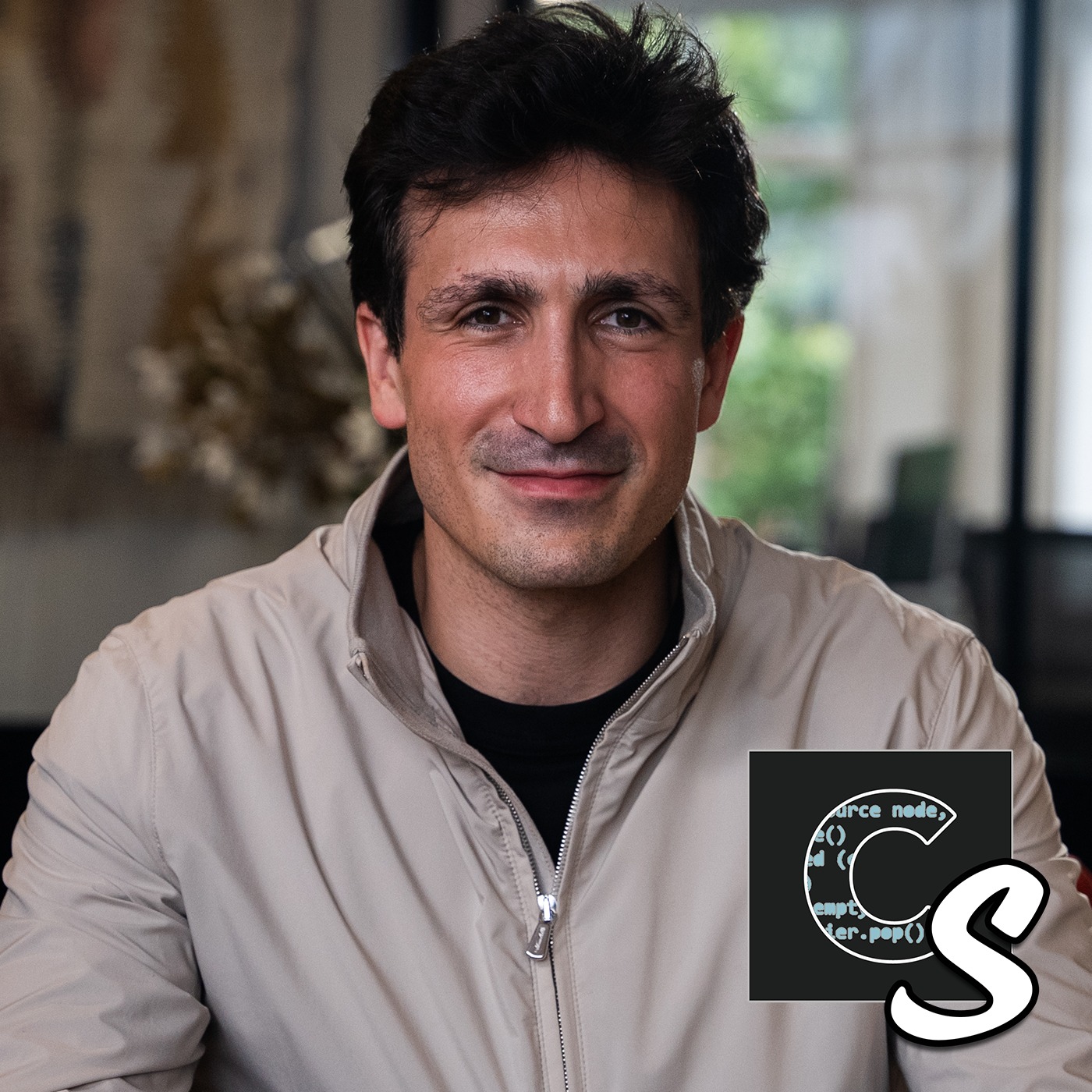
S13 Bonus: Reinventing Banking: Bitcoin-Native Global Financial Services with Shah Ramezani, Founder & CEO of Noah.com
In this episode
Shah Ramezani was born and raised in Switzerland. During his formative years and beyond, he was heavily influenced in finance and banking. Ten years ago, he moved to London, which he considers the fintech hub of the world. Outside of tech, he spends a lot of time on his health and playing sports. When it comes to his health, he focuses a lot on calming his nervous system and prepping his body for the next week. He reads a lot of psychology, philosophy and history. And although sushi is his favorite meal, he does make time to dine in Spanish and Italian cuisines as well.
Shah and his team found themselves frustrated with how slow, expensive and fragmented cross border payments remained, despite the speed of modern digital communication. He set out to build a global money application, leveraging crypto for everyday transactions, using stable-coins, and drawing inspiration from a biblical story about an ark.
This is the creation story of Noah.com.
Links
https://www.linkedin.com/in/shahramezani/
Current Sponsors:
Checkout our Stacklist! https://stacks.codestory.co/
Check out our Patreon!
Hosted by Noah Labhart | Technical Founder & Startup Mentor.
Our Sponsors:
* Check out Granola and use my code granola.ai/CODESTORY for a great deal: https://granola.ai
Advertising Inquiries: https://redcircle.com/brands
Privacy & Opt-Out: https://redcircle.com/privacy
[SPEAKER_02]: For the first time, we have the tools to really build a system that moves money in Stainless Day, 24-7, and borderless. [SPEAKER_02]: Last five ten years, you have pretty much in every part of the world. [SPEAKER_02]: It Brazil, India, Africa, Philippines, and instant payment methods. [SPEAKER_02]: But now you have also stablecoins which connects them to other payment methods and enables you to move [SPEAKER_02]: frictionless in seconds globally. [SPEAKER_02]: You don't need to touch so many different databases of thanks to actually make a simple payment.
[SPEAKER_02]: Everything goes to one protocol and the on and off ramps are a local payment system which are also instant already. [SPEAKER_02]: I'm Shah Ramazani, I'm the CEO and founder of NOAA.com.
[SPEAKER_03]: This is Code Story. [SPEAKER_03]: The podcast brings you interviews with tech visionaries. [SPEAKER_03]: Six months moonlighting goes. [SPEAKER_00]: I'm lost in all the backgrounds. [SPEAKER_03]: Who share what it takes to change an industry? [SPEAKER_00]: I don't exactly know what to do. [SPEAKER_03]: It certainly goes to get right. [SPEAKER_03]: Who built the teams that have their bad company is its people. [SPEAKER_01]: The teams help each other achieve this proud of our team. [SPEAKER_03]: Keeping scalability top of mind.
[SPEAKER_03]: All that infrastructure was happening. [SPEAKER_03]: Yes, we've been fighting it as we grow. [SPEAKER_03]: Total waste of time. [SPEAKER_03]: The stories you don't read in the headlines. [SPEAKER_01]: It's not an easy thing to achieve. [SPEAKER_03]: To get the shelf and dust it off, try to begin. [SPEAKER_03]: To ride the ups and downs of the startup line. [SPEAKER_01]: Need to really want it. [SPEAKER_03]: It's not just about technology. [SPEAKER_03]: All this and more. [SPEAKER_03]: On code story.
[SPEAKER_03]: I'm your host, Snow Alab part. [SPEAKER_03]: In today, how Shah Ramazani is powering the new era of global payments. [SPEAKER_03]: Through one stable coin powered platform.
[SPEAKER_03]: Shah Ramazani was born and raised in Switzerland. [SPEAKER_03]: During his formative years and beyond, he was heavily influenced by finance and banking. [SPEAKER_03]: 10 years ago, he moved to London, which he considers the FinTech hub of the world. [SPEAKER_03]: But outside of tech, he spends a lot of time on his health and playing sports. [SPEAKER_03]: When it comes to his health, he focuses a lot on calming his nervous system and prepping his body for the next week. [SPEAKER_03]: He reads a lot of psychology, philosophy, and history, and although sushi is his favorite meal, he does make time to die in Spanish and Italian cuisines as well.
[SPEAKER_03]: Sean is team found themselves frustrated with how slow, expensive, and fragmented cross-border payments remained, despite the speed of modern digital communication. [SPEAKER_03]: He set out to build a global money application, leveraging crypto for everyday transactions, using stable coins, and drawing inspiration from a biblical story about an arc.
[SPEAKER_03]: This is the creation story of NOAA.com.
[SPEAKER_02]: So NOAA is what we call a stable coins company. [SPEAKER_02]: So we saw early on that there was a passive opportunity [SPEAKER_02]: using stablecoin that it would stablecoin we could reinvent how money moves. [SPEAKER_02]: What we decided to do to build as our first product is stablecoins have has many benefits. [SPEAKER_02]: But companies don't know how to reap the full benefits because they would need a packaged service, they need a platform service to reap the full benefits and that's essentially what now it provides.
[SPEAKER_02]: So we are an API first company whereby we make sure that companies are able to reap the full benefits of a stablecoin payment or a stablecoin storing of the value. [SPEAKER_02]: by connecting every local payment method in the world. [SPEAKER_02]: Let's say ACH, Bedwire, SEPA, UPI, Mobile Money, G-Cash, Turkish, all these different payment that's working the world with SEPA, with stablecoins, then you basically enable instant money movement without going through corresponding banking, which is pretty novel in itself.
[SPEAKER_02]: So that's essentially what we're doing. [SPEAKER_02]: We're combining this as a platform, as an API for service, whereby our clients can finally move money without going to corresponding banking and with speed and to pretty much instantaneous. [SPEAKER_03]: I'm tracking with what you're building, but what makes NOAA so special of a solution in what you're solving it, because there's companies out there that are solving similar problems, there's legacy banking, there's things in place, why does NOAA or how does NOAA attack this [SPEAKER_02]: I think, for the first time, we have the tools to really build a system that moves money instantaneously, 24-7 and borderless.
[SPEAKER_02]: Last five ten years, you have pretty much in every part of the world. [SPEAKER_02]: It Brazil, India, Africa, Philippines, and instant payment method. [SPEAKER_02]: So those payment methods are moving money instantaneously, 24-7, frictionless.
[SPEAKER_02]: But now you have also stablecoins which connects them to other payment methods and enables you to move frictionless in seconds globally, the global money movement. [SPEAKER_02]: I would say the comparison may be the best analogy to this is how telephone over internet first work, so before you wanted to make a phone call, [SPEAKER_02]: You would make it phone call to say from Brazil to India. [SPEAKER_02]: It would go through multiple telecommunications networks or companies. [SPEAKER_02]: Let's say Brazil, a telecom would relay to AT&T, AT&T would relay to UK and UK would then relay to India.
[SPEAKER_02]: And as you can imagine, this is slow, expensive, and a lot of friction. [SPEAKER_02]: But then suddenly Skype came and caught through everything. [SPEAKER_02]: And I would say stablecoin is very similar. [SPEAKER_02]: When you basically don't need all these different hoops, you don't need to touch so many different databases of banks to actually make a simple payment. [SPEAKER_02]: Everything goes to one protocol. [SPEAKER_02]: And the on and off ramps are a local payment system, which are also instant already.
[SPEAKER_02]: So that's kind of the beauty of that. [SPEAKER_02]: And that's why it's so different and so powerful. [SPEAKER_02]: And I think it's much more native to what AI will need, because AI for agents and it's deal in stablecoin walls, it's much simpler.
[SPEAKER_03]: So what I want to dive into is the MVP for NOAA.com. [SPEAKER_03]: For the company, the first version of the product built, how long it takes to build, and what sort of tools are you using to bring it to life? [SPEAKER_03]: Obviously, there's going to be some blockchain elements, right? [SPEAKER_03]: But I'm curious what the story is there. [SPEAKER_02]: It took us really to the first product when I have the three years because there are many components to building that product besides just blockchain.
[SPEAKER_02]: One is obviously the whole regulatory side, so you have the entire regulatory side licensing, AML, all these different components that you have to get right. [SPEAKER_02]: But that's one part which takes a long time. [SPEAKER_02]: Then, so where we actually get in is we connect the old banking world with the new one. [SPEAKER_02]: So all the different old school payment rails,
[SPEAKER_02]: the newer form of payment rails, which are stable coins and abstracted out of the way. [SPEAKER_02]: So that's like the pure technical aspect and then you have the liquidity management aspect. [SPEAKER_02]: So these are the three components and I would say number one and two are the most time consuming one. [SPEAKER_02]: And then the three obviously is the more simpler one but these are the three components to get that platform right. [SPEAKER_03]: In that MVP, you got to make certain decisions and tradeoffs and how you approach the problem.
[SPEAKER_03]: And that could be limit limiting, maybe feature set, or acceptance of certain approach or technical debt, or things like that, right? [SPEAKER_03]: I'm curious about a core decision you had to make in that MVP and how you cope with it.
[SPEAKER_02]: There was a lot of tradeoffs to be bait. [SPEAKER_02]: I think one of the most important of focus on early on our side was, [SPEAKER_02]: We have to also focus where the market is the biggest, right? [SPEAKER_02]: We could have gone and integrate very smaller payment systems, but we went very quickly and focused on your dollar, solving those like how do we make payment systems move basically, how do we move stablecoin into ACH or Fedwire in a very simple way? [SPEAKER_02]: That was like one decision we made, which was more from a market perspective.
[SPEAKER_02]: That's what very often number one is always like, where is the market the biggest? [SPEAKER_02]: How do we focus around it? [SPEAKER_02]: Number two is, how do we do something simple and get it in front of customers instead of building for another year and not knowing what the exact two cases are? [SPEAKER_02]: So these are the main two, you know, I would say trade-offs with every time make words and market the biggest, how do we go into that space? [SPEAKER_02]: And second, how do we make sure we keep it simple?
[SPEAKER_02]: So that we can't export not multiple use cases before building more towards that.
[SPEAKER_03]: Let's move forward then. [SPEAKER_03]: I'm curious about how you have progressed and matured Noah, and to wrap that question in a box a little bit, I'm looking for is how do you build your roadmap? [SPEAKER_03]: How do you go about deciding that, okay, this is the next most important thing, to build her to address with Noah.com. [SPEAKER_02]: If anything, I would say I spend most of my time on new bets, what I call, I think you call it roadmap, but for us is, I see kind of start-ups or companies a bit like writing waves.
[SPEAKER_02]: Let's say we captured the stablecoin wave really well. [SPEAKER_02]: But the question is, with the tools we have today, with the team that we have today and the knowledge, are we fully utilizing our resources to get the highest growth for our company, right? [SPEAKER_02]: It's all about maximizing growth because that means you can bring on more resources [SPEAKER_02]: raise more money, which then also means we can solve the same problem with more gravitas. [SPEAKER_02]: So the roadmap is really again comes back to the same thing you asked me earlier is where do I where do we think as a team we have the authority who play in other verticals where we are not too getting distracted from core it's very similar it actually straightened to our core to our expertise and our platform we built and still capture more
[SPEAKER_02]: And that's basically where I make the most decision and then the one part is where is the biggest markets we have to move into, where the biggest brands and two, where do we feel we have the authority for our expertise and things that we have built to win? [SPEAKER_02]: Because the market is very competitive and people are always trying to go over the same things and we don't want to get to distract it with markets where we don't feel that we are playing bar strength. [SPEAKER_03]: But with how you're building this, you're solving the problem in a unique way and that's what you just described.
[SPEAKER_03]: You're building something that is special and also people are taking notice, they want to be involved and even a lot of success on the fundraising side of the world, to me a bit of stories there and how that's become. [SPEAKER_02]: Yeah, so we obviously raised a pretty big seed round. [SPEAKER_02]: We raised 38 million so far for a seed round. [SPEAKER_02]: And we're already seeing a huge traction. [SPEAKER_02]: We have a strong business model. [SPEAKER_02]: Revenue has been growing 5, 100% over last year.
[SPEAKER_02]: 30% month-a-month growth. [SPEAKER_02]: We're onboarding customers like per week in the... [SPEAKER_02]: buy to tens so we have seen a huge traction and really what was initially a concept has turned into a real world solution and there are companies that are some of our customers are listed companies, some of the customers are big enterprises so it's not only something that people are towing around but actually big customers are deploying and we're also in discussion now with our next fund raise given that the growth has been so immense so the traction and the momentum is great and that's why we're excited to also [SPEAKER_02]: for the build and double-down on what we basically build out.
[SPEAKER_03]: Okay, in what you're describing, I hear you saying we, right? [SPEAKER_03]: I'm curious about team, right? [SPEAKER_03]: How did you go about building your team? [SPEAKER_03]: What do you look for in those people to indicate that they're the winning horses to join you? [SPEAKER_02]: I always like to bet on underdogs. [SPEAKER_02]: I would say people who have something to prove. [SPEAKER_02]: Individuals who I call on rough environments. [SPEAKER_02]: I would say a normal market doesn't value them.
[SPEAKER_02]: because they are different. [SPEAKER_02]: They don't fit into these normal structures. [SPEAKER_02]: So a lot of our best hires were those types of people where I feel they have a natural talent, they haven't fully utilized. [SPEAKER_02]: And we bring them to NOAA and give them all-on responsibility, push them to limit, give them more and more and basically manage them upwards very quickly. [SPEAKER_02]: the kind of loyalty you create with those individuals is another level because you really build like a almost like a strong culture and culture where it is you and the team against the world and that's what we have early on spent time on building.
[SPEAKER_02]: I think it's very important because companies go through a lot of ups and downs and you want to have the missionaries, you don't want to have the [SPEAKER_02]: mercenaries who come in and as soon as things get tough, they take another offer. [SPEAKER_02]: A lot of people that know are truly believed in the way we do things and that's what we are not only focusing on hiring. [SPEAKER_02]: So we are going to double our engineering team so that's kind of number one that we are hiring a lot of engineers across the UK and Europe and also US, but primarily a lot of the UK because we have our largest office here.
[SPEAKER_02]: So a lot of engineers we're going heavily into AI so a lot of these new engineers are coming in and they are going to work on cutting edge H&D payments applications Product designers product managers Yeah, basically those are the main roles we're looking for right now, so if anyone obviously is interested should please reach out But that's where we are focusing most of our time
[SPEAKER_03]: OK, Scott, let's move forward then. [SPEAKER_03]: I'm curious about scale. [SPEAKER_03]: And this is always an interesting one in this specific area where the elements that we talked about was in the beginning when you're building the MVP and what drives know it. [SPEAKER_03]: I'm curious about where scale was thought of in the beginning and how it was thought of. [SPEAKER_03]: And I'm also curious about if there's been interesting areas already where you've had to fight scale as you've grown.
[SPEAKER_02]: Fundamentally, scale comes all down to, [SPEAKER_02]: I think I'm a strong believer that hiring the right guy versus the okay this is okay type of guy is such a big difference. [SPEAKER_02]: Whatever we're doing here, we think it's no different than running a, let's say, Manchester United, or Arsenal team, where talent is pretty much everything. [SPEAKER_02]: And so for me, scale is all about getting the right people in. [SPEAKER_02]: And having the right structure and talent system, a recruitment system that goes through so many profiles.
[SPEAKER_02]: But then selects the few that fit in. [SPEAKER_02]: Because if you bring the right people in, they just unlock so much bottlenecks, but also create
[SPEAKER_02]: For me, I think my obsession, I think my obsession is really around people. [SPEAKER_02]: I would say, after we were actually obviously in another discussion for another big around, but after that, I'm pretty much dedicating 100% of my time into hiring the right people for the company, and even if it means that I have to fly over to other countries just to beat them, make sure that we are, but that's ultimately the most capable thing you can do as a founder.
[SPEAKER_03]: So, as you step on the balcony, and you look across all that you've built thus far with Noah,
[SPEAKER_02]: I think the team, I would say we spend a lot of time building the unscathed things that they are slow, that are maybe not noticed in the beginning, but then take compound in year four, year five. [SPEAKER_02]: So we spend a lot of time on the right people, a lot of time we could have hired so many other people where we just said they would erode our culture, they would basically make everything we built for, and we basically need to sell out on that. [SPEAKER_02]: and we never did that.
[SPEAKER_02]: Even if it meant we grew slower, but we kept the culture the same, and we kept the bar high. [SPEAKER_02]: That's number one. [SPEAKER_02]: Number two is we early on invested in the brand. [SPEAKER_02]: Not that we have now done a lot of exposure, but early on we said, okay, if you wanna build a big company, you need to have a good name and a recognizable name. [SPEAKER_02]: And that's why we got into getting the domain names and IP everything. [SPEAKER_02]: I think these are all everything that we did.
[SPEAKER_02]: that was at the time not showing any results, but we knew that the year five year six will go to fully reap the benefits. [SPEAKER_02]: And the other one is also technology. [SPEAKER_02]: Our CTO and our engineering team, early on, all the decisions we made, might have slowed us down in the year two year three, but we did everything properly so that by year four by five, we would move much faster. [SPEAKER_02]: Equally, we had many acquisition offers. [SPEAKER_02]: We got media options, but acquire companies.
[SPEAKER_02]: We are very careful on a who we acquire because whatever you acquire is going to create a lot of technical debt. [SPEAKER_02]: Migration issues and that can actually slow you down. [SPEAKER_02]: There might be initially like a big announcement and everyone gets excited. [SPEAKER_02]: But we have always this culture and I had no idea. [SPEAKER_02]: We do the right things even if it takes longer because in the year three or four we will outgrow everyone. [SPEAKER_02]: And these are the things I'm proud of.
[SPEAKER_03]: Okay, let's flip the script a little bit. [SPEAKER_03]: Tell me about a mistake you made. [SPEAKER_03]: How you and your team responded to it. [SPEAKER_02]: Obviously, you saw our announcement last week, we growing extremely fast, we grew with this year, 500% over last year, revenues growing 30% month a month. [SPEAKER_02]: When things started taking off, where there was a clear product market fit and a strong revenue model, I didn't react fast enough in hiring a lot of talent. [SPEAKER_02]: I was still very skeptical.
[SPEAKER_02]: because I came from a very difficult time. [SPEAKER_02]: After the company where I had still extremely my paranoid moment, my paranoid mode on. [SPEAKER_02]: And by not moving fast enough on hiring, we basically lost some time, I would say, which was quite important because right now it's a race. [SPEAKER_02]: Whereby we were growing really fast but we didn't have the right people in. [SPEAKER_02]: And obviously getting the right people in the right time takes time, you need good people that normally have three months notice.
[SPEAKER_02]: After that, let's say they join three months later, then you have to teach them, and so it's just like you lose so much time, so I think one advice I would have for other folks running high performance team. [SPEAKER_02]: You should always hire earlier than what you think, because it takes a lot of time to get them in and they get them actually ready to contribute.
[SPEAKER_03]: this will be really exciting shot. [SPEAKER_03]: I'm curious about the future. [SPEAKER_03]: Technology is moving very fast, even faster than it has. [SPEAKER_03]: And I'm curious about the future for Noah. [SPEAKER_03]: What's in store? [SPEAKER_03]: There's been a lot going on with the company here recently. [SPEAKER_03]: Tell me about those things and tell me what the future looks like for Noah.com. [SPEAKER_02]: The future is super exciting for us, I think we as I'm like finalizing our new product bets is everything is super ambitious and big and the entire team is very excited.
[SPEAKER_02]: The growth over the last 12 months has been obviously a proof of like that whatever we are doing is working, but of course we want to take this another level. [SPEAKER_02]: We always try to not think in increments, but if we would just think again, we'll get
[SPEAKER_02]: And I think what really excites me most is the entire agentic payment space. [SPEAKER_02]: I think sooner or later, maybe in matter of months, and a large number of people will start banking on a simple chat interface. [SPEAKER_02]: So they will have their bank account, the dollar account, or depository account, they will start making payments to their friends. [SPEAKER_02]: They will buy stocks, trade stocks, converts, things to dollars, or back-to-forth.
[SPEAKER_02]: Also, I think that's very exciting, and that's some space that no one can run very fast. [SPEAKER_02]: Even a lot of these agents will probably predominantly work with stable coin wallet. [SPEAKER_02]: And so that's like definitely the biggest opportunity we see, but then also we see opportunities in expanding our payment infrastructure network. [SPEAKER_02]: We're going into card issuing, I think. [SPEAKER_02]: They're not many companies who can offer global issuing. [SPEAKER_02]: Imagine every, you can give everyone in the world a car, basically a debit card.
[SPEAKER_02]: And that is, you think about it. [SPEAKER_02]: Of course, for you might be not a big thing, but someone in Africa having your car and finally being able to subscribe to Netflix subscription, as simple as just settling a stable coin on the car, is pretty impactful. [SPEAKER_02]: So there's a number of things that we have, that is super exciting and we'll have, [SPEAKER_02]: I would always say leapfrogging effect in those markets, because those markets, a lot of the global markets, they never had anything before, so that's exciting when you only offer something is a massive pool from the customers.
[SPEAKER_02]: I consider myself a someone who has found the craft and just wants to master that craft. [SPEAKER_02]: And maybe my craft is a leader is to hire exceptional people and motivate them to do better than whatever they thought they could. [SPEAKER_02]: That's it. [SPEAKER_02]: It's simply that, I think. [SPEAKER_02]: That early on in my young years, people would always tell me [SPEAKER_02]: Whenever I talk to you, I feel like I'm talking to Tony Robbins. [SPEAKER_02]: I feel so motivated and inspired.
[SPEAKER_02]: So I thought that was definitely like one of my strongest attributes. [SPEAKER_02]: So basically what I'm trying to do is how do I haunt that and make that better? [SPEAKER_02]: And who really influences me are people from number of different, I would say sectors, it doesn't have to be always business. [SPEAKER_02]: It can be football coaches, it can be generals, it can be anyone who has done something exceptional, [SPEAKER_02]: has fought an uphill battle, has been able to bring a number of people together and do they make the impossible possible.
[SPEAKER_02]: So there's a number of people there, for example, I think Alex Ferguson from Manchester United, exceptional character, there's an amazing documentary on him. [SPEAKER_02]: You look at his story, it's like a typical underdog story, a person who grew up in a ship building family and obviously those that ship being a ship builder is a very tough culture. [SPEAKER_02]: And then he always wanted to be a football player, but he was not good enough. [SPEAKER_02]: If you have to imagine someone wants to do something but doesn't have the talent and that really stayed with him, he was tough.
[SPEAKER_02]: But then he found his calling being a coach. [SPEAKER_02]: But he was a, why he was such a good coach is because he just was tough, because he had that upbringing of difficulty and discipline and puffness. [SPEAKER_02]: And he also early on, I think it's as somebody parallels with also company building, is because Manchester United was not a good football club. [SPEAKER_02]: So it definitely didn't have the resources to go on by the most expensive players. [SPEAKER_02]: What he did, he built a youth program.
[SPEAKER_02]: And there's so many parals today's companies, like some of the best companies, early they bet on young people. [SPEAKER_02]: They bring young people and give them amazing ambitions. [SPEAKER_02]: The expensive hire is rarely actually delivered. [SPEAKER_02]: The outsize returns. [SPEAKER_02]: So he obviously brought David Beckham, I think he was like 13, 14, Christian Ronaldo, he was arguably could say he built those players. [SPEAKER_02]: And so I think that's like one character I would say there's so many of that and it's always the same parallels, like great motivators, great leaders, tough but people respected them.
[SPEAKER_02]: But at the same time made big bets on underdogs and young people. [SPEAKER_03]: Last question, child, so you're getting on a plane, and you're sitting next to a young entrepreneur who's built the next big thing. [SPEAKER_03]: They're jazzed about it. [SPEAKER_03]: They can't wait to show it off to the world and can't wait show it off to you right there on the plane. [SPEAKER_03]: What advice do you give that person? [SPEAKER_03]: Having gone down this road a bit. [SPEAKER_03]: Just go all in.
[SPEAKER_02]: I think never have any shadows of doubts. [SPEAKER_02]: Of course, have doubts in terms of how you do things, like in terms of how you do it until it's better. [SPEAKER_02]: But always fully believe in yourself and go all in with everything you've got.
[SPEAKER_02]: It would have been way easier if I wouldn't have doubted myself as much, because I was going to do it anyways, but the almost the nights where there was talks internally within my self, those were the most painful ones, so if nothing to lose really, think there's some entrepreneurs to have this force within themselves. [SPEAKER_02]: And there's a reason why this force exists. [SPEAKER_02]: And I think the best thing you can do is just fully give into it and just go with it. [SPEAKER_03]: It's fantastic advice.
[SPEAKER_03]: Shaw, thank you for being on the show today. [SPEAKER_03]: Thank you for telling the creation story of nilla.com. [SPEAKER_03]: Thank you so much, Noah, for having me and looking forward to it. [SPEAKER_03]: And this concludes another chapter of Code Story.
[SPEAKER_03]: code story is hosted and produced by Noah Labhart. [SPEAKER_03]: Be sure to subscribe on Apple podcast, Spotify, or the podcasting app at your choice. [SPEAKER_03]: And when you get a chance, leave us a review. [SPEAKER_03]: Both things help us out tremendously.
[SPEAKER_03]: And thanks again for listening.
Latest Season of the Podcast is Sponsored By




 Apple Podcasts
 Spotify
 Castbox
 Player FM
 Pocket Casts
 YouTube
 Overcast
 Castro
 Goodpods
 Moon FM
 Podbean
 Podcast Addict
 Podcast Republic