
S2 E3: Democratizing the Startup Process: How Startups.com Built a Ecosystem for Founders with Wil Schroter (Founder & CEO, Startups.com)
In this episode
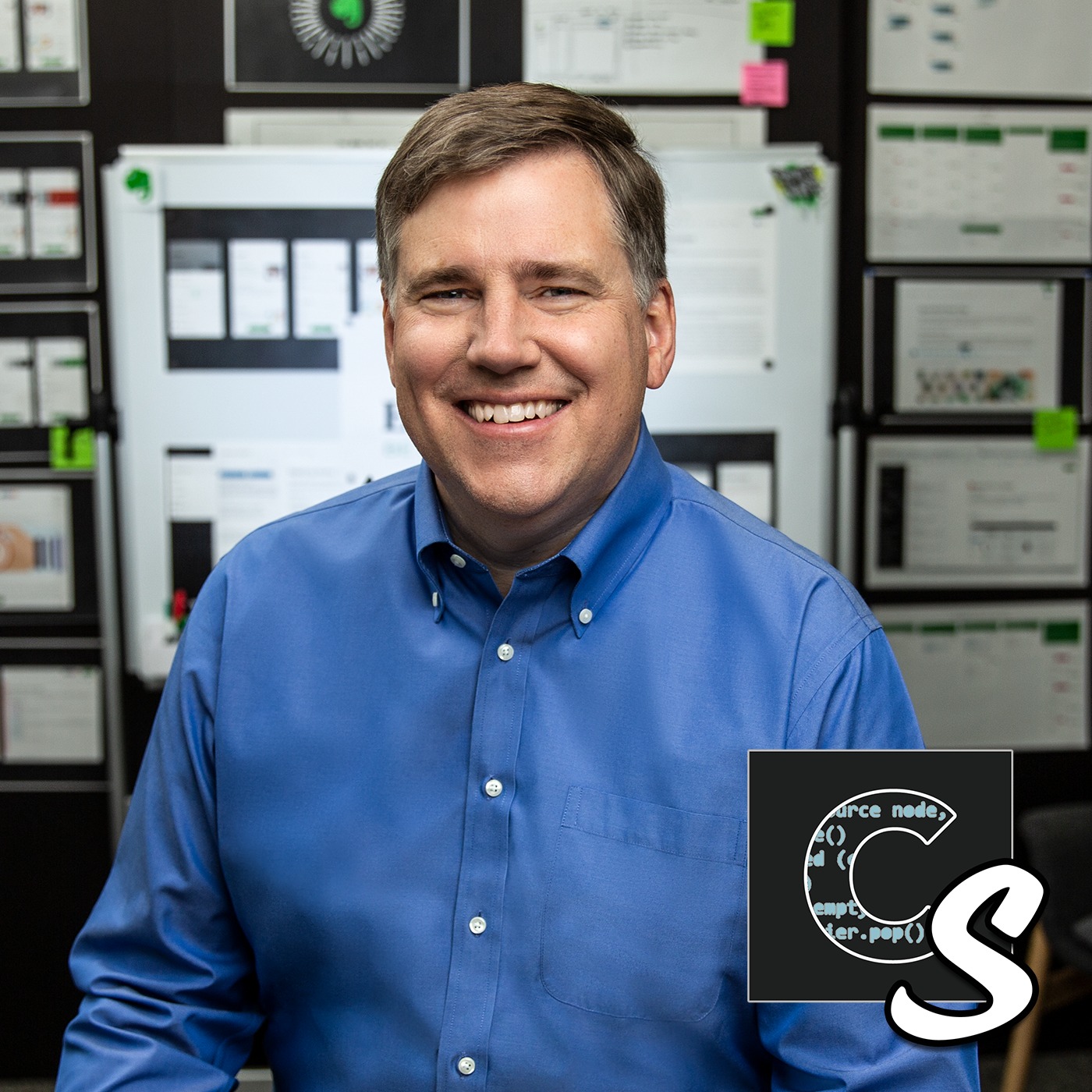
Startup veteran Wil Schroter is a family man, and now amateur carpenter. He spends a lot of his spare time, covered in sawdust and enjoying a balance of analog activities, away from digital life. He has spend 25 years as a startup CEO, and during that team, he learned that what he was best at was teaching people how to go through the startup process. For his 9th startup, he built Startups.com – a place to provide education and tools to help founders through the entire startup process – and this solution was catalyzed with the creation of a funding platform.
Today’s sponsors:
Podcorn (https://podcorn.com/podcasters)
Links
- https://www.startups.com/
- https://www.fundable.com
- https://www.linkedin.com/in/wilschroter/
- https://en.wikipedia.org/wiki/Wil_Schroter
- https://www.crunchbase.com/person/wil-schroter
Leave us a review on Apple Podcasts!
Amazing tools we use:
- If you want the best publishing platform for your podcast, with amazing support & people – use Transistor.fm.
- Want to record your remote interviews with class? Then, you need to use Squadcast.
- Code Story uses the 1-click product ClipGain, sign up now to get 3hrs of podcast processing time FREE!
Credits: Code Story is hosted and produced by Noah Labhart, Co-produced and edited by Bradley Denham. Be sure to subscribe on Apple Podcasts, Spotify, Pocket Casts, Google Play, Breaker, YouTube, or the podcasting app of your choice.
Current Sponsors:
Checkout our Stacklist! https://stacks.codestory.co/
Check out our Patreon!
Hosted by Noah Labhart | Technical Founder & Startup Mentor.
Our Sponsors:
* Check out Granola and use my code granola.ai/CODESTORY for a great deal: https://granola.ai
* Check out Perplexity and use my code pplx.ai/codestory for a great deal: https://www.perplexity.ai
Advertising Inquiries: https://redcircle.com/brands
Privacy & Opt-Out: https://redcircle.com/privacy
[SPEAKER_01]: We watch every step that you take from the moment you have the idea, until just after you launch. [SPEAKER_01]: And we say, let's be there whenever Noah has a problem. [SPEAKER_01]: Now we've built a lot of companies, we're all entrepreneurs here, so we understand this journey incredibly well. [SPEAKER_01]: We've got over a million customers on our platform. [SPEAKER_01]: They tell us because they're all founders, you know, they're very vocal. [SPEAKER_01]: While they're all their journey seemed different, they all follow kind of a pattern.
[SPEAKER_01]: And that becomes the roadmap for the places that they get stuck.
[SPEAKER_01]: Hi, I'm Will Schroeder, the founder and CEO of Startup.com.
[SPEAKER_00]: This is Code Story, a podcast bringing you interviews with tech visionaries who share in the critical moments of what it takes to change an industry and build and lead a team that has your back. [SPEAKER_00]: I'm your host Noah Labhart and today how Will Stroder created the first one-stop shop for founders to get help building their startups. [SPEAKER_00]: All this and more on Code Story.
[SPEAKER_00]: Start up veteran, Will Schroeder, is a family man, and now amateur carpenter. [SPEAKER_00]: He spends a lot of his spare time covered in sawdust and enjoying a balance of analog activities away from digital life. [SPEAKER_00]: He spent 25 years as a startup CEO. [SPEAKER_00]: And during that time, he learned that what he was best at was teaching people how to go through the startup process. [SPEAKER_00]: For his ninth startup, yes, that's right, ninth startup. [SPEAKER_00]: He built startups.com, a place to provide education and tools to help founders through the entire startup process.
[SPEAKER_00]: And the solution was catalyzed
[SPEAKER_01]: When I started startups.com, it was about seven years ago. [SPEAKER_01]: It was my ninth startup. [SPEAKER_01]: And prior to starting this company, I was really focused on what do I want to do for the rest of my life? [SPEAKER_01]: And there's a whole story to that. [SPEAKER_01]: But the core of it is, I wanted to focus on something one project, if you will, that every day of my life, I'd be working toward building something bigger. [SPEAKER_01]: Whereas before, [SPEAKER_01]: In other companies, I was more focused on how can I build it big, or if not, it all, and sell it, or go on to something else.
[SPEAKER_01]: This was the first time I didn't want to get involved in something, unless it was going to be something that was long-term. [SPEAKER_01]: Prior to this, prior to starting startups.com, which helps people start companies. [SPEAKER_01]: I had done eight other startups, notably the first one I did was in 1994, a company called Blue Diesel, which was one of the first internet companies we were one of the first companies building web pages. [SPEAKER_01]: We were essentially a web design company, building web pages on the internet.
[SPEAKER_01]: At a time when nobody even understood what the internet was. [SPEAKER_01]: and it was wonderful. [SPEAKER_01]: It was a great business. [SPEAKER_01]: We grew that very quickly to about $700 million in about seven years and sold it. [SPEAKER_01]: Wonderful, great experience. [SPEAKER_01]: Did a bunch of other startups after that get into those if you'd like. [SPEAKER_01]: But after that, like I said, I kind of got to a point where I only wanted to work on one thing. [SPEAKER_01]: And it turned out the thing that I was best at was teaching people how to go through the startup process, walking them through every step from ideation, to customer acquisition, to funding, all the different aspects.
[SPEAKER_01]: I'm not really good at anything else as my carpentry would tell you, but the one thing I'm an expert at is teaching people how to start companies. [SPEAKER_00]: Tell me about the original MVP and how long it took you to build, what tools are used. [SPEAKER_01]: The very first version in 2012 of Startup.com was actually not quite what you see in the Startup.com platform today. [SPEAKER_01]: Today you see all of these different tools like Fundable and Launch Rock, Clarity and Biz Plan, and then of course the education that's on Startup.com itself.
[SPEAKER_01]: But a lot of those were acquisitions, those are things we didn't build. [SPEAKER_01]: What we started to build, you know, from scratch, was a product called fundable.com in circa 2011 heading into 2012 when we launched it. [SPEAKER_01]: And the idea at the time, it was the dawn of crowdfunding. [SPEAKER_01]: This was right around the time anybody even heard of Kickstarter as a different type of crowdfunding platform. [SPEAKER_01]: ours was intended, funnable, was intended to be an equity crowdfunding platform.
[SPEAKER_01]: And this is before the Jobs Act had kicked off that made it legal to do so, and we were just kind of in the right place the right time. [SPEAKER_01]: We thought, but here's what actually happened, and I think this is really useful to know for a lot of folks that are building something. [SPEAKER_01]: We did everything right in theory. [SPEAKER_01]: We had a great idea to help startup companies raise startup capital, equity startup capital, online, raising money is so hard. [SPEAKER_01]: It's such a complicated and painful process.
[SPEAKER_01]: We wanted to put more of it on rails. [SPEAKER_01]: We wanted to give you the opportunity to say, this is how much I'm raising, the user my terms. [SPEAKER_01]: And here's essentially my profile. [SPEAKER_01]: And again, a lot of people understand the Kickstarter analogy from the non-equity side, you know, [SPEAKER_01]: and we wanted to bring that to the equity side. [SPEAKER_01]: We built the product and probably is span of, I'm gonna say six months at the MVP. [SPEAKER_01]: A little more complicated because in this case, it couldn't just be a landing page in sign-ups.
[SPEAKER_01]: You actually are dealing with equity. [SPEAKER_01]: It's a little more complicated. [SPEAKER_01]: But man, right at the time that we were building this, everyone in their brother thought of the same idea at exactly the same time. [SPEAKER_01]: I mean, so much so that I was sitting across from a really good friend of mine one day in Santa Monica. [SPEAKER_01]: And we're both catching each other up on what we were up to. [SPEAKER_01]: He said to me, he said, yeah, man, I'm working on this new thing I'm super excited about, but I'm all great.
[SPEAKER_01]: Tell me about it. [SPEAKER_01]: And it's worth noting, most of my friends are founders. [SPEAKER_01]: So we have this conversation all the time. [SPEAKER_01]: So it wasn't that unusual. [SPEAKER_01]: And so he starts explaining. [SPEAKER_01]: He said, look, [SPEAKER_01]: I think there's going to be a huge change in the framework by which companies get funded. [SPEAKER_01]: I'm like, oh, man, I couldn't agree more. [SPEAKER_01]: He said, I really want to build a platform that allows people to raise capital online, and I'm like, you've got to be kidding me, I'm working on exactly the same thing.
[SPEAKER_01]: And so that conversation got very awkward at that point. [SPEAKER_01]: and so he ended up launching almost an identical copy of Fundable, so much so that he and I had to coordinate because we were friends, which day we were each going to make the announcement that our companies were going out because we were launching the same damn thing. [SPEAKER_01]: At that moment, damn near 30 companies launched an equity crowdfunding platform. [SPEAKER_01]: I mean, within like nine months of each other, I've never seen anything like it.
[SPEAKER_01]: I've seen a lot of copycat designs where Uber launches, then everybody launches something like it. [SPEAKER_01]: I had never seen a timing event where everyone launched the same thing at the same time without anyone knowing what anybody else was even working on.
[SPEAKER_01]: We had a small team, you know, maybe a team of about five people at the time, working on funnable in the V1. [SPEAKER_01]: You know, we get this thing launched, and the timing couldn't have been better from the standpoint that the same year the Jobs Act would pass, which would allow people to raise equity online, which was supposed to be a big deal. [SPEAKER_01]: Kickstarter became a thing, I think the Pebble Watch had launched if not that year than something close to it, which brought so much attention to the crowdfunding space.
[SPEAKER_01]: And it absolutely looked like we're exactly the right place to the right time. [SPEAKER_01]: To be fair, it looked like that way for 30 other competitors as well. [SPEAKER_01]: Here's what's important in unusual. [SPEAKER_01]: We get about a year into it, and every startup is thinking about crowdfunding, everyone's thinking about it. [SPEAKER_01]: It's exactly how you're gonna fundraise going forward. [SPEAKER_01]: And so the hype is at its peak, but something weird starts happening.
[SPEAKER_01]: We start getting all of these companies coming to us, saying that they wanna raise capital. [SPEAKER_01]: And we built a little team to onboard them, to really kind of help them with their collateral materials and things like that. [SPEAKER_01]: But as we're talking to these companies, we're starting to realize something, two things actually. [SPEAKER_01]: First, none of these companies have any business raising capital yet. [SPEAKER_01]: You know, there's this gold rush mentality that, you know, if you had an idea, everyone would just fund it.
[SPEAKER_01]: Maybe, if you're doing Kickstarter and it's just people throwing away some of their pocket change, but it doesn't work that way when you're talking about investment capital, when you're talking about hundreds of thousands or millions of dollars. [SPEAKER_01]: You know, no one's just taking a flyer on throwing $2 million in your company. [SPEAKER_01]: It doesn't work that way at all. [SPEAKER_01]: So you had this massive flood of entrepreneurs trying to raise money. [SPEAKER_01]: with very little credentials, basically they shouldn't have been raising money, so you had that.
[SPEAKER_01]: On the other hand, [SPEAKER_01]: There was no demonstrable change in the number of investors. [SPEAKER_01]: Something not a lot of people were talking about at the time. [SPEAKER_01]: You know, there's so much hype. [SPEAKER_01]: I was going to conferences about crowdfunding. [SPEAKER_01]: And I kept saying, and nobody wanted to hear it. [SPEAKER_01]: I kept saying, I don't see more investors coming to the table. [SPEAKER_01]: And the reason I'm bringing this up, no is because a lot of times when we're in the middle of the hype cycle,
[SPEAKER_01]: and say is this really happening the way we all think it is? [SPEAKER_01]: Are the very people building the products? [SPEAKER_00]: A quick thank you to one of today's sponsors. [SPEAKER_00]: Podcorn. [SPEAKER_00]: Podcorn is a marketplace connecting podcasters to amazing sponsorship opportunities, such as hostred ads, interview segments, discussions and more. [SPEAKER_00]: With Podcorn, there's no middleman. [SPEAKER_00]: Podcasters of all sizes can browse and choose opportunities right on the platform, set their own rates and collaborate with brands directly.
[SPEAKER_00]: You never give up any rights to your podcast and Podcorn is here to support you every step of the way. [SPEAKER_00]: To ensure you are protected, [SPEAKER_00]: and compensated for the work you do with brands. [SPEAKER_00]: Personally, I've been waiting for the launch of Podcorn for some time. [SPEAKER_00]: My experience using the platform has been super pleasant. [SPEAKER_00]: I've been in contact with new responses, sent lots of proposals, been assigned campaigns, and even gotten to know a few new folks through the whole process.
[SPEAKER_00]: If you are a podcaster or someone looking to promote your product or service, I highly recommend you look into the pod corn platform. [SPEAKER_00]: Check out the link in the show notes to learn more or go to podcorn.com slash podcasters to get started. [SPEAKER_00]: That's p-o-d-c-o-r-n-dot-com slash podcasters. [SPEAKER_01]: I remember specifically being at a crowdfunding conference saying guys, I understand how big this could be, but it won't be any bigger if we don't see more investors showing up.
[SPEAKER_01]: And I don't see us doing anything to change the number of investors. [SPEAKER_01]: Well, what do you know? [SPEAKER_01]: Years go by in the number of investors just didn't really change. [SPEAKER_01]: It changed a little bit, but not nearly the way it did for awards crowdfunding, etc. [SPEAKER_01]: So about a year into it, this 2012 going to 2013. [SPEAKER_01]: I say to our team, this isn't a good bet. [SPEAKER_01]: We made a huge bet. [SPEAKER_01]: We won all in on this, but it's not a very good bet.
[SPEAKER_01]: In order for us to really help startups, we're going to have to do a lot more than just help them raise money. [SPEAKER_01]: We're going to have to help them with their business plan, with their customer acquisition, with their education, finding mentors, because there's all of the problems that they're bringing us as they're trying to use this one product. [SPEAKER_01]: And so at that point, we made a tough decision to break away from just fundable and build a bigger platform.
[SPEAKER_00]: So when you made that decision, what sort of decisions and trade-offs did you have to make in the short-term? [SPEAKER_00]: How did you cope with those? [SPEAKER_01]: It was tough because the biggest part about it when we started to come up with the vision that would ultimately become startups.com, this platform that helps people walk through the startup process, it's essentially a virtual incubator. [SPEAKER_01]: We didn't have any of the products that we needed. [SPEAKER_01]: and the stuff that we needed was pretty complicated.
[SPEAKER_01]: Again, we needed a tool for customer acquisition. [SPEAKER_01]: We didn't have one, and it would take a long time to just build that. [SPEAKER_01]: We didn't have a business planning tool for idea validation, et cetera. [SPEAKER_01]: And it would take a long time to just build that. [SPEAKER_01]: But we needed all of these things kind of now if we were gonna build this virtual incubator concept. [SPEAKER_01]: The only way to do that in any reasonable amount of time would be to acquire the companies that had already built it.
[SPEAKER_01]: Which by the way, we weren't a venture funded company, we were a self-funded company, we were a boot-traped company, you know, I had funded the company because the I little success prior to and it was a big play, it was a really big play, it was an acquisition play. [SPEAKER_01]: And so I moved my family to San Francisco where most of these companies were that we'd want to acquire. [SPEAKER_01]: And I just had five meetings a day, non-stop with every company that was possibly within this field of view of helping startups start up.
[SPEAKER_01]: And in the end, we ended up acquiring six companies, six venture funded companies in a span of about 18 to 24 months. [SPEAKER_00]: How many meanings did you have before you came up with those six companies to acquire? [SPEAKER_01]: This is no exaggeration. [SPEAKER_01]: It was north of 2 to 300. [SPEAKER_01]: You gotta understand, nobody knew who the hell we were. [SPEAKER_01]: So it wasn't like, people were knocking on our door. [SPEAKER_01]: Right, we were going to people and they're like, who are you guy, what, you're from Columbus?
[SPEAKER_01]: Oh, you're where? [SPEAKER_01]: Right, I mean, what am I doing here? [SPEAKER_01]: It wasn't an easy pitch. [SPEAKER_01]: However, [SPEAKER_01]: People did see the vision of what we were trying to build. [SPEAKER_01]: We were trying to build something very massive. [SPEAKER_01]: Not just the number of users or something like that, but something that could have a massive impact on the startup community. [SPEAKER_01]: And I think a lot of people really did understand that vision. [SPEAKER_00]: So you acquired these six companies.
[SPEAKER_00]: You got past that hurdle. [SPEAKER_00]: How has the product progressed?
[SPEAKER_01]: Well, part of the challenge, and this is an insurmountable, but part of the challenge was a lot of these companies were all on different text acts. [SPEAKER_01]: So we were trying to unify the text act and, you know, clarity.fm was built on Ruby, earlier versions of the companies we bought were built on Lairville, where React shop now, but even to be fair, React wasn't really a thing back when we were buying these companies. [SPEAKER_01]: And so we were kind of evolving our own tech stack off of incidentally alertable tech stack into React which became phenomenal for us while also trying to acquire and then develop all of these different tech stacks.
[SPEAKER_01]: It was a nightmare for a while and we're just finally coming out of it. [SPEAKER_01]: I would imagine that was super challenging. [SPEAKER_01]: At the very least, because we didn't have any Ruby developers, so Clarity's built on Ruby, we acquired the company, but the developers went on to take other jobs, which was part of the plan. [SPEAKER_01]: And we were like, well, okay, great. [SPEAKER_01]: We need to make a change. [SPEAKER_01]: How do we do that? [SPEAKER_01]: There's no user has a problem.
[SPEAKER_01]: How do we fix it? [SPEAKER_01]: And so, you know, you find ways to get it done. [SPEAKER_01]: But it was a huge task, not to mention, integrating the business operations, the customers, and everything else into one more unified platform. [SPEAKER_01]: And we're still in the process to be fair, but we've really come a long way. [SPEAKER_00]: So how do you build your roadmap then and today? [SPEAKER_00]: I would imagine that a large part of the roadmap is that core integration piece between the different tech.
[SPEAKER_00]: Now do you figure out what you're going to build next? [SPEAKER_01]: really what it comes down to is, what does the founder journey look like? [SPEAKER_01]: So let me kind of lay that out for you. [SPEAKER_01]: The founder journey is the moment Noah has an idea. [SPEAKER_01]: We have to find what are all the places he's going to move forward with that idea and get stuck, okay? [SPEAKER_01]: So you have this idea, you're sitting in your cubicle and you watch Shark Tank and you have this idea nine seconds ago and you said, I wanna do this, okay?
[SPEAKER_01]: first thing is you're going to have to validate the idea. [SPEAKER_01]: That's a little bit tricky because you don't know that. [SPEAKER_01]: You don't know that you need to validate an idea. [SPEAKER_01]: You know you have one, but you have no idea that this process exists. [SPEAKER_01]: So we have to find you and convince you to even go down an idea validation path. [SPEAKER_01]: so we start to build a product for that. [SPEAKER_01]: Then we say you need to put a plan together per your validation to figure out.
[SPEAKER_01]: This is a pretty good idea. [SPEAKER_01]: Let's put a plan together and kind of blow it out a little bit. [SPEAKER_01]: So you need some sort of business planning or pitch deck tool. [SPEAKER_01]: Okay, we had to go build that or buy in this case. [SPEAKER_01]: And then we watch every step that you take from the moment you have the idea, until just after you launch. [SPEAKER_01]: And we say, let's be there whenever [SPEAKER_01]: and that becomes the roadmap. [SPEAKER_01]: Now, we've built a lot of companies.
[SPEAKER_01]: We're all entrepreneurs here. [SPEAKER_01]: So we understand this journey incredibly well. [SPEAKER_01]: We've got over a million customers on our platform. [SPEAKER_01]: They tell us because they're all founders. [SPEAKER_01]: They're very vocal about what they need. [SPEAKER_01]: And while they're all their journey seemed different. [SPEAKER_01]: It seems like every entrepreneur journey is different. [SPEAKER_01]: They all follow kind of a pattern. [SPEAKER_01]: And that is the becomes the roadmap for the places that they get stuck.
[SPEAKER_00]: That's super interesting. [SPEAKER_00]: You building your roadmap around feedback from what people want. [SPEAKER_00]: That's a normal, that feels right. [SPEAKER_00]: But it's a super interesting set of customers, being extremely vocal. [SPEAKER_00]: Sometimes you have to entice people to give feedback through incentives or rewards. [SPEAKER_00]: But I imagine with a large group of founders, there's no shortage of feedback. [SPEAKER_01]: We don't have any shortage of feedback. [SPEAKER_01]: You've got kind of two camps here.
[SPEAKER_01]: You've got the absolute newbies. [SPEAKER_01]: Now, these are people who had that idea nine seconds ago. [SPEAKER_01]: And to be fair, no one's done this before. [SPEAKER_01]: I mean, you've got serial founders like me who have done it before, but we're in an incredible minority. [SPEAKER_01]: The average founder getting started has no idea what they're doing. [SPEAKER_01]: They're terrified of the way forward as they should be because it's a terrifying process, and they just don't know where they're supposed to go.
[SPEAKER_01]: that's like the freshman in high school. [SPEAKER_01]: And so you got that one camp. [SPEAKER_01]: But once they've been through it, you've got the seniors in high school. [SPEAKER_01]: They've been through the whole thing before they understand how the whole thing works. [SPEAKER_01]: Those are the ones that are particularly vocal because they're saying, hey, I've now been through this before. [SPEAKER_01]: This is how the product should have performed better. [SPEAKER_01]: This is how the product should have been a little bit different.
[SPEAKER_01]: The folks in the freshman class are just so happy to get help. [SPEAKER_01]: The folks in the senior class are trying to give us really good, usually very constructive feedback about how to build the product. [SPEAKER_01]: And we listen very intently because they've made it through the whole process. [SPEAKER_01]: All of their challenges are things that we want to be very close to and build a product or shape our products around. [SPEAKER_00]: So my next question is a little tricky.
[SPEAKER_00]: Having acquired six companies, they're being different stacks, having to focus a lot on integration, where does scalability come into effect here with your product planning, with technology? [SPEAKER_00]: Cause bringing on a million customers using all of these different tools could be pretty hefty from a bandwidth need or throughput infrastructure things like that. [SPEAKER_00]: So how are you factoring that into how you are building the product? [SPEAKER_01]: we've got a sunset the old stacks.
[SPEAKER_01]: I mean, it's kind of that simple. [SPEAKER_01]: The beauty would be if somehow all of these things we acquired had a stack that we understood and or had a stack that was scalable or current, they don't, you know, some of these companies we bought now four or five years ago. [SPEAKER_01]: You know, they were built on technologies that are long since patch their prime. [SPEAKER_01]: And so our focal point has been kind of too pronged. [SPEAKER_01]: One side is to look at what the product that the stack is and look at how we could build the same thing and using our current stack again, which is mainly focused around React.
[SPEAKER_01]: And then the second thing is saying how much of that product has the same inner workings that all of our other products have? [SPEAKER_01]: In other words, they all have user profiles. [SPEAKER_01]: They all have user search. [SPEAKER_01]: They all have company search. [SPEAKER_01]: How can we build one central stack? [SPEAKER_01]: that kind of fits all of the modules for all the products that we've acquired and then start to migrate all of them on to our new stack, really using a combination we kind of call them Legos jokingly of Legos that fit that product's needs.
[SPEAKER_01]: As it turns out a lot of the products like I said, kind of do the same thing. [SPEAKER_01]: They have a different purpose, but if you look under the hood and you look at what are the core components, they're often very similar. [SPEAKER_01]: And so once we built a good set of core components for a master set of software, if you will, when we want to bring on in sunset and older product, we can really just look at here's the new stuff that doesn't exist that we're going to build for the master stack in just sunset the rest of the product.
[SPEAKER_00]: So as you step out onto the balcony and look across all you have built
[SPEAKER_01]: It'd be a number of things that actually really great question. [SPEAKER_01]: It'd be a number of things, though. [SPEAKER_01]: The first thing I'm proud of, and I think founders will understand this better than anybody, is that we survived. [SPEAKER_01]: So some folks, you're going to look cool, okay, great. [SPEAKER_01]: You survived, big deal. [SPEAKER_01]: Man, it's not incidental. [SPEAKER_01]: You know, I've done this many times myself, and I've worked with thousands of founders, and of course over a million on our platform, surviving, making it past the first year, two years, we're coming up on year eight, is not incidental, it is hard.
[SPEAKER_01]: You know, now we've got over 200 employees, we are a profitable debt free business with no investors, not a lot of people can say that. [SPEAKER_01]: and it ain't easy. [SPEAKER_01]: You know, and I'm not saying taking money is easy. [SPEAKER_01]: The last three companies I did were all venture funded companies. [SPEAKER_01]: I understand that route very well. [SPEAKER_01]: It's got its own challenges. [SPEAKER_01]: But let me tell you, making it this far without any additional capital and having to make just lots of good decisions, you don't know if they're good until you go through.
[SPEAKER_01]: But having to make a lot of good decisions and hope they pan out and making it this far as a result of them, man, I'm very proud of that [SPEAKER_01]: I can't believe it worked. [SPEAKER_01]: So making it as far as probably what I'm most proud of, within that, we've built a culture within this company that I'm incredibly proud of. [SPEAKER_01]: We have so much work flexibility. [SPEAKER_01]: We often look and feel like an anti startup, meaning people don't work more than 40 hours here.
[SPEAKER_01]: I mean, it's heretical if they do, no one works on a weekend, no one works past six o'clock. [SPEAKER_01]: In the days of badge of honor, work every hour there is, which I used to do, that was the biggest culprit. [SPEAKER_01]: So I want to point that out for decades, I was the biggest culprit. [SPEAKER_01]: It's like I said, a bit heretical, and I'm so proud of that. [SPEAKER_01]: I'm so proud that our staff has a life. [SPEAKER_01]: You know, a lot of us now have families and kids that we can spend lots of time with them and make them a priority.
[SPEAKER_01]: A lot of people would say, hey, I'm proud of the product that does this or that, I'm proud of the company that makes the product more so than anything.
[SPEAKER_00]: How did you go about building the team? [SPEAKER_00]: How did you go about picking the winning horses to come join you on this journey? [SPEAKER_01]: We talk about this a lot. [SPEAKER_01]: You know, we have our startup therapy podcast, where we talk about a lot of the things we deal with internally, but also the patterns we see among founders. [SPEAKER_01]: And one of the things that we talk about is an organization has this shed at skin. [SPEAKER_01]: I think as founders, we have this feeling that I've got to pick all the right people and they've got to stick with me forever.
[SPEAKER_01]: What I'm saying is you're not going to pick all the right people and they should get out of the organization as fast as possible.
[SPEAKER_01]: There's a good chance that your tech team, for example, is going to roll over, meaning have a whole new staff three or four times. [SPEAKER_01]: A lot of people will look at that say, oh my god, that sounds like the worst outcome ever, and it can't be, it can't be. [SPEAKER_01]: But I would say, no, you need that many iterations before you find the team that's supposed to be here. [SPEAKER_01]: Be it personality, their accomplishments, their output, et cetera, and all the vectors that you might use to say they should be here.
[SPEAKER_01]: I see a lot of founders holding on to that original team, as if the original bet was always the best bet. [SPEAKER_01]: The original bet was the bet you made with the least possible data. [SPEAKER_01]: Now that you know what you need, the company's evolved, it's found its footing, now you know who you need. [SPEAKER_01]: In the likelihood that you just happen to find the right people, your co-founders even. [SPEAKER_01]: The first time that bet before you knew any of this, is damn near impossible.
[SPEAKER_01]: So with that, we've got about 200 people on staff now. [SPEAKER_01]: We've shed our skin numerous times, meaning not a full staff turnover, but a lot of staff turnover. [SPEAKER_01]: And not always in a terrible way. [SPEAKER_01]: You know, it wasn't like, you know, everybody got fired kind of thing. [SPEAKER_01]: Just on a case-by-case basis, we kept finding people that either hadn't evolved fast enough for the organization. [SPEAKER_01]: or the organization in itself just had gotten bigger in a way that they just weren't quite as relevant as they used to be.
[SPEAKER_01]: That said, and this is going to sound totally counter to everything I just said. [SPEAKER_01]: We just talked about this maybe an hour goes toward the end of the year when we're recording this podcast today. [SPEAKER_01]: We haven't had a single person leave. [SPEAKER_01]: which is bizarre to me. [SPEAKER_01]: It's a good thing I suppose, you know, it's a testament to our culture, but it's shocking to me because I'm used to turn over. [SPEAKER_01]: I don't, I'm not against it. [SPEAKER_00]: Sure.
[SPEAKER_00]: Well, that's amazing. [SPEAKER_00]: But I hear you on the team. [SPEAKER_00]: It's hard to make the right choices without the data in the very beginning. [SPEAKER_00]: You're giving it a shot. [SPEAKER_00]: And if you make a wrong choice
[SPEAKER_01]: Yeah, I mean, no, let's just build on that for a second, if you don't mind, you're the right person, whoever we're hiring for right now, if we say that and we believe that it's not making less of a commitment to that person, it's just being mindful that life changes. [SPEAKER_01]: Right? [SPEAKER_01]: It's kind of like, you know, the person that you met, the partner that you met, when you were in high school, changed for when you were in college, changed from when you're getting your, beginning your career, changed from when you're in your 30s and 40s.
[SPEAKER_01]: That's okay. [SPEAKER_01]: The life changes and the people that are a compliment to you during those changes are going to be different. [SPEAKER_01]: And that's okay. [SPEAKER_01]: And I think hiring definitely follows that same pattern. [SPEAKER_01]: If you've been doing this long enough, and understand why those changes occur.
[SPEAKER_00]: Well, let's flip the script a little bit. [SPEAKER_00]: Tell me about a mistake that was made and how you and your team responded to it.
[SPEAKER_01]: You know, this is actually, I mean, I'll pick up right where I left off just now. [SPEAKER_01]: The mistake I made early in my career, [SPEAKER_01]: was holding on to people. [SPEAKER_01]: I'm fiercely loyal to people. [SPEAKER_01]: It's to a fall. [SPEAKER_01]: I don't, you know, a lot of people say he's fiercely loyal, you know, what a great guy. [SPEAKER_01]: Not really. [SPEAKER_01]: It's not that at my, I don't appreciate loyalty. [SPEAKER_01]: It's that I confused loyalty without come.
[SPEAKER_01]: You know, I thought if I was loyal to people, there would be a solid outcome. [SPEAKER_01]: It was rarely true. [SPEAKER_01]: The mistakes I often made were, no, I'm gonna hire you, you know, you're my co-founder or you're the CTO, the company that we brought on, et cetera. [SPEAKER_01]: And I'm gonna be with you through thick and thin. [SPEAKER_01]: And that makes me sound like a pretty good guy. [SPEAKER_01]: But all that does really is that leaves me open to so many errors, you know, it leaves me blinded to maybe how poorly you might have performed.
[SPEAKER_01]: And in spite of that, I'm just so locked into this loyalty that I'm not willing to see what's really happening. [SPEAKER_01]: And I had some really tough conversations with really good friends that I lost really good friends because of this because I let my loyalty really overshadow my ability to lead. [SPEAKER_01]: I lost friends because of my loyalty, and that sounds odd. [SPEAKER_01]: You would think, okay, well, it's guys super loyal, how can you lose friends? [SPEAKER_01]: I lost friends because my loyalty didn't allow me to see their performance for what it actually was.
[SPEAKER_01]: They weren't performing as simple as it sounds. [SPEAKER_01]: And I wanted to hold onto them because they were friends. [SPEAKER_01]: And people say don't hire friends. [SPEAKER_01]: And in some cases, these weren't friends that I hired, these were people that I hired, they became close friends. [SPEAKER_01]: I think consistently over the years, some of my low points, if you will, in my leadership or my career, came when I was working with friends didn't see how they were really performing and things went negative and had to have in a part company and lost those friends because of it.
[SPEAKER_01]: I really wish I could have separated the tip. [SPEAKER_00]: So what does the future look like for the product and for the team at startup.com?
[SPEAKER_01]: We look at it in two ways. [SPEAKER_01]: We look at it. [SPEAKER_01]: What's the future for the team internally? [SPEAKER_01]: And then what's the future for our customers? [SPEAKER_01]: For our customers, we need to do a better job of getting all of our customers connected to each other. [SPEAKER_01]: So right now, you can hop on startups.com. [SPEAKER_01]: There is a bananas amount of education, there's so much education on there. [SPEAKER_01]: There's so many great tools that you can use, and that's wonderful.
[SPEAKER_01]: But I think the real magic in our product are the founders themselves and their ability to help each other. [SPEAKER_01]: And we do that in some ways. [SPEAKER_01]: We've got this great product called Clarity.fm, which allows people to connect with each other, schedule, call with each other, etc. [SPEAKER_01]: But I genuinely believe that... [SPEAKER_01]: If this thing really works well, we'll start bringing our founders together and start connecting them with each other, building groups around each other and allowing them to help each other through what is a very lonely journey.
[SPEAKER_01]: So that's from a product standpoint, that's a huge, huge step for us. [SPEAKER_01]: from a company standpoint. [SPEAKER_01]: We've actually, I mean, if we're at the progress bar, no, I think we'd be at 90% of where we want to be. [SPEAKER_01]: In turn, we made it incredible strides. [SPEAKER_01]: We've got a tremendous amount of work flexibility. [SPEAKER_01]: The work life balance is incredible. [SPEAKER_01]: People are very well paid here. [SPEAKER_01]: There's just so many upsides.
[SPEAKER_01]: Again, I mentioned, [SPEAKER_01]: We didn't have a single person leave this year, I don't know, maybe they'll all leave it in January. [SPEAKER_01]: I can't predict the future, but I'm really proud of the culture we've built here, but I still think there's a little bit, you know, further we can go. [SPEAKER_00]: So who influences the way you work? [SPEAKER_00]: Name a CEO, CTO, entrepreneur, leader, someone that you look up to and tell me why that is. [SPEAKER_01]: Uh, that's a really interesting question.
[SPEAKER_01]: I hadn't thought about that in a while. [SPEAKER_01]: You know, I would imagine everybody cops out and says Steve Jobs or something like that. [SPEAKER_01]: He didn't know he was really building like, or didn't, uh, for me, I actually, I'm gonna be dead honest. [SPEAKER_01]: I don't have a single person that I've modeled anything around. [SPEAKER_01]: You know, and I, I gotta tell you, it's interesting to say that because I've heard so many business books. [SPEAKER_01]: A lot of them being personal biographies or biographies on a company and how it was built.
[SPEAKER_01]: And I'm always amazed at how those folks operate, but at no point that I look at it and say, man, that Jack Dorsey, I want to build things just like he does. [SPEAKER_01]: You know, like Jack Dorsey's fine, but I don't get up in the morning thinking I want to build anything like he does. [SPEAKER_01]: So for me, I think my I've taken a little bit from everybody, but not really a significant amount from anybody. [SPEAKER_00]: So if you could go back to the beginning, what would you consider doing differently?
[SPEAKER_01]: Oh man, you know, I mentioned a moment ago that we talked about this stuff a lot on the startup therapy podcast and I'm bringing this up because Ryan and I keep saying something over and over in the podcast, which is, man, if I had a time machine, I would do this. [SPEAKER_01]: If I had a time machine and I went back to Will when he was 19, I'm 45 when we're recording this podcast. [SPEAKER_01]: When I was 19, all I would have said to him is you have plenty of time. [SPEAKER_01]: That sounds bizarre, right?
[SPEAKER_01]: Because I was always in such a hurry. [SPEAKER_01]: I was working the 80 hours a week. [SPEAKER_01]: I was rushing, I was killing myself. [SPEAKER_01]: Nobody ever stops you and says, dude, you have plenty of time. [SPEAKER_01]: And I found this change in me almost incidentally at the time we started startups.com. [SPEAKER_01]: Because I was at a point, I was 37 years old at the time. [SPEAKER_01]: I was at a point where I was so burnt out. [SPEAKER_01]: I mean, off the charts, and I can go into a whole diet try about that one too.
[SPEAKER_01]: But I was really burnt out. [SPEAKER_01]: And I said to myself, you know, I think part of the reason I'm so burnt out, [SPEAKER_01]: is because I constantly feel like I'm in a treadmill and I'm in the timers running and I have to get to this next milestone or else. [SPEAKER_01]: And I always like, man, I don't want to be in an or else situation for the rest of my life. [SPEAKER_01]: I just want to work on something that I'm just going to work on for the rest of my life and it just takes as long as it takes.
[SPEAKER_01]: And you know what, the moment I came to that realization, the moment I kind of got on board with that thought process, this huge weight came off my shoulders. [SPEAKER_01]: I didn't lose any ambition. [SPEAKER_01]: I'm probably more productive now than I've been for the last 25 years. [SPEAKER_01]: I just don't have this fake weight. [SPEAKER_01]: I call it being chased by a paper ghost. [SPEAKER_01]: I don't have that paper ghost chasing me down, just scaring me that something is going to happen.
[SPEAKER_01]: I've got a long time to go, right? [SPEAKER_01]: And I'm not on what I've got another 50 years to work on this project. [SPEAKER_01]: When I think in those timelines, I'm good, man. [SPEAKER_01]: If I could have told, you know, 19-year-old will, you've got 25 years to figure this out, just give it a minute. [SPEAKER_01]: Take your time, breathe. [SPEAKER_01]: You know, go do that one thing that you felt like doing today, because you've got time to figure this one out. [SPEAKER_01]: I would have been so much better off for it.
[SPEAKER_00]: So, you're getting on a plane, and you're sitting next to someone that just built the next big thing. [SPEAKER_00]: They're like a 19-year-old will. [SPEAKER_00]: And this may be the same advice, it may not, but what advice would you give them since they're just getting started on this road? [SPEAKER_01]: distilled everything into really small pieces. [SPEAKER_01]: When you start something really anything, I don't care if you're trying to lose weight or trying to build a company. [SPEAKER_01]: We all make the cardinal mistake where we try to get it all done quickly.
[SPEAKER_01]: The New Year's is coming up. [SPEAKER_01]: So we're all gonna say we wanna lose weight. [SPEAKER_01]: So we'll say I wanna lose 20 pounds. [SPEAKER_01]: That's a dumb goal. [SPEAKER_01]: I hope you get there, but it's a dumb goal. [SPEAKER_01]: The right goal is I wanna lose one pound. [SPEAKER_01]: and I want to lose it hopefully within a relatively short period of time. [SPEAKER_01]: Because like anything in life, if you can't lose one pound, who really cares about the rest of the pounds?
[SPEAKER_01]: We all create within startups. [SPEAKER_01]: These big amorphous goals. [SPEAKER_01]: I want to conquer the world. [SPEAKER_01]: I want to start up to these great things. [SPEAKER_01]: And that's sure. [SPEAKER_01]: Great. [SPEAKER_01]: But instead, try to focus on what are you going to do by Friday? [SPEAKER_01]: That's it. [SPEAKER_01]: Incidentally, in an organization of 200 people, our entire project planning, our dev planning marketing planning, any planning that we do, never extends past Friday.
[SPEAKER_01]: That's it. [SPEAKER_01]: There's a few reasons we do that. [SPEAKER_01]: One of the reasons is, you can't fake Friday. [SPEAKER_01]: If it's Monday, and you have to get stuff done by Friday, there's no room to screw around. [SPEAKER_01]: Devs are notorious for this, they'll say, yeah, here's our project plan for the next 12 months and I get why we do it, I've been building software for a very long time. [SPEAKER_01]: But what gets lost in that is, hey, I can push this out, all that got delayed or this got delayed, et cetera.
[SPEAKER_01]: Man, when everything only exists from now to Friday, you have no room to screw around. [SPEAKER_01]: This goes for building anything, but a particular startup. [SPEAKER_01]: Yes, you want to build this big thing? [SPEAKER_01]: What is the smallest thing that you want to build right now that you can build in the shortest amount of time possible? [SPEAKER_01]: That's all that matters. [SPEAKER_00]: Well, we'll thank you for being on code story. [SPEAKER_00]: Thank you for telling the creation story of startups.com.
[SPEAKER_00]: Thanks for having me, no, it's a great, yes, great questions. [SPEAKER_00]: And this concludes another chapter of code story.
[SPEAKER_00]: Code Story is hosted and produced by Noah Labpart. [SPEAKER_00]: Season two episodes are co-produced and edited by Bradley Dinnom. [SPEAKER_00]: Be sure to subscribe on Apple Podcasts, Spotify, or the podcasting app at your choice. [SPEAKER_00]: Support the show on patreon.com slash code story for just 5 to 10 bucks a month. [SPEAKER_00]: And when you get a chance, leave us a review, both things help us out tremendously. [SPEAKER_00]: And thanks again for listening.
Latest Season of the Podcast is Sponsored By






 Apple Podcasts
 Spotify
 Castbox
 Player FM
 Pocket Casts
 YouTube
 Overcast
 Castro
 Goodpods
 Moon FM
 Podbean
 Podcast Addict
 Podcast Republic