
S4 Favorite: The Open-Source Empire: Scaling HashiCorp From Side Project to Tech Giant with Mitchell Hashimoto
In this episode
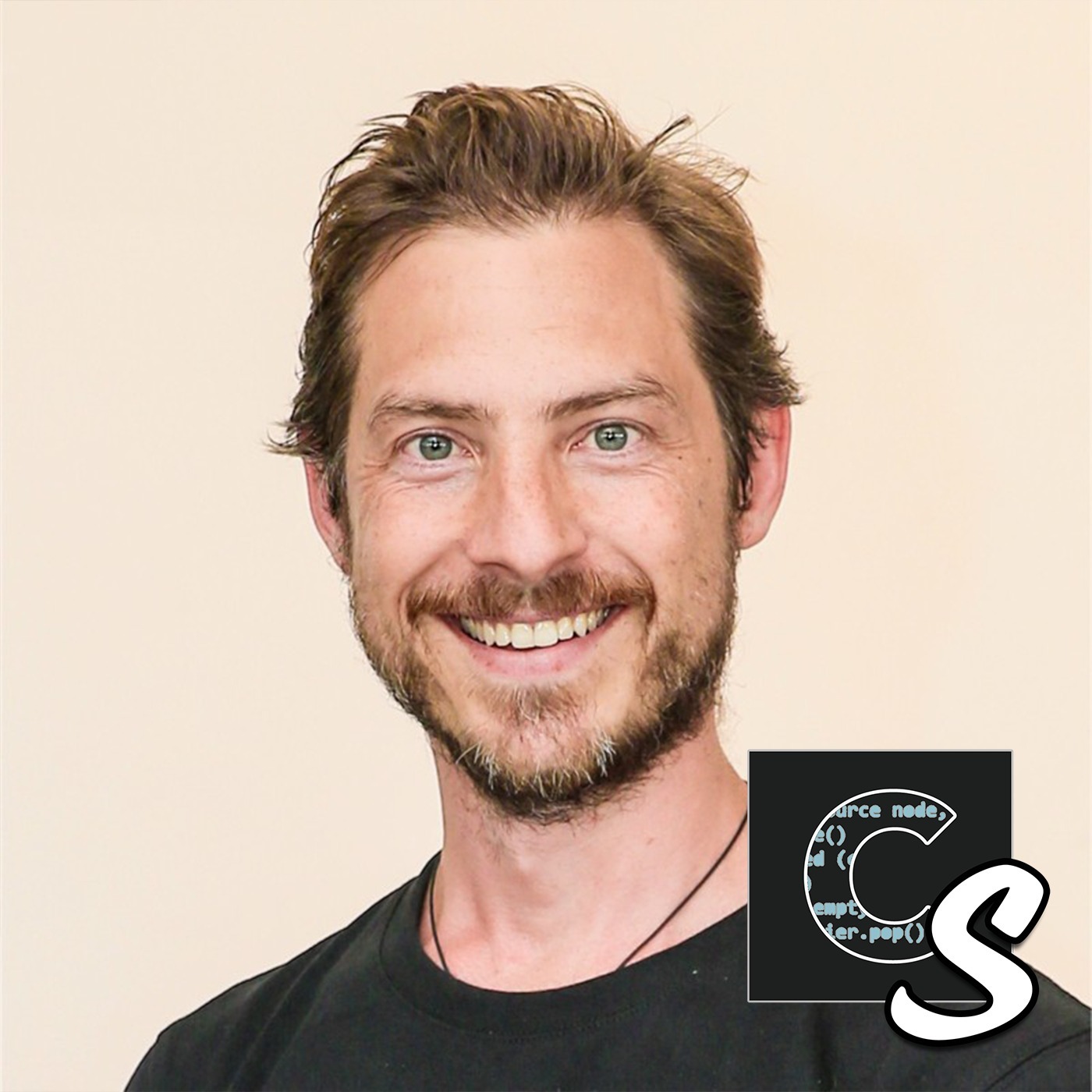
Mitchell Hashimoto started programming in middle school, teaching himself how to code through open source libraries and zip files he could download on the internet. He is a pilot, and owns his own plane, which happens to be a Cirrus. He spends an hour a day studying or practicing flying, and even takes his wife and dog up every now and again, when there is something worth flying to and they can make the oxygen work for then dog.
He attended college at the University of Washington in Seattle, which was located equidistance from Amazon, Google and other cloud focused infrastructure companies. As you could guess, there was a huge focus on this topic while he was at school, and he was able to gain access to vast resources through his computer lab and research projects. It was these projects put the ideas in his head, on what he could make in order for infrastructure to work better.
This is the creation story of HashiCorp.
Links
- Website: https://www.hashicorp.com/
- LinkedIn: https://www.linkedin.com/in/mitchellh/
Leave us a review on Apple Podcasts
Amazing tools we use:
- If you want the best publishing platform for your podcast, with amazing support & people - use Transistor.fm
- Want to record your remote interviews with class? Then, you need to use Squadcast.
- Code Story uses the 1-click product ClipGain, sign up now to get 3hrs of podcast processing time FREE
Credits: Code Story is hosted and produced by Noah Labhart. Be sure to subscribe on Apple Podcasts, Spotify, Pocket Casts, Google Play, Breaker, Youtube, or the podcasting app of your choice.
Current Sponsors:
Checkout our Stacklist! https://stacks.codestory.co/
Check out our Patreon!
Hosted by Noah Labhart | Technical Founder & Startup Mentor.
Our Sponsors:
* Check out Granola and use my code granola.ai/CODESTORY for a great deal: https://granola.ai
* Check out Perplexity and use my code pplx.ai/codestory for a great deal: https://www.perplexity.ai
Advertising Inquiries: https://redcircle.com/brands
Privacy & Opt-Out: https://redcircle.com/privacy
[SPEAKER_01]: you know, I had no intention, literally zero intention of ever building a business around these tools. [SPEAKER_01]: I thought they were just going to be open source and free and at best they would help my resume to get a better job. [SPEAKER_01]: Like that's what that was going through my mind as a, you know, in college. [SPEAKER_01]: And so, I didn't try to build this mega generic tool that solved everyone's problems. [SPEAKER_01]: I built Vagron and my MVP was [SPEAKER_01]: I want a really awesome DM-based development workflow for Ruby on Rails because that's what I do every day, and that's sort of how it formed.
[SPEAKER_01]: I'm Mitchell Hashimoto, I'm the founder and CTO of Hashicorp.
[SPEAKER_00]: This is Code Story, a podcast bringing you interviews with tech visionaries who share in the critical moments of what it takes to change an industry and build and lead a team that has your back. [SPEAKER_00]: Okay. [SPEAKER_00]: I'm your host, Noel Labpart. [SPEAKER_00]: And today, how Mitchell Hashimoto created the tool set to create consistent workflows across your infrastructure. [SPEAKER_00]: All this and more, on Code Story,
[SPEAKER_00]: Mitchell Hashimoto started programming in middle school, teaching himself how to code through open-source libraries and zip files he could download on the internet. [SPEAKER_00]: He's a pilot and owns his own plane, which happens to be a serious. [SPEAKER_00]: And he spends an hour a day studying or practicing flying, and even takes his wife and dog up every now and then. [SPEAKER_00]: When there's something worth flying to, and they can make the oxygen work for the dog. [SPEAKER_00]: He attended college at the University of Washington in Seattle, which was located equidistance from Amazon, Google, Microsoft, and other cloud-focused infrastructure companies.
[SPEAKER_00]: As you could imagine, there was a huge focus on this topic while he was at school, and he was able to gain access to vast resources through his computer lab and research projects. [SPEAKER_00]: It was these projects that put the ideas in his head on what he could make in order for infrastructure to work better.
[SPEAKER_00]: This is the creation story of Hashtagore.
[SPEAKER_01]: So Hashtagore is a company that builds up portfolio of tools based in open source, aimed at cloud adoption, multi-cloud, and just in general, like infrastructure automation and getting more out of your infrastructure. [SPEAKER_01]: The way I sort of got into that was during college. [SPEAKER_01]: I went to college at University of Washington in Seattle, and being there, I was sort of equidistant, more or less, from Amazon, Microsoft, and Google, and that office actually became the Google Cloud Office eventually.
[SPEAKER_01]: And there was a huge sort of infrastructure mindset during the time I was there. [SPEAKER_01]: EC2, AWS, and just announced EC2 and S3 about a year prior to me going to college. [SPEAKER_01]: Because of that, I sort of had access to all that through our computer science program and some research projects I was on, so I just sort of dipped my toes in that and realized how difficult certain aspects of the cloud were especially, you know, at that time, AWS literally had two products. [SPEAKER_01]: Yeah, that sort of motivated me and got me into the cloud space.
[SPEAKER_01]: and got a bunch of ideas in my head of what to build. [SPEAKER_01]: I think the benefit of being in college is that you are, in some sense, you're ignorant about how the real world works. [SPEAKER_01]: And so, you know, everyone was convinced in academia and my little bubble that cloud was sort of the future, and then when I tried to use it, [SPEAKER_01]: I was like, well, it's missing a ton of things. [SPEAKER_01]: And as I graduated and went into sort of industry, I realized startups were basically trying to use clouds still and still struggling.
[SPEAKER_01]: And so that's when I really started to work on these with Ernest. [SPEAKER_00]: Let's step into the MVP. [SPEAKER_00]: This will be interesting to hear what was the first MVP. [SPEAKER_00]: So tell me about that MVP. [SPEAKER_00]: How long it took you to build and what sort of tools you used to get it off the ground? [SPEAKER_01]: Yeah, it's a little bit tricky to answer in the case of hash group because we are a portfolio company. [SPEAKER_01]: So we have eight to ten products depending how you count.
[SPEAKER_01]: The first one I built was called vagrant, which was a VM based development tool. [SPEAKER_01]: And that was so all I was in college. [SPEAKER_01]: And... [SPEAKER_01]: I have this whole ethos where I choose to only work on problems that I have for myself. [SPEAKER_01]: That's just something I love to do. [SPEAKER_01]: I like to solve my own problems and I like to be motivated. [SPEAKER_01]: That motivates me in particular about stuff I'm working on and so product sort of followed this order of the challenges that I saw more or less early on in the first one was Vagre.
[SPEAKER_00]: It's interesting. [SPEAKER_00]: So I didn't know the vagrant was the first one. [SPEAKER_00]: When you're building that first that first product, you know, what sort of tools did you have to use? [SPEAKER_00]: And when you're building that first product to there's trade-offs and decisions, right? [SPEAKER_00]: Do you have to make? [SPEAKER_00]: You know, you're trying to get something out there that works, that solves a problem, and I love it that solves a problem for you. [SPEAKER_00]: Tell me about those trade-offs and decisions and what sort of tools you're using.
[SPEAKER_01]: To give you context of the time, I was a Ruby on Rails web developer, like junior web developer, just, you know, getting started in industry. [SPEAKER_01]: I was probably in my, between my second and third year in college. [SPEAKER_01]: So, very junior. [SPEAKER_01]: And so, I used Ruby to build vagrant. [SPEAKER_01]: It's the only entrepreneur tool that we ended up using Ruby for. [SPEAKER_01]: And I also, you know, had very little money as a college student. [SPEAKER_01]: So, [SPEAKER_01]: I knew I wanted to use DMs and dig into that, but I couldn't use cloud-based ones because they cost money, like EC2 cost money, and I didn't want to pay for it.
[SPEAKER_01]: And the only free sort of hypervisor was virtual box, which was owned by a son at the time, and it's not Oracle. [SPEAKER_01]: And so I built Vagarin around virtual walks for that reason. [SPEAKER_01]: I think as I got older and met more people using Vagarin, they always asked me like, why'd you choose this to do that? [SPEAKER_01]: And it's kind of funny because it wasn't so much a decision. [SPEAKER_01]: It was just I didn't have money and that was the only option I had. [SPEAKER_01]: But it ended up working out and you asked about sort of constraints and focusing the problem and that MVP and for me, the MVP for Vagarin was really focused around my own use case.
[SPEAKER_01]: You know, I had no one [SPEAKER_01]: The Glitterly is zero intention of ever building a business around these tools. [SPEAKER_01]: I thought they were just going to be open source and free and at best they would help my resume to get a better job. [SPEAKER_01]: That was going through my mind as a, you know, in college.
[SPEAKER_01]: I didn't try to build this mega generic tool that solved everyone's problems. [SPEAKER_01]: I built Vaker into my MVP was I want a really awesome DM based development workflow for Ruby on Rails because that's what I do everyday and that's sort of how it formed. [SPEAKER_00]: So you have an MDP bill that's based in Ruby. [SPEAKER_00]: It's solving a problem for you. [SPEAKER_00]: You know intention to build a business around it. [SPEAKER_00]: How did the product progress from there?
[SPEAKER_00]: How did you mature it and what sort of caused you and helped you shape the roadmap? [SPEAKER_01]: So the first year of vagrant, no one really used it. [SPEAKER_01]: There was very few downloads the entire year. [SPEAKER_01]: And you know, I was a little bummed about that because I did think I built something pretty cool and it felt like people were telling me that I didn't. [SPEAKER_01]: After about a year, things started picking up and I started meeting people and meetups and stuff who were excited about vagrant, which surprised me and I started learning more, and that sort of motivated me to focus more on this and start building features for other people, not just myself into the product.
[SPEAKER_01]: Over the next couple of years, I did that for free, still didn't plan to build a business, but that sort of gave me the foundation of the community, as well as the minimal sort of industry, I don't know, experience or respect or whatever you want to call it that I needed to start the next thing, the next product and build a company around it. [SPEAKER_00]: So let's double back a little bit then and back to another MVP story. [SPEAKER_00]: So tell me maybe about like terraform or vault.
[SPEAKER_00]: Tell me about those, the inception stories. [SPEAKER_00]: Vagrant was the only one built in Ruby. [SPEAKER_00]: So would you build terraform and how long did it take you to get kind of a an MVP out there? [SPEAKER_01]: So everything else is running go. [SPEAKER_01]: So we switched to go and sort of as the transitioning of the background to Terraform and Ball, I think what's funny is for the first few years of the company. [SPEAKER_01]: People just didn't call us potchagor-branded and they just called us like sort of the background company.
[SPEAKER_01]: And then at a certain point, probably four or five years ago now, we were fighting that fight and that fight and that, and then a certain point is switched and now or sort of like the Terraform Vault company, which is nice in some ways, and then it's a different challenge and another, yeah, so we have Terraform Vault now, which are very popular and let me think, I mean, I think Terraform is sort of interesting to talk about the MVP. [SPEAKER_01]: Funny enough, Vault doesn't go back to college, but Terraform does go back to college.
[SPEAKER_01]: I wrote a blog post in college when Cloud Formation was announced,
[SPEAKER_01]: And I reposted this on in a just a public gist, but basically I said, you know, I'm super excited about CloudFormation, I think it's pretty limited how it is now, I think they're gonna iterate really well, but I'd really love to see like an open source alternative that worked with multiple Cloud Platforms and stuff, and I posted that four years before I ever built Terraform, and so when we swung back around a Terraform, I already had that idea a long time ago, I just thought someone else would build it.
[SPEAKER_01]: I didn't think it was gonna be me, it had to be me who built it, [SPEAKER_01]: And I re-discovered and I re-discovered and I re-discovered and I re-discovered and I re-discovered and I re-discovered and I re-discovered and I re-discovered and I re-discovered and I re-discovered and I re-discovered and I re-discovered and I re-discovered and I re-discovered and I re-discovered and I re-discovered and I re-discovered and I re-discovered and I re-discovered and re-discovered and re-discovered and re-discovered and re-discovered and re-discovered and re-discovered and re-discovered and re-discovered and re-discovered and re-discovered and re-discovered and re-discovered and re-discovered and re-discovered and re-discovered [SPEAKER_01]: led to the creation of Terraform, which really the MVP for me was build a better cloud formation for AWS, but like sort of on the foundation knowing that beyond the MVP was going to be a bunch more cloud providers and different types of things you could manage as code.
[SPEAKER_00]: So, same question is vagrant then, so as you were building that, you know, what sort of decisions and trade-off did you have to make? [SPEAKER_01]: I think the biggest risk to terraform, the biggest trade-off we had to make, was we felt it would be very difficult to support everything in AWS, especially because they were just really AWS was just starting the inflection point where, [SPEAKER_01]: They started shipping a ton of services. [SPEAKER_01]: I think when we started Terraform, it was still pretty manageable.
[SPEAKER_01]: Like I think you could take any infrastructure person. [SPEAKER_01]: They could probably name like every AWS service. [SPEAKER_01]: It was still at that point. [SPEAKER_01]: And we're just about to lose control of that. [SPEAKER_01]: And so the biggest risk was how do we build something like cloud formation and support all the features of AWS because it's huge. [SPEAKER_01]: You know, we looked at machine generation and stuff and it just... [SPEAKER_01]: A big motivator of Terraform was to build this more human-oriented tooling.
[SPEAKER_01]: You could sort of tell a cloud formation was like machine-generated clients and stuff. [SPEAKER_01]: It just didn't... it felt like you were like writing the API and JSON. [SPEAKER_01]: I didn't feel good. [SPEAKER_01]: And I wanted to sort of build something that felt better. [SPEAKER_01]: And so we decided to hand-bright every single resource and customize it even if it didn't match the API one-to-one and that was a trade-offs order We decided to make saying we believe that you know 90% of people use less than 10% of Amazon's resources out there for the most part You know something like that that wasn't based in data or anything I was just based in experience and and I guess [SPEAKER_01]: and that's how we ship Terraform and that worked for a really long time.
[SPEAKER_00]: That assumption makes a ton of sense, especially if you look, you gaze upon AWS and you see its complexities. [SPEAKER_01]: Yeah, and it's a funny thing because even to this day, Terraform supports a huge surface area of AWS now, but even to this day, the reaction from folks who use something like Terraform, [SPEAKER_01]: If it doesn't support one thing that they need, if it supports, like, let's say they're building the infrastructure and it supports 50 things they need, but the 51st thing is not supported.
[SPEAKER_01]: It's amazing how useless feeling the tool becomes in that moment. [SPEAKER_01]: You know, that's what people say, and it's a bit hyperbolic to say to useless, but really like, if that's a cornerstone piece of your infrastructure, and you can't automate that, the whole idea of infrastructure's code breaks down. [SPEAKER_01]: We really sprinted right away after Terraform's release in the supporting, as much as we can, and now that there's so many more esoteric features of AWS, we really just wait until a community member says, I need this weird thing, and then we add support.
[SPEAKER_00]: So then as a whole, as a hashy corp, how did you go about building your team? [SPEAKER_00]: So start it out, you built Vagrin, but then you started getting some success with that and then you start growing into portfolio products. [SPEAKER_00]: So how did you go about building your team? [SPEAKER_00]: And what did you look for in those people to indicate that they were the winning horses to join you? [SPEAKER_01]: I think this answer would change, uh, depending on the phase of the company, you know, I think picking as you put them winning horses for an early stage startup versus, you know, middle and late stages, they're very different types of people.
[SPEAKER_01]: I think that's one of the reasons that you rarely see people stick through all these different phases because, uh, [SPEAKER_01]: You sort of need different people for each one and and people don't adapt as well. [SPEAKER_01]: But early on, it was pretty straightforward for us. [SPEAKER_01]: We wanted to find people that were passionate about the ideas we had and could accept a little bit of uncertainty at a job given we were early stage. [SPEAKER_01]: the people we tapped for that and asked that they're interested were all the people that contributed regularly to our open source projects.
[SPEAKER_01]: So we just went through GitHub and literally opened well, we actually just literally sorted by commit count reverse, you know, descending and is before GitHub did this for you. [SPEAKER_01]: So we just did it on the command line and started emailing these people based on the email they had and their gick commits. [SPEAKER_01]: You know, it's funny to look back on it now, especially because I was much younger and much more naive about companies and also the commitment that I was asking these people and stuff like that, you know, the emails were so casual.
[SPEAKER_01]: I look back and some of the people that are still the company. [SPEAKER_01]: I literally said them in two sentence emails like, hey, I started a company around this thing, do you want to work on it full time? [SPEAKER_01]: Done, I know what they're deep down, and it's kind of strange, but it worked out really well. [SPEAKER_01]: How many people did you hire just off of commits if you remember? [SPEAKER_01]: Uh, I don't know the exact count, but I'll say it's probably like 15 to 20 people.
[SPEAKER_01]: That's a large amount. [SPEAKER_01]: That's a really cool story. [SPEAKER_01]: Yeah, and that's, uh, we don't need to get into this, but that's sort of led into why our company is now remote, right? [SPEAKER_01]: We're remote from the beginning, and that was sort of a big part of it. [SPEAKER_00]: I think I know the answer to this, given the nature of the product and the portfolio that you've built, but how do scalability factor in to how you approach things? [SPEAKER_00]: I assume it factors into everything, but even from the early days of vagrant, you know, maybe terraformed to or any of the other products, how did you go about thinking about this and making sure that the products are scalable themselves, even though they're tools around scalability.
[SPEAKER_01]: You know, this is an informal differentiation we make, but it is a differentiation I like to make, which is we have two different types of tools. [SPEAKER_01]: I call them sort of the runtime tools, and then more of the pipeline tools, the runtime tools are the ones that run sort of on the server side, that would be like vault and console and no mad and those server side components in the pipeline tools are more of the ones you'd run on your desktop, which are like vagrant. [SPEAKER_01]: and pack her in Terraform.
[SPEAKER_01]: I like to break those up because the properties we've learned over the years that we need to build to make this scalable really fall into those two categories. [SPEAKER_01]: The stuff you do for Terraform doesn't really make sense for vaults and vice versa. [SPEAKER_01]: I think early on. [SPEAKER_01]: We made this bet, which was kind of scary at the time, but we made this bet on distributed systems and raft and being, you know, looking at things like vault and realizing these are core infrastructure components, you know, these are things that they don't gracefully degrade if they go down this brings down your infrastructure and so we optimized up time over everything else at the beginning.
[SPEAKER_01]: We wrote, you know, one of the first raft libraries for go that we still use to this day and a lot of other products use that like I think it helps database Charter thing uses our raft library for example. [SPEAKER_01]: We sort of just built into that. [SPEAKER_01]: I think something we think about with scaling is [SPEAKER_01]: You know, try to run through your head what has to happen for each request and and where to the hot spots and don't optimize them just like think about it. [SPEAKER_01]: Just know it's there and we don't optimize it until we know it's the bottleneck.
[SPEAKER_01]: But if we think about it that way, you could realize like, oh, this is if we expect this to be a thousand requests per second. [SPEAKER_01]: This is going to suck and things like that. [SPEAKER_01]: And when we think about vault, we really think hard about that sort of element. [SPEAKER_00]: So, as you step out on the balcony and you look across all you've built at Hashie Corp, what do you most proud of? [SPEAKER_01]: I think I'm most proud of two things. [SPEAKER_01]: I'll get more specific with one of them, but there's the tech side and the people side.
[SPEAKER_01]: I mean, I think the tech side, I'm really most proud of the impact that these ended up having, because like I said at the beginning, [SPEAKER_01]: I never thought we'd build a business around it or that many people would use it. [SPEAKER_01]: And, you know, a cost-rover's company now has a significant number of the Fortune 500 using our tools, and that's just not what I ever expected. [SPEAKER_01]: But it's more specifically on the tech. [SPEAKER_01]: I mean, I think Terraform probably is the one that I think changed sort of a mindset of representing things as code, more things as code, and having that pick up and be successful is really, really cool.
[SPEAKER_01]: But I do want to mention the people side
[SPEAKER_01]: You know, I write the code early on. [SPEAKER_01]: That's stuff like that. [SPEAKER_01]: So I fixated on my goals around the code and I never stepped back and thought about it until it already happened the human impact that the company would have and just to be able to like look and see you know the companies over a thousand people now that [SPEAKER_01]: You know, a thousand people get their paycheck and pay their bills and live their lives, you know, partially thanks to this software that we wrote.
[SPEAKER_01]: And that's really cool that we could have both the industry impact through the technology and the human impact of having a set of people that are really happy in their jobs and being able to do this for money. [SPEAKER_01]: And that's pretty cool. [SPEAKER_00]: Well, let's flip the script a little bit. [SPEAKER_00]: Tell me about a mistake you made and how you and your team responded to it. [SPEAKER_01]: Yeah, there's a lot of mistakes, I want to mention I guess a big one, and the biggest one I could think of is our first commercial product out of Hoshikorp.
[SPEAKER_01]: It was a total failure. [SPEAKER_01]: scratched it, pivoted the company, commercially, pivoted the company, and it's sort of defined what hot you should work with today. [SPEAKER_01]: So early on, we had this portfolio of open source products and our first commercial product. [SPEAKER_01]: The thesis we had was, our community uses most of these products, they're looking for a way to unify them and have sort of a single management interface to all of them. [SPEAKER_01]: That was our first commercial product, and [SPEAKER_01]: It was a total mess, like, if you read any sort of, like, whatever, lean startup type books, we broke every rule and paid the price because of it because we didn't really talk to customers.
[SPEAKER_01]: We were building a product for a problem we didn't have. [SPEAKER_01]: And so we stepped out of that box and that bit us. [SPEAKER_01]: And we build the whole thing and started selling it before, you know, we started getting more feedback. [SPEAKER_01]: So we didn't iterate really. [SPEAKER_01]: And what we ended up building was something nobody wanted. [SPEAKER_01]: And then we got into the sunk costs thing where we started selling it, and we weren't listening to what people were telling us.
[SPEAKER_01]: And it wasn't until maybe six months of very difficult sales. [SPEAKER_01]: We closed a few sales, but very difficult sales, that we looked at the notes and thought about the meetings we had and realized, you know, oh my god, our customers are telling us the answer, which is [SPEAKER_01]: You know, we'd go into these meetings and pitch this product for like half an hour, and they would be like, Okay, thanks. [SPEAKER_01]: Is there a commercial version of Vault? [SPEAKER_01]: You know, that would be what they said, like they would dismiss the presentation immediately.
[SPEAKER_01]: And it's so obvious in hindsight, it's so funny how cloud it. [SPEAKER_01]: We could get his humans and what we built, but when we looked back, we realized, okay. [SPEAKER_01]: We're not making a lot of money. [SPEAKER_01]: The sales process is really painful. [SPEAKER_01]: Customers are asking for single product commercial versions. [SPEAKER_01]: And the people who want to pay us are big businesses is what we also found out. [SPEAKER_01]: Because we at the time we had this thesis that anybody could buy this.
[SPEAKER_01]: You swipe a credit card and anybody could buy this. [SPEAKER_01]: But it just doesn't work that way. [SPEAKER_01]: And so, [SPEAKER_01]: The wake-up moment was we had this very difficult board meeting, and we weren't like chastised or anything. [SPEAKER_01]: It's more of like when your parents don't say you did anything wrong, but you could tell you did something wrong. [SPEAKER_01]: It was sort of like that. [SPEAKER_01]: We left the board meeting, and me and my co-founder were silent on the entire drive-back to San Francisco.
[SPEAKER_01]: The board meeting was South of San Francisco, and when we got into our office, we sort of sat there as like a Friday night, and we were sitting in the office, and we said, you know, okay, that didn't go well. [SPEAKER_01]: And we decided just as a thought experiment, if we could clean slate everything, if we could start over and there was no sunk cost or anything, what would we do differently? [SPEAKER_01]: And we drew out on a whiteboard, per product commercial versions, what features would that have, how would we package it, sell it only to and her prices, you know, build the team around that.
[SPEAKER_01]: We looked at this whiteboard and, luckily, you know, startups, you know, we're like 30 people a time. [SPEAKER_01]: It was Friday night, and we said, let's do it. [SPEAKER_01]: And so Monday morning, we call our board. [SPEAKER_01]: We put together in all hands, and we said, we're switching strategies. [SPEAKER_01]: We're now an enterprise company. [SPEAKER_01]: This product we had, we're sun setting it. [SPEAKER_01]: Sales of that are going to stop immediately. [SPEAKER_01]: And we're going to go full focus on one product.
[SPEAKER_01]: And the first product is going to be Volta in a prize. [SPEAKER_01]: And then, you know, it'll go from there. [SPEAKER_01]: And that one decision informed us on we hired a CEO, VP of sales, you know, it made it really clear who were hiring after that and it set the stage for the company and so that's what we continued to do today. [SPEAKER_01]: So that was, that was a huge mistake. [SPEAKER_01]: And I think if we didn't recognize it, you know, that could have been a company ending at a certain point.
[SPEAKER_00]: So who influences the way that you work? [SPEAKER_00]: CEO, CTO, an architect, really, any person, who influences the way that you work, and who do you look up to and why? [SPEAKER_01]: uh, there's a lot of people, um, depending on what I'm, you know, what, what area I'm focusing on. [SPEAKER_01]: I think as an engineer, this has changed over time, but the person today that as an engineer, I just respect so much and read everything they write and, and all that is, uh, Russ Cox, who's one of the core go people currently, but his resume is impressive.
[SPEAKER_01]: Um, or he's, I think he's the [SPEAKER_01]: I just love how he's a very measure twice cut once kind of person and the way he communicates is very thoughtful and kind and inclusive and the code he writes in the technology he makes is just amazing and so you know I like to try to learn from that and try to be similar in that way and yeah it's really impressive guys. [SPEAKER_00]: Well, last question, Mitchell, you're getting on a plane and you're sitting next to a young entrepreneur who's built the next big thing.
[SPEAKER_00]: They're jazz about it. [SPEAKER_00]: I can't wait to show it off to you. [SPEAKER_00]: I can't wait to show it off to the world. [SPEAKER_00]: Maybe they're in college and they just heard about a new product that came out and they're jazzed to build something, something for it. [SPEAKER_00]: What advice do you give that person having gone down this road? [SPEAKER_01]: I almost have the situation happening right now, except that I don't know if they have the next big thing yet, but I have a cousin in college who's just discovering startups and technology and is super hyped about it, and I had to think about what I say and I think the advice I would give people is that, you know, you know a lot less than you think, and that's okay, it's actually probably a really good thing.
[SPEAKER_01]: But to make up for that, you really have to surround yourself with people who are good at what they do and interested in helping you learn. [SPEAKER_01]: You know, at the time, you know, 10 years ago when we started Hausha Corp, you know, you don't know what you don't know. [SPEAKER_01]: And it turns out that I didn't know a lot. [SPEAKER_01]: There was a lot I had to learn. [SPEAKER_01]: But I, you know, got lucky, you got introduced to the right people and got the right investors and stuff to help me out and there's a difference between, you know, someone who's going to give you a check or get involved because of ego or just wanting to put you on a resume or whatever and they just want to stand back and let you do your thing versus someone who is getting involved doesn't have an ego and just generally wants you to succeed and those are the people you want to be around because they're going to nudge you in the right direction and teach you things.
[SPEAKER_01]: And so, that's what I would tell people is, you know, you can't do it alone, find advisors, find folks that can help you, and don't chase names, don't chase fame, none of that stuff. [SPEAKER_01]: Success will come if you just focus on sort of building the fundamentals. [SPEAKER_00]: That's great advice. [SPEAKER_00]: Little Mitchell, thank you for being on this show today. [SPEAKER_00]: Thank you for being on Code Story and telling the creation story or the inception story of Hashtagorp.
[SPEAKER_00]: No problem is really fun. [SPEAKER_00]: and this concludes another chapter of Coat Story.
[SPEAKER_00]: Coat Story is hosted and produced by Noah Labport. [SPEAKER_00]: Be sure to subscribe on Apple Podcasts, Spotify or the podcasting app at your choice. [SPEAKER_00]: Support the show on patreon.com slash coat Story for just five to 10 bucks a month. [SPEAKER_00]: And when you get a chance, leave us a review. [SPEAKER_00]: Both things help us out tremendously.
[SPEAKER_00]: and thanks again for listening.
Latest Season of the Podcast is Sponsored By





 Apple Podcasts
 Spotify
 Castbox
 Player FM
 Pocket Casts
 YouTube
 Overcast
 Castro
 Goodpods
 Moon FM
 Podbean
 Podcast Addict
 Podcast Republic