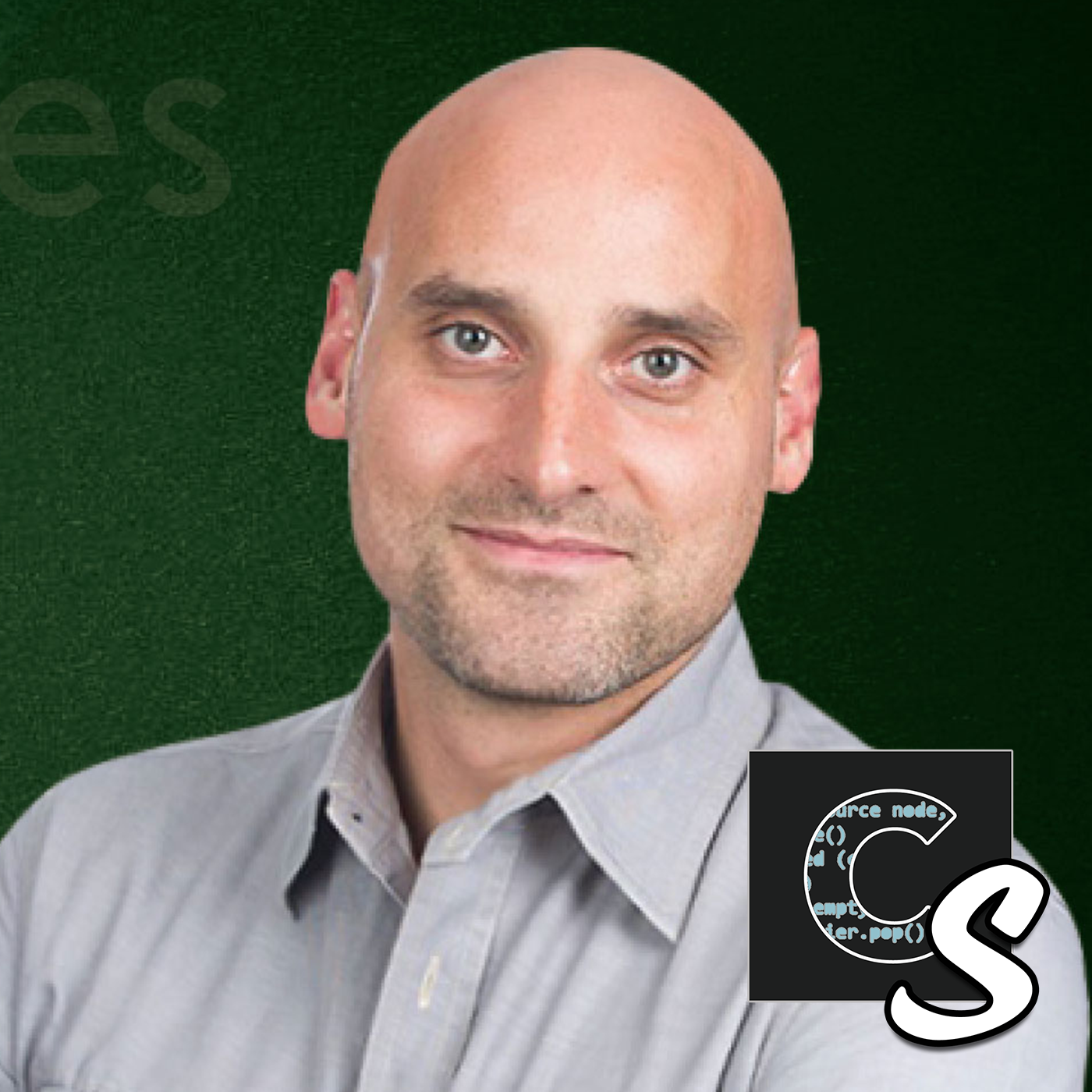
Balancing Innovation and Hardening: How Zeta Global Learned to Move Fast Without Breaking Enterprise Customers
When you’re a startup founder with deep convictions about how technology should work, moving into the enterprise world can feel like a rude awakening. That’s exactly what happened to Christian Monberg when Zeta Global acquired his AI marketing company in 2017.
“I had deep conviction that everything in the world should be real-time,” Monberg recalls. “Data the longer it sits around the less relevant it is.”
But then he met his first enterprise customers. They had terabytes of data they needed to migrate into the system. They wanted batch processing. They wanted guarantees. They wanted SLAs. Suddenly, Monberg’s startup idealism collided with business reality.
This is the story of how Zeta Global—and Monberg’s team—learned to build not just brilliant technology, but a brilliant business.
From Startup Conviction to Enterprise Pragmatism
Zeta Global is a marketing technology company built on AI. The company has been developing AI solutions for marketing use cases for years, leveraging proprietary datasets and infrastructure that differentiate them in a crowded market. But when they acquired Monberg’s company, they weren’t just buying technology—they were making a strategic bet on AI’s future in marketing.
The problem? Monberg’s platform had been built for small and mid-market businesses. It was nimble, innovative, and real-time. Enterprise customers? That was a different beast entirely.
“We had to strengthen our platform to be enterprise-grade,” Monberg explains. “And that took some time.”
That’s putting it mildly. The first year after the acquisition was largely spent on one thing: hardening the system to meet enterprise SLAs. Real-time streaming had to coexist with batch architecture. Reliability had to trump bleeding-edge features. The team had to accept limitations they never thought they would.
The Hard Lesson: Building a Business vs. Building Technology
For a technical founder coming from Silicon Valley, this was a humbling experience. Monberg’s first offices were in Soma, surrounded by brilliant PhDs and engineering minds building groundbreaking technology. But many of those companies shut down because they built technology, not businesses.
“There’s a big difference between building a business and building technology,” Monberg says.
Zeta, by contrast, was and still is an expert at building a business. They understood cash flow, customer relationships, and sustainable growth. That meant bringing rigor to every decision—not just technical decisions, but business decisions.
It was a gift wrapped in a reality check.
The Innovation vs. Hardening Paradox
Here’s the fundamental challenge that every product engineering organization faces: How do you innovate while maintaining stability? How do you move fast while protecting customers who depend on you?
“Every product engineering organization is confronted by the need to balance innovation with hardening,” Monberg explains. “That’s process. That’s culture. That’s what you build, how you build it, how you spec it.”
And this problem doesn’t discriminate. Facebook faces it. Meta faces it. A 12-person startup faces it. The scale changes, but the challenge remains.
In Zeta’s early days post-acquisition, the team struggled with this balance. They didn’t have the systems in place to innovate rigorously while building hardened technology. Innovation sprints and hardening sprints felt like competing priorities.
The solution wasn’t to choose one over the other—it was to embed hardening into the innovation process itself.
Evolution: From Traditional to AI-Native Development
As Zeta evolved its development practices, something interesting happened. The company transitioned from traditional software development lifecycle, to AI-assisted development, to AI-native development.
With each transition, the controls and safeguards became easier to embed into the fabric of the process. The team could move faster—they now ship about 200 epics per quarter—while maintaining the rigor their customers demand.
“Being able to do that in an environment that’s safeguarded took many years of growth and reinvention,” Monberg says. “But once you live through it, you’ve got the calluses to show that you know how to swim that hammer.”
The key insight? Different teams, different customers, and different situations require different trade-offs. There’s no one-size-fits-all answer. The real skill is understanding why a customer bought your product in the first place, and making decisions that honor that commitment.
Building the Roadmap: Listening to Customers
So how does Zeta decide what to build next? Monberg points to three pillars:
1. Customer Input (The Primary Source)
Zeta hosts an annual customer advisory board event before ZetaLive, their signature industry event. This CAB event drives a lion’s share of product roadmap inputs. It’s followed by organized beta programs with real customers providing feedback on new features and directions.
The company even has “supercab members”—trusted customers and advisors who review paper prototypes early and provide feedback before anything is built.
2. Industry Research
Zeta works closely with analysts and pays attention to competitive moves. But this isn’t about copying competitors—it’s about understanding where the industry is heading.
3. Vision
The final pillar comes from the accumulated wisdom of people who’ve worked in the industry for decades. They can see the next logical step because they understand the problems deeply.
“I believe the best products are a hard left,” Monberg says. “It may be disruptive technology, but you’re not disrupting consumer expectations with a hard left. It’s something that you could almost anticipate they might want next if you sat down and listened hard enough.”
Hiring for Autonomy and Mastery
Building a team that can move at Zeta’s pace—200 epics per quarter—requires a specific type of person. Monberg looks for three qualities:
- Mastery: People who are experts in their domain or adjacent domains
- Business Context: Understanding how their work connects to the broader business
- Ownership Mindset: Treating what they build as their own
The result? Teams that work with autonomy because they have the skills and alignment to do so effectively.
“Every month we get together and talk about the importance of autonomy,” Monberg explains. “But to give people autonomy, they have to be masters at what they do, and they need to have really tight alignment with the business so they can be loose and go and work with autonomy.”
The Takeaway
Christian Monberg’s journey from startup founder to CTO of an enterprise AI marketing platform isn’t just a story about technology. It’s a story about growth, humility, and the hard work of building something that lasts.
The next time you’re facing a conflict between moving fast and maintaining quality, remember: it’s not about choosing one or the other. It’s about building systems, culture, and teams that can do both.
Want to hear the full story? Listen to the complete episode with Christian Monberg on Code Story to dive deeper into how Zeta Global is building the AI marketing cloud, the specific decisions that shaped their engineering culture, and the lessons that apply whether you’re scaling from 12 people to enterprise or building the next big thing in your garage.