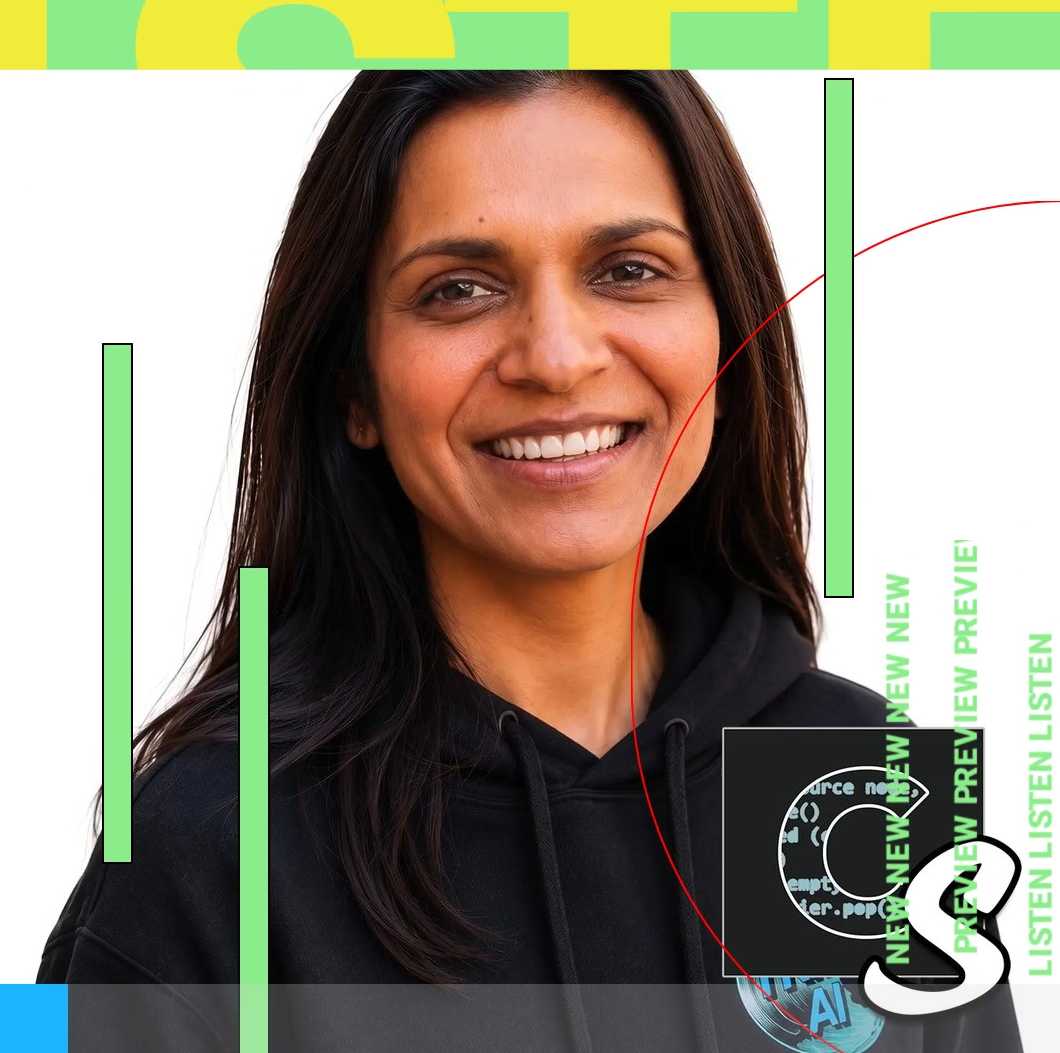
Earning Autonomy: Pooja Brown on Moving AI from Pilots to Real Production Value
Enterprise AI is stuck in the valley of death between impressive demos and actual production systems. Pooja Brown, CTO at Tribe AI, shares how she’s building the infrastructure to get AI products shipping, scaling, and creating real value for Fortune 1000 companies—and why the MVP in enterprise AI looks nothing like you’d expect.
The Gap Between AI Hype and Enterprise Reality
There’s a moment happening right now across the enterprise world. Companies are seeing what AI can do—the impressive demos, the proof-of-concepts, the pilots that show incredible promise. But then comes the hard part: actually getting these systems into production where real people do real work.
This is the gap Pooja Brown is focused on closing at Tribe AI.
“What’s exciting about Tribe is there’s all this development happening outside,” Pooja explains. “The frontiers are busy with making models do more and more. But how do these big large enterprises, the Fortune 1000s, get value off of that? That’s what Tribe does.”
Pooja brings a unique perspective to this problem. She grew up in India in a manufacturing family—her parents ran factories making fertilizer and medicine. She learned early that a product isn’t done until it’s in the customer’s hands. That manufacturing mindset, combined with two decades of building systems at companies like DocuSign and Stitch Fix, has shaped how she thinks about enterprise AI.
And she’s not alone in recognizing this problem. In 2019, Tribe made a bet that every company would become an AI company. That might have seemed contrarian then, but it’s obviously coming true. The problem? Most enterprises are stuck between demos and what it actually means to have a real product run.
What Enterprise AI Actually Looks Like
When you talk to Pooja about MVPs, you need to throw out everything you know about MVP development. At Tribe, an MVP isn’t a demo. It’s not a pilot. It’s a real product doing real work—usually jobs that people have been doing by hand.
“When I think about MVPs, those are not demos, not pilots,” Pooja says firmly. “These are real products doing jobs that usually people do by hand. How do we bring that to life with real systems, real users that are getting value?”
Here’s where it gets interesting: as CTO, Pooja doesn’t get to pick just one MVP. The goal is to make all projects successful. Every enterprise they walk into needs an MVP, and they all follow the same pattern.
The process starts with identifying the right use case—one that’s actually doing real work in production. From there, it’s about building what Pooja calls the “steel thread”: the path from an engineer’s laptop all the way to production within an enterprise’s security plane, governance, and guardrails.
This includes everything:
- Moving code from development to production
- Setting up evaluation loops
- Creating audit trails
- Implementing security guardrails
- Getting actual users to see value
“This is the major substrate that we need to put in place,” Pooja explains. “Once you have that, the number of use cases that can then start compounding value and leveraging that—those become infinite.”
The Autonomy Trade-Off
One of the biggest decisions Pooja has had to make since joining Tribe as their first CTO is how much autonomy to give AI agents on day one. Everyone wants fully autonomous systems running immediately. But you have to earn that right.
“You need to actually earn the right to do that,” she says. “One run at a time.”
This is a lesson Pooja learned the hard way at DocuSign when transforming critical systems. You can’t just replace the old way with something better—you have to bring people along on the journey. You have to understand what the old system did, how it worked, and then help people transition, even when the new system is demonstrably better.
There’s another layer here: when you transform systems, you discover all the workarounds and bugs that have been baked into the old way of working. Those often need to be ported over as new capabilities or features in the new system.
The same applies to AI agents. They need to understand the work your people do, create output, get corrections from your team, and then compound on those corrections over time. It’s a journey, not a destination.
How does Pooja cope with these constant trade-offs? By naming them out loud.
“The coping mechanism is you got to name these tradeoffs out loud,” she says. “You got to bring the teams along—your teams, your customers’ teams. So they know why some things are slowing down to create value for you later.”
Building the Roadmap as Models Evolve
Here’s something that keeps most CTO’s up at night: the models keep getting better. Two years ago, AI models could help a person do the work. Today, they can do the work themselves. That means your product has to change fundamentally.
Pooja describes this as a journey from “digitizing the keyboard” to “digitizing the human.” Originally, the product was a smart layer on top of a model—the person still did the job while the model drafted or suggested. Now, the agent actually does the job and the person checks it. Every correction makes the agent a little more autonomous.
How does Tribe build their roadmap in this rapidly changing landscape?
The roadmap is determined by two things:
1. What’s happening with model development at the frontier labs
2. What outcomes the actual businesses are trying to achieve
The first product in an enterprise is always expensive because you’re setting up integrations, evaluations, security—all the infrastructure needed for agents and models to work effectively. But the second product? You leverage all of that infrastructure. Then you start looking at what the enterprise actually wants to achieve and how your system can unlock that.
“The big thing for us is how do you create these learning loops in AI products where these loops outlive our engagement,” Pooja explains. “We know what an AI product is—an AI product is a product that gets better as it’s being used.”
Building the Right Team
Tribe is growing fast—hundreds of people over the year. But the hiring bar doesn’t change. Everyone at Tribe, at every level, still builds. Everyone does the same take-home exercise Pooja did when she took the CTO job.
This is the manufacturing mindset showing up again. A product isn’t done until it ships. A team member isn’t ready until they’ve proven they can build.
The Real Work of Enterprise AI
What Pooja is building at Tribe isn’t flashy. It’s not the kind of thing that makes headlines or gets you on podcasts (well, okay, it does, but you know what I mean). It’s the unglamorous work of taking the incredible breakthroughs happening in AI research and making them actually work inside real companies, with real security requirements, real governance, real people.
It’s the difference between a demo and a product. Between a pilot and production. Between “this is cool” and “this is creating value.”
And honestly? That’s where the real opportunity is.
Want to hear more about building AI systems that actually ship? Listen to the full episode with Pooja Brown on Code Story to dive deeper into her approach to enterprise AI, the infrastructure challenges of scaling AI products, and what she’s learned building systems at DocuSign, Stitch Fix, and now Tribe AI.