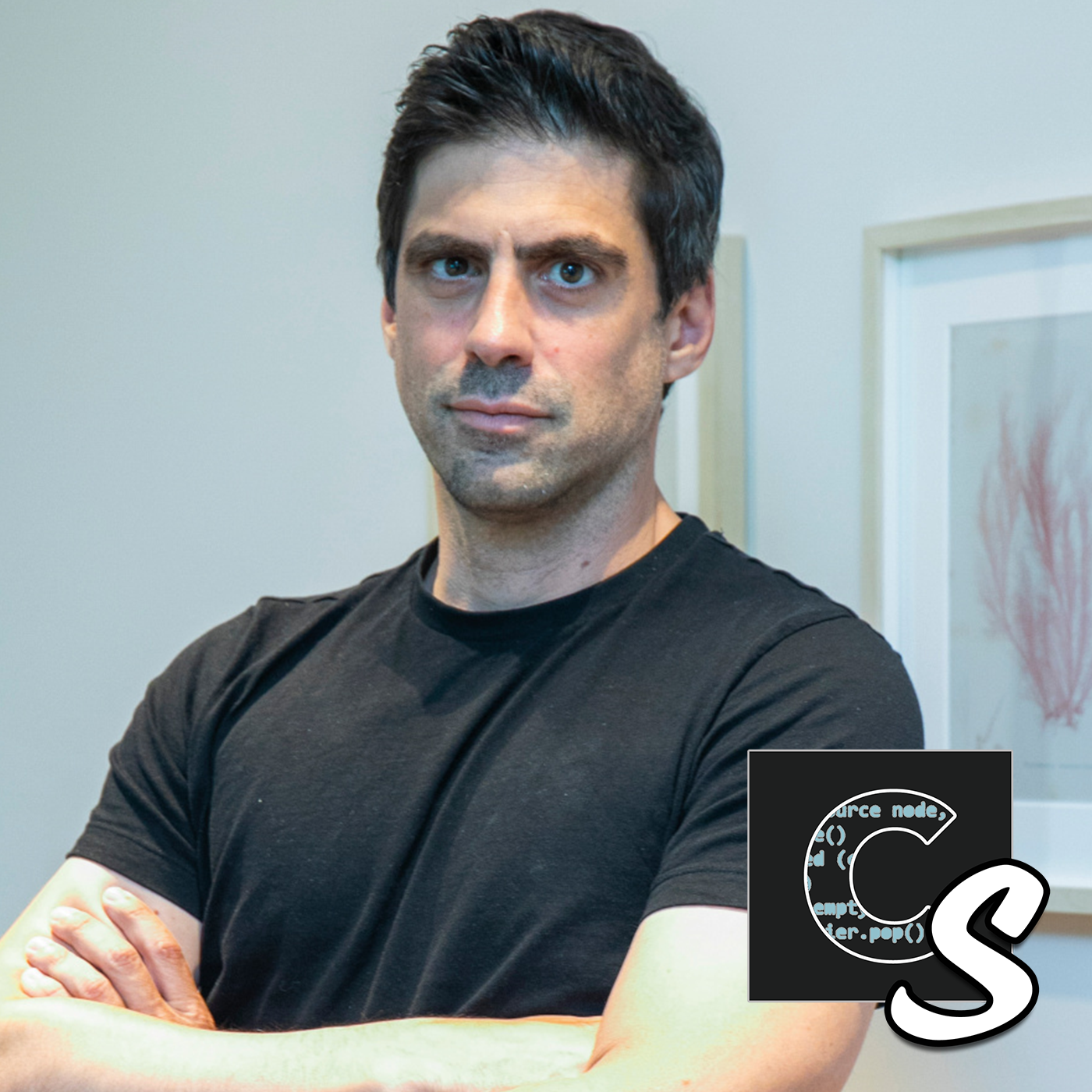
The Token Winter Is Coming: Why AI Hype Doesn't Equal Business Value
From Barcelona to Building the Future
Dave Garcia’s journey to founding Pensero reads like a tech origin story written in the best way possible—with humility, curiosity, and a healthy dose of skepticism about hype.
Originally from Barcelona, Dave started coding at seven years old on a Commodore 64, writing BASIC code and immediately getting hooked when he created his first infinite loop. That childhood curiosity never left him. Throughout his career in fintech, travel tech, and various other domains, he kept returning to one thing: artificial intelligence. Whether he was building fraud prediction systems or genetic algorithms for airline connections, AI was always part of the toolkit.
But then something changed. A few years back, Dave made a conscious decision to step away from the grind. He had a young family, and he wanted to be present for them. He took his time off, spent it with his wife and kids, and planned to enjoy the break.
Then ChatGPT happened.
When Everyone’s Building, What Do You Actually Build?
Like many of us, Dave watched as AI suddenly became ubiquitous. It wasn’t just a tool for engineers and researchers anymore—it was at the supermarket, in conversations with grandparents, everywhere. The technology was genuinely changing how people lived and worked. And Dave, being Dave, couldn’t help but investigate.
“I felt pretty much like probably everyone else,” he says. “Like this thing is magic, we need to build something really good.”
But here’s where Dave’s approach diverges from the typical AI gold rush mentality. Instead of jumping into whatever seemed hot, he asked himself a critical question: Where am I actually good?
He considered education—but he’s not a teacher. He thought about healthcare—but he’s not a doctor. He realized that building in domains where he was an outsider would mean he’d never truly understand the problems he was trying to solve.
What he was good at? Two things: managing people and building technology. He’d spent his career leading teams, helping junior developers grow into senior engineers, and developing people. So he asked: what if he could combine his passion for people management with AI?
That’s where Pensero was born.
The MVP That Proved the Concept
When Dave and his co-founder (a former boss who’d worked with him at a company they sold to Square) started building, they didn’t have the luxury of unlimited resources. It was Dave, some Python, Django, and a MacBook M1 running tiny AI models through an AWS tunnel.
Two weeks. That’s how long it took to build the initial proof of concept.
The result wasn’t pretty. It had a login system, user management, GitHub integration, and connections to Git workflows. It was functional enough to demonstrate the core idea: AI that understands the impact of engineering work on teams and business outcomes, not just the activity metrics.
“It was not even an MVP, it was a POC,” Dave explains. “But it felt right and it showed the concept.”
And that’s all you really need at the beginning.
The Art of Strategic Ruthlessness
Here’s a lesson that applies to far more than just AI startups: when resources are limited, you have to be absolutely ruthless about what you cut.
Dave initially built features that made sense in his head. When he showed them to people, they fell flat. So he made a decision: instead of doing 20 things in a mediocre way, he’d do a few things exceptionally well.
He cut 70-80% of the features and concentrated on the core technology—the part that actually differentiated Pensero from everything else. Yes, the UI was awful. Yes, investors told him to raise money and hire a designer immediately. But when he clicked that button and showed them what the technology could actually do, they understood the potential.
“I decided to invest 90% of my time and energy in building the AI core,” he says. “The technology looks promising, so I can accept that this is ugly.”
This is the kind of thinking that separates founders who ship from founders who get stuck in perfectionism.
The Feedback Loop That Actually Works
Once Pensero had some traction and initial customers, Dave faced the classic founder dilemma: how do you decide what to build next?
His answer? Don’t build a rigid roadmap. Instead, establish a relentless feedback loop with your customers.
All of Pensero’s early customers are on Slack with the team. They talk daily, sometimes weekly at minimum. And here’s the key insight: customers give you ideas constantly, often without even realizing it. They’ll mention a problem in passing, and Dave will spend his weekend implementing a solution because the signal is so clear.
“Before AI, you had to have a roadmap because you had to align a lot of people,” Dave explains. “Building a feature could take weeks. Now it can take hours or even less.”
This changes everything about how you approach product development. Instead of a detailed six-month roadmap, Pensero has a high-level vision of where they want to be. The details get built in real-time, in conversation with customers, in short feedback loops, with weekly releases.
The Real Differentiator: Impact Over Inflation
The title of this episode—“The Token Winter Is Coming: Why Code Inflation Fails to Ship Real Business Value”—hints at the core thesis of what Pensero is actually solving.
In the AI era, it’s easy to measure tokens. It’s easy to measure API calls. It’s easy to measure activity. But what’s hard—and what actually matters—is measuring impact. Did this AI tool actually help the team ship better code? Did it improve the developer experience? Did it reduce bugs? Did it make managers better at their jobs?
That’s what Pensero is built to answer. And in a world where everyone’s trying to justify their AI spending, that’s not just a feature—it’s a necessity.
The Lesson for Builders
Dave’s story offers several lessons for anyone building in this AI-saturated landscape:
-
Ego is the enemy. Dave’s willingness to listen to customers over his own expertise is what keeps the product grounded in reality.
-
Focus ruthlessly. Build the thing that differentiates you, even if everything else looks rough. Polish comes later.
-
Move fast. The speed of AI development means you can iterate weekly. Use that advantage.
-
Measure what matters. In a world obsessed with metrics, focus on the metrics that actually indicate success.
-
Build in your domain. Dave didn’t try to build in healthcare or education. He built in the space where he had deep expertise and credibility.
Want to hear more about how Dave built Pensero from a MacBook M1 to a platform serving hundreds of customers? Listen to the full episode to get deeper into the technical decisions, the fundraising journey, and how he thinks about scaling when AI changes the game so quickly.
Listen to Code Story now and subscribe for more stories from technical founders building the future.