
S10 Bonus: The Non-Deterministic Gaming Frontier: Using Generative AI to Create Endless Replayability and Walk-to-Earn Rewards with Rohith Varanasi, Co-Founder of Block Party
In this episode
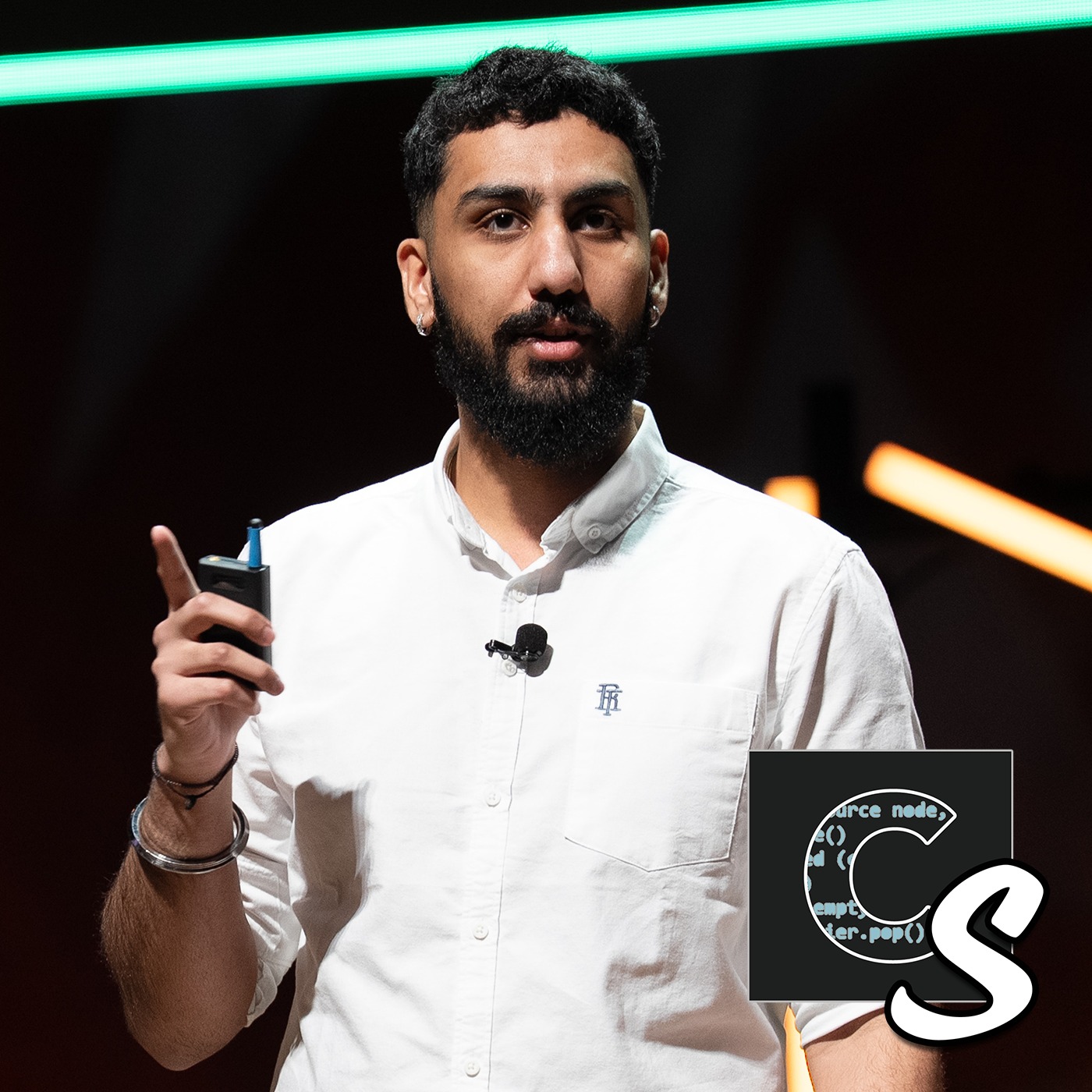
Rohith Varanasi grew up in Jersey and had a chill childhood, playing videos games and sports from a young age. He wanted to learn how to build a video game, and upon googling it, decided he should build a website first. At that point.. he was hooked on coding. He got into jailbreaking the playstation and writing real code to mod games. Eventually, he got into hackathons and ended up building a web browser based on SMS called Cosmos - which went viral. Outside of tech, he is into paddle, loves going to the gym, and hanging with his girlfriend and their 1 year old cat.
Ro and his co-founder have been building a bunch of different consumer products. The latest product they built allows people to earn in game rewards by walking, and do so in a non-deterministic way. Under the hood, they are using generative AI to create endless outcomes, and optimal replay-ability.
This is the creation story of Block Party.
Sponsors
Links
Current Sponsors:
Checkout our Stacklist! https://stacks.codestory.co/
Check out our Patreon!
Hosted by Noah Labhart | Technical Founder & Startup Mentor.
Our Sponsors:
* Check out Granola and use my code granola.ai/CODESTORY for a great deal: https://granola.ai
* Check out Perplexity and use my code pplx.ai/codestory for a great deal: https://www.perplexity.ai
Advertising Inquiries: https://redcircle.com/brands
Privacy & Opt-Out: https://redcircle.com/privacy
[SPEAKER_03]: And so we have this constant feed of things that we can build. [SPEAKER_03]: And I think right now, things are constantly moving around as we get new users on the pond board and priorities are shifting. [SPEAKER_03]: But primarily, like the focus our North Star is, can we make this like fun? [SPEAKER_03]: Not going to make this fun just one time, but can we make this be an infinite source of fun? [SPEAKER_03]: The sort of helps us align with our roadmap and our decision-making of, okay, does this sort of get us closer to that vision of building these infinite games that never run out of content and are dynamic and are shaped by the players that play them?
[SPEAKER_03]: My name is Rohit Varanasi, and I'm the co-founder and CEO of Blackheart.
[SPEAKER_04]: This is code story. [SPEAKER_04]: A podcast bringing you interviews with tech visionaries. [SPEAKER_04]: Six, six months moonlighting goes. [SPEAKER_00]: Lassin on the backhand. [SPEAKER_04]: Who share what it takes to change an industry? [SPEAKER_00]: I don't exactly know that. [SPEAKER_04]: She told many girls to get rocked. [SPEAKER_01]: Who built the teams that have their back company is its team's help each other. [SPEAKER_01]: She was proud of her team. [SPEAKER_04]: Keeping scalability top of mind.
[SPEAKER_04]: All that infrastructure is that you have to eat and fighting it as we occur. [SPEAKER_04]: Total waste of time. [SPEAKER_04]: The stories you don't read in the headlines. [SPEAKER_02]: It's not an easy thing to achieve. [SPEAKER_04]: To yourself, it's best to do it often. [SPEAKER_04]: Try to begin. [SPEAKER_04]: To ride the ups and downs of the start-up line. [SPEAKER_02]: To really, it's not just about technology. [SPEAKER_04]: All this and more on code story. [SPEAKER_04]: I'm your host, Snow Labpart.
[SPEAKER_04]: And today, however, they're not seen. [SPEAKER_04]: Built away for you to explore the town. [SPEAKER_04]: and have an adventure earn rewards all with your friends.
[SPEAKER_04]: Rohit's there and I see grew up in Jersey and had a chill childhood playing video games and sports from a young age. [SPEAKER_04]: He wanted to learn how to build a video game and upon googling it, decided he should build a website first and at that point, he was hooked on coding. [SPEAKER_04]: He got into jail breaking the PlayStation and writing real code to mod games. [SPEAKER_04]: Eventually, he got in the hackathons and ended up building a web browser based on SMS, called Cosmos, which went viral.
[SPEAKER_04]: Outside of tech, he's into paddle who loves going to the gym and hanging with his girlfriend in their one-year-old cat. [SPEAKER_04]: Rowan is co-founder have been building a bunch of different consumer products. [SPEAKER_04]: The latest product they've built allows people to earn in-game rewards by walking and do so in a non-deterministic way. [SPEAKER_04]: Under the hood, they are using generative AI to create endless outcomes and optimal replayability.
[SPEAKER_03]: My co-founder and I, we've been working on different products over the past couple years. [SPEAKER_03]: The most reason one that we launch is called Block Party. [SPEAKER_03]: Block Party turns a whole world into a giant human monopoly more or less. [SPEAKER_03]: You connect your health kit, you walk around and you earn a game currency for just walking. [SPEAKER_03]: One step equals one energy, that's what we call it. [SPEAKER_03]: And then you can use your steps and energy to buy buildings in the real world.
[SPEAKER_03]: On top of that, we have different items that are just scattered all over the world. [SPEAKER_03]: They're called drops and you can go open these drops and you'll get different items like referring raregings and you can use these items to go upgrade your buildings and build up your green buildings, sort of territory build. [SPEAKER_03]: The core part of all of this that we're excited about is that it's not deterministic. [SPEAKER_03]: Every game that's existed up until today is somewhat deterministic in the sense that every asset, every screen, every whatever that you see that a player sees has to have been pre-computated, it has to have existed before that player did that option.
[SPEAKER_03]: I think what we're doing though, I'm really excited about is we're using GenaI as a core mechanic, so really there's infinite endless outcomes. [SPEAKER_03]: And I think we're at a paired-up shift in gaming using Gen AI, like I said, allows us to create endless and like infinite replayability or experience of a like infinite replayability. [SPEAKER_03]: That's a high level overview of Block Party. [SPEAKER_03]: It's this really fun mobile game where there's endless outcomes every option you do, results in a unique visual and experience that no one has seen before.
[SPEAKER_04]: So tell me about the NVP for Black Party. [SPEAKER_04]: What is it? [SPEAKER_04]: First version of the product, look and feel like, and what sort of tools we're using to bring it to life?
[SPEAKER_03]: Right now, we're iOS only, so our mobile app is fully native, it's all Swift. [SPEAKER_03]: For the NVP, we really sprinted and God, like V0.1 out in maybe four weeks, three weeks, and our back end is all elixir. [SPEAKER_03]: I started using Lixer at my first startup and I just fell in love. [SPEAKER_03]: It's been such a pleasure to work with and it only gets to be getting better and more magical. [SPEAKER_03]: Especially as we start to do more real-time things, it's just so well built for that.
[SPEAKER_03]: Yeah, so like I mentioned earlier, server service host is on render and our back end is fully a Lixer with Phoenix as the web server. [SPEAKER_04]: On the MVP version, when you're building any MVP, you've got to make certain decisions and tradeoffs about how you're going to approach building the solution, creating the product. [SPEAKER_04]: So tell me about some of the decisions and tradeoffs you had to work through. [SPEAKER_04]: Maybe you're on tech debt or a pro, or like you said, you're on iOS only, kind of working through those decisions, tell me about how you made those and how you cope with the decisions.
[SPEAKER_03]: I'm sure you understand this but it's everything is a trade-off at this point and at this early stage one we're so resource constraint. [SPEAKER_03]: It's really easy for technical founders to get into this mindset of oh let me just keep building all the features because I'm technical and I can build. [SPEAKER_03]: We've definitely fallen to that trap in the past. [SPEAKER_03]: With this go around, we've been very thoughtful. [SPEAKER_03]: And so for the MVP, I think we've been trying to keep a singular focus on what the player does when they get into the product, when they get into the game.
[SPEAKER_03]: The main objective is, can we make it fun? [SPEAKER_03]: And I think once we aligned ourselves on what is the main objectives that we're trying to bring to the player when they first land in the app is, let's get them to have fun and quickly as possible. [SPEAKER_03]: And for as long as possible, the first iteration didn't have any like generative visuals. [SPEAKER_03]: It was mainly like generative text. [SPEAKER_03]: We are like, maybe this is good enough because like just seeing the text come out might be magical enough and we shipped it and we shipped like a very rough alpha to just like close friends and it was terrible.
[SPEAKER_03]: It was awful. [SPEAKER_03]: No one played it. [SPEAKER_03]: We didn't play it. [SPEAKER_03]: And so we kept iterating and then I think we got really lucky with some of the releases that have been coming out around that time when we realized that the first separation without gender individuals was pretty
[SPEAKER_03]: was right around when the latest like image gen model that came out and it's fluxed by Black Forest Labs, the least August 1st, and we got super lucky. [SPEAKER_03]: And it's really the first truly low latency state-of-the-art image gen model that's fast enough and cheap enough to work in a game completely. [SPEAKER_03]: We got really lucky with that, and so we've just been blessed in that front.
[SPEAKER_04]: So you've got the MVP working, right? [SPEAKER_04]: You've got this new GNI library, and at the timing's great, you've upleveled the experience and you're getting that traction. [SPEAKER_04]: How are you going about building your roadmap of what's next, right? [SPEAKER_04]: How are you going to mature and progress the product? [SPEAKER_04]: And I'm curious about how you decide what is the next most important thing to build or to address with the product. [SPEAKER_03]: One of the things that we're doing somewhat differently with Block Party is we shipped it super early in a very rough state, just to test if the mechanics work.
[SPEAKER_03]: And when you're going to expect a ton of retention of the first version, it was buggy, we just sent it to some close friends, but people seem to be obsessed. [SPEAKER_03]: We've had a couple of users who have like 15 hours of screen time. [SPEAKER_03]: We have a really strong early user base that is constantly providing feedback, submitting feature requests, sharing it with their friends and talking about what works and what doesn't report. [SPEAKER_03]: And they're considering bugs and things that could be better or more efficient or UX improvements.
[SPEAKER_03]: And so we have this constant feed of things that we can build, and I think right now things are constantly moving around as we get new users are on the top board and priorities are shifting, but primarily like the focus our nodes star is, can we make this like fun? [SPEAKER_03]: And I think I want to double click into that a little bit. [SPEAKER_03]: I think when I say, can we make this fun? [SPEAKER_03]: It's not going to make this fun just one time. [SPEAKER_03]: Can we make this be an infinite source of fun?
[SPEAKER_03]: that sort of helps us align with our roadmap and our decision-making of, okay, does this sort of, get us closer to that vision of building these infinite games that never run out of content and are dynamic and are shaped by the players that play them. [SPEAKER_04]: So this will be interesting. [SPEAKER_04]: Tell me about team. [SPEAKER_04]: How do you go about building your team? [SPEAKER_04]: Is it just you or do you have multiple people that you're working with and what do you look for in those people that indicate that they're the winning horses to join you?
[SPEAKER_03]: Right now, the product team has made my co-founder. [SPEAKER_03]: My co-founder Steven is the CEO. [SPEAKER_03]: Probably one of the best iOS engineers I know. [SPEAKER_03]: He makes me better about product and about thinking about product. [SPEAKER_03]: the cliché, you're the sum of the five people you spend your time with, and I think I really take that to heart, and Steven and I both really are obsessive about product, and I think that's what we really look for in any new team members that we are looking to bring on.
[SPEAKER_03]: We're talking about a couple of really exciting candidates that obsessed with product and they're obsessed with block party and they're actually users and they reached out and saying hey can we come help which is so cool to see. [SPEAKER_03]: The things that I really look for are you driven? [SPEAKER_03]: Honestly, do you just care? [SPEAKER_03]: Do you care enough about the thing that you're going to be doing? [SPEAKER_03]: And do you have a good attitude? [SPEAKER_03]: Do you have the positive outlook?
[SPEAKER_03]: I think those are the three main things.
[SPEAKER_04]: I want to flip to scalability, and this will be interesting, because there's so many different ways to approach this, but I'm curious about how you approached scalability. [SPEAKER_04]: You know, is it built to scale efficiently from day one or with scale in mind, you know, maybe abstractions, things like that, or are there interesting areas where you've had to fight it as you'd from? [SPEAKER_03]: We're still pretty small, so in terms of scale, thankfully we're able to just run off through the server.
[SPEAKER_03]: I think we'll probably be able to make that last for quite a bit of time, and that's honestly thanks to the beam and Arlang and Elixir, the whole ecosystem. [SPEAKER_03]: And I think when we are ready to scale and we're getting to the point where we have to scale, Elixir actually makes that relatively easy for us. [SPEAKER_03]: It has built in like networking, it has built in message passing between nodes, and so you could run a bunch of different instances of your Elixir server, and they would just all act as one.
[SPEAKER_03]: In that regard, I think choosing a Leicester set us up for scalability. [SPEAKER_03]: Some of the interesting challenges we've had is ingesting every single building in the world. [SPEAKER_03]: There's a lot of buildings in the world, and so we've done all the parts of Canada out all of the Continental US and a little bit of Mexico, but we just drew a giant bound box over the US and it got some Mexico guy Canada in there as well. [SPEAKER_03]: That was like 175 million buildings that we had to address to our Postgres DB.
[SPEAKER_03]: And so there was some fun stuff that we had to figure out how to wrangle that end to the Postgres DB. [SPEAKER_03]: I think we tried naively approaching it. [SPEAKER_03]: And I'm like, yeah, let me just, you know, ingest them in like batches of a 10,000, it was gonna take forever. [SPEAKER_03]: And so we had to come up with some creative ways to ingest 175 million records that once or in a very short period of time. [SPEAKER_03]: Honestly, we just didn't using AWS glue and it was the right way to do it.
[SPEAKER_03]: But that's probably the main scaling challenge that we've had for Black Party. [SPEAKER_04]: So, as you step out on the balcony and you look across all that you've built, what do you most proud of? [SPEAKER_04]: And I mean with Black Party specifically.
[SPEAKER_03]: I'm really proud of just how fast we've shipped in our momentum. [SPEAKER_03]: I think it's even now that I've been building consumer products for the past two years. [SPEAKER_03]: It's been shipping and I think somehow we just keep getting faster. [SPEAKER_03]: So that's been really cool to see and I think that's probably what I'm the most proud of. [SPEAKER_03]: It's just our velocity and our ability to iterate and ship features and respond to feedback and address any customer bugs or user bugs that show up.
[SPEAKER_03]: That's definitely the thing that I'm most proud of.
[SPEAKER_04]: Let's flip the script a little bit. [SPEAKER_04]: Tell me about a mistake you made and how you and your team responded to it. [SPEAKER_03]: Less of a block party, but I think just over the past couple of years, our biggest hand-strain is just not having an in-house designer. [SPEAKER_03]: I think design is just so important. [SPEAKER_03]: And for the long time, we would bring on part-time or work with a design agency. [SPEAKER_03]: And they're all great and we've had great experiences working with every single designer that's far, but I think it makes such a huge difference of having an in-house designer who is sold purposes to think about the product and the thing that everyone is working on.
[SPEAKER_03]: And so I think if I could do it all over again, we would probably bring out a design resource much earlier into the fold. [SPEAKER_03]: We're making some moves there to remedy that right now, but yeah, I just really wish we had a good
[SPEAKER_04]: So this will be fun, because it's early days and it's you and your co-founder, but what does the future look like for the product and for your team? [SPEAKER_03]: The last time there was a really big, like, paradigm shift or a new reckoning and gaming was when. [SPEAKER_03]: I guess there's two. [SPEAKER_03]: There's, like, Facebook releasing its, like, platform back in the day. [SPEAKER_03]: And then, the Zingapoker and Farmville and Mafia Wars, all of these came out. [SPEAKER_03]: And then that sort of carried on into, like, mobile gaming.
[SPEAKER_03]: that sort of gaming for everyone just like a widespread accessibility. [SPEAKER_03]: We're heading in this direction of like generative gaming like I've said over and over and they've really believed in that and so there's this rare opportunity and I think we're really well positioned to grow into this. [SPEAKER_03]: building the singa of generative game. [SPEAKER_03]: It's inevitable in my opinion that the future of gaming has some sense of generative AI and I think there's gonna be a whole new genre of games where the core tenant is generative AI.
[SPEAKER_03]: And I think that's the big ol' for us. [SPEAKER_03]: How can we be the ones to define and lead the next era of gaming? [SPEAKER_03]: A year down the line, we would love to ship another title. [SPEAKER_03]: Five years down the line have a portfolio of generative gaming titles. [SPEAKER_03]: for the team, Stephen and I are big fans of small but very effective teams. [SPEAKER_03]: We always look up to the WhatsApp's who did it all with 50 employees and the Instagram's. [SPEAKER_03]: And so I think that's where we would like to be is have a very focused and bad-ass team that is just able to crush it.
[SPEAKER_04]: Let's switch to you, Rho, who influences the way that you work. [SPEAKER_04]: In a person, there are many persons or something you look up to and why. [SPEAKER_03]: Take a cliche thing is, my parents, obviously they work their butts off to move to this country and [SPEAKER_03]: give me a wonderful life and a great childhood growing up. [SPEAKER_03]: And I think my dad's story is super inspiring, just grow up in a tiny village in India, my grandparents were cattle farmers. [SPEAKER_03]: And like, he had to tip a whole walk uphill.
[SPEAKER_03]: Two miles, both ways, to school. [SPEAKER_03]: Story that he would always tell me when I was younger. [SPEAKER_03]: I think he's been a huge inspiration. [SPEAKER_03]: Apart from that, I think just, I had a good mentor when I lived in Detroit.
[SPEAKER_03]: are people and just relationships. [SPEAKER_03]: And since then, I've made it a point to ask people who I really look up to to have some sort of like on official mentorship just if I can just have some questions about life or whatever. [SPEAKER_03]: And so I have a whole lot of, I have a handful of mentors that I regularly talk to. [SPEAKER_03]: They're definitely the ones who influence me the most. [SPEAKER_03]: As well as like, my best friends, I think, my best friends and are all doing really cool shit
[SPEAKER_04]: Last question, Ralph. [SPEAKER_04]: So you're getting on a plane. [SPEAKER_04]: And you're sitting next to a young entrepreneur who's built the next big thing. [SPEAKER_04]: They're jazzed about it. [SPEAKER_04]: They can't wait to show it off to the world and can't wait to show off to you right there on the plane. [SPEAKER_04]: What advice do you give that person? [SPEAKER_04]: Having gone down this road a bit.
[SPEAKER_03]: It's a roller coaster. [SPEAKER_03]: It's trapping. [SPEAKER_03]: That's my advice. [SPEAKER_03]: I think it's very common. [SPEAKER_03]: You go on social media on tech, Twitter, or whatever. [SPEAKER_03]: And you see all of the celebrations that are happening. [SPEAKER_03]: Everyone's life is going great.
[SPEAKER_03]: But I think the reality is like, when you're in the sea, it's a roller coaster. [SPEAKER_03]: The highs are high and the lows are low and if I was sitting on a plane and there was a young me sitting right next to me was chasped about the thing that you just built. [SPEAKER_03]: I would have loved to just have been told that it's a roller coaster. [SPEAKER_03]: The highs are going to be high and the lows are going to be low. [SPEAKER_03]: I think being a second time founder, you should have thicker skin in your heart and but first time founders.
[SPEAKER_03]: It's very easy to just tie your identity to the thing that you're building. [SPEAKER_03]: And I think that's super important and necessary for a little bit, but I think it can also get pretty toxic if you go overboard. [SPEAKER_04]: Absolutely. [SPEAKER_04]: Couldn't agree more. [SPEAKER_04]: Well, Rob, thanks for being on the show today, and thank you for telling the creation story of Black Party. [SPEAKER_03]: Thank you for having me, it's a very fun.
[SPEAKER_04]: And this concludes another chapter of Coat Story.
[SPEAKER_04]: code story is hosted and produced by no a lab part. [SPEAKER_04]: Be sure to subscribe on Apple podcast, Spotify, or the podcasting app at your choice. [SPEAKER_04]: And when you get a chance, leave us a review, both things help us out tremendously.
[SPEAKER_04]: And thanks again for listening.
Latest Season of the Podcast is Sponsored By







 Apple Podcasts
 Spotify
 Castbox
 Player FM
 Pocket Casts
 YouTube
 Overcast
 Castro
 Goodpods
 Moon FM
 Podbean
 Podcast Addict
 Podcast Republic