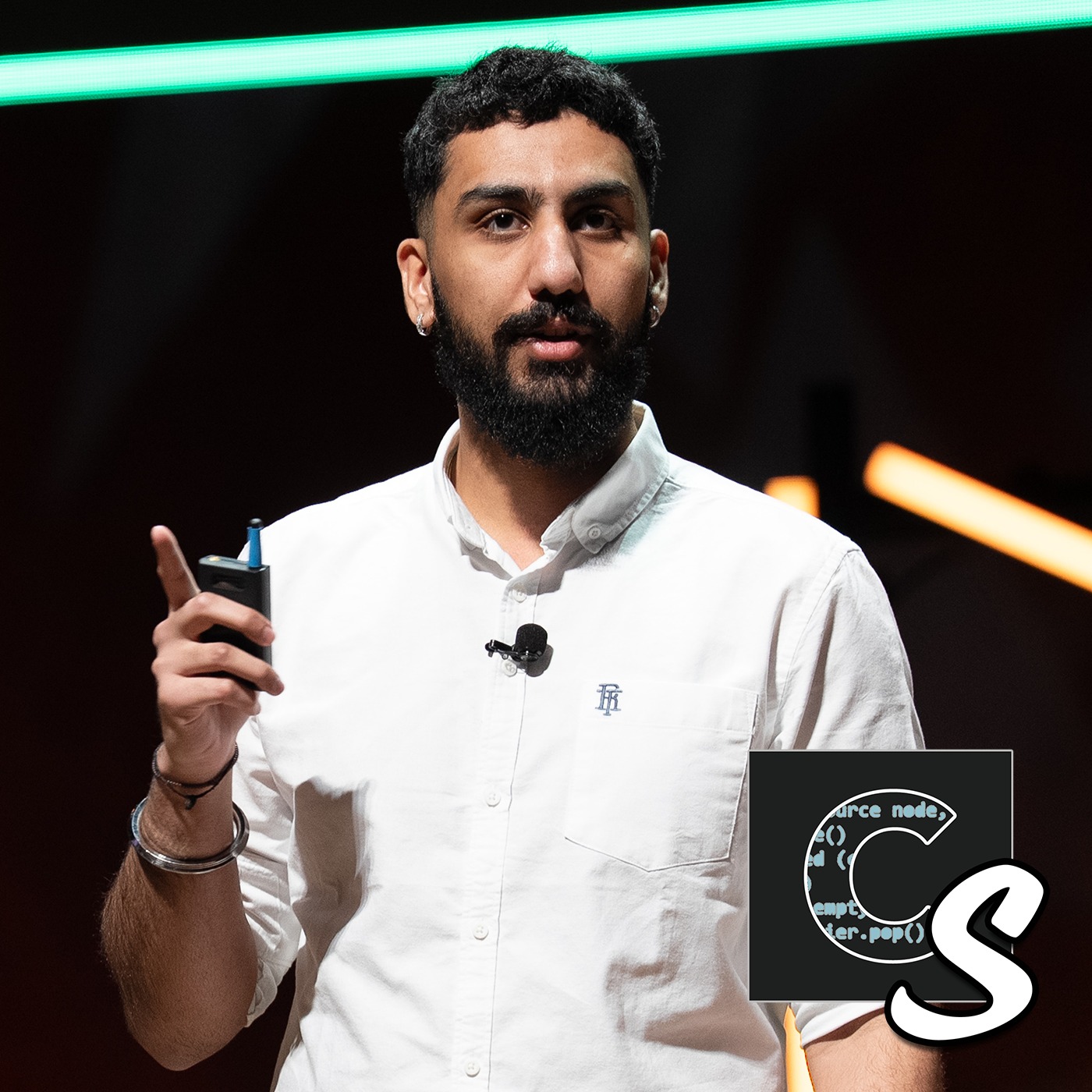
S12 Bonus: The Context Window Mirage: Why Generic Prompt Engineering Fails Enterprise Workflows and the Rise of Dynamic, Task-Specific RAG Orchestration with Ankit Dheendsa, Co-Founder & CEO of Morphos AI
In this episode
Ankit Dheendsa is a Canadian, born and raised, living outside of Toronto today. He claims he is fortunate to have a great ecosystem of professionals and mentor sin his area, to help advise him through thick and thin. When he was younger, he was inspired to pursue building things after he watched Iron Man for the first time. Outside of tech, he is an avid boxer and kickboxer. He loves to work out and train, but when he's away from the mat, he likes to read lots of books.
Ankit and his team quickly realized that although the advent of AI was exciting, hallucinations within LLMs area a big problem. They started to dig into how to lower and/or eliminate hallucinations, and ensure that the LLMs only hold onto the most important data. And they landed on a powerful approach to vector size reduction.
This is the creation story of Morphos AI.
Sponsors
Links
Current Sponsors:
Checkout our Stacklist! https://stacks.codestory.co/
Check out our Patreon!
Hosted by Noah Labhart | Technical Founder & Startup Mentor.
Our Sponsors:
* Check out Granola and use my code granola.ai/CODESTORY for a great deal: https://granola.ai
* Check out Perplexity and use my code pplx.ai/codestory for a great deal: https://www.perplexity.ai
Advertising Inquiries: https://redcircle.com/brands
Privacy & Opt-Out: https://redcircle.com/privacy
[SPEAKER_01]: We've actually built three products so far, but we're MVP and what we're going to market with this call katana. [SPEAKER_01]: And that is an infrastructure product. [SPEAKER_01]: It comes in the form. [SPEAKER_01]: It's a hybrid model of a software developer kit and an API. [SPEAKER_01]: And it allows companies that are utilizing rags, so retrieval augmented generation for Machature PT wrapper companies or whatever the case is, whenever you're utilizing data with AI. [SPEAKER_01]: It allows you to plug our system in very easily, but you can set it up in the span of an hour where the average developer and then you're able to reap the benefits of reducing your vector storage, increasing your accuracy, and decreasing latency in getting much faster query speeds.
[SPEAKER_01]: My name's Aikidinso. [SPEAKER_01]: I'm the Chief Technology Officer of Morphal Set Guide.
[SPEAKER_03]: This is Code Story. [SPEAKER_03]: a podcast bringing you interviews with tech visionaries. [SPEAKER_03]: Six, six months moonlighting goes. [SPEAKER_03]: It's the last and all of the backgrounds who share what it takes to change an industry. [SPEAKER_00]: I don't exactly know what to do. [SPEAKER_03]: It doesn't go as to get right. [SPEAKER_04]: who built the teams that have their bad company is its team's help each other, which is proud of our team. [SPEAKER_03]: Keeping scalability top of mind, all that infrastructure was up there.
[SPEAKER_03]: Yes, we've been fighting it as we grew up. [SPEAKER_03]: Total waste of time. [SPEAKER_03]: The stories you don't read in the headlines. [SPEAKER_02]: It's not an easy thing to achieve. [SPEAKER_03]: To get yourself a deficit of off, try to begin to ride the ups and downs of the start-up line. [SPEAKER_04]: Need to really want it. [SPEAKER_02]: Not just about technology. [SPEAKER_02]: All this and more on code story. [SPEAKER_02]: on your host, Noel Eppart. [SPEAKER_02]: And today, how I get to deemed so.
[SPEAKER_02]: It's cutting vector storage by 99.5%. [SPEAKER_02]: Without trading away, retrieval quality.
[SPEAKER_02]: Akat Deensea is a Canadian born and raised to living outside of Toronto today. [SPEAKER_02]: He claims he is fortunate to have a great ecosystem of professionals and mentors in his area to help advise him through thick and thin. [SPEAKER_02]: When he was younger, he was inspired to pursue building things after he watched Iron Man for the first time. [SPEAKER_02]: But outside a tech, he's an avid boxer and kickboxer. [SPEAKER_02]: He loves to work out and train, but when he's away from the mat, he likes to read a lot of books.
[SPEAKER_02]: Akken in this team quickly realized that although the advent of AI was exciting, hallucinations within the LLM's area was a big problem. [SPEAKER_02]: They started to dig into how to lower and or eliminate hallucinations and ensure that LLM's only hold onto the most important data. [SPEAKER_02]: And they landed on a powerful approach to vector size reduction.
[SPEAKER_01]: Morphos AI at its core is an AI infrastructure company. [SPEAKER_01]: And so, what does that mean, right? [SPEAKER_01]: What we specifically focus on is data. [SPEAKER_01]: And how do we reduce the size of it? [SPEAKER_01]: So, majority people are very pixeled and know the term compression. [SPEAKER_01]: It's been utilized for decades and it's very, very indemand and much needed technology in order to compress data across networks and workflows. [SPEAKER_01]: What we do is we focus on data specifically for AI workflows, and as a result, you end up working with what we call vectors.
[SPEAKER_01]: And when I talk about vectors, I'm not talking about the despicable me villain. [SPEAKER_01]: I'm talking about a multi-ternoll variable that describes data. [SPEAKER_01]: right, so you can describe anything in the form of vector. [SPEAKER_01]: I can describe a water bottle or an iPhone with different things, right? [SPEAKER_01]: What does it look like? [SPEAKER_01]: What are the colors? [SPEAKER_01]: What are the dimensions, the sizes, the materials? [SPEAKER_01]: All of those different data points describe a single object.
[SPEAKER_01]: And so that is what a vector is. [SPEAKER_01]: When you store, [SPEAKER_01]: documents or data and you want to have, let's just say, chatchipit, utilize those documents to give you answers, right? [SPEAKER_01]: If you utilize notebook LM or chatchipit to study or to do any type of work and your storing data, then you have to store them what we call a vector database and the problem with vector databases that they're so bloated that you're storing so much noise. [SPEAKER_01]: Right, so noise is data that you don't really need, but you have to store anyways.
[SPEAKER_01]: And as a result, we're starting to see RAM prices are going up. [SPEAKER_01]: A high-bend with memory prices are going up. [SPEAKER_01]: We've already sold up the supply for 2026, but everybody wants to put data centers everywhere. [SPEAKER_01]: I mean, Elon Musk has talked about putting them up in space. [SPEAKER_01]: And Kevin O'Leary wants to do, I think, a 40,000 acre project in Utah. [SPEAKER_01]: And energy prices are going up and all these things. [SPEAKER_01]: That is because of the underlying issue that the data [SPEAKER_01]: bloat is so large.
[SPEAKER_01]: And the need for this data is paramount because you need to utilize for AI workflows. [SPEAKER_01]: And so what we do is we reduce that data size by up to 99.5% without any form of compression. [SPEAKER_01]: And what this results in is you get much faster queries when you're utilizing a model let's us say Chacha BT or Claude or Gemini in conjunction with the data. [SPEAKER_01]: We get up to 10x faster queries. [SPEAKER_01]: We reduce the size of vector databases, which is actually very expensive to store data, just for context we would take in $8 million bill per year and turn it into $40,000.
[SPEAKER_01]: Right, and so massive savings on vector storage, and we are able to get up to 95% accuracy. [SPEAKER_01]: which is far better than any LLM will get you on its own, and in conjunction with some of the top industry standard and top industry compression models like Google's Turbo Conner, Alastix, BBQ model, you don't get anywhere near that level of accuracy, right? [SPEAKER_01]: So hallucinations have been a big problem of LLM, that's why they've had a hard time introducing some of these technology into specific industry such as medical or military.
[SPEAKER_01]: because you can't afford for it to be wrong even once in those industries, right? [SPEAKER_01]: How many times have you asked chat to put you a question, it gives you a wrong answer, right? [SPEAKER_01]: And it'll lose this. [SPEAKER_01]: So those are the things that we solve for by reducing the vector size at its core, by only keeping the most important information, the actual purity of your data and getting rid of all of the noise.
[SPEAKER_02]: Tell me about the MVP and there's a handful of products or definitely one that has been brought up to my attention, but tell me about what you would consider the MVP for Morphos, and how long it take to build and what sort of tools we're using to bring it to life. [SPEAKER_01]: We've actually built three products so far, but we are MVP and what we're going to market with this called katana. [SPEAKER_01]: And that is an infrastructure product. [SPEAKER_01]: It comes in the form. [SPEAKER_01]: It's a high-run model of a software developer kit and an API.
[SPEAKER_01]: And it allows companies that are utilizing rags, so retrieval augmented generation, for patch-upty wrapper companies or whatever the case is, whenever you're utilizing data with AI. [SPEAKER_01]: It allows you to plug our system in very easily, but you can set it up in the span of an hour for the average developer, and then you're able to reap the benefits of reducing your back-to-storage, increasing your accuracy, and decreasing latency in getting much faster query speeds. [SPEAKER_01]: And so that's what we're going to mark away that's an infrastructure product specific V2B.
[SPEAKER_01]: However, we've also built just a showcase the technology. [SPEAKER_01]: We've built a chatchipty wrapper that we call key, which is basically a chatchipty at the time we built it we were utilizing 4.1. [SPEAKER_01]: But we built a custom UI with lovable and we slapped our technology on and just to showcase side by side, hey, if you upload a document to regular chatchipty versus ours, [SPEAKER_01]: What does the difference look like and we're able to see massive gains? [SPEAKER_01]: That would be more of a B2C product that we're not going to market with, but we just feel like there's more impact on the infrastructure side.
[SPEAKER_01]: And then finally, we actually need just a really showcase and hammer-hold how strong this technology is. [SPEAKER_01]: We built a standalone device, and we put all of Wikipedia up until 2025 on a Raspberry Pi 5.
[SPEAKER_01]: And no internet connection, no server-side technology, we three printed the case, and we slapped on all of Wikipedia as well as a small language model, so you can actually query any question regarding Wikipedia completely on the edge, right? [SPEAKER_01]: This has never been done before at this scale, and a small form factor is like the one that we built, and we call it the keyboard, and we're planning on iterating it to become an attachment to your iPhone or your Android. [SPEAKER_01]: to be able to enable pure edge artificial intelligence and regain data sovereignty and becoming less reliant on third-party technologies.
[SPEAKER_01]: But in terms of building our actual MVP and the technology that we use, when you're building infrastructure products and you're building APIs and whatnot, you're pretty much utilizing the standard tech staff. [SPEAKER_01]: We're building an Python, Postgres SQL, Postman for API calls and whatnot. [SPEAKER_01]: And so that's what we built. [SPEAKER_01]: And in terms of how long it took us about, [SPEAKER_01]: to implement. [SPEAKER_01]: But when you're building an infrastructure product like this, because the core technology had been developed over the course of two years, where you're testing it, you're breaking your own toys, you're figuring out where does it work and how do you iterate on it?
[SPEAKER_01]: Once you have that core solution finalized, creating the quote unquote wrappers around it, and the connections around it is a relatively simple task. [SPEAKER_01]: But that's what we were able to build in January and ever since then we've been running pilots with enterprise customers and we're officially onboarding our first enterprise client this week with a larger scale enterprise with a lot of data. [SPEAKER_01]: And so we've been seeing some really great results and we're excited to see where what the next steps are and where we can take it.
[SPEAKER_02]: Let's move into those next steps, right? [SPEAKER_02]: How are you progressing and maturing it? [SPEAKER_02]: How are you going to take it forward? [SPEAKER_02]: And I'm curious about how you build your roadmap, how you go about deciding that, okay, this is the next most important thing to build or to address. [SPEAKER_01]: There's two sides to that actually. [SPEAKER_01]: There's number one, it's when you're strategically building out a product roadmap, the most important thing that you want to look at is, if you're an infrastructure company like ours, you want to be building leverage in your product ecosystem.
[SPEAKER_01]: So you want to be building products that benefit each other and that work in cohesion with one another to start building out an ecosystem very much like Apple has, right? [SPEAKER_01]: Like they built the iPhone platform as a result. [SPEAKER_01]: They're able to build iPods, they're able to, you know, now get into the smart classes of market. [SPEAKER_01]: And a lot of technologies that surrounded that all interconnect perfectly on your one device. [SPEAKER_01]: And so there's that side of it building products that have leverage and two building products that the market needs right now.
[SPEAKER_01]: And so we're kind of lucky that we're able to sit [SPEAKER_01]: right as the wave is starting to come and what we're looking at doing now is building a line-up of products that are solving AI's biggest problems as of right now. [SPEAKER_01]: The first one that we are planning on working on and we've actually started to work on this and it's probably going to take a maybe a couple more months of R&D is solving the memory and context layer when [SPEAKER_01]: for agent orchestration as well as parallel agent orchestration.
[SPEAKER_01]: If you play around with perplexity computer or cloud code or any of these other or even codex, you notice that in the first 10 minutes, you get pretty great results. [SPEAKER_01]: If you want to build a website, any type of tool, whatever the case is, you get really great results. [SPEAKER_01]: If you start using it for an hour, two hours, five hours, 10 hours on the same project. [SPEAKER_01]: Now you're starting to get diminishing the turns. [SPEAKER_01]: right and your tokenization cost is going to the roof and you're burning through token.
[SPEAKER_01]: And it's very expensive to do that's why we're seeing many companies in large scale enterprises as well. [SPEAKER_01]: They're burning through their token budgets in the first quarter. [SPEAKER_01]: What was planned for the fiscal year. [SPEAKER_01]: And no one has really been able to solve the memory and context layer the way that we would be able to because everyone is utilizing standard compression and technology that currently exists. [SPEAKER_01]: And no one really has access to
[SPEAKER_01]: And as a result, we would be able to enable parallel agent orchestration, or I should say true parallel agent orchestration, because of our course solution, us being able to reduce data sizes so much means that, if you have five agents building website, an agent one has built in the front end, an agent two has built in the back end, an agent three has worked on security and whatnot. [SPEAKER_01]: Every single time an agent does something. [SPEAKER_01]: As of right now, it's not really talking to other agents.
[SPEAKER_01]: Right? [SPEAKER_01]: And even if it is, the data blow to so large, it takes other agents so much time and energy to figure out what the original agent did. [SPEAKER_01]: Right? [SPEAKER_01]: The same way that the humans work, right? [SPEAKER_01]: If I work on a project, I'm working with my team. [SPEAKER_01]: I need to be communicating with my team back and forth, that this is what I'm doing, this is what you're doing. [SPEAKER_01]: But AI agents don't really work that way as or right now.
[SPEAKER_01]: We would be able to enable that with a middle layer solution to enable true Kerala agent orchestration. [SPEAKER_01]: What are the core attributes of our technologies that allows for the seamless ingestion of new data? [SPEAKER_01]: And so basically right now is if you're a company that stores vector databases or sorry vectors in a vector database, every single time you want to add new data into that vector database, you actually have to basically delete the whole thing, re-upload the brand new data set that includes the new data, and re-vactorize the whole thing.
[SPEAKER_01]: And that's what companies are doing right now on a night-week basis. [SPEAKER_01]: And it requires a designated team and a couple of devs to be able to do as expensive, it's time-consuming, it energy-expensive, or energy-intensive, I should say. [SPEAKER_01]: And so what we are able to enable is true seamless data and management, so you don't need to wipe out your current vector database to add a new data. [SPEAKER_01]: You can just ingest it seamlessly. [SPEAKER_01]: And so as a result, every single time an agent performs some tasks and contributes to a repo or to a project.
[SPEAKER_01]: All other agents are able to get that context immediately. [SPEAKER_01]: So that way, they're building more scalable and thorough solutions rather than what people in the industry in our column, calling AI Slop. [SPEAKER_01]: And so that's the next iteration on the software side. [SPEAKER_02]: Let's flip to team. [SPEAKER_02]: I'm curious about how you've built your team. [SPEAKER_02]: What do you look for in those people to indicate that they are the winning horses to join you? [SPEAKER_01]: When you're in a position of leadership, there's two sides to you that says, one side says you want to hire the best talent in terms of the skill sets, and the other side and you tells me that you want to hire people that have great cultural fits.
[SPEAKER_01]: And it's all about finding a balance in between. [SPEAKER_01]: Well, we've noticed that better off having a team that is pretty good, a certain skill set, that are all great cultural fits that work with one another, that have the ability to rest and self learn and boost each other up rather than just having one great performer, that brings down the rest. [SPEAKER_01]: Just like the same goes, if you want to move fast, go alone, but if you want to move far, then you have to go with a group.
[SPEAKER_01]: And so we really prioritize cultural for that. [SPEAKER_01]: Over almost anything else is probably our biggest weight in terms of what we look for when it comes to new hires and team members. [SPEAKER_01]: If you are not the type of person that acts as a leader in your own department, in your own team, [SPEAKER_01]: then it typically doesn't really fit. [SPEAKER_01]: We really tell everybody that, hey, we don't believe in the traditional bureaucratic systems and decides that some large enterprise have to take on because of compartmentalization, whatnot.
[SPEAKER_01]: We want everybody involved in the project and everybody's opinion matters. [SPEAKER_01]: And you need to be [SPEAKER_01]: fact-checking and cross-checking things with everybody else. [SPEAKER_01]: We want to hear your inputs and you need to be able to boost other people up when they're not getting worked on or if they're in a slump and when you're in a slump you can rely on them to help you out. [SPEAKER_01]: And so it's all about helping each other get the job done. [SPEAKER_01]: We're all focused on the same role.
[SPEAKER_01]: If you have people that are really great at what they do but the ego gets in the way, then that typically doesn't really fit our criteria as a team. [SPEAKER_01]: And so that I would say that would be the biggest variable in terms of
[SPEAKER_02]: This will be interesting. [SPEAKER_02]: I'm curious about scalability and how you approached scale from the beginning from the early days, and also, if there've been interesting areas where you've had to fight scale as you've grown.
[SPEAKER_01]: Because of our technology and what it is that we're able to do in terms of reducing data size, scalability actually hasn't been much of an issue for us. [SPEAKER_01]: But even if we're talking about utilizing cloud services and whatnot, horizontally scaling, we haven't really had to do that much because, [SPEAKER_01]: When you're able to produce vectors pre-injection, you don't need, you hit that bottleneck much later rather than sooner. [SPEAKER_01]: And we haven't even gotten to the point with our pilots and the new client that we're onboarding right now, where that's been a problem for us.
[SPEAKER_01]: And something that we're definitely considering for the future, I always like to plan months ahead that if we hit certain conditions, we need to start acting on some of these contingency methods or whatnot. [SPEAKER_01]: But scaling up in terms of tech infrastructure has not been a big issue because of the nature of the solution itself. [SPEAKER_01]: However, in terms of scaling up the team, we have a lot of plans to be able to scale really fast. [SPEAKER_01]: We're in the midst of raising our seed round.
[SPEAKER_01]: We're raising an 8 million. [SPEAKER_01]: dollar round at a hundred million dollar pre money valuation and we're on the brink of closing out deal to be able to do and our plan isn't to scale as much as possible as fast as possible like many other startup speed is everything and because we want to get into the hardware space with iterations on the keyboard as well as developing out our software product suite, scaling out teams is going to be the most important. [SPEAKER_01]: factor in terms of that and we're starting to actively work on hiring and recruiting pipelines as or right now defining roles and personas for those roles to make sure that we're getting the best hires and the best talent that we possibly get.
[SPEAKER_02]: Okay, as you step out on the balcony and you look across all that you've built thus far, what he must proud of. [SPEAKER_01]: I'm definitely most proud of the Keyboy as of right now, because nobody has really done something like that ever before. [SPEAKER_01]: People have put Wikipedia on a Raspberry Pi. [SPEAKER_01]: That's not something new. [SPEAKER_01]: And people have put small languages on Raspberry Pi's, but the form factor is not a small, it still requires the internet connection, it's so requires third party service providers.
[SPEAKER_01]: We were able to do it purely on the edge in the span of a weekend. [SPEAKER_01]: That's something that's tangible that's physically you could hold in your hand. [SPEAKER_01]: You can actually ask questions and see it come to life and you're like, holy cow, how does this even work? [SPEAKER_01]: I'm not connecting to any server as I'm not doing any of this stuff. [SPEAKER_01]: And I'm getting better results. [SPEAKER_01]: But if I were to utilize Claude's latest and greatest model, or Gemini's latest and greatest model, in conjunction with this data on server-side infrastructure, I'm getting better results on the edge with a smaller model, right?
[SPEAKER_01]: And that's something that I'm very proud of. [SPEAKER_01]: That was a very fun project. [SPEAKER_01]: Tinkering and building things physically is always great because you have an idea in your mind. [SPEAKER_01]: And that's what we get into software devs that it's an easy way for you to ideate things and bring them to life. [SPEAKER_01]: But when you're able to build it in the physical world, that's a whole level of, a whole new level of satisfaction when you're able to hold in your hand.
[SPEAKER_02]: Let's flip the script a little bit. [SPEAKER_02]: Tell me about a mistake you made and how you and your team responded to it.
[SPEAKER_01]: I would say the biggest mistake actually that we made was figuring out what we wanted to do and focus on because with our tech dog, there's so many different routes you can take, right? [SPEAKER_01]: You can go into hardware, you can go to infrastructure products, you can go into... [SPEAKER_01]: be to see products, what industries do you want to focus on? [SPEAKER_01]: How do you want to play this whole thing? [SPEAKER_01]: And we went down through so many different rabbit holes of figuring out where do we fit best?
[SPEAKER_01]: And we started exploring so many different technologies, satellites, autonomous drone systems, you name it. [SPEAKER_01]: And we have a massive impact on all of those things and we can definitely work on all those things. [SPEAKER_01]: And the number one rule that I think that we forgot about for a while was just keep it simple. [SPEAKER_01]: Keep it simple, work on the thing that you can get done the quickest that has a good level of impact, test it, get customers review it, give it away for free, figure out what's good about it, what's bad about it, review and then iterate.
[SPEAKER_01]: Especially if you start up in your going to market, you're looking to raise round and generate some revenue. [SPEAKER_01]: speed is everything. [SPEAKER_01]: If you get caught up in the research stage for a year, that's where a lot of startups do die, because you're burning through so much funding so quickly. [SPEAKER_01]: And we tried to do throw as many darts on the board, if you will, and then see what sticks. [SPEAKER_01]: And we had noticed what stuck. [SPEAKER_01]: prior, but we still chose to explore other rabbit holes.
[SPEAKER_01]: I think going back the past six, seven months, if we had just decided to, hey we're going to focus on this B2B product that we now have, which is called Katana, we would have been able to go to market with it much quicker. [SPEAKER_01]: I [SPEAKER_01]: However, I think all mistakes are really great. [SPEAKER_01]: I don't think a lot of these are really blunders that are learning opportunities. [SPEAKER_01]: And as a result, we did get some great things out of it. [SPEAKER_01]: But we got to export what impact we would have on different sectors and whatnot.
[SPEAKER_01]: And so whenever we talk to people in the government, in the private sector regarding any type of technology, if you data centers, energy, satellites, autonomous AI systems, we have an answer and we can talk to you and have a great conversation about it. [SPEAKER_01]: But in terms of business and actually going to market, I would say focusing on the simple stuff, keeping it simple throughout the process, and only focusing on the tasks that really push the needle forward and just letting go of everything else is was probably the biggest mistake.
[SPEAKER_02]: Okay, let's move forward then. [SPEAKER_02]: What does the future look like for Morphos AI for the products mentioned? [SPEAKER_02]: Key and Keyboy and Katana, all the things where the industry is going. [SPEAKER_02]: I'm really curious to hear what the future looks like. [SPEAKER_01]: We want to build our next product where internally calling it deep sea, but we're definitely going to have to change the name on that because it's too close to deep sea, and we don't want people. [SPEAKER_01]: Men mistaken the two, but deep sea was what I talked about earlier in terms of that memory and context layer solution for agent orchestration.
[SPEAKER_01]: And so we want to build that out and we are [SPEAKER_01]: actively looking into acquiring other companies we have we're very blessed to have a great network of investors and people that are willing to fund some of these deals and we want to be able to acquire vector storage companies and be able to provide vector storage at a much cheaper rate than what industry and individuals are currently paying for. [SPEAKER_01]: In terms of development on the software side, the one thing that I'm most excited about that I can talk about now is what we're internally calling Project Darkstar, which is a new model architecture that we believe is going to be monumentally impactful on in Israel, I say, in industry and what that is, instead of embedding intelligence into models via training and large data sets, we actually embed intelligence into the memory.
[SPEAKER_01]: And so instead of right now, if you want to build a brand new model, you've got to let's just say a convolutional neural network. [SPEAKER_01]: But you've got to flood it with an absolute ton of training data. [SPEAKER_01]: You have to make sure it doesn't overfit or underfit. [SPEAKER_01]: But you have to go through the entire process. [SPEAKER_01]: Build these models is very expensive. [SPEAKER_01]: It requires a lot of hardware if you're doing it on prem. [SPEAKER_01]: And if you're not, then a service that technology, you run up the build pretty quick.
[SPEAKER_01]: with building in new models, that's why a lot of these AI labs need to have a good amount of funding for R&D. [SPEAKER_01]: And so the problem with that is that once you've trained the model, it's only good at what it's been trained on. [SPEAKER_01]: So every single time you want to add new intelligence into it, now you have to retrain it on that new intelligence. [SPEAKER_01]: And yeah, there's techniques to do it and companies are definitely doing it, but it's a whole process and it's a very large lift.
[SPEAKER_01]: And it doesn't fit on small IoT devices, right? [SPEAKER_01]: In order to run these models, you need specialist [SPEAKER_01]: That's why Nvidia stock has been booming because now you're going to be utilizing their GPUs, their server racks, and all their other platforms to power these AI workflows that also are very energy hungry. [SPEAKER_01]: So your electricity bills going to go up. [SPEAKER_01]: What Darkstar would do is that it allows you to utilize a single neural network, let's say a convolutional neural network, and you can hot swap the intelligence by hot swapping the data.
[SPEAKER_01]: just like a gameboy you did you you I'm assuming you played with the gameboy when you were younger or maybe even today oh yeah yeah I mean it's been a while but yeah awesome so you know how the games used to come in gameboy cartridges right and so if you would just want to play a different game you just take one cartridge out and you put a new one it so we're actually planning on doing that with the keyboy right now if we compete he has been downloaded on to the pie itself [SPEAKER_01]: Oh, I just sent it to the memory of the pie itself, and what we're going to be doing is creating these data cartridges where you can hot swap the data sets, right, to prove that you can inference any data set by hot swapping it, and it's all in very small form factor.
[SPEAKER_01]: And so as a result with Project Darkstar, you'd be able to utilize a single model. [SPEAKER_01]: and then hot swap data in and out to change the intelligence. [SPEAKER_01]: So you can, for example, utilize one model and then upload a data set of dogs and cats. [SPEAKER_01]: And every single time you take a picture with this device, let's just say you're phone, it simply reduces, it vectorizes that image, reduces the vectors because of our technology, and then runs vector similarity searches with the memory layer that has all the vector signatures of different dogs and cats to be able to determine what breed am I looking at.
[SPEAKER_01]: Right. [SPEAKER_01]: And you can apply that across all model type phone. [SPEAKER_01]: It comes to vision models, audio models for you name it. [SPEAKER_01]: And so that's a big play that we're very excited about because it enables small devices to be able to host very lightweight models that already run on the chips that we have in an existence as of right now, like on iPhones and Android and whatnot, people are building their chips to be really great at some of the stuff. [SPEAKER_01]: We would enable a really lightweight model to be hosted completely locally on the edge.
[SPEAKER_01]: And whenever you want it to specialize in a certain type of model type, I should say, then you just hot-swap the data set that you want it to refer back to. [SPEAKER_01]: And if it's dogs and cats one day, but the next day, you want to upload a data set of [SPEAKER_01]: vehicles to figure out how you can fix your car or fix this broken down humv if you're in the military. [SPEAKER_01]: You're able to just hop swap that data set in, take pictures, ask questions, and it would be able to inference that data set, everything regarding the whatever it is that you uploaded.
[SPEAKER_01]: And so that would be monumentally important when it comes to AI on edge devices, as well as empowering your IoT devices to be able to process AI workflows.
[SPEAKER_02]: Let's watch you on get who influences the way that you work. [SPEAKER_02]: Name a person or many persons are something you look up to and why. [SPEAKER_01]: I've looked up to, I would say, growing up a lot of athletes, NBA athletes, the Kobe Bryant, the Michael Jordan, the LeBron James. [SPEAKER_01]: In my early years, in terms of just learning what discipline looks like, learning what work ethic looks like, and if you want to make great impact, or even any impact, the amount of work that actually goes into it, being able to hear it from them and the people that play at the top of their game.
[SPEAKER_01]: was really impactful on me at a young age in order to chase excellence and trying to get as good as I possibly can on my skill set. [SPEAKER_01]: Now going into my later years and entering industry and actually working on things, I would say some big inspirations for me are people like Jensen Wong, CEO, Nvidia, I would say the typical Steve Jobs and now Tim Cook as well has done an excellent job with Apple. [SPEAKER_01]: Palmer Lucky has been a big inspiration as of late, especially the past couple of years with his work on.
[SPEAKER_01]: What he did with the Oculus Rift and now what he's doing in Android, being able to look at some of these figures and see that you build amazing stuff and you have large companies and amazing funding and all these things yet you still clock in so many hours so you're still constantly working on solutions. [SPEAKER_01]: yet you never take it easy and get lacks and lazy with your approaches and you're just always a professional. [SPEAKER_01]: Has been very humbling. [SPEAKER_01]: A lot of people believe that once you raise your round and you can take it easy a little bit and you can relax or get paid with a fun part really begins.
[SPEAKER_01]: For me it's once you raise around and you start working with clients who are not the responsibility only increases. [SPEAKER_01]: And so, for me, I've never attached success with the raising of the round and never attached success with the amount of revenue we're generating. [SPEAKER_01]: I've always attached success with, did you show up today? [SPEAKER_01]: Did you put in the work or are you working on something cool? [SPEAKER_01]: And are you trying to push the needle forward even just a little bit every single day?
[SPEAKER_01]: Just being a little bit better than yesterday's been the call for me? [SPEAKER_01]: And so consistency has always been something that I've aim for rather than just feeling motivated and trying to do things and sell it and get a quick win. [SPEAKER_01]: It's always been the consistent work, and when that being said, instead of thinking of months, weeks or months in terms of progress or even a year thinking in decades, right? [SPEAKER_01]: There was an interview that Jensen wanted about years ago.
[SPEAKER_01]: And he said, I don't need to make an impact on the world in a year, right? [SPEAKER_01]: I can do that in 50 years, and that really speaks to the mindset and the vision. [SPEAKER_01]: Said, I'm committed to what it is that we're doing for decades. [SPEAKER_01]: And as a result, [SPEAKER_01]: I'm going to be able to do a lot of work. [SPEAKER_02]: I got one more question. [SPEAKER_02]: So you're getting on a plane. [SPEAKER_02]: And you're sitting next to a young entrepreneur who's built the next big thing.
[SPEAKER_02]: They're jazzed about it. [SPEAKER_02]: They can't wait to show it off to the world. [SPEAKER_02]: Can we show it off to you right there in the plane? [SPEAKER_02]: What advice do you give that person having on down this road a bit? [SPEAKER_01]: You know, when you've built something amazing that you think is going to be truly impactful, you get super excited about it, and you always feel like it's going to be the next big thing, and it's going to change the world and do all these things, but you have to realize that it's your baby, and as a result, you're going to be the most excited about it.
[SPEAKER_01]: your ability to articulate value and translated in a way that other people can now feel excited about it is arguably going to be more important than the thing itself, right? [SPEAKER_01]: If I can't get people to get excited about what it is that I'm building, then [SPEAKER_01]: As a result, it's going to be very difficult to bring on hires when you're trying to hire a level players, and the best of the best in the industry. [SPEAKER_01]: It's going to be very difficult when you're trying to raise route.
[SPEAKER_01]: It's going to be near impossible to even get customers to want to buy what it is that you have. [SPEAKER_01]: And if you're an engineer for example, and you've built some amazing creation, which a lot of engineers do, I would say the biggest piece of advice that I would get is [SPEAKER_01]: learning how to articulate its value in very simple terms and getting other people excited about it. [SPEAKER_01]: If you can get other people excited about it, you can get them kinetic about it.
[SPEAKER_01]: And if they're kinetic, that's where things happen. [SPEAKER_01]: Because you're going to need people to help you. [SPEAKER_01]: When it comes to building a company, it's never a one-man team. [SPEAKER_01]: You're always going to need help, right? [SPEAKER_01]: If that's in the form of VC, it's customers, team members, whoever. [SPEAKER_01]: Now your role is going to be starting to shift more into being a people person. [SPEAKER_01]: And so that is something that I see a lot of founders struggle with, especially technical founders.
[SPEAKER_01]: They struggle with articulation. [SPEAKER_01]: They struggle with motivating other people and projecting the vision and getting people excited about it. [SPEAKER_01]: So that would be probably the most important. [SPEAKER_02]: Well, it's fantastic advice. [SPEAKER_02]: Thank you for being on the show today. [SPEAKER_02]: And thank you for telling the creation story of more folks AI. [SPEAKER_02]: No, thank you very much. [SPEAKER_02]: Appreciate it.
[SPEAKER_02]: And this concludes another chapter of Coat Story.
[SPEAKER_03]: code story is hosted and produced by no-alapart. [SPEAKER_03]: Be sure to subscribe on Apple podcast, Spotify, or the podcasting app at your choice. [SPEAKER_03]: And when you get a chance, leave us a review. [SPEAKER_03]: Both things help us out tremendously.
[SPEAKER_03]: And thanks again for listening.
Latest Season of the Podcast is Sponsored By







 Apple Podcasts
 Spotify
 Castbox
 Player FM
 Pocket Casts
 YouTube
 Overcast
 Castro
 Goodpods
 Moon FM
 Podbean
 Podcast Addict
 Podcast Republic