S12 E30: Wastewater Guardians: Automating Biology to Protect Clean Water with Virginia Szepietowski, Co-Founder of Nyad AI
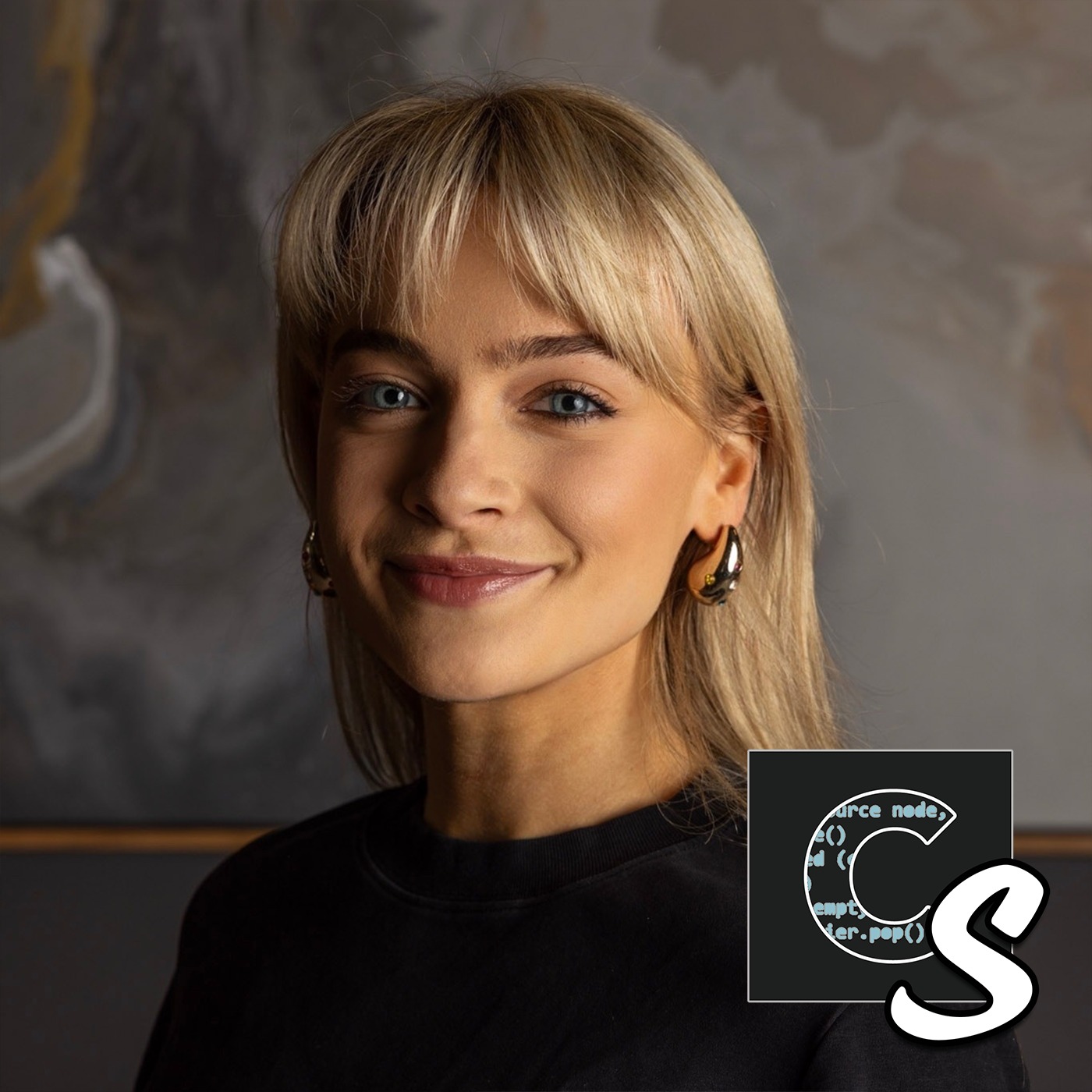
Virginia Szepietowski grew up in the UK outside of London, and now lives in Alabama. She's had a winding path to her current venture, including body building, triathlons, law, and entrepreneurship. She comes from a family of entrepreneurs, who are deeply ambitious, tenacious, and deeply humble. She finds the feeling of a deep safety net from her family, and she pursues her adventures. Outside of tech, she is married to her now co-founder. She is still a competitive body builder, and likes to push herself to the limit.
Through a series of life events, Virginia got interested in water treatment. She started discovering the world of wastewater operators, and the fact that they were the last line of defense before toxic wastewater moved into our waterways (rivers and such). Using AI, her and her team started to build a platform for these operators to quickly detect organisms in these water streams.
This is the creation story of Nyad AI.
Sponsors
Links
Current Sponsors:
Checkout our Stacklist! https://stacks.codestory.co/
Hosted by Noah Labhart | Technical Founder & Startup Mentor.
Our Sponsors:
* Check out Granola and use my code granola.ai/CODESTORY for a great deal: https://granola.ai
* Check out Perplexity and use my code CODESTORY for a great deal: https://www.perplexity.ai
Advertising Inquiries: https://redcircle.com/brands
Privacy & Opt-Out: https://redcircle.com/privacy
Intro and episode teaser on automating biology in critical clean water infrastructure
[SPEAKER_00]: Initially, the technology part was very super hard, but it was one of those things where timing was amazing. [SPEAKER_00]: The technology is now available and it's not expensive for us. [SPEAKER_00]: So some academics were starting to test it out. [SPEAKER_00]: We worked with a few of the leading guys in the field. [SPEAKER_00]: We started building prototypes. [SPEAKER_00]: We came to the US. [SPEAKER_00]: I presented that prototype at an industry lunch and learn thing and a customer literally tried to buy it there and then in the room.
[SPEAKER_00]: And that was when I realized it would cross to that MVP threshold. [SPEAKER_00]: Okay, great. [SPEAKER_00]: And then we kind of got to work on really flushing out the super hard thorny bits. [SPEAKER_00]: My name is Virginia Zabatowski and I'm the co-founder and CEO
[SPEAKER_02]: This is code story. [SPEAKER_02]: A podcast bringing you interviews with tech visionaries. [SPEAKER_02]: 6 months moonlighting goes. [SPEAKER_00]: I was lossing on the backhand. [SPEAKER_02]: Who share what it takes to change an industry? [SPEAKER_00]: I don't exactly know what to do. [SPEAKER_02]: It's all too many girls to get right. [SPEAKER_01]: who built the teams that have their bad company is its team's help each other, which is proud of our team. [SPEAKER_02]: Keeping scalability top of mind, all that infrastructure was up there.
[SPEAKER_01]: Yes, we've been fighting it as we grew up. [SPEAKER_02]: Total waste of time. [SPEAKER_01]: The stories you don't read in the headlines. [SPEAKER_01]: It's not an easy thing to achieve. [SPEAKER_02]: To get yourself a deficit of off, try to begin to ride the ups and downs of the start-up line. [SPEAKER_01]: Need to really want it. [SPEAKER_02]: Not just about technology. [SPEAKER_02]: All this and more on code story. [SPEAKER_02]: on your host, Snow Elapart. [SPEAKER_02]: And today, how Virginia's Epitowski is giving you the best operating signal through automated organism detection for wastewater.
Guest introduction: Virginia Szepietowski's background and path to founding Nyad AI
[SPEAKER_02]: Virginia Zepatowski grew up in the UK outside of London and now lives in Alabama. [SPEAKER_02]: She's had a winding path to a current venture, including bodybuilding, triathlons, law, and entrepreneurship. [SPEAKER_02]: She comes from a family of entrepreneurs who are deeply ambitious, tenacious, and deeply humble. [SPEAKER_02]: She finds the feeling of a safety net from her family as she pursues her adventures. [SPEAKER_02]: But outside of tech she is married to her now co-founder.
[SPEAKER_02]: She's still a competitive bodybuilder and likes to push herself to the limit.
[SPEAKER_02]: Through a series of life events, Virginia got interested in water treatment. [SPEAKER_02]: She started discovering the world of wastewater operators and the fact that they are the last line of defense before toxic wastewater moves into our waterways, rivers and such. [SPEAKER_02]: Using AI, her and her team started to build a platform for these operators to quickly detect organisms in the water streams.
Understanding the hidden biology behind municipal and industrial wastewater treatment
[SPEAKER_02]: This is the creation story of Nihad AI.
[SPEAKER_00]: So, Naira comes from the Greek mythology word for river guardian, and to set the scene, I have to take you back to the 1970s. [SPEAKER_00]: So, it was proven then that looking under a microscope was the way to manage the process of treating wastewater, which is essentially a little zoo of good bugs that eat the bad bugs. [SPEAKER_00]: The problem with that is that it is very rigorous, and it is very expertise intensive, which makes it hard for humans to do. [SPEAKER_00]: But those two things, software is very good up.
[SPEAKER_00]: So the challenge was the computer vision. [SPEAKER_00]: Establishing whether it was even possible, could we apply computer vision to the concept of looking at under a microscope at bugs? [SPEAKER_00]: and can we draw parallel between what they're saying under the microscope to the impact of the efficiency and compliance of a wastewater treatment. [SPEAKER_00]: Initially, the technology part was really super hard, but it was one of those things where timing was amazing. [SPEAKER_00]: The technology is now available, and it was not expensive for us.
[SPEAKER_00]: So some academics were starting to test it out. [SPEAKER_00]: We worked with a few of the leading guys in the field, we started building prototypes
The core problem: Why manual microscope sampling creates dangerous operational blind spots
[SPEAKER_00]: we started working with a couple of design partners, and then I presented that prototype at an industry lunch and learn thing, and a customer literally tried to buy it there and then in the run. [SPEAKER_00]: And that was when I realized we'd crossed that MVP threshold. [SPEAKER_00]: Okay, great. [SPEAKER_00]: And then we kind of got to work on really flushing out the to be hard thorny bit. [SPEAKER_00]: So what we have today is a web app. [SPEAKER_00]: The customer buys a license.
[SPEAKER_00]: They take my cross-copy image. [SPEAKER_00]: So most have a standard digital microscope. [SPEAKER_00]: They get the sample under the microscope. [SPEAKER_00]: Image it, upload it to the NIR web app. [SPEAKER_00]: We do some really cool computer vision analysis on it. [SPEAKER_00]: And we can extract trends about the operations and recommend process control changes.
[SPEAKER_00]: A wastewater treatment plant that is safe, efficient, and compliant. [SPEAKER_00]: Soon it's going to be plugged into the other systems and the other kind of data infrastructure. [SPEAKER_00]: In the plant, and more broadly, in the future, we talk about it being a Jarvis for wastewater, the Jarvis for my man.
[SPEAKER_02]: So let's go back to that prototype, call the MVP, curious about that first version that you built and you showed off and someone tried to buy it, how long it'd take you to build and what sort of tools we're using to bring it to life. [SPEAKER_00]: So, my co-founder Chris is a brilliant engineer, and we worked a few well-tinks. [SPEAKER_00]: I'm good at people, and he is great with machines. [SPEAKER_00]: So, he set to work, building the initial MVP, and initially was literally a rudimentary dashboard with a human in the loop being the AI expertise.
[SPEAKER_00]: So, that was what we used to validate. [SPEAKER_00]: Have you ever heard the analogy of [SPEAKER_00]: If you want to set out to bills or to teach a monkey to recite Shakespeare, standing on a stool, you have to start off by teaching the monkey to recite Shakespeare and not building the store.
Origin story: Translating computer vision research into industrial water automation
[SPEAKER_00]: So if he started off with that kind of approach. [SPEAKER_00]: So once we validated that, the problem was worth solving. [SPEAKER_00]: We went through every step from very quick prosciatized typing used for outlet, use cursor, criss-tryed, a bunch of different open-source, closed models. [SPEAKER_00]: Because of how good those prosciatoping tools are, [SPEAKER_00]: He was able to get an interface upgrade fast, so that I could spend my time in front of a customer getting a bunch of customer feedback really fast while we were then building the models in the background.
[SPEAKER_00]: So we a thousand percent stood in the shoulders of giants and we constantly switch between coders, anthropic and obnion, and [SPEAKER_00]: with the underpinning belief that user feedback was the most important thing. [SPEAKER_00]: So the best bit about how fast we were able to build and to iterate was that it bought me time to be in front of customers. [SPEAKER_00]: So Chris built the very first prototype in a matter of weeks. [SPEAKER_00]: And it then is one of those things where as the non-tent co-founder, sometimes it's hard for me to distinguish with tweaking.
[SPEAKER_00]: What takes five minutes and what takes five months? [SPEAKER_00]: But that's, yeah, like I say, that's where having a strong engineering co-founder is the power of having the right partnership and the fun book was that I get to test it and put it in front of the years or I'll watch them play with it and watch where they're unsure of where to click next or where they struggle or where the language on the web app doesn't quite land. [SPEAKER_00]: Those are the kind of psychology bits that I really enjoy.
[SPEAKER_02]: Okay, so when that first MVP and I could probably cherry pick this a bit from your answer, but in that first MVP, I'm curious about a pillar decision you had to make. [SPEAKER_02]: One that really shaped and formed how you moved forward, and how you built that MVP and how you approached the market, a bit, and how you coped with that decision. [SPEAKER_00]: There was a belief at the beginning that the more we could offer the customer, the happier they would be. [SPEAKER_00]: And that's not the case.
[SPEAKER_00]: We tried to add in another sensor, we from a third party. [SPEAKER_00]: And I'm being in a discussion with this design partner, and [SPEAKER_00]: We said, okay, look, we can, like this sense of will. [SPEAKER_00]: It's a bit of hardware.
How Nyad AI's automated hardware samples and analyzes live microorganisms in real time
[SPEAKER_00]: We thought we'll ship it in. [SPEAKER_00]: We'll cover the costs. [SPEAKER_00]: And I could not understand why this still wouldn't close. [SPEAKER_00]: So I was like, we are getting you so much value out of this. [SPEAKER_00]: And it ended up, we were then had a face-to-face conversation. [SPEAKER_00]: And I was like, look, what is actually going on here? [SPEAKER_00]: And they said, look, the sensor sounds great, but that means that we would have to switch your far operations, we would have to have someone come in and store it, and so we would have lost production.
[SPEAKER_00]: Time by installing the sensor and we can't really justify that just now. [SPEAKER_00]: So once I said, okay, but we can just ditch the sensor and we can just have the software. [SPEAKER_00]: They were like, okay, great. [SPEAKER_00]: And then it was signed that day. [SPEAKER_00]: So some of those decisions was just trying to do too much for the customer when we're in early stage company. [SPEAKER_00]: You don't want to ask the customer to do too much early on. [SPEAKER_00]: the less you can ask of them the better.
[SPEAKER_00]: So if you say this is this single tool, does this single job, but it doesn't really well. [SPEAKER_00]: It's less for them to digest. [SPEAKER_00]: It's easier for them to explain to their supervisors. [SPEAKER_00]: It's easier for them to put on a purchase order. [SPEAKER_00]: It just makes things simple. [SPEAKER_00]: So simplicity for that early MVP was pretty sure. [SPEAKER_00]: I'm trying to do too much.
[SPEAKER_02]: Let's move forward then. [SPEAKER_02]: So you've got the MVP done. [SPEAKER_02]: You've shown it to the world. [SPEAKER_02]: You've gotten feedback. [SPEAKER_02]: Someone tried to buy it. [SPEAKER_02]: How did you progress it from that point? [SPEAKER_02]: And mature it. [SPEAKER_02]: I think to wrap that in a box a little bit. [SPEAKER_02]: I'm looking for it. [SPEAKER_02]: How do you build your roadmap? [SPEAKER_02]: How do you go about deciding that? [SPEAKER_02]: Okay. [SPEAKER_02]: This is the next most important thing to build or to address.
[SPEAKER_00]: customer feedback. [SPEAKER_00]: So we were able to ride that wave of product velocity in a way that was much faster than the expected. [SPEAKER_00]: And the machine learning bit is really hard spending time with them in person and actually just asking them what [SPEAKER_00]: do you use to show me how you're using this? [SPEAKER_00]: And sitting next to them, like I said, watching them, where they're mouse hovers. [SPEAKER_00]: How they are actually using it did. [SPEAKER_00]: We have a big screen in our office, and we have a kind of a feedback button with on every response.
[SPEAKER_00]: And when we get some feedback, [SPEAKER_00]: There's like a big red light that lights up on our screen and we all drop what we're doing and we deal with it. [SPEAKER_00]: So we call up the customer and we say, okay look I noticed you've just done there so you've done this upload. [SPEAKER_00]: Talked me through it, why did that not work for you? [SPEAKER_00]: What were you expecting? [SPEAKER_00]: That was the key because I am not my customer. [SPEAKER_00]: I am not always a dream plant operator.
[SPEAKER_00]: Done the courses and I understand as much as I can. [SPEAKER_00]: But because I am not literally there on a plant all day, the single most important thing was not building what I think they might want.
Overcoming physical hardware engineering hurdles in harsh, high-humidity environments
[SPEAKER_00]: It was building what they actually want to meet. [SPEAKER_00]: As dashboards and interfaces have become so easy and cheap to build, so many people are on out, building things that maybe people don't need, and I was really desperately conscious to not fall into that trap. [SPEAKER_00]: I wanted to build something that had really genuine value because otherwise we're just wasting everybody's time. [SPEAKER_00]: So getting in front of them and actually hearing what they have to say, we spent a lot of time physically and person which was the benefit and why we started in Alabama.
[SPEAKER_00]: Am I being in the US so great because we didn't have that kind of infrastructure available in the UK?
[SPEAKER_02]: How did you build your team? [SPEAKER_02]: And what did you look for in those people to indicate that they were the winning horses to join you? [SPEAKER_00]: There was some trial and error. [SPEAKER_00]: We have become a really mission-driven team, which is one of the things I'm most proud of. [SPEAKER_00]: We decided to just ditch resumes. [SPEAKER_00]: We don't even look at someone's resume. [SPEAKER_00]: So the best hire has been kind of unusual once. [SPEAKER_00]: We have a bit of a rubric where we say, how they've done something extraordinary.
[SPEAKER_00]: and it doesn't. [SPEAKER_00]: There's literally no limit to what that could be. [SPEAKER_00]: The one of our team went and spent 40 days in Antarctica. [SPEAKER_00]: One of our team can run a 220 marathon. [SPEAKER_00]: So we look for the spike of someone extraordinary who strives or something more. [SPEAKER_00]: The next thing we look for is super high agency.
[SPEAKER_00]: and we also hire, we call it, they have that dog in them, and it can compasses a bit of everything, it's are they hungry, are they ambitious, do they strive for the best? [SPEAKER_00]: We have a pair of speakers, like Suspica's in our office, like to, in iPad. [SPEAKER_00]: and they are so janky and they're so difficult to connect. [SPEAKER_00]: That we almost use it as a test. [SPEAKER_00]: If someone comes in and you say, oh, can you connect that? [SPEAKER_00]: Because they're so bloody difficult to connect.
[SPEAKER_00]: Do they give up after 90 seconds of trying? [SPEAKER_00]: Or do they keep like a dog with a bone? [SPEAKER_00]: Do they keep going out until it's done? [SPEAKER_00]: So that's another rubric. [SPEAKER_00]: But we'd like to make sure they've got their dog in them.
[SPEAKER_02]: Okay, Virginia, let's move forward then, I'm curious about scale, and I'm curious about how scale has impacted the way you approach this problem, and then also, if there's been interesting areas where you've had to fight scale as you've grown, and that could be tech, people, business, all the things.
Preventing biological plant crashes and saving millions in compliance penalties
[SPEAKER_00]: we're software-only company, so by default, the night is scalable. [SPEAKER_00]: I would say that some of the decisions we made early on, we tried to optimize for scale, and they were the wrong decisions. [SPEAKER_00]: So we tried to make onboarding. [SPEAKER_00]: Really scalable, really hands off, we can, the customer could potentially self-serve they can buy it and then we can build materials and resources that will allow them to learn at their own pace on how to use this tool. [SPEAKER_00]: And actually that was just not what the customers wanted.
[SPEAKER_00]: The old, a dodge of doing things that don't scale. [SPEAKER_00]: In this case, absolutely applied. [SPEAKER_00]: So being that in-person, giving customers the attention and the effort to help them learn a kind of met new product. [SPEAKER_00]: on a live call or even via text rather than giving them a recording or giving them a guide. [SPEAKER_00]: It has proven way more successful in adoption than people who we tried to allow them to self-serve. [SPEAKER_00]: So we want to hold our hand through the process.
[SPEAKER_00]: We want to control the experience and make the experience absolutely delightful because we're building for an industry who do not often get a customer experience of absolute delight, other than maybe buying their own iPhone. [SPEAKER_00]: But everything else the industry is not built for a beautiful experience. [SPEAKER_00]: It's not even
[SPEAKER_00]: be the best part of our customers day. [SPEAKER_00]: And that's something that we repeat every single time we've got the phone, every single time you text or call or have a Google meet on board or anything. [SPEAKER_00]: It is built into us that every single interaction with our customer you strive for that to be the highlight of their day. [SPEAKER_00]: So we obviously have a bunch of automation stuff in house and internally that make our work run smoothly. [SPEAKER_00]: But scaling the onboarding the customer
[SPEAKER_00]: and we're not going to strive to make that automated in any way.
[SPEAKER_02]: As you step out on the balcony, and you look across all that you've built with Niadei. [SPEAKER_02]: What do you most proud of? [SPEAKER_00]: I've built a team of people who I am in awe of, who are really driven by a vision that I laid out and a mission that we can get behind. [SPEAKER_00]: That is not the big sexy industry. [SPEAKER_00]: It's something that I honestly marvel at every single day. [SPEAKER_00]: And it's something that I can try something, oh my god, I can't believe these people who I respect.
[SPEAKER_00]: so deeply. [SPEAKER_00]: I'll do this with me. [SPEAKER_00]: I can't believe I've convinced them to do this with me. [SPEAKER_00]: This is amazing and [SPEAKER_00]: to watch, then get so much flowing. [SPEAKER_00]: And those of them are not from the wastewater world themselves. [SPEAKER_00]: It's not an industry that people leave college or hear about startup world, and yeah, that's cool. [SPEAKER_00]: I'm going to go out and waste water. [SPEAKER_00]: It means that none of it is performative, which makes it even more special.
[SPEAKER_00]: So that is honestly the thing that I'm most proud of, seeing them, roasting them, learn and change,
Addressing the labor shortage: Supporting the next generation of water operators with AI
[SPEAKER_00]: I get fired up on Niyad's behalf. [SPEAKER_00]: I mentioned earlier that I come from a family that is like a family that would kill each other. [SPEAKER_00]: Like I said, I feel like I've unintentionally started to build that culture that we'd go out to bat for each other. [SPEAKER_00]: And yes, we will, little things internally with the benefit of the company and everyone has a voice and everyone has heard. [SPEAKER_00]: But externally, it feels like we are a right or die theme.
[SPEAKER_02]: OK, Virginia, let's flip the script a little bit. [SPEAKER_02]: Tell me about a mistake he made and how you and your team responded to it. [SPEAKER_00]: An early one was when a team member no longer fit and when there was different priorities on when there were concerns there and I didn't address them soon enough. [SPEAKER_00]: and when there is someone in the team who doesn't want to be there or who has competing priorities or a completely different view of what the company is and what it should be and what it's different to everybody else's and that's like at loggerheads.
[SPEAKER_00]: I let that go on too long. [SPEAKER_00]: Maybe out of fear that I didn't know whether I'd be able to hire somebody else and this was [SPEAKER_00]: really early on before it raised off funding like that. [SPEAKER_00]: It can be I think an empty seat is less damaging than one filled with the wrong person so not addressing those issues sooner and being honest and vulnerable with the team as well like that was a big kind of unlock. [SPEAKER_00]: As the CEO I see it as my job to be strong and I think so many founders also struggle with this.
[SPEAKER_00]: being able to turn around to a team and to sometimes say, I actually don't know what to do here. [SPEAKER_00]: One of the kind of mistakes we made that I mentioned was going too broad and not being totally clear in the one really strong value problem of what we were selling. [SPEAKER_00]: And like we said, I thought customers would buy more if we could do more stuff. [SPEAKER_00]: But we tried to be too much to too many types of people, which is a classic problem so many people will be [SPEAKER_00]: passing the stakes so many people make.
[SPEAKER_00]: So being vulnerable with the team and being able to say, OK, I made a mistake in this call and owning it, taking responsibility, change the dynamic of the team that has been significantly more a deep and real since then, made a more honest relationship. [SPEAKER_00]: And as we have deeper respect, both ways. [SPEAKER_00]: Not a team that would ever consciously point fingers, whatever. [SPEAKER_00]: So taking responsibility on my shoulders, I take responsibility for anything and everything that happens to the company and actually being able to say, yeah, this was a mistake.
[SPEAKER_00]: And when you make yourself vulnerable like that, that can make the team rally around and it doesn't make them vulnerable. [SPEAKER_00]: angry. [SPEAKER_00]: It doesn't make them upset that maybe we'll be lost in sales because they didn't communicate it in the best way. [SPEAKER_00]: It allows us to all rally together and then we're all sending each other podcasts and sending each other links of messaging or we all rally together or we learn together. [SPEAKER_00]: That least blows the experience there.
[SPEAKER_00]: So honesty is always the best policy and sometimes it's the right thing to put your hands up and say, made a bad call.
[SPEAKER_02]: Okay Virginia, let's move forward then.
Scaling AI hardware deployments across municipal and industrial facilities
[SPEAKER_02]: I'm curious about what the future looks like for NIADI 4. [SPEAKER_02]: What you offer for the industry that you serve given the admin of even more AI in the fast-moving nature of that technology, what does the future look like? [SPEAKER_00]: So I would love to touch more of the day of an operator. [SPEAKER_00]: So as a team, we are fantastic at computer vision. [SPEAKER_00]: So building the best possible tools as this historically very slow moving conservative industry is actually starting to move into this new era.
[SPEAKER_00]: And even the last six months since we commercially launched, I have seen such a drastic change in the [SPEAKER_00]: attitude of utilities and train plants moving forward and actually actively seeking AI tools, which is amazing, which is a year ago I would barely help believe that kind of attitude. [SPEAKER_00]: So it's amazing. [SPEAKER_00]: So we are absolutely primed to build a world where every single operator performs like that top 1% and so it can mean every single plant will be able to use less chemicals [SPEAKER_00]: fuel polluting events, run plants in a way that are genuinely safe, efficient, and compliant at the best possible costs and allowed them to allocate resources to other areas.
[SPEAKER_02]: Let's switch to you, Virginia, who influences the way that you work? [SPEAKER_02]: In a person or many persons or something, you look up to and why. [SPEAKER_02]: I recall our conversations about your family. [SPEAKER_02]: I'm curious if they're, if it's them or if it's other folks as well. [SPEAKER_00]: It's definitely family in the kind of the work ethic and the chance to hear resilience. [SPEAKER_00]: My dad's called John and Chris and I in the eye of the store will sometimes turn out like what would John do here.
[SPEAKER_00]: what would John do? [SPEAKER_00]: WWE JD. [SPEAKER_00]: So that's always in the kind of forefront of our minds. [SPEAKER_00]: In terms of external influences, I mentioned Richard Branson earlier. [SPEAKER_00]: I love Richard Branson. [SPEAKER_00]: He's, as if no one doesn't know him, he's the British founder of the version group. [SPEAKER_00]: He has such a bullseye [SPEAKER_00]: grab the ball by the horns attitude to everything and he comes from to every single industry he comes to disrupt.
[SPEAKER_00]: He's come from the outside and he has broken into a bunch of legacy industries and turns everything up on its head, upsets everyone in the industry and he is gunning for the customer. [SPEAKER_00]: He's the only thing that matters is that the customer wins and he's a master of
[SPEAKER_00]: which is so overlooked, in my industry in particular, you walk into any of these conferences and it's like a sea of blue. [SPEAKER_00]: Everyone is in a blue polisher. [SPEAKER_00]: So when we were designing the Brad for Nihar, it's like, okay, that can be anything except for blue. [SPEAKER_00]: And my favorite colors orange. [SPEAKER_00]: So I said, the opposite to blue is orange. [SPEAKER_00]: So let's go with that. [SPEAKER_00]: And then, often the operators on site like to wear these kind of fluorescent car hearts.
[SPEAKER_00]: They're like perfect. [SPEAKER_00]: They look like safety. [SPEAKER_00]: So we go for big, bold brand. [SPEAKER_00]: We have a company bright orange cybertruck. [SPEAKER_00]: We do tick talks. [SPEAKER_00]: We do we totally flip Donald's head.
The future of automated biology in global water security and environmental protection
[SPEAKER_00]: And Richard Branson is my ultimate. [SPEAKER_00]: inspiration on the kind of branding side. [SPEAKER_00]: On the personal side, I mentioned on bodybuilder, I am a huge Arnold Schwarzenegger fan, like the biggest fan of the way that he has conquered so many different disciplines and the total unapologetic attitude of going into bodybuilding and saying, I'm going to be the best in the world of this and then he goes into [SPEAKER_00]: I'm gonna be the best movie star in the world. [SPEAKER_00]: I'm gonna, then he goes into property, goes into business, he goes into politics.
[SPEAKER_00]: And he comes to each of these disciplines, again, as an outsider, and conqueres them. [SPEAKER_00]: And there is just something that is a resonate with so deeply on that level and the addiction to discipline and the addiction to striving for the best and having that singular goal. [SPEAKER_00]: and willing to do absolutely anything that it takes. [SPEAKER_00]: A plus he was striving for the American dream. [SPEAKER_00]: That's the same way I am. [SPEAKER_00]: Coming over from Europe, chasing the American dream.
[SPEAKER_00]: So yeah, he shapes me it in many ways.
[SPEAKER_02]: Okay, Regina, one last question. [SPEAKER_02]: You're getting on a plane and you're sitting next to a young entrepreneur who's built the next big sink. [SPEAKER_02]: They're jazzed about it. [SPEAKER_02]: They can't wait to show it off to the world and
[SPEAKER_02]: What advice do you give that person having gone down this road a bit? [SPEAKER_00]: I often think about this phrase that Chris actually said to me. [SPEAKER_00]: So Chris, my co-van is said, right early on when I was doubting myself like, Oh, do I? [SPEAKER_00]: What about my right to play in this space where people take me seriously? [SPEAKER_00]: And he turned around and he said, if not you, [SPEAKER_00]: than who? [SPEAKER_00]: And I think about that all the time. [SPEAKER_00]: If not you, then who?
[SPEAKER_00]: Who is going to go out and build this? [SPEAKER_00]: If you think about all the people who doubted whether they should be building this thing or whether people were going to take them seriously and they were going to be accepted by the industry and they were accepted by the customer and all this, if they hadn't had gone and done it, the thing of Elon, the thing of Steve Jobs, the thing of Johnny I, all the people who [SPEAKER_00]: You know, have touched the technology that shape our world today.
[SPEAKER_00]: Yeah, there's something who else is going to do it. [SPEAKER_00]: So you love that and I always think of that. [SPEAKER_00]: And then it just velocity. [SPEAKER_00]: Remember, you are, you have to be on the move time. [SPEAKER_00]: Is the only constant. [SPEAKER_00]: So make sure, enjoy the journey. [SPEAKER_00]: Keep pushing, stay alive. [SPEAKER_00]: Standing still is moving backwards. [SPEAKER_00]: So velocity is king. [SPEAKER_02]: I love all of that. [SPEAKER_02]: Couldn't agree more.
[SPEAKER_02]: Overging a thank you for being on the show today.
Closing thoughts and how to connect with Virginia Szepietowski and Nyad AI
[SPEAKER_02]: Thank you for telling the creation story of Naya at AI. [SPEAKER_00]: Thank you so much. [SPEAKER_00]: This has been a pleasure.
[SPEAKER_02]: And this concludes another chapter of Coat Story.
[SPEAKER_02]: code story is hosted and produced by Noah Labhart. [SPEAKER_02]: Be sure to subscribe on Apple podcast, Spotify, or the podcasting app at your choice. [SPEAKER_02]: And when you get a chance, leave us a review. [SPEAKER_02]: Both things help us out tremendously.
[SPEAKER_02]: And thanks again for listening.
Latest Season of the Podcast is Sponsored By




 Apple Podcasts
 Spotify
 Pocket Casts
 Castbox
 YouTube
 Player FM
 Overcast
 Castro
 Goodpods
 Moon FM
 Podbean
 Podcast Addict
 Podcast Republic