S12 Bonus: The App-Aware Illusion: Why Infinite Compute Fails Without Underlying Infrastructure Accountability and the Case for "Boring" IT with Richard Luna, President & Founder of Protected Harbor
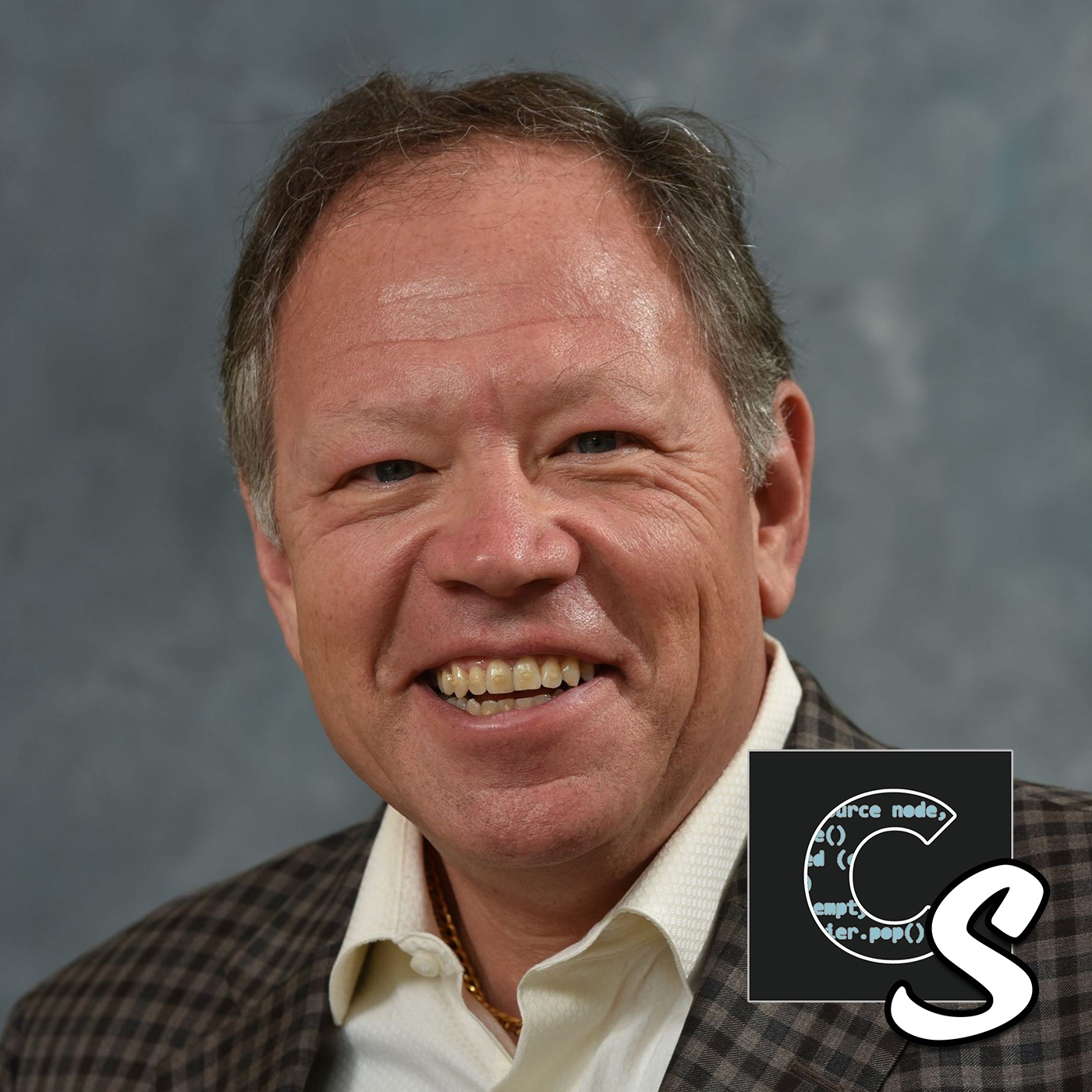
Richard Luna grew up in New York, never living more than 35 from where he grew up. He is a self proclaimed super nerd, and has been one since he was 13 - at which point, he started coding on an HP calculator. He's always been fascinated to know how things work, and how patterns repeat - which he has observed in the industry throughout the years. Outside of tech, he has 2 kids, one of which is in the business with him. He's an avid cyclist, traveling on average, 120 miles a week.
Richard has been a life long technologist, doing everything from desktops, to coding, to hosting. When he and his team saw the limits of what hosting can do, they dove into developer operations (DevOps), and found where they could add the most value - through SaaS infrastructure.
This is the creation story of Protected Harbor.
Sponsors
Links
Current Sponsors:
Checkout our Stacklist! https://stacks.codestory.co/
Hosted by Noah Labhart | Technical Founder & Startup Mentor.
Our Sponsors:
* Check out Perplexity and use my code CODESTORY for a great deal: https://www.perplexity.ai
Advertising Inquiries: https://redcircle.com/brands
Privacy & Opt-Out: https://redcircle.com/privacy
Teaser on solving complex database report bottlenecks beyond standard SQL servers
[SPEAKER_01]: I've never been satisfied with where we are as a technology, right? [SPEAKER_01]: I always want us to be moving forward and pushing and learning. [SPEAKER_01]: We had a client had a massive SQL job and they said, we've hired Microsoft, we've hired consulting companies and they could not get this report to run in under 25 hours. [SPEAKER_01]: And they said, can you do it? [SPEAKER_01]: That's not a course we can do it. [SPEAKER_01]: We looked at the problem and said the reason that those organizations fail to reduce the time or see how to optimize it is because they're storing this all-on-sequel server.
[SPEAKER_01]: Not built for that type of report generation. [SPEAKER_01]: However, data like yes. [SPEAKER_01]: This is Richard Luna, CEO, protected harbour.
Show intro and setting the stage for application-aware infrastructure
[SPEAKER_03]: This is Code Story. [SPEAKER_03]: a podcast bringing you interviews with tech visionaries. [SPEAKER_03]: Six, six months moonlighting goes. [SPEAKER_03]: It's the last and all of the backgrounds who share what it takes to change an industry. [SPEAKER_00]: I don't exactly know what to do. [SPEAKER_03]: It doesn't go as to get right. [SPEAKER_02]: who built the teams that have their bad company is its team's help each other, which is proud of our team. [SPEAKER_03]: Keeping scalability top of mind, all that infrastructure was up there.
[SPEAKER_03]: Yes, we've been fighting it as we grew up. [SPEAKER_03]: Total waste of time. [SPEAKER_03]: The stories you don't read in the headlines. [SPEAKER_02]: It's not an easy thing to achieve. [SPEAKER_03]: To get yourself a deficit of off, try to begin to ride the ups and downs of the start-up line. [SPEAKER_02]: Need to really want it. [SPEAKER_03]: Not just about technology. [SPEAKER_03]: All this and more on code story.
Host intro: How Richard Luna established application-aware infrastructure
[SPEAKER_03]: I'm your host, Noah Labpart, and today how Richard Luna has established application aware infrastructure, ensuring your platform runs optimized.
Guest introduction: Richard Luna's background, coding at age 13, and cycling 120 miles a week
[SPEAKER_03]: Richard Luna grew up in New York, never living more than 35 miles from Larry grew up. [SPEAKER_03]: He is a self-proclaimed super nerd, and has been once since he was 13. [SPEAKER_03]: at which point he started coding on an HP calculator. [SPEAKER_03]: He's always been fascinated to know how things work and how patterns repeat, which he has observed in the industry throughout the years. [SPEAKER_03]: But outside of tech, he has two kids, one of which is in the business with him. [SPEAKER_03]: He's an avid cyclist traveling on average 120 miles a week.
The career path from desktops, coding, and traditional web hosting to DevOps and SaaS infrastructure
[SPEAKER_03]: Richard has been a lifelong technologist doing everything from desktops to coding to hosting. [SPEAKER_03]: When he and his team saw the limits of what hosting could do, they dove into developer operations, i.e. [SPEAKER_03]: devops, and found where they could add the most value through SAS infrastructure.
Origin story: The creation of Protected Harbor
[SPEAKER_03]: This is the creation story of Protected Harbor.
Defining application-aware infrastructure and why traditional hosting reaches a hard ceiling
[SPEAKER_01]: We are a SaaS engineering infrastructure company. [SPEAKER_01]: That's our core is as SaaS tools grow. [SPEAKER_01]: They encounter performance obstacles. [SPEAKER_01]: And those performance obstacles can be as bad as the apps not working, which causes reputation damage, or it could be slowdowns. [SPEAKER_01]: We got there because, as I said, I'm a lifelong technology, so I started at 13 writing code. [SPEAKER_01]: But I've written, see, apps I wrote the first, this is this date to me now, of course.
[SPEAKER_01]: No, first Windows control module for no-vell networks. [SPEAKER_01]: I wrote a Windows CISC on PC console, F console utility, called NetMagic. [SPEAKER_01]: So we started as a programming company, then became a more generalized desktop provider in addition to still writing custom code. [SPEAKER_01]: That then led to some very interesting hosting application environments. [SPEAKER_01]: And when we saw the limits of what a hosting company can do, we'd start to dive into DevOps, which then combined, of course, all the programming background.
[SPEAKER_01]: And that's led us to the SaaS infrastructure. [SPEAKER_01]: Because that's where we add really the greatest value.
Why "infinite compute" fails when underlying database architecture and queries are broken
[SPEAKER_01]: With SaaS infrastructure, there's no two clients that are the same. [SPEAKER_01]: Right? [SPEAKER_01]: A Kubernetes environment has a very different footprint and need resource than a Windows SQL environment. [SPEAKER_01]: And what we do is part therapy where, in generally an assessed company, programmers are gods, but programmers are people and they're limited by their knowledge base and they didn't go to school or learn coding to understand how to lay that app out, they learned how to build modules together and how to use libraries to glue products together.
[SPEAKER_01]: That's a very different skill set than how do you scale this application up. [SPEAKER_01]: Programmers generally, they use their laptops, they build their code base, and they test all within their laptop environment. [SPEAKER_01]: That's great because they can simulate 1, 2, 3, 10. [SPEAKER_01]: users. [SPEAKER_01]: Now if you have a million users, there's going to be a whole different set of problems and obstacles that come up. [SPEAKER_01]: And our job in what we do is understand those obstacles.
[SPEAKER_01]: And ideally, if we're really good, we make changes and the coders don't even know. [SPEAKER_01]: They don't have to do anything. [SPEAKER_01]: Sometimes that's not possible. [SPEAKER_01]: Sometimes we need to ask for their help, but what we build trust we connect with them, because we know what we're doing and we bring a different skill set that they're not necessarily aware of, we can establish a level of trust that maybe they're internal IT can. [SPEAKER_01]: I've had clients tell them, I've had the IT department tell me, oh, you can't say that to the programmers.
[SPEAKER_01]: And I'm like, listen, gravity is gravity. [SPEAKER_01]: It works for everybody. [SPEAKER_01]: And what you're telling me makes no sense. [SPEAKER_01]: So no, I need to talk to the programmers, because I want my people to hear what their prejudices are and how they look at things, because we will communicate in their words.
Moving beyond basic server ping tests to deep application transaction monitoring
[SPEAKER_01]: how we can make it better and solve the problems. [SPEAKER_01]: For our largest customer, we scaled them from 20 VMs to a little over 2000, and they've had tremendous growth. [SPEAKER_01]: And that's what we like to do for our clients is create a partnership. [SPEAKER_01]: My goal is that internally, they can't tell our support staff from their own support staff, that it's seamless. [SPEAKER_01]: And if we do that, we have a client for a decade, [SPEAKER_01]: And that's my goal, right?
[SPEAKER_01]: And as I, we don't have a large sales group, so it's all word-of-mouth. [SPEAKER_01]: And so that's my goal. [SPEAKER_01]: It's to create a climate that the clients want to give us more work. [SPEAKER_01]: And we do a great job that adds value to them.
[SPEAKER_03]: My next question will be interesting, because I'm curious where it started, like what would you consider the MVP for a protected harbor, that first version of SaaS infrastructure that you provided for a client or a design partner, tell me about how you built it, and what's sort of tools you're using to bring it to life. [SPEAKER_01]: I've never been satisfied with where we are as a technology, right? [SPEAKER_01]: I always want us to be moving forward and pushing and learning. [SPEAKER_01]: And so when a client had a massive SQL job and they said, we've hired Microsoft, we've hired consulting companies and they could not get this report.
[SPEAKER_01]: to run in under 25 hours. [SPEAKER_01]: And they said, can you do it? [SPEAKER_01]: That's not of course we can do it. [SPEAKER_01]: And it's a massive amount of data. [SPEAKER_01]: It has to do with trend line analysis of billing. [SPEAKER_01]: And so we looked at the problem and said, the reason that those organizations fail to reduce the time or see how to optimize it is because they're storing this all on SQL Server, which is not built. [SPEAKER_01]: Sequel server is a great product of nothing against it, but it's not built for that type of report generation.
[SPEAKER_01]: However, data lake is, so we built a data lake connected it into Sequel servers and we got the job down to 7.5 hours. [SPEAKER_01]: And they're thrilled. [SPEAKER_01]: So MVP is what's the problem that our client has? [SPEAKER_01]: Can we solve it? [SPEAKER_01]: Can we add value and move it forward and or will we learn a lot?
The case for "boring" IT: Prioritizing stability, predictability, and uptime over hype
[SPEAKER_01]: That's what I want to do because that gives us that keeps my people sharp. [SPEAKER_01]: It keeps us sharp and allows us to solve problems much larger and bigger than ourselves. [SPEAKER_01]: What I've learned is we have taken technology
[SPEAKER_01]: Alright, there's a radiologist, there's a general physician, there's a pediatrician, there's at every level. [SPEAKER_01]: No, if you have something wrong with your head, do you go to a neurologist? [SPEAKER_01]: We have sliced and diced technology like we sliced and diced. [SPEAKER_01]: They human body. [SPEAKER_01]: If I... [SPEAKER_01]: have a problem. [SPEAKER_01]: Maybe there's a ransomware attack going on. [SPEAKER_01]: I'm going to talk to the security officer. [SPEAKER_01]: How does the security officer know what ports are open?
[SPEAKER_01]: Look in the firewall. [SPEAKER_01]: Yeah, maybe. [SPEAKER_01]: But what happens on the server side? [SPEAKER_01]: How did it get, how did the attack come in, what trends are we watching? [SPEAKER_01]: So the security officer was never educated in the database administrators, and database administration, and the database administrator was never educated on L2 traffic or wire traffic.
[SPEAKER_01]: and the land engineer knows very little about what's running in windows and certainly the windows administrator wants nothing to do with the Linux. [SPEAKER_01]: So we've sliced technology up into these buckets and then we've trained people on these buckets and then in scale we're asking them to solve problems that go across the buckets. [SPEAKER_01]: So what happens? [SPEAKER_01]: Fingerpointing. [SPEAKER_01]: It's the other guy's fault, no, I can't take responsibility. [SPEAKER_01]: And so that's the environment that we're living in.
[SPEAKER_01]: So what happens is you then have systems that are compromised because somebody opened something that they didn't expect to open. [SPEAKER_01]: And they get compromised and then they're problems. [SPEAKER_01]: The client's tell us what our MVP is. [SPEAKER_01]: The client's tell us what we've got to evolve and develop to get to the next level.
[SPEAKER_03]: So, you mentioned the iterations that there've been many iterations. [SPEAKER_03]: Tell me about how you have progressed and matured what you offer, your clients. [SPEAKER_03]: And I'm curious about, wrap in a box a little bit. [SPEAKER_03]: I'm curious about how you build your roadmap for protected harbor. [SPEAKER_03]: How do you decide what's the next most important thing to build or to address? [SPEAKER_01]: As a lifelong technologist, there are certain fundamental principles that I believe in.
[SPEAKER_01]: One is data has value. [SPEAKER_01]: and data is sacrosite. [SPEAKER_01]: It should never be shared on public if ideal, right?
Strategic trade-offs in hybrid cloud setup and managing hardware accountability
[SPEAKER_01]: We have way too much data being shared in this world and we're using paradigms from the 1970s and 80s where trust everything and trust everybody. [SPEAKER_01]: So, one paradigm that I have is everything we use runs, every all our tools, every piece, every component, right down to our AI servers, are local servers, running in our data centers under our control. [SPEAKER_01]: I don't extend it to the level of getting a generator. [SPEAKER_01]: We can get color facilities and that's what we do is get color facilities with at least 16 ISP feeds and at least two levels of power generation.
[SPEAKER_01]: And as long as they do it, that's good enough. [SPEAKER_01]: We don't need to build out our own data center physically. [SPEAKER_01]: After that, it's all our equipment, and it's all our stack. [SPEAKER_01]: And every piece, every tool we use is running on our servers, which allows us to deliver amazing uptime, and allows us to know, hey, this is all working. [SPEAKER_01]: So that's a fundamental principle. [SPEAKER_01]: A second fundamental principle is we rebuild everything. [SPEAKER_01]: If we get a client and they've got 400 servers, 800 servers, 1,000 servers, we will rebuild over time all of them.
[SPEAKER_01]: And we will do it in a way that will have minimal impact to their production. [SPEAKER_01]: will capture the servers, do whatever packet, pack, band-dated it up so that it's a lot more stable than the way we found it, but we then slice and dice it and break it up. [SPEAKER_01]: We're doing a migration right now. [SPEAKER_01]: We get dragged into a lot of medical organizations, because it's the confluence of lots of data, lots of tiny files, and lots of integrated systems.
[SPEAKER_01]: make a difference in add value and in one client they couldn't take down a server because they had five of their clients on it. [SPEAKER_01]: So we had to culturally first during the migration we separated the clients so that each one had their own web server each or web server pool depending on the size of the client had their own database or database pool based on the size of the [SPEAKER_01]: And that allowed us to do a standard maintenance. [SPEAKER_01]: We've had clients tell us when we say, what's your maintenance window there?
[SPEAKER_01]: Like, no, you can't do maintenance, but you mean we can't do maintenance. [SPEAKER_01]: Oh, we can't be down. [SPEAKER_01]: I'm like, are you serious? [SPEAKER_01]: We have to do maintenance. [SPEAKER_01]: If you don't do maintenance, you're gonna get a tie.
Aligning MSP incentives with client business outcomes and application performance
[SPEAKER_01]: And culturally, we've had to walk clients through how do you do that. [SPEAKER_01]: And most of the time what we found is they didn't realize that there were ways to configure systems that would allow for the high up time, whether that's... [SPEAKER_01]: They have to be in two different data centers or multiple data centers, but they're their ways to do this. [SPEAKER_01]: That fits within their culture and paradigm, but also allows us to do our job and make sure that the systems are hardened and up to date.
[SPEAKER_01]: So we rebuilt, right? [SPEAKER_01]: That's for none. [SPEAKER_01]: I've seen too many, too many times I've seen apps where clients will have put SQL servers and web servers and database servers and gateways all on the same box and guaranteed you're going to have a nightmare. [SPEAKER_01]: Each one of those needs each major component needs to be on its own box. [SPEAKER_01]: Period. [SPEAKER_01]: And a story. [SPEAKER_01]: I've also seen storage on databases have storage on really slow storage.
[SPEAKER_01]: So that makes it what are you doing? [SPEAKER_01]: You're killing your own product. [SPEAKER_01]: That's the, those are the two main things that the hallmarks of what we do. [SPEAKER_01]: You got a only infrastructure completely and we rebuilt. [SPEAKER_01]: After that, we break up, as during our rebuild, we break everything out into Lego pieces. [SPEAKER_01]: And we net-named the servers all the same name and make the structure all the same way. [SPEAKER_01]: And the reason we do that is so that we can maintain the boxes.
[SPEAKER_01]: I have a fair number of people. [SPEAKER_01]: that every night they're doing customer maintenance and if we if they don't know that hey this is a database server and so they've got to make sure that the hot spare or the H.A. [SPEAKER_01]: is up and good then they shouldn't touch it.
[SPEAKER_03]: Okay I'm curious about how you built your team and would you look for in those people to indicate that they were the winning horses to join you? [SPEAKER_01]: I went through a lot of mistakes at first. [SPEAKER_01]: And I realized that the mistakes were that I didn't look at people that would help me. [SPEAKER_01]: So I'm an incredibly selfish person. [SPEAKER_01]: I want people who think like me and act like me. [SPEAKER_01]: And one, that means I've got to train them to be broad.
[SPEAKER_01]: and think broad. [SPEAKER_01]: So when I was looking for people, I thought at first I could find and fix anybody and that was not true. [SPEAKER_01]: I failed at them. [SPEAKER_01]: And so what I look for now is who's really creative? [SPEAKER_01]: Who's got the spark that wants to learn? [SPEAKER_01]: And typically a question I ask, or I used to ask when we would hire in a junior at level in geniuses, how do you play with technology? [SPEAKER_01]: And the typical answer that I've heard that I enjoy is, oh, I have a bunch of virtual servers and I'm playing with them all the time.
[SPEAKER_01]: And then I start it, what are you doing? [SPEAKER_01]: And I look at what is the intellectual curiosity of that person in front of me? [SPEAKER_01]: And if that person shows creativity, that's somebody I'd like to continue talking to. [SPEAKER_01]: And that's how I find it's even today when I interview somebody interviews for a physician. [SPEAKER_01]: I'm listening for how they're different. [SPEAKER_01]: And I'm asking questions about how they're different. [SPEAKER_01]: I'll ask what how do you deal with obstacles?
[SPEAKER_01]: How do you deal with people? [SPEAKER_01]: How do you deal with a customer who's really difficult?
Common pitfalls in legacy system cloud migrations
[SPEAKER_01]: And tell me your crisis, your worst moment that you've had in technology. [SPEAKER_01]: Because I want to hear one, will they tell me the truth? [SPEAKER_01]: Because you can sense when somebody is full of it or they're giving you puff, you don't learn from accolades. [SPEAKER_01]: Nobody learns from hate how wonderful they are. [SPEAKER_01]: Everybody learns from their failure. [SPEAKER_01]: And so I want to hear that person, what if they failed it? [SPEAKER_01]: And why? [SPEAKER_01]: Why do they perceive it?
[SPEAKER_01]: So somebody can't do that, it's a really strange way to do an interview. [SPEAKER_01]: I'm an oddball. [SPEAKER_01]: You want to work here? [SPEAKER_01]: This is what you got to deal with because the data we deal with is worth billions. [SPEAKER_01]: And I have to be able to trust the people here are the oil the time focused if they are overwhelmed, they need to say something, they need to ask for help, they need to drive to a solution. [SPEAKER_01]: And this is what it takes to drive to a solution.
[SPEAKER_03]: Okay, so I'm curious about scale. [SPEAKER_03]: Scale is in your bread and butter, and I'm curious about how you approach it. [SPEAKER_03]: Yes, I kind of understand what your product does, but what I'm really interested is is have there been interesting areas where you've had to fight scale as you've grown. [SPEAKER_03]: That could be infrastructure, technology, but it could also be people, business, things like that. [SPEAKER_01]: Honestly, every time that we make a mistake and we do make mistakes, things don't work out the way we expect or up to our standards.
[SPEAKER_01]: I call a meeting and we diagnose it and go over what could have we done differently to avoid that problem. [SPEAKER_01]: We learned that because we got into trouble on a client this year. [SPEAKER_01]: Large, large client, large environment. [SPEAKER_01]: We thought the client was more of a desktop oriented client. [SPEAKER_01]: And really, they're a true back-end data center client. [SPEAKER_01]: They're right in our infrastructure. [SPEAKER_01]: And what was happening is we weren't triangulating on a solution.
[SPEAKER_01]: So a solution starts wide and it's like a V, it narrows down, because you should always be peeling the onion away, finding what is the root cause and how do we drive into it? [SPEAKER_01]: And after two months we were not driving into that root cause. [SPEAKER_01]: And I realized after we dove in and we had the meeting and we did the assessment, my CTO stood up and said, I need to go on site. [SPEAKER_01]: Okay, go. [SPEAKER_01]: And he went, then found the root cause, and then we started to make progress.
[SPEAKER_01]: And the client actually just had a meeting last week, and said, you guys were amazing once you got in gear. [SPEAKER_01]: And deft thrilled, right? [SPEAKER_01]: We did it in time. [SPEAKER_01]: But here's what came out of it. [SPEAKER_01]: Our technology is totally modular and scalable. [SPEAKER_01]: What isn't is our onboarding process. [SPEAKER_01]: And so,
[SPEAKER_01]: and redesigned it with my CTO and COO. [SPEAKER_01]: And about how we look at the problem of understanding what a client does. [SPEAKER_01]: And what we came to is, our CTO has to do the deep dive at the beginning, is to live and breathe that client so that he's got a reference and then he makes the roadmap. [SPEAKER_01]: Then, at the director level, that person has to do the execution and we break everything up into tasks and those tasks can go down and get executed at all different levels.
The role of operational discipline in modern cybersecurity and IT governance
[SPEAKER_01]: And so, under the directors are then what we call tier 4, which is our real core people. [SPEAKER_01]: And that has allowed us to really increase our bandwidth by having that environment, so that we've got one person who makes the plan. [SPEAKER_01]: And that one person has the roadmap. [SPEAKER_01]: And of course, what's the bottleneck? [SPEAKER_01]: The bottleneck is the one person. [SPEAKER_01]: Yes, but I can then train over time a director level to become the next deployment architect.
[SPEAKER_01]: Because the only thing that the deployment architect is doing is for 72, 96 hours, they're studying a new client saying, how is this client wired and where's the data, where is it going, what's the flow, what's the storage underneath it, where are the hiccups, what are the servers, where are the failure points they're experiencing and why are they experiencing it. [SPEAKER_01]: That, when you have an experienced person, they answer, oh, [SPEAKER_01]: It's obvious, look, the Course Witches are old, they're joking, so he lays out the plan for the Course Witches, which then goes to the Leafs, which then goes to the wiring, and so now there's a year plan that's come out of 72-hour.
[SPEAKER_01]: investigation, but that year plan is then executed by a team of people. [SPEAKER_01]: Who now know what the goal is, what their need to accomplish, and how to accomplish it. [SPEAKER_01]: And there's a, there's a supervisory and accountability factor because those people have to report back up. [SPEAKER_01]: to right now my CTO to say, here's what we're doing and here's how things are going in the CTO sits in a meeting once a week and says, where's the status on this? [SPEAKER_01]: And he's listening is everything going on matching that plan that he wrote.
[SPEAKER_01]: Since he wrote it, he's accountable to execute it. [SPEAKER_01]: So that's how that's something, it's very current. [SPEAKER_01]: This is this happened this year, so we're dealing with it. [SPEAKER_01]: But I'll say in any growing business, you've got to say, you've got to be conscious as the CEO, I have to be conscious of how do we get to the next step? [SPEAKER_01]: How do we grow? [SPEAKER_01]: How do we stay modular in both our hardware, in our people, and our processes? [SPEAKER_03]: Richard, as you step out on the balcony, look across all that you've built, thus far with protected harbor.
[SPEAKER_03]: What are you most proud of? [SPEAKER_01]: on my people, it's amazing to me how we can have clients for a decade, two decades, and they stay with us. [SPEAKER_01]: I can't do that without the people that I have, and they stay here. [SPEAKER_01]: They work hard. [SPEAKER_01]: They're focused. [SPEAKER_01]: I have a great relationship with them. [SPEAKER_01]: I can speak my half sentences and they get what I'm saying and where I'm coming from. [SPEAKER_01]: If I don't get good people, then I can't do my job.
[SPEAKER_01]: I got to do their job. [SPEAKER_01]: And I don't want to do their job. [SPEAKER_01]: I want to do my job. [SPEAKER_01]: I want to do these type of podcasts because this is how I differentiate what we do, and I am really thrilled and proud of what I've created. [SPEAKER_01]: This is what I was on this planet for to do, and I want to create an environment where people have fun. [SPEAKER_01]: and that's what I try to do is create that environment where they feel it matters what they do.
[SPEAKER_01]: It is not just another place to earn money. [SPEAKER_01]: If that's what you want is hey I didn't get my 7% or my 10% this is a wrong company. [SPEAKER_01]: Go somewhere else. [SPEAKER_01]: Because there are plenty of companies out there that'll play the game. [SPEAKER_01]: I don't want to play the game. [SPEAKER_01]: You want to be part of a team, you want to matter, you want to, you want problems that you're going to learn a tremendous amount and solve real problems. [SPEAKER_01]: You got to place here.
[SPEAKER_03]: Let's move forward, then Richard. [SPEAKER_03]: What does the future look like for protected harbour for? [SPEAKER_03]: What you offer for where the industry is going, all the things. [SPEAKER_03]: Tell me what the future looks like. [SPEAKER_01]: I could tell you all the depressing things, I think technology is we're losing the ability to understand it and there's fewer and fewer people that know it. [SPEAKER_01]: Everybody wants dashboards in the world instead of understanding what a command line is.
[SPEAKER_01]: That's the negative. [SPEAKER_01]: On the positive. [SPEAKER_01]: knowledge is power. [SPEAKER_01]: It's always been power. [SPEAKER_01]: And if I can continue to grow people to really understand how data works, the data is like water, it goes everywhere. [SPEAKER_01]: And so to control it, you have to think that way. [SPEAKER_01]: If I put a $100 bill on the table on a desk, it's somebody's office, not mine, but to someone else, if I go to it, and I put a thumb drive, that thumb drive could be worth millions, and nobody realizes or connects with it.
[SPEAKER_01]: But the $100 bill, they'll connect to, right? [SPEAKER_01]: Because they understand the principle of it, except it's a thumb drive they should be worried about, not the $100. [SPEAKER_01]: That's what I'm most excited about.
[SPEAKER_03]: Let's wish to you who influences the way that you work. [SPEAKER_03]: They are a person or many persons or something you look up to and why. [SPEAKER_01]: My mother was a refugee. [SPEAKER_01]: She ran across the border with her mother between East Germany and West Germany, with guards shooting at her. [SPEAKER_01]: She was supposed to go to Montana or North Dakota. [SPEAKER_01]: I think it was North Dakota. [SPEAKER_01]: and she got on a boat from West Germany and came to the U.S. and the boat landed in New York and she asked her why didn't you go to North Dakota and she said I didn't know at North Dakota I knew New York.
[SPEAKER_01]: And she became, she went to Downstate Medical Center and became one of the first women to become a doctor.
Where managed infrastructure services are heading and closing thoughts
[SPEAKER_01]: And I watched what it took to be successful and how hard she worked at it. [SPEAKER_01]: and I'll never forget those memories. [SPEAKER_01]: If you want something in this world, you can have anything you want. [SPEAKER_01]: Are you going to work for? [SPEAKER_01]: Are you going to, you know, or are you just going to let obstacles get in your way? [SPEAKER_01]: So for her, it was about survival. [SPEAKER_01]: And there have been plenty of times in my life because I've gone through four different corporate revisions.
[SPEAKER_01]: There have been times I've had to change for survival. [SPEAKER_01]: I had a very successful consulting business. [SPEAKER_01]: And when I had the Nobel Products, we were very successful and then 9-11 hit. [SPEAKER_01]: I was well in FinTech. [SPEAKER_01]: I was half my clients wearing the World Trade Centers. [SPEAKER_01]: Why? [SPEAKER_01]: I'm a New Yorker, number one, so I went to places that had technology. [SPEAKER_01]: And they're the ones that I could make the end most in-road, too, because I spoke the same language.
[SPEAKER_01]: And, you know, my whole business almost tanked them. [SPEAKER_01]: And I had to pivot to, okay, what do I do? [SPEAKER_01]: And people started to ask me problems, and I was like, oh, maybe I can get paid to do it via an MSB. [SPEAKER_01]: I had to fire everybody and start to give the business all over again. [SPEAKER_01]: You, it's about never seeing, never giving up. [SPEAKER_01]: and just keep on going. [SPEAKER_01]: Whatever it takes, and my mother drove that into me at a very early age.
[SPEAKER_01]: Plus, I've been grateful. [SPEAKER_01]: When I sent a game in to the Texas Instruments group when I was 13, and they published it, I was addicted. [SPEAKER_01]: Wow, I mean, I could do something and other people would recognize it. [SPEAKER_01]: How powerful is that for an 13 year old to have that kind of impact? [SPEAKER_01]: And I think it's really, I get a little depressed because I think it's really hard to do that and be authentic about it and real in 2026. [SPEAKER_01]: I think it was much easier earlier.
[SPEAKER_03]: Okay, Richard, last question, so you're getting on a plane and you're sitting next to a young entrepreneur who's built the next big thing. [SPEAKER_03]: They're jazzed about it. [SPEAKER_03]: They can't wait to show it off to the world and can we show it off to you right there on the plane? [SPEAKER_03]: What advice do you give that person having on down this road a bit? [SPEAKER_01]: make sure whatever you're building, test it, test the crap out of it, and don't assume that one person spend the time to make sure you have automated procedures that test and that you can feel comfortable that whatever you're going you don't have to back up backing up is really costly because what you don't have would you think, especially when you're younger,
[SPEAKER_01]: I'll get to it. [SPEAKER_01]: I'll get to it. [SPEAKER_01]: And you won't get to it. [SPEAKER_01]: And as you have more success, the things that you didn't get to become anchors in the past. [SPEAKER_01]: Instead, build automated systems or figure out how to bandade whatever it is. [SPEAKER_01]: so that you don't get dragged back into the past. [SPEAKER_01]: Always treat people. [SPEAKER_01]: I used to, there was a time that I was really condescending, and could be a jerk at times.
[SPEAKER_01]: And what I learned is that sometimes you need the help of everybody in a room. [SPEAKER_01]: And if you walk into a room and start dividing and conquering people and saying, oh, I'm thinking mentally, oh, I'm smarter than that person, or these are my people, those are not my people. [SPEAKER_01]: The people that you say those are not my people, you're not going to get any help from. [SPEAKER_01]: And sometimes those are the people you need help from. [SPEAKER_01]: So, understand and be grateful for everybody who works here and for anybody who can help me.
[SPEAKER_01]: solve a problem, regardless of what the situation is. [SPEAKER_01]: And if I was a new entrepreneur, that's probably the most important thing I would tell them. [SPEAKER_01]: Always be grateful and if you're not happy, if you're like in a situation that you are thinking you're going to do this to make a buck, I'm going to, I'm going to vibe codenap to make a million dollars, nonsense. [SPEAKER_01]: If you are at a all successful at all, like you get a few people, either get rid of it, if it's making you miserable, or become an expert in every other aspect of application production.
[SPEAKER_01]: And that can be a hassle, and that's going to cost a lot of time and a lot of money. [SPEAKER_01]: So find other people that can help take the load off. [SPEAKER_03]: Yeah, that's all fantastic advice Richard. [SPEAKER_03]: Thank you for being on the show today and thank you for telling the creation story of protected harbour.
[SPEAKER_03]: and this concludes another chapter of Coat Story.
[SPEAKER_03]: Coat Story is hosted and produced by Noa Labhart. [SPEAKER_03]: Be sure to subscribe on Apple Podcast, Spotify, or the podcasting app at your choice. [SPEAKER_03]: And when you get a chance, leave us a review, both things help us out tremendously.
[SPEAKER_03]: And thanks again for listening.
Chapters
Latest Season of the Podcast is Sponsored By

 Apple Podcasts
 Spotify
 Pocket Casts
 Castbox
 YouTube
 Player FM
 Overcast
 Castro
 Goodpods
 Moon FM
 Podbean
 Podcast Addict
 Podcast Republic