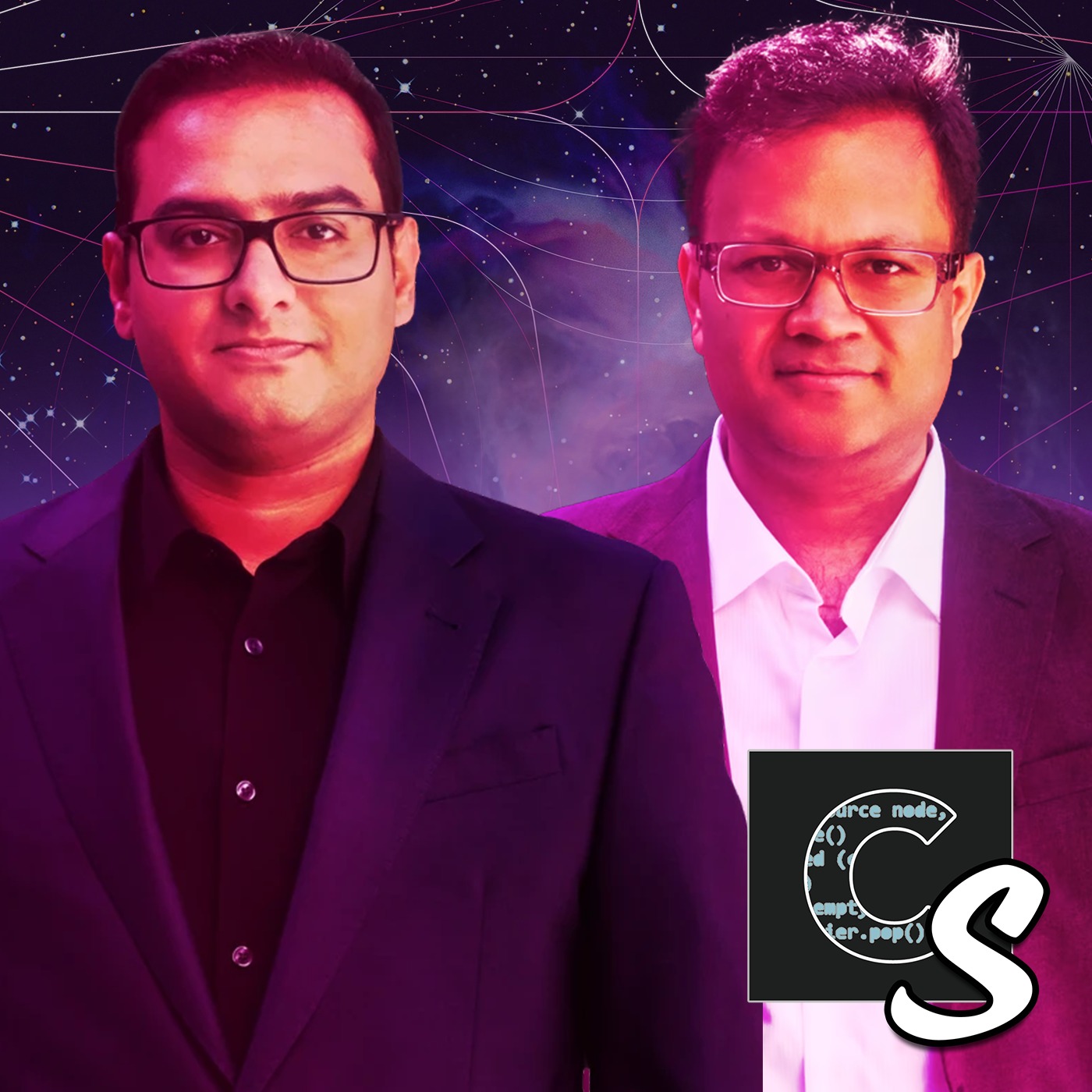
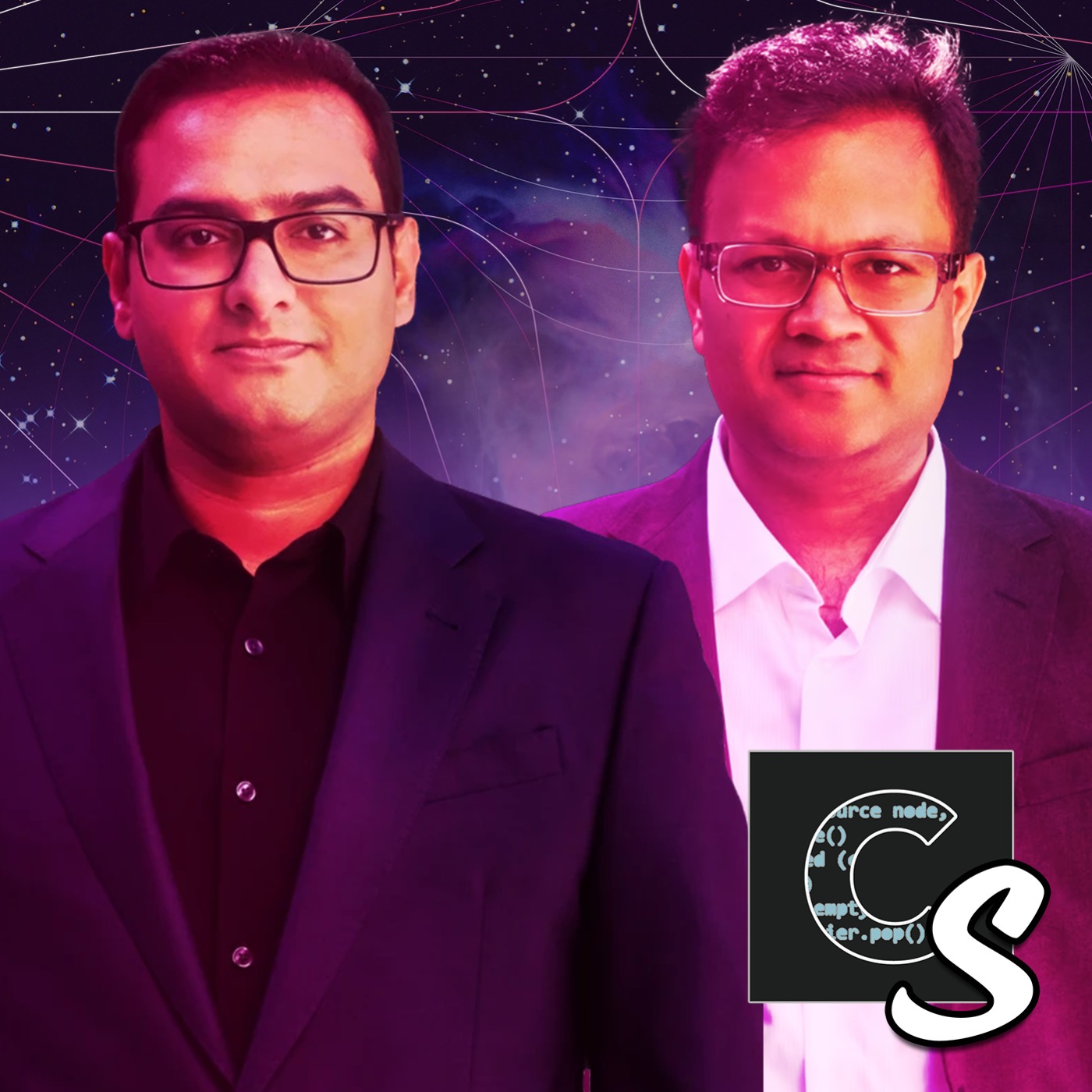
S12 Favorite - Overcoming Broken Right-Sizing Models to Automate Real-Time Cloud Cost Optimization with Sharad Kumar & Harshit Omar, Co-Founders of FluidCloud
In this episode
Sharad Kumar lives in Pleasanton, California with his wife and 2 kids. He enjoys playing all musical instruments, and spending time with his family. He has a 2 year old daughter, and a 14 year old son into robotics. He is also passionate about giving back to the community, through their company foundation.
Harshit Omar lives in San Francisco, and is married with a 4 year old son. He used to be a street racer in his college days, loving fast cars and taking risk. Nowadays, he is a big marvel and comic book fan, along side his son. In fact, his son thinks he is Captain America, regularly wielding his shield and mask.
A fun fact about both of these gentlemen: this is their third company to work together in, their second startup, and their wives are sisters. So they are connected by wives, and united by startups.
In their previous startups, Sharad was leading sales and ops and Harshit was leading on the product side. When the company got acquired, it took them 8-9 months to integrate to a different cloud provider. They realized the model was broken, requiring expensive consulting services, and not convenient at all - and they wanted to figure out a better way.
This is the creation story of Fluidcloud.
Sponsors
- Unblocked (https://getunblocked.com/codestory)
- TECH Domains (https://get.tech/codestory)
- Mezmo (https://mezmo.com/codestory)
- Braingrid.ai (https://braingrid.link/code-story)
- Alcor (https://alcor.com/podcast)
- Equitybee (http://codestory.co/equitybee)
- Terms and conditions: Equitybee executes private financing contracts (PFCs) allowing investors a certain claim to ESO upon liquidation event; Could limit your profits. Funding in not guaranteed. PFCs brokered by EquityBee Securities, member FINRA.
Links
- https://www.fluidcloud.com/
- https://www.linkedin.com/in/sharadkumar123/
- https://www.linkedin.com/in/harshito/
Current Sponsors:
Checkout our Stacklist! https://stacks.codestory.co/
Hosted by Noah Labhart | Technical Founder & Startup Mentor.
Our Sponsors:
* Check out Granola and use my code granola.ai/CODESTORY for a great deal: https://granola.ai
* Check out Perplexity and use my code pplx.ai/codestory for a great deal: https://www.perplexity.ai
Advertising Inquiries: https://redcircle.com/brands
Privacy & Opt-Out: https://redcircle.com/privacy
[SPEAKER_02]: So I thought okay it'll be cool thing the MVP would be okay we'll use some AI and our own models and then we'll generate 10 of them but interestingly AI was never able to come up with an 100% accurate terraform which can just run on deep but in my great there was always a human intervention needed so I told this to sure I think this is too aggressive and too ambitious thought here take and we cannot achieve it. [SPEAKER_03]: we wasted a lot of time with AI and then we look into it somebody when there are a lot of competitions which heard what we were doing and they're trying to do it and most of them assumed that we were doing through it and that was the fun part because they're still trying to do it so I'm loving it.
[SPEAKER_03]: Hi, I'm Sharad. [SPEAKER_03]: Hi, my name is Harshith and we are the co-founders at
[SPEAKER_01]: The podcast brings you interviews with tech visionaries. [SPEAKER_01]: Six months moonlighting goes. [SPEAKER_02]: I'm lost in all the backgrounds. [SPEAKER_01]: Who share what it takes to change an industry? [SPEAKER_02]: I don't exactly know what to do. [SPEAKER_01]: It certainly goes to get right. [SPEAKER_01]: Who built the teams that have their bad company is its pinnacle. [SPEAKER_00]: The teams help each other achieve those proud of our team. [SPEAKER_01]: Keeping scalability top of mind.
[SPEAKER_01]: All that infrastructure was happening. [SPEAKER_00]: It hasn't been fighting it as we grow. [SPEAKER_01]: Total waste of time. [SPEAKER_00]: The stories you don't read in the headlines. [SPEAKER_00]: It's not an easy thing to achieve. [SPEAKER_01]: To get yourself a deficit of it off and try to begin to ride the ups and downs of the startup line. [SPEAKER_00]: Need to really want it. [SPEAKER_01]: Not just about technology. [SPEAKER_01]: All this and more. [SPEAKER_01]: On code story.
[SPEAKER_01]: I'm your host, Noel Abhart. [SPEAKER_01]: And today, how's Rattumar and Harshit Omar? [SPEAKER_01]: Built infrastructure that moves with you. [SPEAKER_01]: So you can innovate where you want without cloud locked in.
[SPEAKER_01]: Throughout Kumar, lives in Pleasanton, California with his wife and two kids. [SPEAKER_01]: He enjoys playing all musical instruments and spending time with his family. [SPEAKER_01]: He has a two-year-old daughter and a 14-year-old son into robotics. [SPEAKER_01]: He's also passionate about giving back to the community through his company's foundation. [SPEAKER_01]: Harshette Omar lives in San Francisco and is married with a four-year-old son. [SPEAKER_01]: He used to be a street racer in his college days, loving fast cars and taking risks.
[SPEAKER_01]: Nowadays, he is a big marvel in comic book fan alongside his son. [SPEAKER_01]: In fact, his son thinks he's Captain America, regularly wielding his shield and mask. [SPEAKER_01]: A fun fact about both of these gentlemen, this is their third company to work together, their second startup, and their wives, or sisters. [SPEAKER_01]: So they're connected by wives, and united by startups.
[SPEAKER_01]: In their previous startups, Shorod was leading sales and ops and harsh it was leading on the product side. [SPEAKER_01]: When the company got acquired, it took them eight to nine months to integrate to a different cloud provider. [SPEAKER_01]: They realized the model was broken, requiring expensive consulting services and not convenient at all, and they wanted to figure out a better way.
[SPEAKER_01]: This is a creation story, a fluid cloud.
[SPEAKER_03]: the world is changing going towards AI. [SPEAKER_03]: So much innovation happening, people are still locked up into their cloud providers and they don't have the freedom to go to any cloud provider the way they wanted on a click button. [SPEAKER_03]: This is, as I said before, Harshith and Maya, a third company and second startup together. [SPEAKER_03]: In the previous one, I was one of the court founding team, and did majority of the sales and business operations. [SPEAKER_03]: Harshith was one of the major contributors from the tech perspective.
[SPEAKER_03]: When the company got acquired, it took us almost eight to nine months to integrate from one account of AWS, to another account of AWS. [SPEAKER_03]: And I'm like, this has to be integrated, this, it cannot take so much time, this is not right. [SPEAKER_03]: When I realize that most of the companies, when they have to do this, they'll get an external consulting companies, the SIs and everyone will come, they'll just charge, if he mongers bill and they just do it. [SPEAKER_03]: And I'm like, look, this is not the right model, everything is [SPEAKER_03]: on a click button by this cannot be on a click button and then we realize that the way these cloud companies they have built the cloud APIs, everything is separate and different and so that's where we started building a fluid cloud that can we have uniformity across the cloud APIs and that's where we started building the whole company and from there the Broadcom acquisition happened for VM there and then there was a price rise [SPEAKER_03]: and like there is so many other influences happen on the way from the cloud out to just perspective and all that effect like wow we are very lucky to be actually giving birth to the true multi-cloud in the industry.
[SPEAKER_02]: When it comes to infrastructure and this is like 2023, the year 2023 and 2024 has been the most disruptive for the infrastructure domain in the cloud infrastructure industry because as brought come acquired VMware and then they started taking advantage of that and people customers started really felt helpless with they can't do anything, price is high, they cannot move anything, stuff like that. [SPEAKER_02]: Another interesting thing also happened was, Hashi Corp, they have to perform which was an open source, looks code, and they all of a sudden, they said, hey, this is no longer an open source.
[SPEAKER_02]: You guys should start paying, there's a huge backlash from the whole DevOps and develop the community about it, and there was a birth of open tofu, which was a full version of that terraform as well as [SPEAKER_02]: a lot of people start checking into polo me and other alternatives and then really they you can't do anything the changes huge your whole infrastructure the whole ecosystem because when you get an infrastructure it's not just from the cloud infrastructure, not bunch of cloud accounts and stuff like that and apps.
[SPEAKER_02]: It's the whole ecosystem right you have your pipeline setup, you have your security, posture setup, you have a [SPEAKER_02]: cost estimates and cost tools and all the stuff. [SPEAKER_02]: It's a really whole ecosystem and that this is too much of disruption. [SPEAKER_02]: So that's where the idea was born and obviously this is our experience when we got acquired by tenable we had. [SPEAKER_02]: I was one of the core members who was actually taking care of that migration of one account or another.
[SPEAKER_02]: And there is no really short clip like this. [SPEAKER_02]: So yeah, we have felt this pain, and that was the main reason, and this particular problem is very close to our hearts, and that is the main reason why we wanted to start fluid blood basically to solve this particular problem.
[SPEAKER_01]: Let's dive into the MVP for Fluid Cloud at first version of the product to build. [SPEAKER_01]: How am I going to take the building? [SPEAKER_01]: What sort of tools were you using to bring it to life? [SPEAKER_02]: First of all, we took four months, we started something like last year, August. [SPEAKER_02]: So, Shadha and me, you were like having this, okay, let's, want to up, simple MVP, would be here, there are bunch of resources running in AWS, and you'll just log in into Azure account, it's MP, you come to Fluid Cloud, just click, do a migrate button, and then there you will refresh that Azure account and you see all the resources appeared there.
[SPEAKER_02]: And I said, okay, we can do that. [SPEAKER_02]: We started looking into some lot of AI. [SPEAKER_02]: So people were doing code generation, right? [SPEAKER_02]: Go land code generation, Python code generation with all this coding assistance and stuff like that. [SPEAKER_02]: So I thought, okay, it'll be cool thing. [SPEAKER_02]: The MVP would be, okay, we'll use some AI and our own models and some people train some models and then we'll generate ten of them. [SPEAKER_02]: But interestingly, we actually wasted four months with that because AI was never able to come up with an 100% accurate terraform which can just keep run on deep but in my gate.
[SPEAKER_02]: There was always a human intervention needed. [SPEAKER_02]: So I told this to Shadhi Sharad. [SPEAKER_02]: I think this is too aggressive and too ambitious. [SPEAKER_02]: Thought he had taken and we cannot achieve it. [SPEAKER_02]: So that was the time where that four months we spent four months in doing something and we couldn't do it and then we felt in the phase where okay what should we do then? [SPEAKER_02]: Should we do start something else? [SPEAKER_02]: What is it like if this is not possible?
[SPEAKER_02]: Then that's when we went back and had that break to where the reason we were avoiding is male off-building that mapping and that as shirts had their different APIs and stuff. [SPEAKER_02]: The reason we were avoiding it's because it's too much of an initial effort, like he literally humongous, just to give you some just bare random number that the combinations are all you. [SPEAKER_02]: Number of possible ways how you can configure an AWS cloud account. [SPEAKER_02]: goes into 3 to 4 billion combinations and when you multiply that with similar equal amount in Azure and GCP.
[SPEAKER_02]: So imagine building that mapping engine which can have the whole 3 billion 9 to 10 billion combinations is almost impossible to do. [SPEAKER_02]: So we went ahead and we started working on the mapping ourselves in house. [SPEAKER_02]: And that's when we spread that breakthrough and yes, watch her actually had that vision, hey, click better migrate, zero human intervention. [SPEAKER_02]: You were able to achieve that. [SPEAKER_02]: That came out at first week of this news. [SPEAKER_03]: I think the initial MVD, one of the ways when I look at it into it is, those are just the experiments which we do as I've said, tricyclyclyclyclyclyclyclyclyclyclyclyylylylylylylylylylylylylylylylylylylylylylylylylylylylylylylylylylylylylylylylylylylylylylylylylylylylylylylylylylylylylylylylylylylylylylylylylylylylylylylylylylylylylylylylylylylylylylylylylylylylylylylylylylylylylylylylylylylylylylylylylylylylylylylylylylylylylylylylylylylylylylylylylylylylylylylylylylylylylylylylylylylylyl
[SPEAKER_01]: So then you've gone through the process, right? [SPEAKER_01]: You've dug into AI, figured out it's not what you wanted, and then you got to the point where you have your MVP. [SPEAKER_01]: How did you progress and mature fluid cloud from there? [SPEAKER_01]: And I think to wrap in a box a little bit, what I'm looking for is how did you build your roadmap? [SPEAKER_01]: How did you go about deciding that, okay, this was the next most important thing to build or to address with fluid cloud.
[SPEAKER_03]: One of the ways I would suggest is, and this is to all and not the way they are working, you yourself are the super user, you yourself are feeling the pain, look at the way the company's like Apple came up, look at the way companies like Google. [SPEAKER_03]: Slag came up everything was for the personal use so when you yourself are the super user and you can Any you can imitate the pain somebody might have and you're intelligent enough and not lazy enough to solve it [SPEAKER_03]: A very typical way of building a startup is, hey, I'll do 100 user interviews, and I'll figure out what the problem they're facing, and then we'll come up with all the problems, and then we'll try to build a solution.
[SPEAKER_03]: Goes back to Henry Ford, what he said, if I would ask my user, they would need a fast-a-hars. [SPEAKER_03]: So, one of the mistakes what most of the entrepreneurs do is they'll go to the users and ask them what to look at. [SPEAKER_03]: Today the time in the era has changed so much, and I don't know if that was true or not, but this is what we keep hearing about New Sahan people. [SPEAKER_03]: But in today's era, what has to happen is you have to give the best the tech has to offer to the user to solve their problem, not exactly building what they're saying because technologically the user has a very limited knowledge on what maximum could be built.
[SPEAKER_03]: Otherwise he would have solved it or she would have solved it by now. [SPEAKER_02]: We won't not taking any shortcuts. [SPEAKER_02]: You know, it will build a lot of things. [SPEAKER_02]: There's literally no shortcut of doing things. [SPEAKER_02]: And typically what happens in a startup, people, you have to have that pressure off, okay, we have to get out of the market because we'll lose time or we might have to take some thing. [SPEAKER_02]: Let's do some patchwork for now for the MVP and then we go ahead and build something later once we see the traction.
[SPEAKER_02]: We had this vision, okay, people will be using multiple clouds, but we never took shortcuts. [SPEAKER_02]: Even in December when we came up with that MVP, our MVP had a dev stage in broad, like all-seed deployments. [SPEAKER_02]: We had the whole overall automated deployments, and then we actually went ahead and invested a lot of things on the building that our own custom QF framework, as well as unit test cases. [SPEAKER_02]: We started with 10% unit test coverage. [SPEAKER_02]: Now you don't see a start of it.
[SPEAKER_02]: You have zero customers, while focusing on having one sprint just adding unit test cases and refactoring [SPEAKER_02]: We had RMVP was a performance benchmark with 35 million records of no downtime, literally. [SPEAKER_02]: So there's no shortcut and we took time. [SPEAKER_02]: So when me and Sheldon were talking, I said, hey, you have to give that time. [SPEAKER_02]: And when that MVP comes up, it makes sure it is ready for users to be taken up. [SPEAKER_02]: So we were actually in the stage of MVP, but [SPEAKER_02]: It was in the real world scenario that would be like as good as a version one of any product used like users can just wouldn't sign up and start using an end-rip thing.
[SPEAKER_02]: Yeah, that was the philosophy we had actually had. [SPEAKER_03]: Always great companies are built like bamboo and I think pretty much everyone might have heard before about the bamboo parable where you have to keep watering the bamboo for a couple of days, months, all the way together. [SPEAKER_03]: you'll not see any results on day one. [SPEAKER_03]: You'll not see any results on month 4, but you have to keep giving the water. [SPEAKER_03]: However, the day the bamboo shoots up, it shoots up 70-80 feet and that happens very fast.
[SPEAKER_03]: and that means that all this while bamboo was getting ready for the high road. [SPEAKER_03]: As Harsh had said, we invested, we kept giving water for one year, and today when we are coming out of stealth, you're coming out of market, the kind of response which we are getting. [SPEAKER_03]: Even cloud service providers are literally amazed of how you guys were able to achieve it, and that's what we are really proud of.
[SPEAKER_01]: You know, in that description you're talking about how, you know, you're going about this and you're saying, we, and I know you referencing each other in that, but also there's a team there. [SPEAKER_01]: How did you go about building that team? [SPEAKER_01]: And what do you look for in those people to indicate that they're the winning horses to join you? [SPEAKER_02]: Also, while we are team from day one, a lot of our last company in Genie is wanted to join here. [SPEAKER_02]: You guys are doing something I am in.
[SPEAKER_02]: As you want to listen about the idea, what do you guys do? [SPEAKER_02]: Just can't be in. [SPEAKER_02]: We had almost like 10 people. [SPEAKER_02]: Actually Akarik's guy is the same core team which worked with me. [SPEAKER_02]: I was one of the individual contributors there and then they like my work. [SPEAKER_02]: They wanted to work with me again and share that as well because as a share that as a person as he says He's a absolute charm to just talk to and he's a very personal guy.
[SPEAKER_02]: He connects with everyone and the personal level. [SPEAKER_02]: So yeah, so when we started now, we had and people were given that already and then when a lot of other people was like and we wanted to join [SPEAKER_02]: He actually were hiring, but we were going very crackily. [SPEAKER_02]: One who believes in our vision, one who doesn't give scripts about complaints. [SPEAKER_02]: People who are doing startups, they are their hustler. [SPEAKER_02]: Whatever do whatever it takes to get it done.
[SPEAKER_02]: No complaints, no questions, whatever it takes, you understand what we student like them. [SPEAKER_02]: So that's what we look for. [SPEAKER_03]: When he is saying, if nobody complains, it's primarily on startup is a grind and definitely you have to put little more hours than normal, so from the cribbing perspective, that's what really hurts it means. [SPEAKER_03]: But at a very fundamental level, when we look at being weakland to higher, [SPEAKER_03]: I think we're hiring more on the people who are problem solvers.
[SPEAKER_03]: Somebody who might have a five-year experience, somebody might have 15 years experience. [SPEAKER_03]: We understand that they both come with one comes with experience, but we might actually go with somebody who's a problem solver. [SPEAKER_03]: You give a problem to someone and then the person can trace it back and then they can actually solve the problem. [SPEAKER_03]: One thing which I've also realized is as we are progressing into this, big companies and small startups, they have very different culture.
[SPEAKER_03]: So I think people who have the attitude for startup, which is like, beyond this, if like after like we are all celebrated, fluid cloud and see how the natural progression happens.
[SPEAKER_03]: go out and build their own cup. [SPEAKER_03]: and can I give them a platform today to teach them how to build a company? [SPEAKER_03]: So, that's one of the ways I look into it when I hire that they're really ambitious, they want to make a dent in the industry and they're innovative, just coming out out of the box ideas and fearless. [SPEAKER_03]: I think that's one of the qualities which at a very fundamental level we look at because the problem which we have taken itself needs people who are literally fearless.
[SPEAKER_03]: have zero respect for the status quo, then they can actually have the power to bend the technology. [SPEAKER_03]: The similar way me and Harshith are also like that, that's what we look at. [SPEAKER_03]: But at the base level, these people should be fun to work. [SPEAKER_03]: I would say they believe in the company vision, but they also believe in the company values. [SPEAKER_03]: We, in this company, we have one philosophy, you can build a great company not being an asshole. [SPEAKER_03]: This is exactly what we say to everyone.
[SPEAKER_03]: We'll have a lot of laughs and we'll just have so much fun and we'll work relentlessly. [SPEAKER_03]: And this all of that is possible. [SPEAKER_03]: If you pick up the right problem and solve the right problem, market has all the opportunities for you.
[SPEAKER_01]: Let's move forward into scalability and this will be interesting given it's got to be baked into your bread and butter and what's your building But how did you approach that from the beginning I think what's more interesting is like have there been interesting areas where you've had to fight scale as you've grown? [SPEAKER_02]: not really. [SPEAKER_02]: I mean, it might appear externally that okay, we are doing a start of real small, but all of us basically who has worked on it, we have all worked in a big scale company.
[SPEAKER_02]: We know what are those design patterns are, the most proven design patterns using scalable microsoft's architecture, whatever. [SPEAKER_02]: Hundreds of ways some developers discuss about what solution goes and what are the loop holes and what are the pain points which end up later on. [SPEAKER_02]: we are aware of that so it's not that we are building a startup because we are small. [SPEAKER_02]: It's just all we are bringing in all those experiences of big companies from ground up.
[SPEAKER_02]: So when we started we had everything sorted out from the day one like all the practices what you find in a big enterprise companies we do have that. [SPEAKER_02]: We always felt this need of underserved, actually. [SPEAKER_02]: We were like, start with 10 people, then we gradually started growing like 15, 20. [SPEAKER_02]: Now we are like, what, 35 people. [SPEAKER_02]: And in the engineering is again, like 26 people. [SPEAKER_02]: But our philosophy is, no matter what, the number of features we are going to share or the number of, we always had the two weeks of sprint cycle every two weeks, we release features.
[SPEAKER_02]: And the number of features we are shipping, whether there is one person in the team, or whether there is 10 person in the team, [SPEAKER_02]: There's no difference. [SPEAKER_03]: The way I always look at it is when we started with this whole problem. [SPEAKER_03]: I understood one thing very clearly. [SPEAKER_03]: The product has to be built on day one first scaling. [SPEAKER_03]: And the reason for that is multi-cloud is starting just to start with it's the fortune 2000 problem. [SPEAKER_03]: So that's the scale we might be actually going with and then also we realize that from an MVP perspective when we just started with and all the way to how do we scale from the time we started the first iteration of the product till now the very designed whole product was just scale and the way we have put the whole architecture is just to scale.
[SPEAKER_03]: So today adding a feature adding a cloud service provider in itself. [SPEAKER_03]: is not really a big issue. [SPEAKER_03]: So that's the very thought about it. [SPEAKER_03]: Also from a scaling perspective, this is more from the tech side, from the side of, from the business perspective. [SPEAKER_03]: The scaling is primarily, we understand that this particular pain point of people exiting the M there, because of the price rise, becomes our headpin. [SPEAKER_03]: and the way it becomes our headpin is because VMware has given almost 1,000 percent like this is approximate numbers but approximately around 1,000 percent price increase they've sent sea strength to sea slatter to perpetual license holders all of them they are on a timeline and since they are on the timeline our next best called donated is a consulting company and if they go with that consulting company it can also use us [SPEAKER_03]: But now instead of paying 5 million to a consulting company, they can actually spend X amount of dollars and which is much lesser than 5 million and still get the same job done And that's the breakthrough which we wanted and this is like we knew that the problem is big [SPEAKER_03]: Today, Gartner Kevin came out with its own study, they have said like almost 70% or 75% of all the VMware customers would exit over next to the three years, and there's another public poll which they have done, 74% of all the VMware users think that they'll be thinking their relationship on the VMware site, so most of them are planning to either move to
[SPEAKER_03]: or either they would like to go cloud-need him. [SPEAKER_03]: And we want to be the, the thoughts we're looking for back. [SPEAKER_01]: I'm curious about, you know, as you step out on the balcony, you look across all that you've built with fluid clouds specifically, what are you most proud of? [SPEAKER_01]: definitely not one thing but a couple of mentions. [SPEAKER_02]: We have a couple of patterns. [SPEAKER_02]: We have proud of our mapping which is basically the core engine. [SPEAKER_02]: Basically, if that provides the value water is like literally what we thought me and Shirley were like discussing last year.
[SPEAKER_02]: Hey. [SPEAKER_02]: people would be moving from one cloud to another and they'll be out to just coming up in like you cannot depend on a public cloud and for such a this always things go down and people felt helpless so if you want to build it where using which you can just go from one cloud to another like piece of cake and it should appear like magic. [SPEAKER_02]: and that is what we are actually getting in the lot of feedback from the customers and they're like talking about it.
[SPEAKER_02]: Oh, absolutely magical and you guys have made it so simple and 2025 has been really lucky. [SPEAKER_02]: Yeah, because every major cloud provider hyperskiller has been gone through some outage, like GCP had an outage in June, OCI had an outage in April. [SPEAKER_02]: AWS and Azure both have
[SPEAKER_02]: October. [SPEAKER_02]: So yeah, we are really proud of what we thought the direction in which the industry is going and we predicted that where the industry is going and we exactly have the solution what people want and that is just an amazing feeling. [SPEAKER_03]: One thing which I am fundamentally proud of is the team, because all of this is possible the base layer is the team. [SPEAKER_03]: The values of the team which we have and the discipline the way we run it, the high level discipline which we have the team.
[SPEAKER_03]: and then what has come out of it? [SPEAKER_03]: What has come out of it primarily is the great product, a great culture, and definitely happy customers. [SPEAKER_03]: When we look into all of that, that's what makes us proud. [SPEAKER_03]: Even from a product perspective, I think [SPEAKER_03]: It's a 20 year old industry problem, maybe more, I don't know. [SPEAKER_03]: But it's almost a 20 plus year old industry problem, trying to go head on with it. [SPEAKER_03]: Another thing which I am proud of, this is another fun thing which happened.
[SPEAKER_03]: We were at very recently, we were at AWS Reinvent and we were invited in a setting, like most of the guys, CIOs and head of infrastructures and few of the investors around. [SPEAKER_03]: I was talking about what we are doing to the group and then they said you have not even used the word AI once, most likely you are doing something meaningful, I'm interested. [SPEAKER_03]: I said we have AI, it's not that we don't have AI of course, but for us AI is just a use case, it's a tool between enhance a use.
[SPEAKER_03]: That's what the way we look at AI. [SPEAKER_03]: That's the reason it's real good cloud.com, not AI. [SPEAKER_03]: And then the thing is what we are building towards the AI has a pretty fundamental value because all of that works primarily if you have all the functionalities correct. [SPEAKER_03]: So that's what now what we have proud of that from here, our future roadmap looks so strong that we are on a roller coaster, right? [SPEAKER_01]: But let's flip the script a little bit. [SPEAKER_01]: Tell me about a mistake you made and how you and your team responded to it.
[SPEAKER_03]: We did say that earlier and I'll interview one of the mistakes we did was using AI. [SPEAKER_03]: And that's why this is not working like we try doing everything possible under the sun It just it was painful that was one another thing is one of the mistakes What I think at a very fundamental level is getting the clarity of who we exactly want as as part of the whole team as things got more clear as we are progressing [SPEAKER_03]: So I think that clarity also came to, you know, that also is one of the things where I think more clarity came as we are building this whole new ecosystem on the infrastructure site.
[SPEAKER_03]: From a good market standpoint, I think one of the mistakes we always think and this is novel always says this one of the entrepreneurs that people try to keep company understand and then they come out and then they think voila I have done here guys just go for it selling is extremely painful and we do realize that part but the thing is the network effect is equally valuable once you have something extremely valuable for the industry it just goes through word of [SPEAKER_03]: on day one I was expecting hey I should be having like at 200 leads why like 500 or 200 leads and then now yes now I have a very good piping which is definitely very qualified one but I think that those thoughts initially were like oh it doesn't work this way actually now I was right [SPEAKER_02]: This is like our second start-up together, right?
[SPEAKER_02]: And she'll be in the pit run for now. [SPEAKER_02]: I was just an individual contributor, but now I'm like being as a founder. [SPEAKER_02]: But the thing is, if we assume things, oh, we are doing this second-of-eat video on this. [SPEAKER_02]: We know all stars. [SPEAKER_02]: But yeah, trust me, when you start a startup, things are not easy. [SPEAKER_02]: None of those assumptions work. [SPEAKER_02]: There is literally as we said, there's no shortcut for it, there's no shortcut for it.
[SPEAKER_02]: Like you have to do your homework, no matter how many times you have done it, how things are repeatable, but then yeah, you cannot take shortcuts. [SPEAKER_02]: So we had this as watchers that we had a lot of assumptions over. [SPEAKER_02]: Hey, we have this cool product. [SPEAKER_02]: The whole world, but just jump on it and start using it, but then we realized, [SPEAKER_02]: Oh, it's so difficult to come up with some idea which nobody has ever seen and now it takes time for them to understand there's a lot of skepticism over there How you guys doing it?
[SPEAKER_02]: Why could others people do it and stuff like that? [SPEAKER_02]: We joke around in the community. [SPEAKER_02]: Hey, it takes more time decide to move to a cloud than actually move the cloud This will be fun. [SPEAKER_01]: Let's move forward then. [SPEAKER_01]: What does the future look like for fluid cloud for what you've built for the product and for your team? [SPEAKER_03]: from the vision standpoint, it doesn't change. [SPEAKER_03]: He'd want to build this industry, clue it from the club perspective.
[SPEAKER_03]: And that's where we are a relentless, relentlessly working on this. [SPEAKER_03]: From a future standpoint, there are a couple of things that surprises for the industry which are coming in in the future. [SPEAKER_03]: Until March, but I think right now, we are heads down on closing the customers. [SPEAKER_03]: We have, and, [SPEAKER_03]: Yes, I think the scale and the speed of growth that itself is quite overwhelming. [SPEAKER_03]: So that's something we want to be very careful about that we eat what we can chew and digest too and not take much because we are at a stage where [SPEAKER_03]: We are about to touch the Jacob, we are about to touch the product market for it.
[SPEAKER_03]: And so once we have that, and I think once you use the NISOL, a very critical problem that comes very fairly early. [SPEAKER_03]: So that's where we are, from a technology standpoint, I think just all these customers we have just keep working with them, make it more scalable, make it that features which the think are not aligned to what they want, and if you hear it, I mean again, you want to make those changes. [SPEAKER_03]: But yeah, I think at this point in time, there are so many surprises for the industry.
[SPEAKER_03]: The time will definitely reveal that. [SPEAKER_02]: Yeah, honestly, we don't know where this will go, but at the same time, we are also like just making sure area prepared for that in every way. [SPEAKER_02]: And yes, we do have a lot of surprises and a lot of cool things coming up.
[SPEAKER_01]: Let's wish to you guys who influences the way that you work. [SPEAKER_01]: Name a person or many persons or something. [SPEAKER_01]: You look up to him why. [SPEAKER_03]: I admire Ratan Data, the most as an entrepreneur. [SPEAKER_03]: Because in a true sense, I think the way the whole Tata group was set up is just to give back to society. [SPEAKER_03]: That's whom I always aspire to be. [SPEAKER_03]: And that's how we have built the horror organization this. [SPEAKER_03]: I may only need always give 2% off.
[SPEAKER_03]: What about the Japanese? [SPEAKER_03]: Are for our future clip foundation? [SPEAKER_03]: So that's somebody I look up to always and we have really good advisors which is part of our Flood Cloud Journey. [SPEAKER_03]: They have built almost companies to the scale of 100 billion dollars. [SPEAKER_03]: So I definitely look up to them with regards to and that's what brings scalability right. [SPEAKER_03]: They know the mistakes I'm making and stuff like that. [SPEAKER_03]: and then I look up to Harshith on most of the things where I lack and from where I am trying to get an inspiration also.
[SPEAKER_03]: So this is a thing which I keep telling him joke about before the word white code got coined. [SPEAKER_03]: Harshith was a walking white code alike. [SPEAKER_03]: He is the personification of white code. [SPEAKER_03]: So, technology details, technology, no houses, very defined, very defined, is man of details. [SPEAKER_03]: But definitely look up to him for a lot of things where I think I sometimes feel I need guidance on. [SPEAKER_03]: But what happened in the previous company, he had a coding sprint I would say, he coded for almost continuously, he took a like an hour break or half an hour break but he coded almost for 30 hours.
[SPEAKER_03]: Straight, right? [SPEAKER_03]: He just told me, and since we are co-brothers, brother-in-laws, he wasn't the same house as I was in. [SPEAKER_03]: And he said, I'm going to take a short nap and he took a nap. [SPEAKER_03]: And I was getting something from the room,
[SPEAKER_03]: And I have recording of that. [SPEAKER_03]: What's going on? [SPEAKER_03]: Yeah, there isn't too much. [SPEAKER_03]: So I just, like, I didn't bother him that time, but that time I realized that only passionate people can build passionate startups. [SPEAKER_03]: Too passionate about, I'm too passionate about coding actually. [SPEAKER_02]: But yeah, my role models are like, I'm very much inspired by Steve Jobs and my role models are Steve Jobs and Elon Musk. [SPEAKER_02]: The reason mainly did their approach.
[SPEAKER_02]: First of all, those guys, they are like very defined thought process. [SPEAKER_02]: What they want to achieve, they have a vision and then they have the execution, how they want to achieve it. [SPEAKER_02]: And that's what really inspires me. [SPEAKER_02]: Like in whatever way you see it. [SPEAKER_02]: And yes, and I do learn a lot of things from shreds. [SPEAKER_02]: One thing which shreds has made me learn is nothing is black and white. [SPEAKER_02]: And in coding, like you always have an if and then else block or either this or that.
[SPEAKER_02]: But when it comes to sales, marketing, business or nothing, he straight forward. [SPEAKER_02]: There's a lot of green. [SPEAKER_02]: Yeah. [SPEAKER_02]: and so yeah I learned that a lot he really connects to the people really well and I'm like I sometimes get amazed how he can just simply talk like as if those guys are just meeting after they're like best friends and meeting after such a long separated times is talking a lot and do you know this guy? [SPEAKER_02]: No, this is my first time I met him like okay how do you do this?
[SPEAKER_02]: Just connect to people that are really personal level. [SPEAKER_02]: Yeah it probably is a learning working with him. [SPEAKER_01]: Gentlemen, last question, so you're getting on a plane, and you're sitting next to a young entrepreneur who's built the next big thing. [SPEAKER_01]: They're jazzed about it, but can't wait to show it off to the world, and can we shut off to you right down the plane? [SPEAKER_01]: What advice do you give them? [SPEAKER_01]: Having gone down this road a bit, several times.
[SPEAKER_02]: reality check has to be there like you cannot just simply become an ostrich and assume as found a little bit I am like super enthusiastic about it and then yes this will work. [SPEAKER_02]: Do that market study take your time to take this they come to a conclusion take addition and once you have decided once you have the vision sorted then don't change. [SPEAKER_02]: There'll be hundreds and thousands of people coming up just to test you out or just to always say something negative about it to make you change what you want to do.
[SPEAKER_02]: But if you believe in yourself, if you believe in that vision, if you have the guts to do it, who's a little like, have that reality check and have confidence keep going. [SPEAKER_02]: Ultimately everybody receives becomes successful. [SPEAKER_02]: Success is not a achievement in terms of an activity. [SPEAKER_02]: It's a time-based measurement. [SPEAKER_02]: If somebody can become successful in one year, somebody can become successful in one year. [SPEAKER_02]: 5 years, but eventually everybody becomes successful.
[SPEAKER_02]: All you have to do is figure out what is the minimum time you can, how can you minimise that time. [SPEAKER_03]: Antipnorship journey itself extremely painful, that's a chance in Mawal. [SPEAKER_03]: Always said, it's very painful because I think to build the generational value, it takes three generations sacrifice. [SPEAKER_03]: Your parents will not get your time. [SPEAKER_03]: Your family is not going to get your time. [SPEAKER_03]: and your kids are not gonna get your time. [SPEAKER_03]: So, there are three generations at stake.
[SPEAKER_03]: Like, a wife is gonna always say, hey, I need more time, but you can go and give enough. [SPEAKER_03]: And we both are not very lucky. [SPEAKER_03]: Like, we have very supply level of support, but yeah, it takes three generations active. [SPEAKER_03]: So, are you ready for that first? [SPEAKER_03]: Because, you can build a cool product today, but this is a marathon. [SPEAKER_03]: It's not a spring. [SPEAKER_03]: So do you have you build muscles enough to run on that marathon and those muscles are primarily resilience which is there in not getting disheartened as her shit said because when we started with it half of the people they said this is not possible so you guys are taking an achievable goal and this will never happen.
[SPEAKER_03]: Try to be actually doing there are customers who are actually using it so extremely proud of it. [SPEAKER_03]: So that's going to be one second is identification of the
[SPEAKER_03]: The problem has to be good enough and high enough, so people appreciate that. [SPEAKER_03]: Your solution has to be, yes, of course, needs to be out of the box and a tripbook. [SPEAKER_03]: Build for scale, don't build to flip the companies and also one thing which I would highly suggest don't go with the waves. [SPEAKER_03]: Today we have any eye wave. [SPEAKER_03]: So I see a startup two years back. [SPEAKER_03]: It isn't the company's call X. [SPEAKER_03]: And then once the AI wave wave hits, it suddenly becomes an AI blog company.
[SPEAKER_03]: And then suddenly agents comes in. [SPEAKER_03]: It's AI agent take blog company. [SPEAKER_03]: And then the next wave which comes in, which is AI, which will be AI, AI, AI or whatever agent take blog company. [SPEAKER_03]: People keep changing these companies based on what investors want to listen to, but they should be building the companies, what the user wants to listen to, what the user wants to solve actually. [SPEAKER_03]: So that's how great companies are built. [SPEAKER_03]: Silicon Valley is burial ground of great products, so great product with good distribution.
[SPEAKER_03]: So if content is king distribution is God, as you're doing this podcast, content is king, but distribution becomes God. [SPEAKER_03]: So every single time somebody is actually showing the great product, the next question is what's your distribution strategy? [SPEAKER_03]: So have a very clear distribution strategy while you are actually also building the product. [SPEAKER_03]: In parallel, that's where you need to go found at some time. [SPEAKER_03]: One is relentlessly working on [SPEAKER_03]: The product part of it the other one is more focused on the distribution and the channel part of it So that's how great companies over it both fantastic pieces of advice Well, sure out.
[SPEAKER_01]: How should thank you for being on the show today and thank you for telling the creation story of fluid cloud Thank you so much Noah. [SPEAKER_02]: It's actually it actually felt like it's hitting above off This is the most enjoyable part because I That is great to hear. [SPEAKER_01]: I appreciate that In this concludes another chapter of code story
[SPEAKER_01]: code story is hosted and produced by no-alapart. [SPEAKER_01]: Be sure to subscribe on Apple podcast, Spotify or the podcasting app at your choice. [SPEAKER_01]: And when you get a chance, leave us a review. [SPEAKER_01]: Both things help us out tremendously.
[SPEAKER_01]: And thanks again for listening.
Latest Season of the Podcast is Sponsored By






 Apple Podcasts
 Spotify
 Castbox
 Player FM
 Pocket Casts
 YouTube
 Overcast
 Castro
 Goodpods
 Moon FM
 Podbean
 Podcast Addict
 Podcast Republic