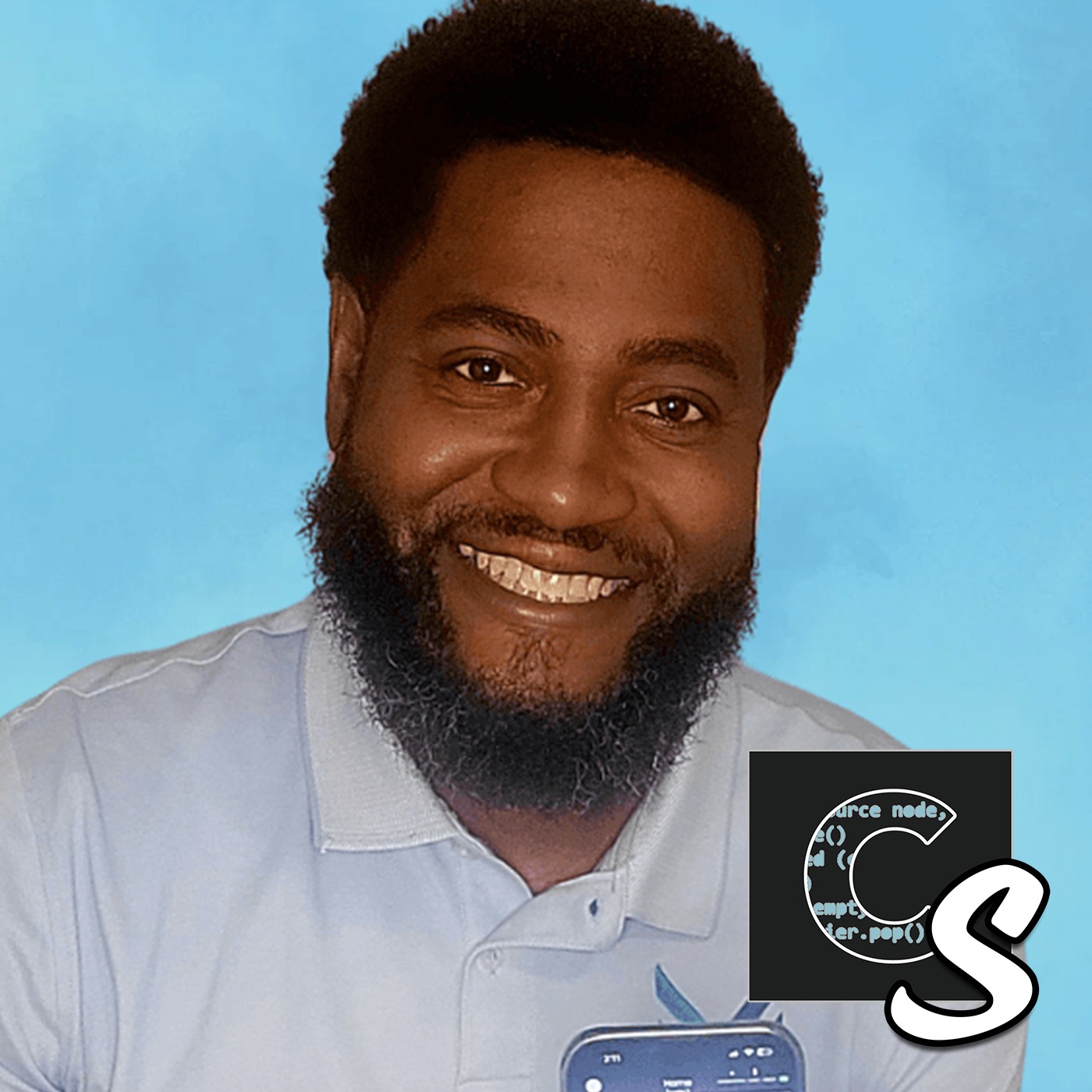
S13 Bonus: Eliminating Friction in Digital Market Discovery & Deal Flow with Demetrie King, Founder & CEO of MarketMatch
In this episode
Demetrie King grew up in Forney TX, but spent most of his life in Waxahachie. He is a Texas man through and through - and an avid side hustler, owning vending machines, buying and flipping things online, and partnering with companies that dispute property taxes. Outside of tech, he likes to hang out with his friends and travel. He has a unique hobby as well, performing standup comedy in the local DFW clubs.
Demetrie owned a vending machine business in the past. He began asking his consumers to rate the items he was putting in the machine, so he could stock it with the winners. As this progressed, he decided to make this into something bigger, with the main goal of creating a large, virtual focus group - with a "swipe-able" survey.
This is the creation story of Market Match.
Links
https://www.linkedin.com/in/demetrie-king-65936074
Current Sponsors:
Checkout our Stacklist! https://stacks.codestory.co/
Check out our Patreon!
Hosted by Noah Labhart | Technical Founder & Startup Mentor.
Our Sponsors:
* Check out Granola and use my code granola.ai/CODESTORY for a great deal: https://granola.ai
Advertising Inquiries: https://redcircle.com/brands
Privacy & Opt-Out: https://redcircle.com/privacy
[SPEAKER_01]: Just putting a sticker on a machine or just putting a flyer up and hoping to get downloads. [SPEAKER_01]: Is that something that really happens? [SPEAKER_01]: You really have to explain, going on, what type of software you're bringing to the table, and all that feedback that I kept hearing. [SPEAKER_01]: Okay, this is something that we would love if it was a lid and we didn't have to download. [SPEAKER_01]: I am a bootstrapped company. [SPEAKER_01]: Everything has been built by myself.
[SPEAKER_01]: I was looking at possible getting some investors to do it, get a CTO to do it as well too. [SPEAKER_01]: With my partnership, [SPEAKER_01]: with Tech Fort Worth, I ran across another founder who introduced me to the AI tools that I could build in myself, so something that was going to end up in a barrier, I was able to mold it myself. [SPEAKER_01]: My name is Dimitri King, and I'm the founder of MarketMatch.
[SPEAKER_03]: a podcast bringing you interviews with tech visionaries. [SPEAKER_03]: Six, six months moonlighting goes. [SPEAKER_03]: It's the last and all of the backgrounds who share what it takes to change an industry. [SPEAKER_00]: I don't exactly know what to do. [SPEAKER_03]: It doesn't go as to get right. [SPEAKER_02]: who built the teams that have their bad company is its team's help each other, which is proud of our team. [SPEAKER_03]: Keeping scalability top of mind, all that infrastructure was up there.
[SPEAKER_03]: Yes, we've been fighting it as we grew up. [SPEAKER_03]: Total waste of time. [SPEAKER_03]: The stories you don't read in the headlines. [SPEAKER_02]: It's not an easy thing to achieve. [SPEAKER_03]: To get yourself a deficit of off, try to begin to ride the ups and downs of the start-up line. [SPEAKER_02]: Need to really want it. [SPEAKER_03]: Not just about technology. [SPEAKER_03]: All this and more on code story. [SPEAKER_03]: find your host, Noah Lapart, and today how to meetry King is helping you cater to your market by gamifying the research with a swipe left or right.
[SPEAKER_03]: Demetri King grew up in Forty Texas, but spent most of his life in Moxahatchi. [SPEAKER_03]: He is a Texas man through and through in an avid side hustler, owning vending machines, buying and flipping things online, and partnering with companies that dispute property Texas. [SPEAKER_03]: But outside of technology and entrepreneurship, he likes to hang out with his friends and travel. [SPEAKER_03]: He has a unique hobby as well, performing stand-up comedy in the local DFW clubs.
[SPEAKER_03]: Demetri owned a vending machine business in the past. [SPEAKER_03]: He began asking his consumers to rate the items he was putting in the machine so he could stock it with the winners. [SPEAKER_03]: As this progressed, he decided to make this into something bigger, with the main goal of creating a large virtual focus group with a swipable survey.
[SPEAKER_03]: This is the creation story of Market Match.
[SPEAKER_01]: So, MarketMatch is a marketing app that utilizes swipable surveys to conduct market research in a gamified fashion. [SPEAKER_01]: So, instead of the usual Google Form type of style survey, we've created a fun tool that gathers community feedback in a fun way to help brands vendors before they launch, place something in the marketplace or spend money in the marketplace. [SPEAKER_01]: So right now, we're rolling this out with a few different colleges here locally, TCU, UTA, and UTD. [SPEAKER_01]: We are introduced a few different ways.
[SPEAKER_01]: One of them is we actually come on campus to showcase it to the students, have them scan the QR code or the University will send a link out for them to click on, for them to be able to go through the survey. [SPEAKER_01]: For every 50 swipes that they do, they get a chance to win some entry to win a cash prize
[SPEAKER_01]: or even a chance to win a case of Celsius. [SPEAKER_01]: We are so partnered with Celsius on campus at TCU and UTD as well too. [SPEAKER_01]: So it's a fun way to get this feedback from the students that really don't like the survey form type that they feel like they're taking another test while they're at school. [SPEAKER_01]: The main goal is to make this a very large virtual focus group so if anyone wanted to sign up they could go to a website log in and then once we have a survey we can send them an email and say hey there's a new market survey out and we love your feedback.
[SPEAKER_01]: I started this because I was an avid side hustler and still the end with the market matches my main focus now. [SPEAKER_01]: one of those side hustles that I had was of any machine business. [SPEAKER_01]: I saw that there was a real disconnect in between what I was putting the machine compared to what my customers wanted the machine. [SPEAKER_01]: Of course, as any business owner, I'm not going to disbuy something above because one person said that they wanted it. [SPEAKER_01]: So I treated my first company.
[SPEAKER_01]: That started, the name of that was actually vending my sheen which I had people rate products on a five star scale to let me know what was really in demand. [SPEAKER_01]: Got some great feedback from that and it up seeing that the number one thing that was in demand at the time was iced honey bun, so I just [SPEAKER_01]: went out of small pack of that, put in the machine and sold out the next day. [SPEAKER_01]: And then I just started going on the line of what else was really wanted, started selling.
[SPEAKER_01]: Got some feedback from my customers and hey, we wish there was like an easier way to give our feedback instead of the rating. [SPEAKER_01]: So I went to swiping, very similar to dating apps. [SPEAKER_01]: And then I had my life all was like, man, this could actually come much further. [SPEAKER_01]: So let me change the name and rebrand it to market met so I can use it for multiple industries, not just for the
[SPEAKER_03]: Let's dive into the MVP of market match. [SPEAKER_03]: The first version of product, this would be post the original rating system, right? [SPEAKER_03]: Where you started to move into building market match. [SPEAKER_03]: Tell me about that first product to build. [SPEAKER_03]: How long did it take to build and what sort of tools were you using to bring it to life? [SPEAKER_01]: So, took me about about six months to build the market match and I actually built that myself. [SPEAKER_01]: I don't have any technical background.
[SPEAKER_01]: However, I'm very ambitious. [SPEAKER_01]: I now with AI tools that are right right now. [SPEAKER_01]: I was able to build the version of market match that I would like. [SPEAKER_01]: Because one of the biggest things that I was hearing from our customers with my first venture was, hey, we were really like this if it wasn't a downloadable app, if it was like a web-based app, so I ended up making this using cloud and other AI tools saying, okay, this is what my customer base is saying, built, put it together and then we got it out in front of the students and then ever since then it's just really been taken off.
[SPEAKER_03]: Let's stay on that for just a minute. [SPEAKER_03]: Tell me about a decision or trade off you had to make and creating that, the product at that point, the way that you did. [SPEAKER_03]: And I hear some and what you're describing, but maybe a core decision that you feel like is like a pillar decision you had to make and that first version and how you cope with making it. [SPEAKER_01]: So the first version, it was pretty solid with a mobile app just in general, just putting a sticker on a machine or just putting a flyer up.
[SPEAKER_01]: and hoping to get downloads. [SPEAKER_01]: Is that something that really happens? [SPEAKER_01]: You really have to explain what's happening, what's going on, what type of software you're bringing to the table, and all that feedback that I kept hearing, okay, this is something that we love, if it was a win and we need to download. [SPEAKER_01]: And it's funny because I was put in a position where I kept hearing that I needed something that was a downloadable, where I was working with a few different people to find someone that could build that for me.
[SPEAKER_01]: I am a bootstrapped company. [SPEAKER_01]: Everything has been built by myself from what I brought to the table. [SPEAKER_01]: I was looking at possible getting some investors to do it, get a CTO, to do it as well too, with my partnership with TechForWorth, I ran across another founder who introduced me to the AI tools that I could build in myself, so something that was going to end up being a barrier. [SPEAKER_01]: Actually, in and up, I was able to mold it myself and put my vision that I've kind of had in my head this whole time in regards to what I would like my software to be.
[SPEAKER_01]: I was able to do it myself and that honestly, that's a great thing to be able to showcase that something that especially being intact. [SPEAKER_01]: One of the things I ask is, hey, did you make this yourself, did you build this yourself? [SPEAKER_01]: And you might lose a little bit of credibility if you say, hey, I had a third party do it, but now I'm able to save myself.
[SPEAKER_03]: Okay, let's move forward then. [SPEAKER_03]: From that point when you build the first MDP, then you progress and mature the product. [SPEAKER_03]: I'm curious about how you went about that, ran a graph that in a box, what I'm looking for is, how do you build your roadmap? [SPEAKER_03]: How do you decide that, okay, this is the next most important thing to build or to address? [SPEAKER_01]: So my company's mission is take the feedback in and make changes according to that. [SPEAKER_01]: That's my whole business with market match is not just on myself, but for a university for brand for anything.
[SPEAKER_01]: It's listened to what the consumer base says and then make the changes accordingly. [SPEAKER_01]: And that's kind of what we're doing right now is like we're rolling out with these universities and getting the feedback from the students, of course, on what they want for like
[SPEAKER_01]: but we are also creating a way to get their feedback on what they would like to see next in regards to the app. [SPEAKER_01]: The younger generation is happy to give their feedback, especially in this fun and engaging way. [SPEAKER_01]: So what we're doing is giving them the options, and then the same way that I did with that Vinny Machine, of course, if one person says something I'm not gonna make a change to that, but if I get enough interest or enough feedback from the consumer base that's using it, [SPEAKER_01]: we're going to make the changes according to what they're saying.
[SPEAKER_03]: Okay, I know this is bootstrapped in it and I believe you're a woman show at the moment. [SPEAKER_03]: Tell me about how when the timing's right, you're going to build a team and what are you going to look for in those people to indicate that they're the winning horses to join? [SPEAKER_01]: So I technically am a solo performer, however, with with as I do have [SPEAKER_01]: I have a team of 12 actually working for me right now. [SPEAKER_01]: Those 12 with my membership of Techfulworth, I have an intern from TCU that I'm working with.
[SPEAKER_01]: It's just one and then I have a team of six at TCU as well. [SPEAKER_01]: That is working on my version three of MarketMatch for Project with the TCU community. [SPEAKER_01]: And then with UTD, I have another five. [SPEAKER_01]: that are helping me rolling out on campus there to help it scale because we are showing that this is a great way to get the students to tell the university what they like, but one of the biggest pain points at the students told us originally at TCU. [SPEAKER_01]: was 90% of them said, hey, if you give us what we want, we are going to stay on campus and that's a huge thing because that means that more money is going to stay on campus, the students are going to stay on campus and that's probably going to produce some more productive student because that's the less time that they have to walk to their car when it's 104 degrees outside or other favorite things on campus.
[SPEAKER_01]: But right now, I technically am a solar-pronore. [SPEAKER_01]: I do have a total of 12 people working for me that are all students based out of college. [SPEAKER_01]: The Capstone Project as well, too, is one of the things that I just recently started with UTD, and I've been working with TCU for the last year and a half. [SPEAKER_01]: The students there have been an absolute great help during this whole process.
[SPEAKER_03]: I'm curious about how you're approaching scale, right? [SPEAKER_03]: And scale could be technological scale, it could also be people, it could also be approach, all the things really, I'm curious about how you're approaching that. [SPEAKER_03]: And then I'm also interested even in early days if there's been interesting areas where you've had to fight scale as you've grown. [SPEAKER_01]: Working with universities, as I'm sure you would know, like you have to go through different red tape and departments to be able to work.
[SPEAKER_01]: It's not just a easy feat to be able to work with the university. [SPEAKER_01]: We're trying to scale this in regards to we're just going to start with the three universities that I'm working with right now to really perfect it for next year. [SPEAKER_01]: Right now, of course, we're starting with food and drinks and events, but then the next main goal is to showcase how this type of technology can really help with merchandise inventory. [SPEAKER_01]: So say a university would like to put new merchandise out before they actually purchase it.
[SPEAKER_01]: They can provide me all the designs and have the students and faculty swipe through the
[SPEAKER_01]: And then that cultivated community will be able to choose what should be on campus. [SPEAKER_01]: And then of course there'd be more inclined to buy it as well too, because they felt like they're the ones that actually chose this type of merch to be at the community campus. [SPEAKER_01]: Also, this is going to create a huge difference for the university for their bottom line. [SPEAKER_01]: they're going to make sure that they're not going to have a lot of overbought things. [SPEAKER_01]: They're not going to have their bottom lines going to be lower because less things are going to be have to be put on sale because it's not really in demand.
[SPEAKER_01]: More things are going to be purchased because they're giving the customers what they want. [SPEAKER_01]: And at the same time, what I'm also doing is creating this [SPEAKER_01]: this consumer base of the younger generation that if a brand or a CPG product or any type of company wants to get feedback before they start putting it into a retail location or anything like in regards to designs, flavors, [SPEAKER_01]: I can let them know, hey, this is who your demographic is before you even get there.
[SPEAKER_01]: So that way I can give them insight, like your product should not go to TCU, not because your product is back, it should go to UTA or UDD because your demographic is there, and that's who really wants it, so it gives you a better insight of where your product should go. [SPEAKER_01]: And that's what we're really trying to scale to is like, once we get to a certain stage, it will go much further than a college campus. [SPEAKER_01]: We just rolled out our first music festival that's in Austin with the Urban Music Cultural Fest.
[SPEAKER_01]: And we just rolled out our first survey there and we're letting the previous attendees choose who is gonna be the music artist for this upcoming years concert. [SPEAKER_01]: So again, that's another way to bring experience levels that have never really been done before by asking the consumer base what they like. [SPEAKER_01]: And that's what we're trying to do is create a difference in between of just putting something together and then actually cultivating something for what the audience wants.
[SPEAKER_03]: Okay, as you step out on the balcony, you look across all that you've built thus far with market match. [SPEAKER_03]: What do you most proud of?
[SPEAKER_01]: My partnership that I've had with Tech Forward and TCU has gotten me in the doors with TCU. [SPEAKER_01]: Every student intern that I've had has treated my business as it was their own and they saw such a need for it that they wouldn't pitch it to the college themselves and having an intern feel like your company is their company is a huge thing in my opinion. [SPEAKER_01]: A lot of people these days, when they think of the generation, they might have some negative connotations, but in my experience, everyone that I've been working with so far has been a great teammate, and each time that their internship has ended, they've all said that they've learned so much, and they can't wait to see what market match can be, and they were so happy to be a part of the growth during that whole time.
[SPEAKER_03]: Okay, let's flip the script a little bit. [SPEAKER_03]: Tell me about a mistake you made and how you and your team responded to it. [SPEAKER_01]: Yeah, so my, when I first rebranded to market match, I was ironically trying to find market fit. [SPEAKER_01]: As with any company, trying to do the product market fit and that's what our company is now doing for others. [SPEAKER_01]: But we were going into retail stores trying to get this to be used. [SPEAKER_01]: They'll smoke shops and stuff like that.
[SPEAKER_01]: And the mistake was like, yes, we've got some traction. [SPEAKER_01]: However, it wasn't the data points that we really needed. [SPEAKER_01]: and then what we really realized was we just need a large audience to get this in front of and even if we get a small, with these schools like TCU has I think they're trying to get to 18,000 students by next year and even if we get 10% of the student usage out of those 18,000 that is a lot of data points that [SPEAKER_01]: can really get us to the next level of what we need to do.
[SPEAKER_01]: And when we first started out, we were trying to get this into retail stores, and that's not where we need to start. [SPEAKER_01]: Will we be in retail stores in the future? [SPEAKER_01]: Absolutely. [SPEAKER_01]: But we're showcasing like, hey, we just need to get this in front of a large audience. [SPEAKER_01]: Start getting the feedback, start listening to the feedback, implementing the data that we receive. [SPEAKER_01]: And then that's when we see the change and experience in regards to what, what these students, what these concert goers or what the consumer base actually wants.
[SPEAKER_01]: So that way we can really make a change. [SPEAKER_01]: The retail side is the main goal what I want to do is once we get to a certain point, we'll be able to help CPG brands get in places that they should be without them guessing and testing like they're used to doing. [SPEAKER_01]: But right now, the main focus is, use the younger and you're in a generation who's looking to get the feedback in a fun way, make the changes to showcase that they're being heard, and then after you do that, we can start moving into a bigger direction.
[SPEAKER_03]: Okay, Dimitri, let's move forward then. [SPEAKER_03]: What does the future look like for a market match? [SPEAKER_03]: And I'm curious about where the industry is going with technology is moving really fast, all the things in AI, where does the future lie? [SPEAKER_03]: Or what is your North Star for a market match? [SPEAKER_03]: And you've touched on it through a few different places, but I'd like to give space for a full answer there.
[SPEAKER_01]: What we want to bring to the table is if any company's small medium or large wants to make it launch they want to place or they want to spend money in the marketplace, they come to us first so we can survey the consumer base to let them know where they want to go. [SPEAKER_01]: A great example that is say you're a CPG brand and you want to be a Walmart, like with most companies if you're a brand, what they do is a test out your product and the Walmart and see if it sells. [SPEAKER_01]: However, what we're trying to do is, let's not put it in Walmart and see if it sells, let's ask the customers that are coming to that Walmart, is this something that they would like?
[SPEAKER_01]: And it's not just about getting the brand in the store, it's also bringing more exposure to that brand, so if the consumers on my application want to go and buy from them directly [SPEAKER_01]: That's also a great way for them to get that exposure. [SPEAKER_01]: You could have five Walmart in a 10 mile radius. [SPEAKER_01]: And if I can tell a brand which Walmart is should be in before it gets there, [SPEAKER_01]: That's a huge benefit for that brand. [SPEAKER_01]: While I'm also showcasing their brand to the consumers that are on my app, creating a connection that they could either follow them on social media, they could become a customer buying their product directly from being a D to C client.
[SPEAKER_01]: Recently, we just showcase how this could really work by putting some, [SPEAKER_01]: Food trucks on our app for UTA, and we let the students swipe to the food trucks. [SPEAKER_01]: The number one food truck was then put on campus, it got booked three times after that, and now it has a permanent spot on UTA campus Monday through Friday. [SPEAKER_01]: just from being on the application. [SPEAKER_01]: And that's another way of if you give the consumer the ability to voice their opinion in a way that's not feeling like they're taking a test.
[SPEAKER_01]: It showcases that we can put the right people in the right places at the right time. [SPEAKER_03]: Dimitri, let's wish you who influences the way that you work. [SPEAKER_03]: Name a person or many persons or something. [SPEAKER_03]: You look up to him, why? [SPEAKER_01]: Honestly, it's mainly my grandfather, my father, and my grandfather was on entrepreneur. [SPEAKER_01]: I watched him grow a melon business from. [SPEAKER_01]: Out of his garage to a very large square foot facility who had many employees for a long time frame.
[SPEAKER_01]: If I'm going celebrity-wise, I would say, David John, I'm a huge fan of David John, and what he's done, I've been following him for a while, even way before Shark Tank. [SPEAKER_01]: I love reading, I love reading. [SPEAKER_01]: All his books that he has published as well too. [SPEAKER_01]: That's help influence what I'm doing today and what I'm continuing to do. [SPEAKER_01]: But it's mainly, I watch my own family members take their dream and bring it to reality. [SPEAKER_01]: So here I am, just doing the same thing.
[SPEAKER_03]: I've got one more question to me to read, so you're getting on a plane. [SPEAKER_03]: I'm sitting next to a young entrepreneur who's built the next big thing. [SPEAKER_03]: They're jazzed about it. [SPEAKER_03]: They can't wait to show it off to the world and they can't wait to show it off to you, right there on a plane. [SPEAKER_03]: What advice do you give that person having gone down this road a bit? [SPEAKER_01]: Yeah, one thing that I always say, it's kind of my mantra, is you have to keep going.
[SPEAKER_01]: You're going to run across many different nodes. [SPEAKER_01]: You're going to run across, yeses, that turn into nodes. [SPEAKER_01]: you have to make sure to find people that are going to say your name or picture business when you're not in the room. [SPEAKER_01]: So you have to make sure to find those type of people because being entrepreneurs not for the week, it is definitely something that you have to be grounded in and understand, you know, what's coming along with this hard work also brings success.
[SPEAKER_01]: But make sure just to keep your circle around you and make [SPEAKER_01]: because there's going to be many ups and downs and there will probably be many downs before the ups even start coming. [SPEAKER_01]: So you just have to make sure that you keep going throughout it all and what you do, you'll finally get to the end of that tunnel and the light will be there for ready for you. [SPEAKER_03]: That's fantastic advice. [SPEAKER_03]: I'll do me a treat. [SPEAKER_03]: Thank you for being on the show today and thank you for telling the creation story of market match.
[SPEAKER_01]: Thank you very much. [SPEAKER_01]: I really appreciate it, Noah.
[SPEAKER_03]: And this concludes another chapter of Coat Story.
[SPEAKER_03]: code story is hosted and produced by Noah Labhart. [SPEAKER_03]: Be sure to subscribe on Apple podcast, Spotify, or the podcasting app at your choice. [SPEAKER_03]: And when you get a chance, leave us a review. [SPEAKER_03]: Both things help us out tremendously.
[SPEAKER_03]: And thanks again for listening.
Latest Season of the Podcast is Sponsored By




 Apple Podcasts
 Spotify
 Castbox
 Player FM
 Pocket Casts
 YouTube
 Overcast
 Castro
 Goodpods
 Moon FM
 Podbean
 Podcast Addict
 Podcast Republic