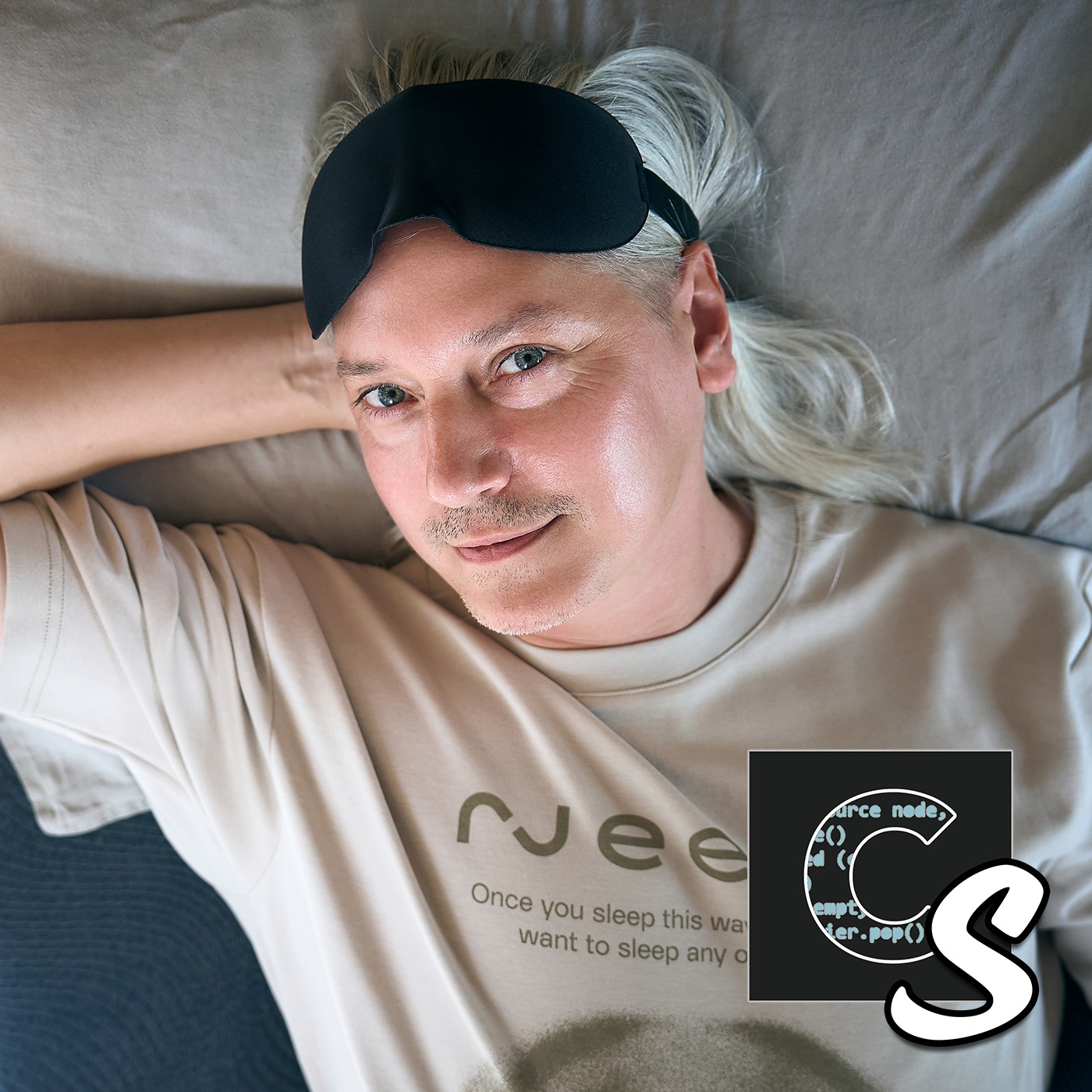
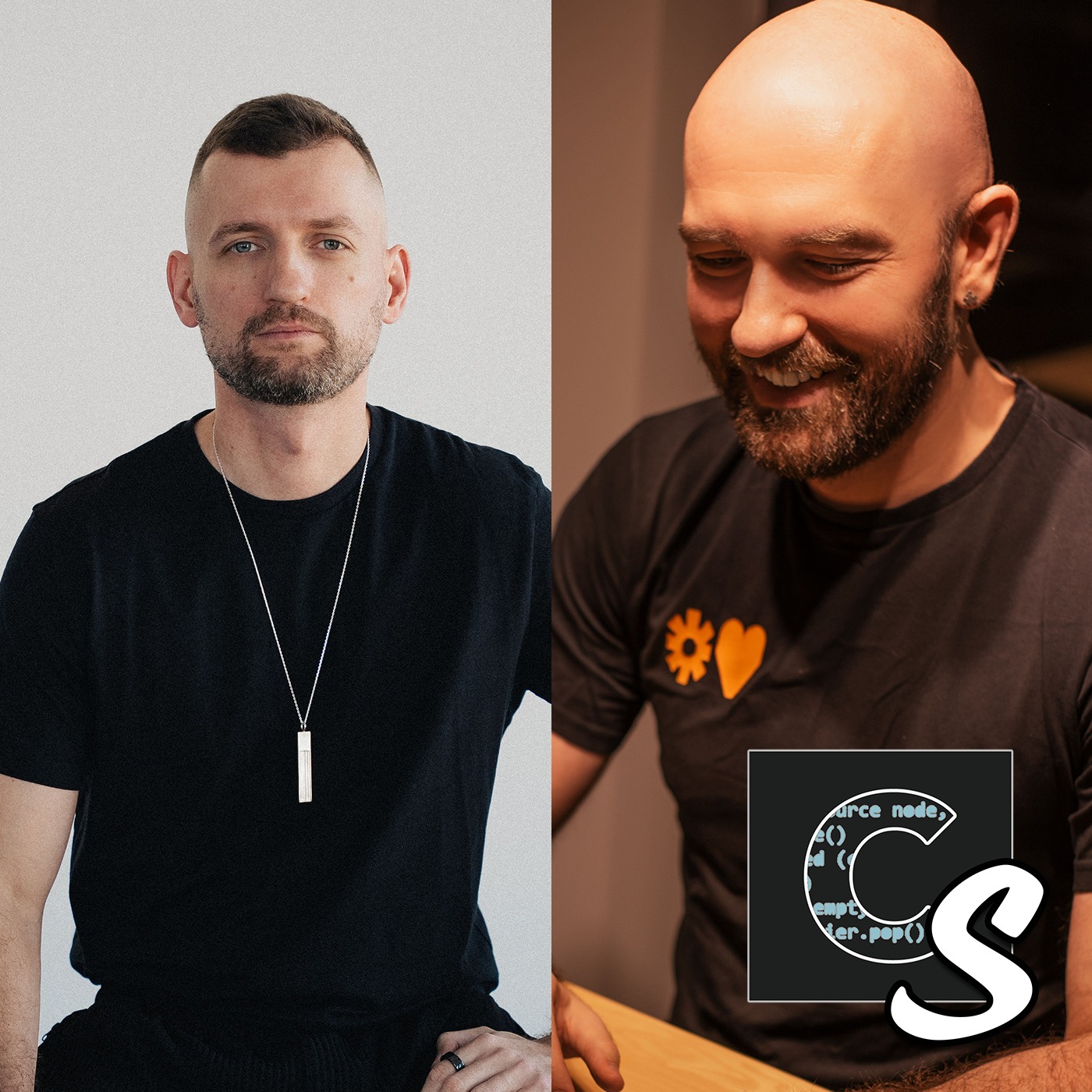
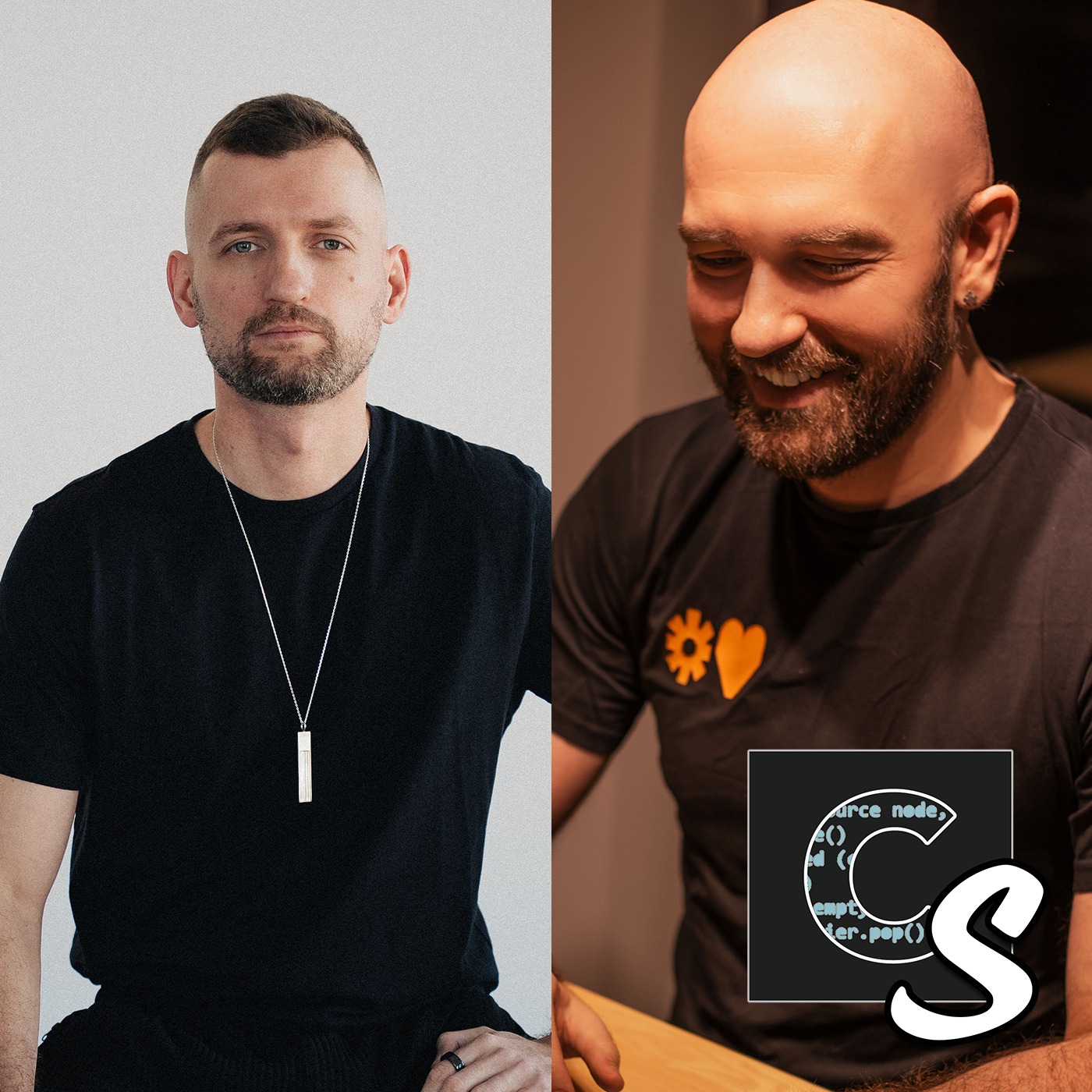
S13 E11: Optimizing Deep Sleep Cycles Through Intelligent Biometric Hardware with Igor Me, Founder & CEO of Neera Sleep
In this episode
Igor Me is originally from Ukraine, but now lives in Portugal with deep connections to the US. He has been an entrepreneur for a long as he can remember, and tends to dig into the rabbit hole to make things happen. For example, he was into music in the past, which led him to want to be a DJ, which led him to opening a night club so he could DJ. His through-line happened 25 years ago, when he was driven to start helping people be more healthy. Outside of tech, he is married to his co-founder, raising one kid. He likes to cook steaks, of which his friends tell him they are the best in town.
Igor and his team noticed that health wearables only track specific data points, but don't do anything to help the wearer to break of out of a high stress state. Rather than just displaying data on a screen, he and his team built a closed loop nervous system modulation device - with real time sensing, and active interventions - and, with the goal of turning biofeedback into immediate physical regulation.
This is the creation story of Neera.
Links
https://www.linkedin.com/in/igorme/
Current Sponsors:
Checkout our Stacklist! https://stacks.codestory.co/
Check out our Patreon!
Hosted by Noah Labhart | Technical Founder & Startup Mentor.
Our Sponsors:
* Check out Granola and use my code granola.ai/CODESTORY for a great deal: https://granola.ai
Advertising Inquiries: https://redcircle.com/brands
Privacy & Opt-Out: https://redcircle.com/privacy
[SPEAKER_01]: In deep tech, which is connected to physical projects, where the ones who face in the entropy, I would say, all the time, and more than AI also have to react. [SPEAKER_01]: One incorrect bit chosen component can lead to month of delay, because the iteration is ready. [SPEAKER_01]: Let's say it's time consuming. [SPEAKER_01]: The greatest scale-frame one in the product in the consumer tech on the wellness can introduce
[SPEAKER_01]: Freeble Test everything, create testing product rigors, testing protocols, where there are no physical mistakes in it. [SPEAKER_01]: A.M.N.M. [SPEAKER_01]: is a gore, I'm the co-founder and CEO at New York.
[SPEAKER_03]: This is Co-Story. [SPEAKER_03]: a podcast bringing you interviews with tech visionaries. [SPEAKER_03]: Six, six months moonlighting goes. [SPEAKER_03]: It's the last and all of the backgrounds who share what it takes to change an industry. [SPEAKER_00]: I don't exactly know what to do. [SPEAKER_03]: It's the same goes to get right. [SPEAKER_02]: who built the teams that have their bad company is its team's help each other, a team's proud of our team. [SPEAKER_03]: Keeping scalability top of mind, all that infrastructure was up there.
[SPEAKER_03]: Yes, we've been fighting it as we grow. [SPEAKER_03]: Total waste of time. [SPEAKER_03]: The stories you don't read in the headlines. [SPEAKER_02]: It's not an easy thing to achieve. [SPEAKER_03]: To get yourself a deficit of off, try to begin to ride the ups and downs of the start-up line. [SPEAKER_02]: To really want it. [SPEAKER_03]: Not just about technology. [SPEAKER_03]: All this and more on code story. [SPEAKER_03]: I'm your host, Noah Labpart, and today how Eagle or me is helping you bring your body out of a stress state by working from the body up.
[SPEAKER_03]: Igor May is originally from Ukraine, but now lives in Portugal with deep connections to the U.S. [SPEAKER_03]: He's been an entrepreneur for as long as he can remember and tends to dig into the rabbit hole to make things happen. [SPEAKER_03]: For example, he was in the music in the past, which led him to want to be a DJ, which led him to opening a nightclub, so he could DJ. [SPEAKER_03]: His through-line happened 25 years ago when he was driven to start helping people be more healthy.
[SPEAKER_03]: But outside of technology, he's married to his co-founder, raising one kid. [SPEAKER_03]: He likes to cook steaks, of which his friends tell him they are the best in town.
[SPEAKER_03]: Igor and his team noticed that health wearables only track specific data points, but don't do anything to help the wearer to break out of a high stress state. [SPEAKER_03]: Rather than just displaying data on a screen, he and his team built a closed-loop nervous system modulation device, with real-time sensing and active interventions. [SPEAKER_03]: and with the goal of turning biofeedback into immediate physical regulation.
[SPEAKER_03]: This is the creation story of Neera.
[SPEAKER_01]: Well, the first, I would say, notion or intention that we made up in this fear happened around five years ago. [SPEAKER_01]: And one of my friends, he decided to build a super-conscious environment
[SPEAKER_01]: We started it because for in various technologies, I was just consulting you, and there was a bunch of technologies that were explored and started in probably actual. [SPEAKER_01]: Normal air ventilation and circulation, perfect insulation of sound, perfect EMF blockages, and we also dive into the sound in various science of sound and how it may help people sleep better. [SPEAKER_01]: And there was a notion at that time that there were no nice instruments to induce vibrato sound in your bed, so the terminology was not there, but the science was not really there.
[SPEAKER_01]: It was realized in some hyper-expansial coaches where people would infuse vibrations and the beds, but they were not really smart, right? [SPEAKER_01]: So it was the first time I kind of had a thought that why our beds are actually not smart. [SPEAKER_01]: It was spent eight to nine hours daily in some environment on some surface and everything is smart around us except for this thing and still lagging in terms of getting the data out of your body or making body full sleep. [SPEAKER_01]: So that was the first touch [SPEAKER_01]: Around year and a half ago, one of our businesses mean that we were looking for what's next, what we can present to the world.
[SPEAKER_01]: We kind of recalled this and started digging deeper, found a couple of scientists who have been working on various acoustic algorithms, [SPEAKER_01]: And the idea was, let's not try only audio, let's try the Vibracoustics, and let's just try to put those algorithms on the surface of the bed, so we may search on our Twitter designs and waveguides for that we took the team that created the algorithms for us, and I was at the beginning was really skeptical that this would work, but then we started testing it on people, [SPEAKER_01]: And we saw tremendous amazing results.
[SPEAKER_01]: I'll actually change the state how people who's falling asleep, how they would be revitalized, like in half an hour session. [SPEAKER_01]: And I became a strong believer in it. [SPEAKER_01]: And we double down our efforts on actually starting the company and giving this technology to millions of people in the future. [SPEAKER_01]: And so, right now, it's end up in that the nearer is basically a neurological regulation platform. [SPEAKER_01]: And the first implication of this is the Viber acoustic bedtopor that adapts to your physiology in real time and creates certain patterns in Viber acoustic patterns that input you into certain stages of your sleep, plus in help you to rejuvenate and basically wind down.
[SPEAKER_03]: So this first version, then, or this first piece of it, I guess I would like it to MVP, telling about the process of creating that. [SPEAKER_03]: First version, how long it takes to build and what sort of tools and technology and you mention algorithms and there that you were using to bring it to life? [SPEAKER_01]: Well, being in hardware and deep tech for the last 15 years, we have a great experience in actually prototyping, right? [SPEAKER_01]: So we launched more than 30 various projects on products on the market, we built around five companies around hardware and deep tech, and sold probably more than 30 million devices like purpose points or 50.
[SPEAKER_01]: So, what this experience comes to team, right, so we've been building our team for the last, on say, 15 years. [SPEAKER_01]: And we basically mostly work with the same people across all the projects. [SPEAKER_01]: So, we have a really inspired team, because we're keep on innovating, exploring new technologies, so, really, and engineers, and CEOs, and designers, we can become engineers. [SPEAKER_01]: And having this, having this at hand, making an MVP, it's a really easy claim. [SPEAKER_01]: It was reduced to the rate of business.
[SPEAKER_01]: So it took us on day probably two months from the initial year to the first part of the day. [SPEAKER_01]: Because we have all the suppliers of the hands, all the connections we have, the logistics of hands, we have procurement of the hands, and we have like genus engineers at hand. [SPEAKER_01]: You can make it half and fast, using all the various types of paper, but the typing, etc. [SPEAKER_01]: So, that was the process, and that's the biggest thing on that is the team of football.
[SPEAKER_03]: In that process, you've got to make certain decisions and trade-offs, and I'm sure there are some pillar decisions and trade-offs she had to make. [SPEAKER_03]: In how you approach the problem and how you approach building this first version, I'm curious about maybe one of those that you had to make and how you coped with it.
[SPEAKER_01]: and usually the idea of the product goes to create a separate mat, like an or a chair or an experience, right? [SPEAKER_01]: Because it's really hard to squeeze in all the technologies that we have and to basically, that's all part. [SPEAKER_01]: But since our goal was to introduce the this technology to as much people as possible and to be part of your bad system, [SPEAKER_01]: and doesn't take an additional place, a traditional hustle in your environment, right? [SPEAKER_01]: The biggest I would say, not a trade-off, but the biggest challenge that we decided to undertake is to actually make it.
[SPEAKER_01]: Really comfortable, I'm really nice, from like sleep, perspective, photographer, which also works as a neurological system, regulation, culture, and by means of producing sounds, and by
[SPEAKER_01]: together with really nice use cases of the bad side harm that it goes into the system. [SPEAKER_01]: We kind of want to become an intelligent system that would track you environment, track your state and make it and make give you people to inform about the trends and environments that you're in and actually change your state. [SPEAKER_01]: So that was the biggest challenge and still is, but we already had a certain stage of manufacturing where we solved a lot of problems. [SPEAKER_01]: So I would say we're not dealing with trade-offs, we're facing more challenges and trying to solve them.
[SPEAKER_03]: So I know it's really days, but I'm curious about how you're progressing and maturing Nira in the first version of product and maybe in the future things that you're looking at and I think to wrap that question in the box, but I'm looking for is how do you build your roadmap? [SPEAKER_03]: How do you decide that this is the next most important thing to build or to address with Nira? [SPEAKER_01]: We're at this stage that we are made around research. [SPEAKER_01]: We tested more than 150 people on this technology.
[SPEAKER_01]: We keep on testing and we keep on refining protocols. [SPEAKER_01]: And at this point, we can draw, I'll say, the path or the roadmap just one year ahead. [SPEAKER_01]: Because due to the rapid change of technology, you know how AI is actually impacting everything what's happening right now, which is actually great for business because like back in the days, the five years ago, making first MPP and writing wrote them both like back and front end and and app and also the low level hardware, low level software was really a challenge and right now you can basically do it in a day, which makes it really flexible from the technology [SPEAKER_01]: But as for the roadmap perspective, it's just the market feedback that's when we test our users when we get their feedback.
[SPEAKER_01]: This is where we iterate and this is where we actually can uncover the future of the product and find something interesting. [SPEAKER_01]: I can give you an example, we never looked at the, I'll say, children's market, right, or thinking just for it. [SPEAKER_01]: Make it as bad for an adult. [SPEAKER_01]: But then we uncovered that there is a huge opportunity for those children who did use to semi-optimated clips, where they would shake them, right, and they would use it for two years.
[SPEAKER_01]: And that there is a problem to actually, I would say, transport. [SPEAKER_01]: The child from this hyper advanced script into a normal flat surface. [SPEAKER_01]: They get used to the experience so much that they cannot sleep on the flat surface. [SPEAKER_01]: Where they cannot sleep on something that doesn't move, right? [SPEAKER_01]: And we started testing nearer for these excuses and that's a period that is working for those kids. [SPEAKER_01]: We're not marketing that at this point, but there is one product use cases that we never looked into.
[SPEAKER_01]: and hence we think in roadmap ways, how would we market and what kind of algorithms and what kind of user experience from say, nights, nighttime stories, plus vibrations we can create for those kids.
[SPEAKER_03]: Igor, I'm curious about team, right? [SPEAKER_03]: Another team is fairly small now, and maybe there's team members that I can't see, but I'm curious about how you decide someone is right to join the team. [SPEAKER_03]: And what do you look for in those people, Indicate, that they're the winning horses to join you? [SPEAKER_01]: There are three co-founders and we decide differently, but my approach, I'm a sensory feeling guy, and usually it takes five seconds into an interview to realize if you're a mental fit, or I would say a feeling fit.
[SPEAKER_01]: And then sometimes it's really sad to spend another 15 minutes or 20 minutes and then it's just being polite. [SPEAKER_01]: You just know it. [SPEAKER_01]: Throughout my career probably hired and fired hundreds of people and worked in the world. [SPEAKER_01]: There is interesting and especially in the design industry we have really contrasted individuals, I would say, right, engineers, really contrasts people, especially the geniuses, right, really hard to manage. [SPEAKER_01]: So, it comes down in my marine process and in my approach is how do I feel about this person, which is not conventional, right, because other guys from the team who are super rational, they can do the technical and to use.
[SPEAKER_01]: But, usually for me, the life of the person is much more important than his professional qualities. [SPEAKER_01]: So, on hand, this is the way I make my decisions, which is filtered through other decisions [SPEAKER_01]: But this strategy I would say never, I would say this strategy always works for me, and I stick to it.
[SPEAKER_03]: So I'm curious about scale, right? [SPEAKER_03]: How are you thinking about scale? [SPEAKER_03]: I know it's early, but are you thinking about scale? [SPEAKER_03]: And even in these early days, have you ran into any areas where scale has been a problem, where you've had a fight scale as you've grown? [SPEAKER_03]: That could be people, technology, product, all the things. [SPEAKER_01]: In deep tech, which is connected to physical projects, we're the ones who face in the entropy, I would say, all the time, and more than AI also to the right.
[SPEAKER_01]: One, incorrect, big chosen component at the, I'll say PCV, PCVA level can lead to month of delay, because the iteration is really, [SPEAKER_01]: Let's say it's time consuming, right? [SPEAKER_01]: So the greatest scale thing one in the product and the consumer tech or the walnuts can introduce is to do the whole work before your manufacturer. [SPEAKER_01]: Like, freeble test everything. [SPEAKER_01]: Free test and product rigors, testing protocols. [SPEAKER_01]: Spend more time on, like, [SPEAKER_01]: Though it's a waterfall process, we do have some agile, but then the EVT is a DVT stages where we would find you in the product to a stage where there are no physical mistakes in it, right?
[SPEAKER_01]: So that's the first point. [SPEAKER_01]: You're getting ready and choosing the manufacturing partner is a really crucial thing. [SPEAKER_01]: They're in tears, there's tears of manufacturers and ODMs out there, and you need to make a vigorous background check and do deal with those partners in order to, for them to meet all of your own safety quality needs. [SPEAKER_01]: That's one part. [SPEAKER_01]: The second one, of course, the classical keywords and all the systems and all the goals on keeping the financial part in place.
[SPEAKER_01]: and need structure and realize by most of the team, especially to those who connected to market and PR logistics and manufacturing. [SPEAKER_01]: So that would be the second pillar for me. [SPEAKER_01]: And the third one, and it also comes down to feelings, be open to opportunity. [SPEAKER_01]: Because you never know, don't cliches help to the fact that okay, I'm only Diro Siebret. [SPEAKER_01]: And whenever the B2B opportunity jumps in, you would think that all that would be like her.
[SPEAKER_01]: Defocus for the team. [SPEAKER_01]: We're not really there, but there could be a chance in any opportunity that this exact client may order thousands of devices and will cover and make your as his scalability We'll say an online year layer So for me, those are the three main pillars to the homework to the homework rigorously from the product perspective The second one keep track of finance and goals and just count every penny spent [SPEAKER_01]: And the third one be open and be not insist on the market.
[SPEAKER_01]: Well, you want it to be listened to the market and adapt to it and cash over to new just whenever they arise. [SPEAKER_01]: Because you never know what some partnership [SPEAKER_01]: and this actually leads to the third one leads to be like you have to be a solid personality in order to be friendly to anyone you meet on your life way, way of life, and you should be open to any feedback or any, I'll say, any encounter in your life, and this is really important.
[SPEAKER_03]: Okay, as you step on a balcony, look across all that you've built thus far with Neera,
[SPEAKER_01]: just being this and this. [SPEAKER_01]: It's not a part of building. [SPEAKER_01]: I don't really like taking credit with what I've built because there is no actually me who's been doing that. [SPEAKER_01]: There was always like a chance in opportunity universe or the team or series of circumstances that led to
[SPEAKER_01]: once it gives some chances or opportunities. [SPEAKER_01]: So I cannot take credit from most of the things that I would build. [SPEAKER_01]: Also the proudness for me, I wouldn't say proud, but the nicer to earn for me would be what I'm thankful for. [SPEAKER_01]: But from this angle, it's for me it becomes a much more interesting and ageticly wise. [SPEAKER_01]: I'm thankful to most of the things that I've encountered in my life. [SPEAKER_01]: I do take some pride in some of those, but I can't say it that it's personal.
[SPEAKER_01]: And of course, I'm thankful to all the people that I met, all the enemies that I met, all the conflicts that I had, thankful to my parents and to my family and thank you, thank you to my co-workers and business partners. [SPEAKER_01]: but there is no pride or pride in us in this. [SPEAKER_01]: It's a much more subtle position I would say.
[SPEAKER_03]: Okay, Igor, let's flip the script a little bit. [SPEAKER_03]: Tell me about a mistake you made and how you and your team responded to it. [SPEAKER_01]: It's not connected to Nira, but from the business perspective. [SPEAKER_01]: One of the greatest mistakes that we made as a team has that been decided to go for a worldwide market straightaway, because the opportunity is appeared like on the US, in Europe and South America, North America, and in Asia. [SPEAKER_01]: And in the beginning, once you've built in your product, once you're looking for your market and your customer, it was such a deal railing clean-to-do, because logistically wise and even low-wise, legally wise.
[SPEAKER_01]: It was such a challenge to take. [SPEAKER_01]: So, I would never do this mistake again, so right now, once we launch the product, we choose one market, one where it took all, and we test the vertical bit by bit until I actually convert. [SPEAKER_01]: And then we scale into another vertical and to another value position. [SPEAKER_01]: And covering this by bits. [SPEAKER_01]: Even like taking one state or one city as a beginning. [SPEAKER_01]: could be a nice approach for you to be there is a rule of 3F, I don't know if you can sound here on this stage like this, but it's focus of focus.
[SPEAKER_01]: So that was the main I'll tell you, main your mistakes that I made in one of my businesses. [SPEAKER_01]: Trying to catch all the markets at once and not being too focused on the actual value proposition that we were delivering on a single market.
[SPEAKER_03]: Let's move forward then. [SPEAKER_03]: I'm excited about what you're describing with Neera and the products you're building. [SPEAKER_03]: I'm curious about what the future looks like for the company for products where technology is going, all the things. [SPEAKER_03]: What does the future look like? [SPEAKER_01]: From this exact product perspective, yeah, I want my biggest wish, our intention is to for millions of people to explore this technology and to use a daily, because one of the reviews that we get is like, well guys, if you sleep this way, you want to sleep another way.
[SPEAKER_01]: And once people would get used to this technology in their bedroom, I want this technology to be available everywhere, say in your hotels and your sponsors and cars and airplanes, whenever you go, your body should have an opportunity to experience a new and our neurological regulation platform. [SPEAKER_01]: So that's one of the biggest goals for the nearer, but in general, [SPEAKER_01]: I want to create a mindful home because right now there is a saying that there is a smart home but most smart homes are stupid, right?
[SPEAKER_01]: There is a conflict in various protocols and technologies, they are not aligned, the various security issues out there. [SPEAKER_01]: But in people where taking smart home from the gig perspective, I want for technology to be as seamless as possible, invisible, and it should take care of us about our bodies, about our mindfulness state, about our energy, about our diet, all the habits that we have. [SPEAKER_01]: But it should be invisible to user. [SPEAKER_01]: Hence, I'm really hoping that in the future, we will contribute to a great creation of the really mindful home, rather than the smart one.
[SPEAKER_03]: Okay, Igor, let's push you. [SPEAKER_03]: Who influences the way that you work? [SPEAKER_03]: Name a person or many persons or something. [SPEAKER_03]: You look up to and why? [SPEAKER_01]: At this point in life, my greatest teacher is my child. [SPEAKER_01]: He is definitely the greatest influence that changes the way our work, the way I approach love and general and my feelings and my sleep and my emotions and my approach and building something. [SPEAKER_01]: I really look up to him in terms of his unstoppable, yet lovable energy, so we are tend to lose it because of our brains brought a lives when we get disconnected to emotions, with our emotions.
[SPEAKER_01]: The second greatest teacher is probably just the world and observations. [SPEAKER_01]: I cannot name any, you know, like, certain aim. [SPEAKER_01]: I cannot insert it here because there are so many, like, thousands of people, and thousands of situations that are, and I perceive to be my teachers, my influencers. [SPEAKER_01]: And yes, of course, my wife and my partner, as always being a greatest, let's say, medium for my behavior and for my approach to life. [SPEAKER_01]: But just, you meet teachers all the time, even the bad situations are drawn to us in order to become a teacher.
[SPEAKER_01]: And if you don't see that situation as a teacher or as a lesson, there is a high probability that it will revert to you in 10 years to try to teach you once again, but with a much greater and devastating, I'll say, impact to your life. [SPEAKER_01]: So working on your shadow material and is a great opportunity to provide as a person. [SPEAKER_01]: Plus, one of the systems that I like, I think it's been proposed by Ken Wilder, basically, each human being should grow up, wake up, clean up, you know, the two show up, right?
[SPEAKER_01]: Where, then the three pillars are the pillars of a human being where you grow up, and then, actually, it were professionally, where you clean up your psychological material,
[SPEAKER_01]: how your emotions impact them. [SPEAKER_01]: Then you wake up, basically you do your mindful work, right? [SPEAKER_01]: You explore what you really are as an entity where you uncover that you're more than just the body of collection of thoughts. [SPEAKER_01]: And one, those three aligned, you can show up into the world. [SPEAKER_03]: only can build something. [SPEAKER_01]: So I say, so this is one of my outdated teachers in life, I would basically whenever something is happening, I'm trying to put myself until those three pillars and COK is this wake up material, this is a raw material, or this is a cleanup, how can I show based on my vertical development right now?
[SPEAKER_01]: So I guess that's it.
[SPEAKER_03]: Igor, last question, so you're getting on a plane and you're saying next to a young entrepreneur who's built the next big thing. [SPEAKER_03]: The jazz about it, the can't wait to show it off to the world and can we show it off to you right there on the plane? [SPEAKER_03]: What advice to give that person? [SPEAKER_03]: Having gone down this road a bit and several different paths? [SPEAKER_01]: most of the young entrepreneurs they under estimate the power of the listening. [SPEAKER_01]: They listen to their hearts, or to their brains, so they do the internal listening, which they transfuse into the energy, which helps them into the belief, which helps them build things, which stay focused.
[SPEAKER_01]: But there is another building for the scale and it's really subtle is the outside listening, right? [SPEAKER_01]: And I briefly touched upon that and my teachers are, right? [SPEAKER_01]: So if your energy is not only outgoing, but you also have a much broader channel of incoming. [SPEAKER_01]: The universe or the people you would meet,
[SPEAKER_01]: So training this skill, training this ability to be emotionally connected to reality around you in the forms of circumstances, in the forms of people, in the forms of. [SPEAKER_01]: emotions of problems is such a great skill because it provides a really nice reality check where you actually are as a human being right now and where your company is because basically in most of the cases and solopreneurs the company is extension of the character of the person and the second thing what I see sometimes is that people engage themselves in activities that [SPEAKER_01]: We have this filter, we call the zombie product, right?
[SPEAKER_01]: And zombies basically, it's been the truth and exist, right? [SPEAKER_01]: And we have the zombie test, where people would think about the product, or separate device, or hardware, or an AI thing, [SPEAKER_01]: and they try to build it from scratch whenever it appears that it's either already exists and somebody has already built it and made a mistake and already bankrupt because of this hellie. [SPEAKER_01]: were, I'll say, in hardware recently, 90% of the products shouldn't exist.
[SPEAKER_01]: Go to Amazon, and you can see, like, great variety of duplicates of everything. [SPEAKER_01]: I'm not saying it's a bad thing. [SPEAKER_01]: It's a great play of entropy, where the most, I'll say, functional and beautiful on. [SPEAKER_01]: Evolutionarily adopted product survives and I'm not for the continuous thing you should have one vacuum cleaner for life, right? [SPEAKER_01]: One model from one manufacturer. [SPEAKER_01]: No, I'm not saying that, but at the same time, sometimes too much.
[SPEAKER_01]: And people can spend years on the product or on an idea that shouldn't exist. [SPEAKER_03]: I love that advice, I think it's fantastic and spot on. [SPEAKER_03]: Bigore, thank you for being on the show today, and thank you for telling the creation story of Nira. [SPEAKER_01]: Thanks a lot, Nira. [SPEAKER_01]: It was a pleasure to be with you here.
[SPEAKER_03]: And this concludes another chapter of Code Story.
[SPEAKER_03]: Code Story is hosted and produced by Noah Labhart. [SPEAKER_03]: Be sure to subscribe on Apple Podcasts, Spotify or the podcasting app at your choice. [SPEAKER_03]: And when you get a chance, leave us a review. [SPEAKER_03]: Both things help us out tremendously.
[SPEAKER_03]: And thanks again for listening.
Latest Season of the Podcast is Sponsored By






 Apple Podcasts
 Spotify
 Castbox
 Player FM
 Pocket Casts
 YouTube
 Overcast
 Castro
 Goodpods
 Moon FM
 Podbean
 Podcast Addict
 Podcast Republic