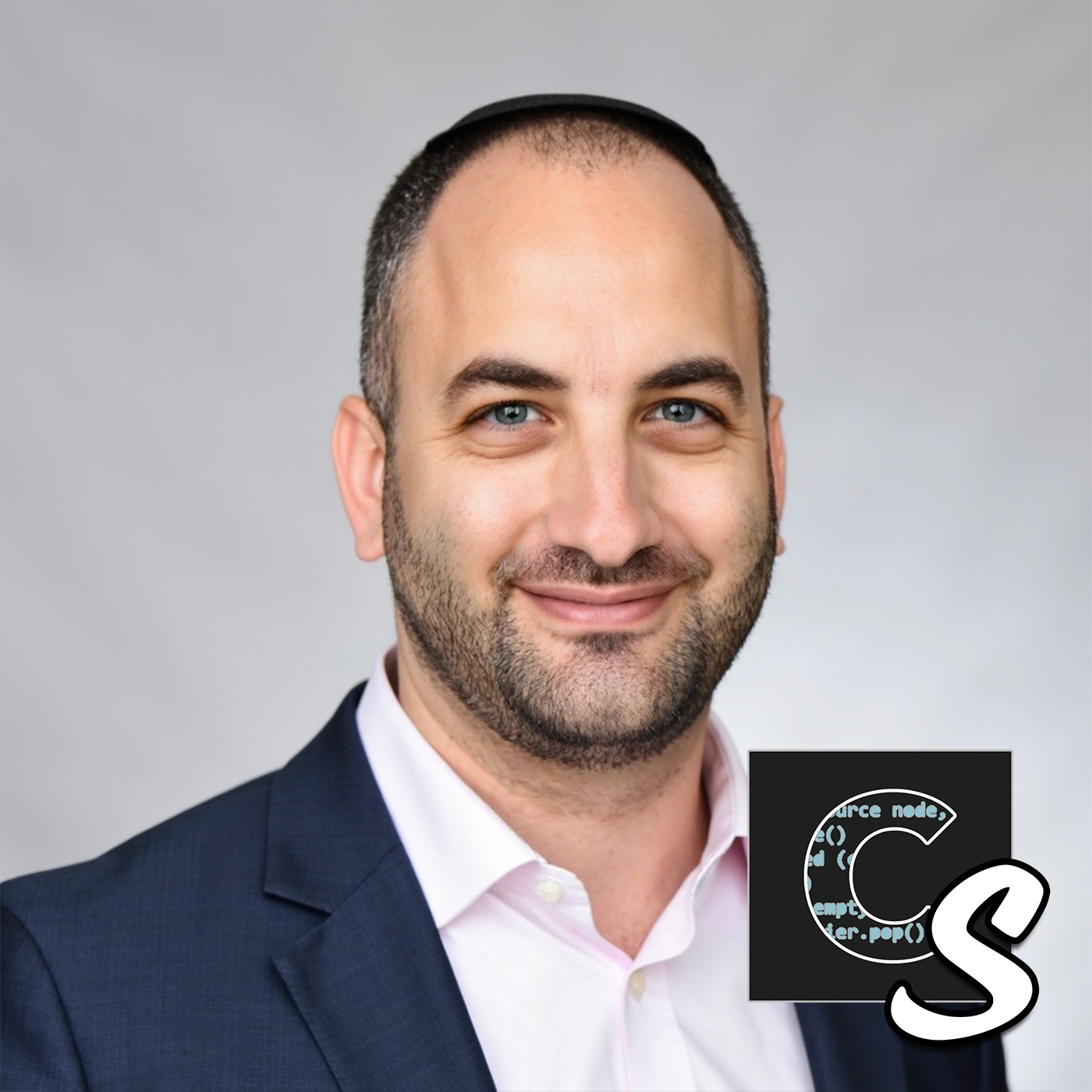
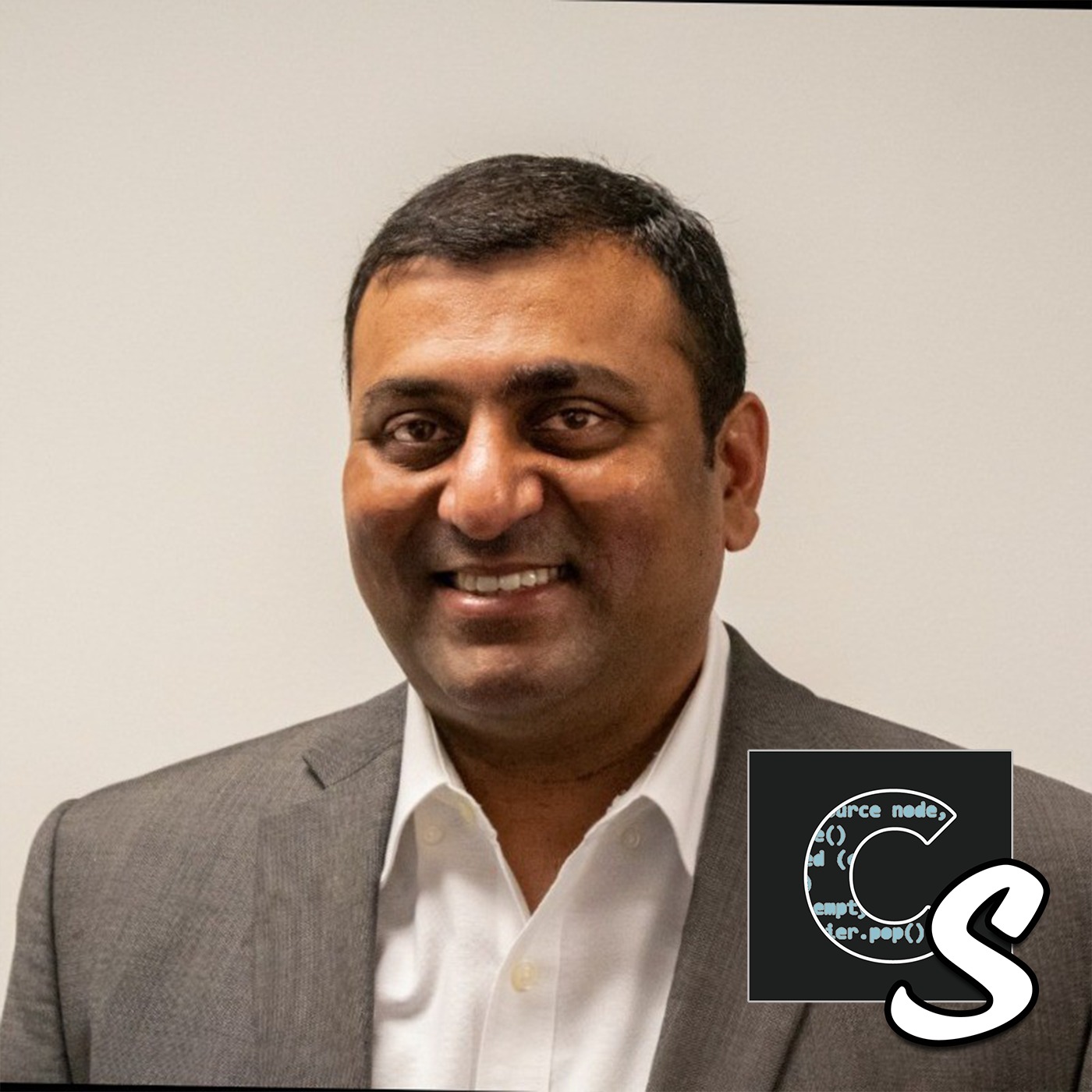
S13 Bonus: The AI DBA Shift: Automating Database Reliability & Performance with Itamar Syn-Hershko, Founder & CEO of NeverBlink
In this episode
Itamar Syn-Hershko has been a tech guy since he was a wee lad - IE he was teaching his kindergarten teachers how to use their computers. He learned how to "do stuff" tech wise through playing games back in the day. Back in the day he was one of the original developers on a document based database, as well as building a consulting company. Outside of tech, he is the father of 5 kids, all of them 7 and under... so his hands are quite full. That said, he does enjoy learning new things and traveling, when he has the time.
Itamar founded a boutique consulting agency, helping businesses succeed in data related projects. Like most smart agencies, they built tools to help them to do their jobs better. One of these tools became highly popular, and after 1.5 years of selling this tool to customers, they hit a $1m in annual recurring revenue.
This is the creation story of NeverBlink AI.
Links
https://www.linkedin.com/in/itamar-syn-hershko
Current Sponsors:
Checkout our Stacklist! https://stacks.codestory.co/
Check out our Patreon!
Hosted by Noah Labhart | Technical Founder & Startup Mentor.
Our Sponsors:
* Check out Granola and use my code granola.ai/CODESTORY for a great deal: https://granola.ai
* Check out Perplexity and use my code pplx.ai/codestory for a great deal: https://www.perplexity.ai
Advertising Inquiries: https://redcircle.com/brands
Privacy & Opt-Out: https://redcircle.com/privacy
[SPEAKER_01]: We basically built something that our market was demanding, right, or not even market, the customers were demanding. [SPEAKER_01]: So effectively, we needed to build something in a quick, because some customer was on flames. [SPEAKER_01]: And then the next customer that was on flames, we just improved it. [SPEAKER_01]: and then just continue doing that over and over again. [SPEAKER_01]: So I guess the trade-off would have been quality scale. [SPEAKER_01]: And then when we did make it more like a product, I guess it was just version two of the MVP.
[SPEAKER_01]: We started creating that more oriented towards something that is more holistic and could sustain more load. [SPEAKER_01]: My name is Itamal Sinelchko. [SPEAKER_01]: I'm the CTO and founder of Deveble in K.I.
[SPEAKER_04]: This is code story. [SPEAKER_04]: A podcast bringing you interviews with tech visionaries. [SPEAKER_04]: 6 months moonlighting goes. [SPEAKER_00]: I was lossing on the backhand. [SPEAKER_04]: Who share what it takes to change an industry? [SPEAKER_00]: I don't exactly know what to do. [SPEAKER_04]: What do you mean goes to get right? [SPEAKER_02]: who built the teams that have their bad company is its teams help each other achieve this proud of our team. [SPEAKER_04]: Keeping scalability top of mind, all that infrastructure was up there.
[SPEAKER_04]: Yes, we've been fighting it as we grew up. [SPEAKER_04]: Total waste of time. [SPEAKER_04]: The stories you don't read in the headlines. [SPEAKER_02]: It's not an easy thing to achieve. [SPEAKER_04]: To get yourself a deficit of it off and try to begin to ride the ups and downs of the start-up line. [SPEAKER_02]: To really want it, not just about technology. [SPEAKER_03]: All this and more, on code story. [SPEAKER_03]: I'm your host Noah Labpart. [SPEAKER_03]: And today, how e-tomarse in her scope has built the platform to ensure your databases or always running at their best, emphasis on always.
[SPEAKER_03]: It's a Marston Herskow, has been a tech guy since he was a wee lad. [SPEAKER_03]: IE, he was teaching his kindergarten teachers how to use their computers. [SPEAKER_03]: He learned how to do stuff, quote unquote, tech wise, through playing games back in the day. [SPEAKER_03]: He was one of the original developers on a dock-based database, as well as building a consulting company. [SPEAKER_03]: Outside of tech, he is the father of five kids, all of them seven and under, so his hands are quite full.
[SPEAKER_03]: That said, he does enjoy learning new things and traveling when he has the time.
[SPEAKER_03]: Eto Mar founded a boutique consulting company helping businesses succeed in data-related projects. [SPEAKER_03]: Like most smart agencies, they built tools to help them do their jobs better. [SPEAKER_03]: One of these tools became highly popular, and after one and a half years of selling this tool to customers, they hit $1 million an annual recurring revenue.
[SPEAKER_03]: This is the creation story of NeverBlink AI.
[SPEAKER_01]: Never-blink is a platform that is always vigilant in looking at your databases, mostly production databases. [SPEAKER_01]: So, transactional processing to other bases like Postgres and analytics databases or search engines like elastic search, open search keycouts. [SPEAKER_01]: It looks up there, those databases and make sure they are reliable and highly performance at all times. [SPEAKER_01]: So we started building that out of the consulting company that we had, we got called so many times to help with putting out fires of real estate, soliciting company, like Craigslist, that suddenly had their search engine, not responding, so you'd imagine how much money they're losing per minute.
[SPEAKER_01]: And we have to quickly debug and understand what's going on with those databases or the store technologies to figure out how to put them alive again in a stable service. [SPEAKER_01]: Put those companies or just improve anything that's going on. [SPEAKER_01]: So we started building tools to help us do things better and faster. [SPEAKER_01]: And then at some point those tools became a product or a platform something that we can reuse easily and let other customers use as well. [SPEAKER_01]: And at some point it just got its own life and we started onboarding customers.
[SPEAKER_01]: A year and a half after we made it a product and launched
[SPEAKER_01]: And now it's just we're running as never-bling to make sure that we are able to capture a bigger market more understandable message of what we do. [SPEAKER_01]: And we're pretty excited about where we are heading next.
[SPEAKER_03]: I'm curious about if you can tell me the story around the MVP. [SPEAKER_03]: So the first version of Never-Planck ad created, tell me about how I took you to build and what sort of tools you're using to bring it to life. [SPEAKER_01]: It's like any MVP, it was very scrappy, it was just a set of tools and one big Grafana dashboard, just some script that takes metrics and puts them in some sort of graph. [SPEAKER_01]: And we had to do it ourselves because we wanted to look at things that [SPEAKER_01]: Traditionally, we're not being broadcasted by existing tools, so we just did all of that, and Then at some point, we also realized that we just have a lot of information and We can deduct a lot of things out of all of that breadth of information [SPEAKER_01]: So effectively we started building more scripts that would look at all of those metrics and try to make sense to make some sense out of them.
[SPEAKER_01]: So effectively not just looking at node metrics and high CPU and high memory, but also looking at some query patterns. [SPEAKER_01]: and then trying to correlate them, right? [SPEAKER_01]: So if you have more queries coming in at 10 p.m. that you didn't anticipate probably, that would explain why you have high CPU and high memory pressure, and then we can correlate with the root course, right? [SPEAKER_01]: So we can understand that cluster is not working well, that your applications, [SPEAKER_01]: At Merite, their application is not working well, is suffering under load, because the database, or the elastics such cluster in that case, was having high CPU high memory pressure, and that is happening because of high query load that is unusual, especially for that time and day.
[SPEAKER_01]: So having all of those insights and having a 360 look at everything that's going on with your specific database in that case was really instrumental. [SPEAKER_01]: So DMVP was a bunch of scripts that grew and then at some point we refactor that into a full platform. [SPEAKER_03]: Let's stay on that MVP for a minute. [SPEAKER_03]: You touched on some of this at a high level, but I'm curious about a decision or trade off you had to make when building that MVP and how you cope with that decision.
[SPEAKER_01]: We basically built something that our market was demanding, right? [SPEAKER_01]: Or not even market. [SPEAKER_01]: The customers were demanding. [SPEAKER_01]: So effectively, we needed to build something in the quick, because some customer was on flames. [SPEAKER_01]: And then the next customer that was on flames, we just improved it. [SPEAKER_01]: and then just continue doing that over and over again. [SPEAKER_01]: So I guess the trade-off would have been quality scale because we just need to look at one cost or one database at a time.
[SPEAKER_01]: So we didn't really care about any scale like that. [SPEAKER_01]: And then when we did make it more like a product, [SPEAKER_01]: I guess it was just version 2 of the MVP, we started creating that more oriented towards something that is more holistic and could sustain more load. [SPEAKER_01]: But again, it wasn't built to handle scale. [SPEAKER_01]: So up until today we have many database clusters that we monitor and derive instance for. [SPEAKER_01]: There are still some pieces that are from the original in the
[SPEAKER_01]: that are still there are causing some problems or sometimes even costing us a money that we can probably improve and we are just not going to replace them in a time soon because we're busy building and improving beyond. [SPEAKER_01]: So I guess [SPEAKER_01]: To your question, maybe sometimes building software is just evolving an MVP to version 20 version 200, right? [SPEAKER_01]: So you never get something complete. [SPEAKER_01]: You just replace those pieces as you go along attending to the most painful pieces or the biggest bottleneck that you have at that time.
[SPEAKER_03]: So let's go from that point then for the MVP where you decided to rebuild it into a platform. [SPEAKER_03]: How did you progress in matured from that? [SPEAKER_03]: That point, and I think they're wrapping a box of wood. [SPEAKER_03]: I'm curious about how you go about building your robot. [SPEAKER_03]: How you decide that, okay, this is the next most important thing to build or to address with never-bling AI. [SPEAKER_01]: Yeah, so fun story, we just recently hired our first product manager.
[SPEAKER_01]: So we didn't have a product manager at all until this point, which may or may not have been a good smart decision. [SPEAKER_01]: But again, we were just having, we're just being engineers, working with engineers, which are SCP, effectively. [SPEAKER_01]: So the people that we want to sell to, or the people that we want to use are platform, [SPEAKER_01]: are the ones that we've been working with directly and trying to hear their pain as engineers and trying to collect those pieces. [SPEAKER_01]: So we did, we did product managerial roles and tasks that we weren't product managers or selves.
[SPEAKER_01]: So maybe we didn't do it right. [SPEAKER_01]: but eventually we did come up with some very good features that I think are worth it and we also created some features that evidently nobody is using now that we did think are good choices. [SPEAKER_01]: So I think maybe hiring a product manager earlier in the time was a good decision, better decision to have, but eventually like I said MVP following an MVP and we found ourselves with no product
[SPEAKER_03]: Okay, so this would be interesting because it's a two-sided question. [SPEAKER_03]: I'm curious about tea, right? [SPEAKER_03]: How did you build your team for never-bling AI? [SPEAKER_03]: And then also, for your consultancy, I'm curious about what you look for in those people to indicate that they are the winning horses to join you. [SPEAKER_01]: But for me, that is an engineer, engineer that found himself being a bootstraper or an entrepreneur, solopreneur at some point, even. [SPEAKER_01]: I think I'm just attracted to people who are very good at what they're doing period, and especially those who are technically savvy, so you can throw them, because there are any problem at them and they will be able to fix it, to solve it.
[SPEAKER_01]: Those are the people that I hired to work with me on the consulting company. [SPEAKER_01]: Never being effectively is a full-spin of, but it's an evolution of what we've been doing in the consulting system, which still exists today. [SPEAKER_01]: Still serve a lot of customers we've worked with. [SPEAKER_01]: companies like Kiti and Neureli, Kenoshen and many others, so very large enterprises and also many small startups that need to move fast and we basically get appointed to the biggest problems or the most exciting for us and the most the biggest challenges that there are.
[SPEAKER_01]: So we need people who are able to handle that, take any curveball and be able to handle it correctly. [SPEAKER_01]: And those are the people that I hired to work with me on the consulting company. [SPEAKER_01]: Never Blink was created reminding you from the consulting company. [SPEAKER_01]: So it was just a set of tools in the beginning that you can call it God Out of Control and became a full product. [SPEAKER_01]: And those people that work with me in the past and still work with me today on the consulting company are the same people that work on the product.
[SPEAKER_01]: So maybe that would also explain what I just said about the product management. [SPEAKER_01]: So the idea is that we work with customers and we help them succeed. [SPEAKER_01]: with their databases, with their data platforms. [SPEAKER_01]: Now, AI platforms and so on, which ties very strongly back to having a strong database and having a performing database and eventually everything we were working with customers on made itself back to the platform to make it to make it even better and even stronger.
[SPEAKER_01]: So, we did have engineers that were focused on the platform itself, namely, front-end engineers, full-stack engineers, back when it was still a big thing, and the people who built the platform and the root cause analysis that the platform knows how to do and everything around that are the same people who consult companies and help them improve their database. [SPEAKER_01]: So effectively, [SPEAKER_01]: those are the people that I hired early on and progressed me for building the product itself.
[SPEAKER_03]: I'm curious about scalability and this will be interesting because it's I'm sure it's baked into the the spine and the bones of what you've built but I'm curious how you approached it and I'm also curious if there's been interesting areas where you've had to fight scale as you've grown.
[SPEAKER_01]: I think that the scale of the team was really interesting, China. [SPEAKER_01]: The scale of platform, that's what we do, right? [SPEAKER_01]: Getting a data platform or platform that needs to work with a lot of data and databases and making sure that it works at big performance and the lowest possible cost, that's what we do in the day-to-day. [SPEAKER_01]: So for us, it's a solved problem. [SPEAKER_01]: It requires some time. [SPEAKER_01]: attention, but it's definitely a soft problem for us.
[SPEAKER_01]: Skating the team is always a challenge, and remember that we are a bootstrapped company, so we don't have any VC-man or anything like that that we can plan ahead and hire before any big workload comes our way, and effectively [SPEAKER_01]: that was the biggest challenge and still is the challenge for everything that we do. [SPEAKER_01]: So we need to be able to accept projects as a consulting company or onboard customers with significant scale to the platform and be able to support them while they onboard, figure out any places where they need special attention on special treatment.
[SPEAKER_01]: like a customer that is onboarding with weird versions or has some weird behavior with their clusters that we would need to sound figure out and fix and so on and still be able to handle that with the same amount of people that provide the service day-to-day and hold the service. [SPEAKER_01]: So I think this is the biggest challenge for us and also hiring people is I'm very [SPEAKER_01]: cautious about that. [SPEAKER_01]: I do want to make sure that we only hire the best of the best.
[SPEAKER_01]: That's also why we're still our relatively small company. [SPEAKER_01]: And that was always a challenge. [SPEAKER_01]: And sometimes it translates to working long hours. [SPEAKER_01]: and sometimes it just means that we need to define a role as a little bit better and find people who are not as senior, but they can execute tasks, especially now with AI and Claude Codden so on, in a more controlled manner. [SPEAKER_01]: But AI really helped us to succeed more in less time and less team members.
[SPEAKER_01]: And overall, I think we're in a good position now.
[SPEAKER_03]: So as you step out on the balcony and you look across all that you've built thus far with never-blank and maybe you pick that boutique and curious about what you're most proud of. [SPEAKER_01]: definitely the team, and I think some really good success stories that we've had over the years, right, detecting some very weird and obscure bug or something that didn't work for a customer, and they fought with it for even several months, and eventually the team was able to fix it for
[SPEAKER_01]: So that's more of a consulting thing, but then also when the platform was able to do the same. [SPEAKER_01]: So the platform was built with so much of our knowledge and IP baked into all the decision trees and all the detectors that we have inside. [SPEAKER_01]: and eventually that when the platform was able to detect something similar and do the work for us and then the customer comes back to and says, wow, that platform is great, it gave me this and that inside. [SPEAKER_01]: And some insights we wouldn't have found ourselves because when newer as a consultant, [SPEAKER_01]: You look at the cluster and you have this kind of playbook that you need to go through.
[SPEAKER_01]: But you can be this thorough as your attention span and as a wake or tired that you are. [SPEAKER_01]: And effectively we don't sometimes as human beings we don't find anything and the platform does. [SPEAKER_01]: And I think the team are success stories in some cases and then that we were able to
[SPEAKER_03]: Okay, let's flip the script a little bit. [SPEAKER_03]: Tell me about a mistake you made, and how you and your team responded to it. [SPEAKER_01]: First, I'm this, that kind of boss that sometimes pushes to master. [SPEAKER_01]: So pushes go to the master of the source code repository. [SPEAKER_01]: Yeah, that sometimes causes a couple of mistakes. [SPEAKER_01]: And then obviously some things that you pushed to the product that you didn't test well enough and then trigger this kind of, [SPEAKER_01]: We're alert to the entire customer base, right, and then you need to now go back and explain why they got this alert of that alert And so plenty of those errors.
[SPEAKER_01]: I think the biggest one was actually as a consultant given a customer [SPEAKER_01]: Maybe let's call it the bad advice, but just something that I didn't think through all the way and that got them to get a downtime of an hour or two that was a little bit annoying and embarrassing, but even during we were whole human, I think we all did those kind of mistakes and the really important part is to really learn from that.
[SPEAKER_03]: Let's move forward then, this will be exciting, because I know never blinked as growing fast. [SPEAKER_03]: You've had some major successes and you're moving forward. [SPEAKER_03]: I know what the future looks like, but never blink AI for the product, yes, or the company for where the industry is doing all the things. [SPEAKER_01]: Never blink, like I mentioned, it reached $1,000,000 a.m. are pretty fast within 18 months from launch. [SPEAKER_01]: And it was focusing on open-cert and elastic search only because that's really what we've been doing for most of our time.
[SPEAKER_01]: Those technologies are growing. [SPEAKER_01]: There is a huge adoption curve. [SPEAKER_01]: There is a lot of things going on with open-cert and elastic search, very big market. [SPEAKER_01]: But we feel like that's what we've built with never been for those technologies is only the tip of the iceberg because in this AI era databases are only growing and you all need them to be much better and much more performing much faster and also much more reliable. [SPEAKER_01]: And agents are making it harder over there because sometimes really hammer the database is to really get that a base is working hard and maybe even more importantly it's not something you can plan for a lot of times because agentic workflows are known deterministic.
[SPEAKER_01]: So, what we're doing now, we are taking a platform that we've built, we're taking the Modus operandi that we have for how to manage and maintain that a base says, it's scale. [SPEAKER_01]: And we apply what we did with never-blink for open search and elastic search, traditional database technologies, we just launched Clickhouse support. [SPEAKER_01]: So Clickhouse is an amazing technology, it's growing fast and we are happy to be the first AIDBA platform, a Gentic AIDBA for Clickhouse and do everything that we've been doing for open search and elastic search for the last few years also for Clickhouse and more database technologies will follow.
[SPEAKER_01]: So the idea is [SPEAKER_01]: is to whether you're running a self-managed database cluster or on a managed service like on Clickhouse Cloud for example, there are still a lot of mistakes that you can do on your database. [SPEAKER_01]: So how you defined your table, did you create, did you create the right indices? [SPEAKER_01]: Did you use the right codex and so on and how do you write your queries on top of that? [SPEAKER_01]: and I'll do you ingest data into those databases. [SPEAKER_01]: So there's plenty of mistakes that you can make or do things not that most appropriate way.
[SPEAKER_01]: And even if you're running on a minute service, nobody's there to save you. [SPEAKER_01]: And that's what we're doing with NeverBlake. [SPEAKER_03]: Let's pursue it tomorrow, who influences the way that you work. [SPEAKER_03]: Name of a person or many persons or something, you look up to it, why? [SPEAKER_01]: I guess that would sound cliche, but eventually I think that's true, all the big entrepreneurs of this and the previous generation, Steve Jobs and Bill Gates and those, I think the most prominent figure lately is Elon Musk.
[SPEAKER_01]: mainly because of his way of doing for thinking. [SPEAKER_01]: So the way that he says, this will happen in ten years. [SPEAKER_01]: Therefore, this needs to happen in five years. [SPEAKER_01]: Therefore, this needs to happen in one year from now. [SPEAKER_01]: I think this is what's currently inspiring me. [SPEAKER_01]: I'm thinking so far ahead and then driving back the tasks for the near future.
[SPEAKER_03]: Okay, last question, Ethan, we're so you're getting on a plane, and you're sitting next to a young entrepreneur who's built the next big thing. [SPEAKER_03]: They're jazz about it, get me to show it off to the world and can we show it off to you right on the plane? [SPEAKER_03]: What advice do you give that person having gone down this road a bit? [SPEAKER_01]: So I'll always lead with the business value. [SPEAKER_01]: So I'll always lead with what's this thing that you've been building?
[SPEAKER_01]: How is that going to change the world or even change one person's world, right?
[SPEAKER_01]: And I think that is what how do you move the need of for them and that is what's going to help you succeed? [SPEAKER_01]: And on that note, I have to say there's been so many people along the road. [SPEAKER_01]: Some I know, some I don't, that have helped me one way or another. [SPEAKER_01]: Even being able to pick the brains of some successful entrepreneur and someone who's just good at what you're doing in the marketing role or sales role or even engineering. [SPEAKER_01]: that I think your question is really spot on you.
[SPEAKER_01]: I think the biggest advice that I can get in general is help people when you can, because you would definitely want people to help you when you need it. [SPEAKER_03]: I think that's fantastic advice. [SPEAKER_03]: We need to thank you for being on the show today and thank you for telling the creation story of NeverBlink AI. [SPEAKER_01]: Thank you for having me, and it was pleasure, chatting with you today.
[SPEAKER_03]: And this concludes another chapter of Coat Story.
[SPEAKER_03]: code story is hosted and produced by Noah Labhart. [SPEAKER_03]: Be sure to subscribe on Apple podcast, Spotify, or the podcasting app at your choice. [SPEAKER_03]: And when you get a chance, leave us a review. [SPEAKER_03]: Both things help us out tremendously.
[SPEAKER_03]: And thanks again for listening.
Latest Season of the Podcast is Sponsored By


 Apple Podcasts
 Spotify
 Castbox
 Player FM
 Pocket Casts
 YouTube
 Overcast
 Castro
 Goodpods
 Moon FM
 Podbean
 Podcast Addict
 Podcast Republic