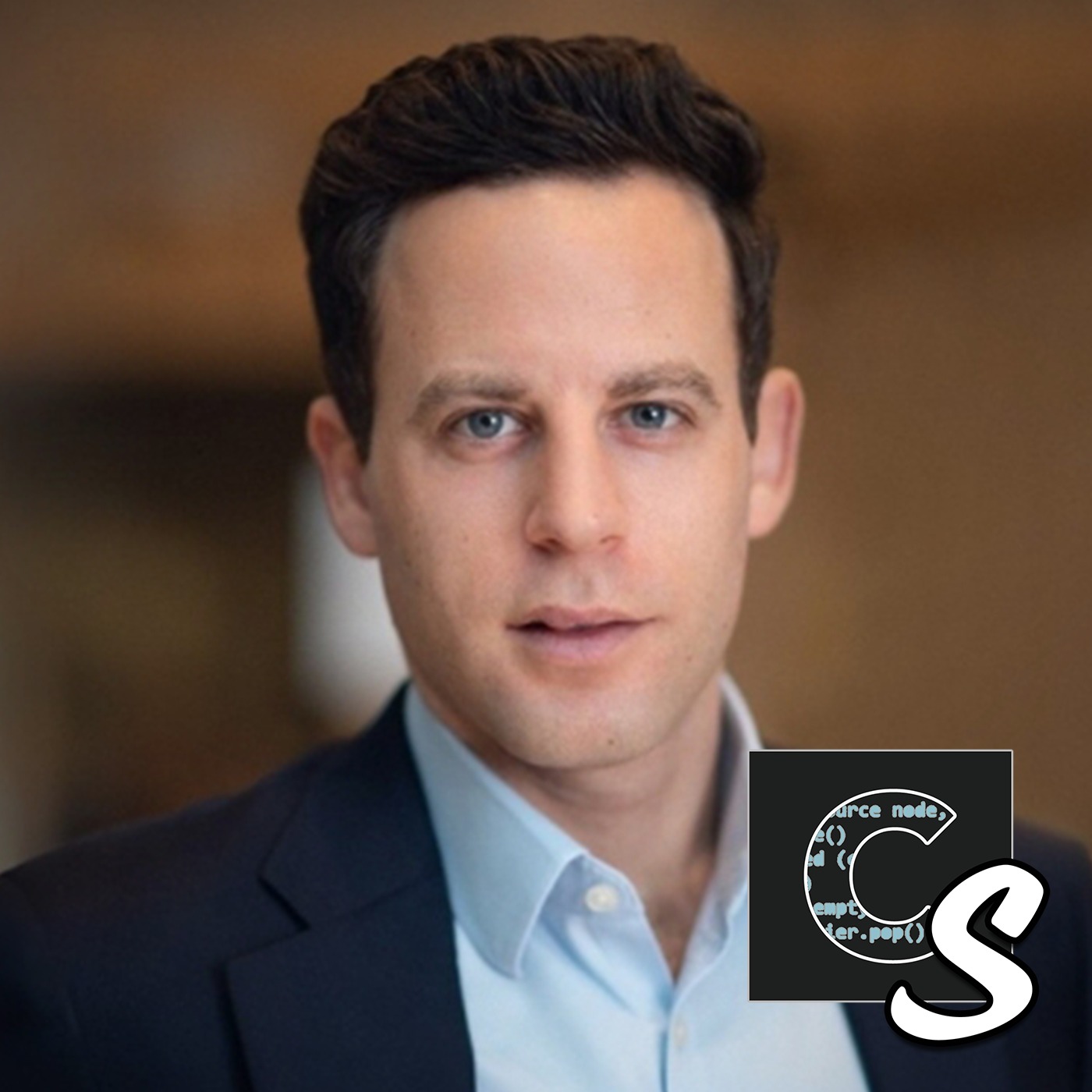
S12 E29: Fractional Talent: Traditional Freelance Marketplaces Fail Enterprise Workflows and the Shift Toward Managed Engineering Teams with Danny Gal, Co-Founder & CEO of Proteams
In this episode
Danny Gal was born and raised in the UK, and now lives outside of London. He attended University in Nottingham... yep, the same one from Robin Hood. He LOVES challenges, and not just any challenges - the hard ones. He is done Iron Man competitions, ultra marathons, climbed Mount Kilimanjaro, and jumped out of a perfectly good plane, to name a few. He loves doing them once... and then never again. He's got 2 small kids, and believes in work hard, play hard.
Danny has worked in many roles in the past, across enterprises and the like. What he found most difficult was scaling himself. He got to talking with his now co-founder about building something around the idea of scaling oneself, and took it to some businesses to validate it. Once he saw them get excited about it, he figured they were onto something.
This is the creation story of Proteams.
Sponsors
Links
Current Sponsors:
Checkout our Stacklist! https://stacks.codestory.co/
Check out our Patreon!
Hosted by Noah Labhart | Technical Founder & Startup Mentor.
Our Sponsors:
* Check out Granola and use my code granola.ai/CODESTORY for a great deal: https://granola.ai
* Check out Perplexity and use my code pplx.ai/codestory for a great deal: https://www.perplexity.ai
Advertising Inquiries: https://redcircle.com/brands
Privacy & Opt-Out: https://redcircle.com/privacy
[SPEAKER_01]: We work a lot with procurement teams in large global enterprise countries and what I want every procurement team to have some achieved procurement officer down is a strategy for external workforce. [SPEAKER_01]: And external workforce generally is any time they're using an external provider. [SPEAKER_01]: Whatever type of provider that is technology, consultancy, agency, freelancer, platform, whatever [SPEAKER_01]: And the world where companies have started to use the right supplier for the right type of work is when everyone will benefit.
[SPEAKER_01]: I'm Vanigal, co-founder and managing director of Pro teams.
[SPEAKER_03]: This is code story. [SPEAKER_03]: The podcast brings you interviews with tech visionaries. [SPEAKER_03]: 6 months moonlighting goes. [SPEAKER_00]: It's less than on the backhand. [SPEAKER_03]: Who share what it takes to change an industry? [SPEAKER_00]: I don't exactly know what to do.
[SPEAKER_02]: who built the teams that have their bad company is its team's help each other, a team's proud of our team. [SPEAKER_03]: Keeping scalability top of mind, all that infrastructure was up there. [SPEAKER_03]: Yes, we've been fighting it as we grow. [SPEAKER_03]: Total waste of time. [SPEAKER_03]: The stories you don't read in the headlines. [SPEAKER_02]: It's not an easy thing to achieve. [SPEAKER_03]: To get yourself a deficit of off, try to begin to ride the ups and downs of the start-up line.
[SPEAKER_02]: To really want it. [SPEAKER_03]: Not just about technology. [SPEAKER_03]: All this and more on code story. [SPEAKER_03]: I'm your host, Noah Labpart, and today, how Danny Gell has built the Airbnb of people, so you can build your flexible workforce with hypercare.
Guest introduction: Danny Gal's background, endurance challenges, and career journey
[SPEAKER_03]: Danny Gell was born and raised in the UK and now lives outside of London. [SPEAKER_03]: He attended university and nonning him, the same one from Robin Hood. [SPEAKER_03]: He loves challenges and not just any challenges, the hard ones. [SPEAKER_03]: He's done Iron Man competitions, Ultra Marathons, climbed Mount Kilimanjaro and jumped out of a perfectly good airplane to name a few. [SPEAKER_03]: He loves doing them once and then never again. [SPEAKER_03]: He's got two small kids and believes in work hard, play hard.
[SPEAKER_03]: Danny has worked in many roles in the past across enterprises and the like. [SPEAKER_03]: What he found most difficult was scaling himself. [SPEAKER_03]: He got to talking with his now co-founder about building something around the idea of scaling oneself and took it to some businesses to validate it. [SPEAKER_03]: Once he saw them get excited about it, he figured they were on to something.
[SPEAKER_03]: This is the creation story of Proteams.
The core problem: Why traditional freelance marketplaces fail enterprise workflows
[SPEAKER_01]: The story of Pro Team, so we're a freelance and marketplace platform. [SPEAKER_01]: I like to refer to us as the Airbnb of people. [SPEAKER_01]: Essentially, we are a solution that helps large multinationals with access to freelance contractors, experts, people on the market. [SPEAKER_01]: And we do that in a few different ways. [SPEAKER_01]: We either give them access to dedicated people for them to work with, or we deliver it as into end projects as protein. [SPEAKER_01]: So we're always bringing in experts as part of our project team, but we'll deliver that as an end to end project.
[SPEAKER_01]: Similar to a consultancy type model [SPEAKER_01]: And the background to pro teams was I had a very corporate career, worked a big corporate, then worked in a style-up world. [SPEAKER_01]: I went independent myself and started working for myself and working with different companies. [SPEAKER_01]: My challenge was always the scalability. [SPEAKER_01]: I was teaching people how to scale and I didn't scale myself. [SPEAKER_01]: and I looked at what other models they were of doing this and I got talking to my co-founder about this model and I said, look, sure, it sounds a bit like recruitment and that's not really me, my backgrounds in more textbook tech and fast.
[SPEAKER_01]: But then we go and send to check with a few people and I went and spoke to a few people in procurement and big corporates and they said, we need this.
Origin story: Solving the bottleneck of "scaling oneself" in leadership
[SPEAKER_01]: and it happened a few times in the road. [SPEAKER_01]: I was like, hey, there must be something here. [SPEAKER_01]: My whole career has been how do we solve problems and find give them solutions. [SPEAKER_01]: And so it was clearly a problem and beneath this was a solution to that problem. [SPEAKER_01]: And so it started with a sort of small thing. [SPEAKER_01]: Initially I was going to relatively big business now.
[SPEAKER_03]: Let's dive into what you would consider the MVP for Pro Team, so that first product that you and the teams set out to build, how long to take to build and what sort of tools we're using to bring it to life. [SPEAKER_01]: I got started with my co-founder, he's more tech-y-one, I have to admit, so I'm more of the commercial one. [SPEAKER_01]: Definitely in the rest of this season, I'm going to help her around some of the commercial aspects. [SPEAKER_01]: I definitely need him for some of the tech aspects, so I really like a lot of your audience is tech.
[SPEAKER_01]: But initially it was all around and online platform to allow freelancers to be up to match to corporate. [SPEAKER_01]: and that was the initial thing was how do we get invite-only platform that's very focused on senior quality. [SPEAKER_01]: Initially I first tried to find the pharmaceuticals for some of the big farmers out there and so there was a large part of it was around far more focused. [SPEAKER_01]: And so a lot of it was people led to those types of attractible perspectives.
[SPEAKER_01]: That was what our initial MVP was. [SPEAKER_03]: Okay, let's stay on that for a minute. [SPEAKER_03]: Tell me about a decision or trade off you had to make and building that MVP, I mean, starting the company, decision or trade off that was central to how you moved forward and how you cope with it.
Validating the managed fractional team model with early enterprise clients
[SPEAKER_01]: I think the biggest decision was more on what do we focus on? [SPEAKER_01]: We had clients from all different areas, so we were to mainly move procurement, IT, marketing, R&D, consultant, and social services, we were working with a plethora of different people. [SPEAKER_01]: Some had really small projects, some had really big projects, some had very chat core requests, and so our big thing was what do we want to be, and how do we want to focus on our platform perspective from a commercial perspective as well, on who we are?
[SPEAKER_01]: Because we're as leveraging external talent, we're able to be quite broad, but my whole business world has been how do we focus, so how do we focus, but also do broad at the same time? [SPEAKER_01]: And so that was a big thing was like,
[SPEAKER_03]: Cool. [SPEAKER_03]: So let's move forward then. [SPEAKER_03]: You've got the MVP done and ready. [SPEAKER_03]: You're getting some traction. [SPEAKER_03]: Have made the hard decisions in your progressing and maturing the product. [SPEAKER_03]: Tell me about how you did that, how you went about that process and kind of wrapped that in a box of the book. [SPEAKER_03]: I'm looking for is how do you build your roadmap? [SPEAKER_03]: How do you go about deciding that? [SPEAKER_03]: Okay, this is the next most important thing to build or to address with pro teams.
[SPEAKER_01]: Yeah, so I'm blind-obsessed in terms of how we think about things and what we're doing. [SPEAKER_01]: So, a part of it, we're very up on, we were a small player, and there's a big players in the U.S. that would be upworked, popped out, would be probably two of the big ones that you may be familiar with. [SPEAKER_01]: And...
Self-serve bidding vs. managed delivery teams: Understanding the structural shift
[SPEAKER_01]: So some of it is certainly we're looking at one of our competitors doing because that's obviously needs of the market, but the biggest thing in our customers saying to us, what are they for Australia's with what only I have to get today and how do we make their life easier? [SPEAKER_01]: How do we add value to them and how do we make their life easier? [SPEAKER_01]: What we found is some of the work we done was on platform and on development and on tech, but also some was on our service and how we deliver what we're doing for them.
[SPEAKER_01]: And so there was this balance between not just tech and building, but also how we advance our roadmap on service and delivery as well. [SPEAKER_01]: So yeah, big balance, but that's very client-led, very customer obsessed. [SPEAKER_01]: And we were able to be very agile, like we did in the 12-month road map, some normal road back in the year and normal SaaS world. [SPEAKER_01]: We were very much agile to what clients really needed and delivering fast. [SPEAKER_01]: We were also able to bring in external experts to help develop and build our road map quicker when we needed that.
[SPEAKER_01]: So that's the flexibility we're given to our clients. [SPEAKER_01]: We're also doing that internally with our team.
[SPEAKER_03]: Tell me about how you built your team. [SPEAKER_03]: And what do you look for in those people to indicate that they are the winning horses to join you? [SPEAKER_01]: We've been very lucky. [SPEAKER_01]: I would say we do strap the business. [SPEAKER_01]: We've never taken external funding. [SPEAKER_01]: We've been profitable from day one and we've grown organically. [SPEAKER_01]: And I've done a lot of P.C. [SPEAKER_01]: in the past. [SPEAKER_01]: I know so much for PLC and overseas.
[SPEAKER_01]: And so with this business, decided to have a different strategy around that. [SPEAKER_01]: And for me, I work in freeways, I work with people, I work with process and I work with systems. [SPEAKER_01]: Number one is good people. [SPEAKER_01]: Number two is we need processes and number three is we need systems to track and give us the data back of what's work and what's not. [SPEAKER_01]: And so for the people side of things, it was very much about bringing in people that were curious.
[SPEAKER_01]: that were hardworking and that were dedicated and given what we said we've bought in a lot of young talent into our business and some have worked and some haven't so it's not it wasn't like it's we don't ever I would love for us to have 100% hit rate of everyone we'd bring in works out and they were great but especially when you're bringing in quite young talent into the business
Building a software-enabled harness for global engineering talent
[SPEAKER_01]: It is a bit of an underscame, but luckily we've brought in some mix of experienced people as well as junior people into the team. [SPEAKER_01]: And as worked very well, I would say I've worked in a lot of different businesses. [SPEAKER_01]: I'd say the team here is extremely good, and we can't keep people alone not performing in the team, although they're not working in the right way. [SPEAKER_01]: It's never been pretty ruthless on our team and our people, but in the right way.
[SPEAKER_03]: I'm curious about scale and scale can be technology, can be business, it can be people. [SPEAKER_03]: I'm curious about where or how you've approached scale in those areas and then also if there's been interesting stories where you've had to fight scale as you've grown. [SPEAKER_01]: Yeah, I always talk about the moves from Star Luts to scale up to scale up to beyond. [SPEAKER_01]: And so we're very much, I think we've gone through that Star Luts phase. [SPEAKER_01]: We're now in that scale up phase, and then we go through it.
[SPEAKER_01]: We're facing different growth opportunities, challenges, and scaling of business, right? [SPEAKER_01]: We've got. [SPEAKER_01]: More clients than ever before, we've got all of those clients that growing the whole model as we bring on a client and they just grow and grow. [SPEAKER_01]: So all of our clients grow and they're giving us more and more projects and more and less requirements and all of that stuff so they're complex here with what we're doing for them and also growing significantly from when we first started.
[SPEAKER_01]: And we're only working with large global multinationals. [SPEAKER_01]: Global requirements are also coming to us where initiative might just be in a region or a country. [SPEAKER_01]: then globally, a huge gap. [SPEAKER_01]: And so with that, our team is, we have a big talent team, we have a bigger cat management team, sales team, marketing, project management team, and the main sort of functions of the delivery of our business model. [SPEAKER_01]: And then we've got obviously our tech team, we've got HR finance, et cetera, et cetera.
[SPEAKER_01]: From a style perspective, it's all about doing the right thing at the right level. [SPEAKER_01]: And I've helped a lot of businesses with this area. [SPEAKER_01]: So for me, that's not fink. [SPEAKER_01]: Three years ahead, our timeline right now is the next 18 months. [SPEAKER_01]: Because what's good, our business is going to be very different 18 months from now. [SPEAKER_01]: I was very different 18 months ago. [SPEAKER_01]: So I'm very much focused on what do we need to execute this month next month next quarter and then future which is 12 months to 18 months away.
[SPEAKER_01]: And our business as it keeps running and scaling are going to have different opportunities, challenges, teaming problems and my whole philosophy is we need to be 1% better every single day.
How Chief Procurement Officers should structure external workforce strategies
[SPEAKER_01]: So, every day we need to look at ourselves and say what do we need to do to be 1% better than yes to say? [SPEAKER_01]: And if we keep on that trajectory, we'll be where we need to be in 18 knots time.
[SPEAKER_03]: Yeah, that makes sense, that's a fantastic daily goal. [SPEAKER_03]: Okay, as you step out on the balcony, and you look across all that you've built thus far with pro teams, what do you most proud of?
[SPEAKER_01]: I think I'm most proud of seeing young people from not knowing much coming to business. [SPEAKER_01]: Some of them recently graduated, some of them young and their careers. [SPEAKER_01]: And then watch them develop and see them grow, see them promote, earn more money, get bigger jobs, get bigger responsibilities, and enjoy what they're doing, and having for me that is success. [SPEAKER_01]: and seeing those people strive or something then being the quiet young person in the corner to now training, mentoring, managing other people in the business is the most for me the biggest thing I do out of this journey.
[SPEAKER_01]: wish human and we make mistakes. [SPEAKER_01]: My first thing is when we make mistakes everyone has to be open on this transparent. [SPEAKER_01]: On this with the client on this with ourselves there's not trying to hide behind it or pretend it didn't happen but we all make mistakes every day and we need to learn to admit make sure it doesn't happen again and move on. [SPEAKER_01]: Sometimes we didn't hire the people at the right time. [SPEAKER_01]: We could have hired Demerlia, and we waited a bit too long, and actually the improvements they gave to our business.
[SPEAKER_01]: It was like, why didn't I just do that six months ago? [SPEAKER_01]: And then it was always a balance act of where the business was at for that time. [SPEAKER_01]: But I think I'm more keen that we, where there's a gap and a clear gap, we press go on getting the right people in place.
[SPEAKER_03]: Let's move forward then. [SPEAKER_03]: So this will be exciting. [SPEAKER_03]: There's a lot going on in the industry and I'm curious about what the future looks like for pro teams for where the industry is going from a technology standpoint, although the AI buzzwords and start your favorite there and where you're taking the platform, what does the future look like for pro teams? [SPEAKER_01]: My vision of the business is we work a lot with procurement teams in large global enterprise countries and what I want every procurement team has from a chief procurement officer down is a strategy for external workforce.
[SPEAKER_01]: and external work force should really is any time they're using an external provider. [SPEAKER_01]: Whatever type of provider that is technology, consultancy, agency, freelancer, platform, whatever it may be. [SPEAKER_01]: And the world where companies are started to use the right supplier for the right type of work is when everyone will benefit.
Overcoming compliance, IP, and security hurdles in enterprise talent integration
[SPEAKER_01]: the small companies, the suppliers, the procurement side, the business side, and so I'm on a journey to try and get procurement teams. [SPEAKER_01]: It's a huge amount of spend. [SPEAKER_01]: They're spending a huge amount of money off their annual budget somewhere between four billion, six billion a year, every year on external spend. [SPEAKER_01]: It was suppliers. [SPEAKER_01]: This is outside of software, purely just like on service-type suppliers, and no procurement team average strategy behind that spend.
[SPEAKER_01]: So it's a big, crazy theme that you've got this big spend, your job is to look at the bright solutions for the right price. [SPEAKER_01]: Yet you don't have a strategy behind how you're spending that money, and most procurement teams will admit that to anyone that's true for their organization. [SPEAKER_01]: But that's the journey we're on from a business level. [SPEAKER_01]: We're trying to get procurement teams out of strategy behind external workforce, but back to the expense. [SPEAKER_01]: And if they do that, ultimately to continue to benefit, but so will many others in the market, because companies will start using the right suppliers for the right jobs.
[SPEAKER_01]: In terms of from a platform perspective, there's a lot we're doing around our UI and UX. [SPEAKER_01]: There's a lot we're doing around our journey. [SPEAKER_01]: Some, a lot of our clients want very different experiences. [SPEAKER_01]: Some want a very tech heavy touch. [SPEAKER_01]: They never want to deal with a person, and they just want to do everything for our platform. [SPEAKER_01]: and others want the complete opposite of that and they don't ever want to use another platform, they just want to speak to someone and get the problem solved.
[SPEAKER_01]: So we've got very mixed types of clients across tech companies and every type of company out there and so we need the ability to be able to have a very seamless experience regardless of how you want it. [SPEAKER_01]: work with us, but also ensuring from a visibility, a transparency, a report in all KPIs, everything that is available for the team that we'll be able to see that. [SPEAKER_01]: So we're looking at doing a lot more on our platform to make that very seamless. [SPEAKER_01]: from work flows from the use of AI, from how people interact, from some basic things as well, learning notifications, let a lot more we should and could be doing to improve that music experience for our customers and for our team as well.
[SPEAKER_01]: There's also a lot of efficiency gains we can have. [SPEAKER_01]: I'm still saying way too much about job and I think everyone is bored of them and saying, are we using AI for that? [SPEAKER_01]: Why are we not using AI for that? [SPEAKER_01]: How can we use AI for that? [SPEAKER_01]: But still far too much of people's jobs are still using spreadsheets or docks or slides and it's still too much manual work in the business and we definitely changed that as we become more efficient.
[SPEAKER_03]: Okay, let's switch to you, Danny, who influences the way that you work? [SPEAKER_03]: Name a person or many persons or something. [SPEAKER_03]: You look up to him, why? [SPEAKER_01]: I've had it, I've been lucky enough to have some very good mentors or coaches over the years. [SPEAKER_01]: My last mentor was the, he's now the chairman of the London Stock Exchange Group.
Balancing speed, quality, and accountability in remote team management
[SPEAKER_01]: It was the chairman of experience, and it was the year of experience before that. [SPEAKER_01]: And he was also chairman of one of the previous companies I worked at, which is how I got to
[SPEAKER_01]: So that's a very real life mental coach someone I looked up to, saw in the boardroom, super likeable character and everyone really spoke very fondly of him, but also very strict and disciplined and got what he wanted. [SPEAKER_01]: So definitely from a very real life perspective, that was someone that I very much looked up to. [SPEAKER_01]: The other one is my granddaughter,
[SPEAKER_01]: and amazing storyteller and he achieves amazing things in his life. [SPEAKER_01]: Luckily, before he passed the managed to tell my grandparents, I need to be need to turn your life into a story. [SPEAKER_01]: Right to book, right to book your retire, it's come on. [SPEAKER_01]: No time for that. [SPEAKER_01]: So eventually me and my cousin filmed my nan and my granddad in their house. [SPEAKER_01]: So it was also for a couple of years. [SPEAKER_01]: And we took it as chapters. [SPEAKER_01]: We filmed their story of their last.
[SPEAKER_01]: I luckily read that some stories out of his life before they left for Gotham. [SPEAKER_03]: No, that's incredible way to take advantage of that opportunity. [SPEAKER_03]: That's a moving story. [SPEAKER_03]: Okay Danny, last question. [SPEAKER_03]: So you get not a plane and you're sitting next to a young entrepreneur who's built the next big thing. [SPEAKER_03]: They're jazzed about it. [SPEAKER_03]: They can't wait to show it off to the world and can't I show it off to you right there on the plane?
[SPEAKER_03]: What advice do you give that person having gone down this road a bit? [SPEAKER_01]: My advice is journey is very rarely smooth. [SPEAKER_01]: There are bumps in the road, there are things different things in the world, are different stages of the journey and keep going, keep going, listen to your customers, know when to listen. [SPEAKER_01]: Focus as well focus on what you're trying to do. [SPEAKER_01]: There's a big market out there, you don't need to capture every single person in the universe,
[SPEAKER_01]: There's a lot of white space and a lot of things to go after, but be curious to be customer obsessed. [SPEAKER_01]: The best way to build a product is to keep speaking to customers. [SPEAKER_01]: I'm still surprised how little CEOs and founders speak to customers. [SPEAKER_01]: I'm still shocked that most customers and people all building the product are so far away. [SPEAKER_03]: removed and they're not with each other so I would say yeah keep going enjoy the journey and get some mentals along the way get some coaches to help you out I could hear you more all that's fantastic advice Danny thank you for being on the show today and thank you for telling the creation story of pro teams sorry to me no thanks so much and this concludes another chapter of code story
Closing thoughts and where to connect with Danny Gal and Proteams
[SPEAKER_03]: code story is hosted and produced by Noah Labhart. [SPEAKER_03]: Be sure to subscribe on Apple Podcasts, Spotify, or the podcasting app at your choice. [SPEAKER_03]: And when you get a chance, leave us a review. [SPEAKER_03]: Both things help us out tremendously.
[SPEAKER_03]: And thanks again for listening.
Latest Season of the Podcast is Sponsored By




 Apple Podcasts
 Spotify
 Castbox
 Player FM
 Pocket Casts
 YouTube
 Overcast
 Castro
 Goodpods
 Moon FM
 Podbean
 Podcast Addict
 Podcast Republic