S13 Bonus: The Legal AI Shift: Automating Contract Workflows with AI Agents with Nick Holzherr, Founder & CEO of GitLaw

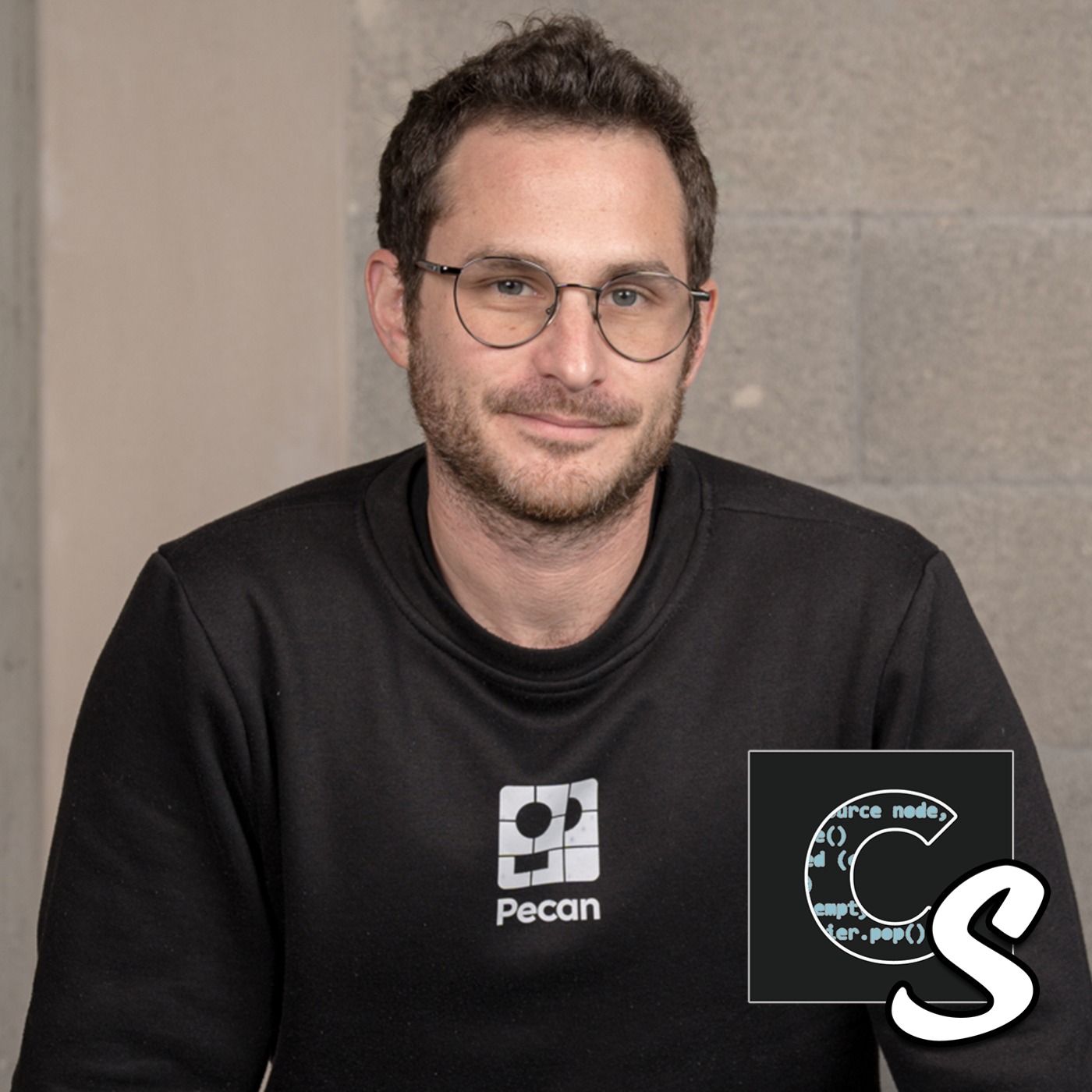
Nick Holzherr is originally from the Switzerland, but moved to UK when he was 7 years old, to the countryside. He had no real touch to computers until he was 18, when he attended university and everything picked up for him, tech wise. Eventually, he got into building businesses, and of those, he founded a coffee company, HR software company, and whisk.com, which was sold to Samsung in 2019. Outside of tech, he is the father to two young children. He enjoys skiing and snowboarding, and jokingly, he admits that running around ensuring his agents are prompted gets in the way of his family and hobby life.
Through his entrepreneurial adventures, Nick spent large sums of money on legal contracts, ensuring that the i's were dotted and the t's were crossed. While he still feels that lawyers are very important and needed for certain scenarios, Nick wanted to create a way to level the playing field for small businesses, in the legal arena.
This is the creation story of GitLaw.
Links
https://www.linkedin.com/in/nickholzherr/
Current Sponsors:
Checkout our Stacklist! https://stacks.codestory.co/
Hosted by Noah Labhart | Technical Founder & Startup Mentor.
Our Sponsors:
* Check out Granola and use my code granola.ai/CODESTORY for a great deal: https://granola.ai
* Check out Perplexity and use my code CODESTORY for a great deal: https://www.perplexity.ai
Advertising Inquiries: https://redcircle.com/brands
Privacy & Opt-Out: https://redcircle.com/privacy
[SPEAKER_03]: I think the biggest regrets mistakes are big product decisions that took a long time were somewhat irreversible and were wrong. [SPEAKER_03]: And I think there are some examples with Gitlaw. [SPEAKER_03]: We are much earlier and also AI allows you to move much faster, so you mistakes are usually more reversible. [SPEAKER_03]: It takes less time to get there than in the past, so it's less of an issue, but [SPEAKER_03]: There are still issues, right, and it's things like, it doesn't matter if you make a mistake on, I want a new visual way of chatting with AI, and I can probably vibe code that in a day, push it live if it's wrong, doesn't matter, take it down, right?
[SPEAKER_03]: No harm done. [SPEAKER_03]: My name's Nick Hulter, I'm the founder of Gitlaw, which is Git.law.
[SPEAKER_02]: This is Code Story. [SPEAKER_02]: a podcast bringing you interviews with tech visionaries. [SPEAKER_02]: Six, six months moonlight ago. [SPEAKER_02]: It's the last and all of the backgrounds who share what it takes to change an industry. [SPEAKER_00]: I don't exactly know what to do. [SPEAKER_02]: It doesn't go as to get right. [SPEAKER_01]: who built the teams that have their bad company is its team's help each other, a team's proud of our team. [SPEAKER_02]: Keeping scalability top of mind, all that infrastructure was up there.
[SPEAKER_02]: Yes, we've been fighting it as we grow. [SPEAKER_02]: Total waste of time. [SPEAKER_02]: The stories you don't read in the headlines. [SPEAKER_01]: It's not an easy thing to achieve. [SPEAKER_02]: To get yourself a deficit of off, try to begin to ride the ups and downs of the start-up line. [SPEAKER_01]: Need to really want it. [SPEAKER_02]: Not just about technology. [SPEAKER_02]: All this and more on code story. [SPEAKER_02]: I'm your host Noah Labpart, and today how Nick Hulzer has built the AI agent for contracts, giving your SMB the power to understand and negotiate.
[SPEAKER_02]: Nick Colzer is originally from Switzerland, but moved to the UK when he was seven years old to the countryside. [SPEAKER_02]: He had no real touch to computers until he was 18 when he attended university, and everything picked up for him, tech-wise. [SPEAKER_02]: Eventually, he got into building businesses, and of those he founded a coffee company, HR software company, and Whisk.com, which was sold to Samsung in 2019. [SPEAKER_02]: But outside of tech, he's married and is the father to two young children.
[SPEAKER_02]: Enjoy skiing and snowboarding, and jokingly, he admits that running around and cheering his agents are prompted gets in the way of his family and hobby life.
[SPEAKER_02]: Through his entrepreneurial adventures, Nick spent large sums of money on legal contracts, ensuring that the eyes were dotted and the teas were crossed. [SPEAKER_02]: While he still feels that lawyers are very important in the needed for certain scenarios, Nick wanted to create a way to level the playing field for small businesses in the legal arena.
[SPEAKER_02]: This is the creation story of Gitlaw.
[SPEAKER_03]: It's an AI agent for contract so you can ask it for any contract and it will write it for you or you can ask it to review any contract and it will review it for you and it does it using templates, lawyer reviewed, lawyer created, tried and tested templates which is exactly what lawyers do, lawyers don't go and hand draft from their top of their head what you're being a contract that uses a tried and tested template and then it uses workflows that have been basically distilled a lot of legal knowledge to try and improve what LLMs do out of the gate.
[SPEAKER_03]: and it's all, it's the platform at, it's targeted at businesses, not at lawyers, so it's not at all for lawyers, like the famous ones in the space of people like Harvey and the Gora, they're targeted at generally large law firms, some of the new entrance are targeted at moral law firms. [SPEAKER_03]: We're targeted at businesses, we're trying to help businesses, [SPEAKER_03]: avoid the costs or it is often prohibitive costs of legal advice, which means they end up not doing any legal, getting the legal advice and then doing lots of DIY and ends up being poor quality and they end up a lot of risky mistakes or risks that have jumped in where they miss certain important clauses or they leave revenue on the table, all sorts of different problems that happen.
[SPEAKER_03]: we do everything with AI and we try and guide it with the experience, the platform guides it, guides AI in a way that gets you a better outcome, it does it in word documents with track changes and comments and all the things you'd expect a human to do as well. [SPEAKER_03]: You obviously still need a lawyer for certain things if I was selling my company. [SPEAKER_03]: to another company, which I've done a few times. [SPEAKER_03]: We don't want a lawyer who's done it a thousand times before and been in the room and negotiated all those things and knows exactly how these things work.
[SPEAKER_03]: Of course I would, and would I be willing to pay for that person and absolutely, so there's lots of cases where human lawyers are still absolutely, I think, necessary or highly recommended by me, but there are lots of places as well where I think I read literally a few days ago. [SPEAKER_03]: The average, unpaid bill is $18,000. [SPEAKER_03]: So when someone does some work, the other person doesn't pay, so often like agencies are smaller businesses, and it costs $17,000 to recover it.
[SPEAKER_03]: So most businesses just don't bother. [SPEAKER_03]: Right? [SPEAKER_03]: Someone doesn't pay. [SPEAKER_03]: They're like, ah, I'm just gonna leave it. [SPEAKER_03]: I can't be bothered. [SPEAKER_03]: It costs almost as much as I think as the amount of money that I'm owed, I'm just I'll leave it there. [SPEAKER_03]: I'll move on with my business. [SPEAKER_03]: I'll focus on growing it. [SPEAKER_03]: I've certainly had that experience myself. [SPEAKER_03]: I think that way, I feel like that's a feels like an unfair position to be in.
[SPEAKER_03]: Really, this is my attempt at making [SPEAKER_03]: What feels like an unfair legal system to small businesses, more fair, and a little bit of an access to justice kind of angle, we started off with a tub-esque inspiration where it was like open-source contracts, why are all these templates limited to more firms who pay a lot of money monthly, but access to these industry templates, why not just open-source these templates? [SPEAKER_03]: lawyers don't actually own the IP in these contracts because they've essentially evolved over hundreds of years in the different legal systems where one person made a contract, another one made a revision, an alteration, and then a kept evolving.
[SPEAKER_03]: So these content, who actually owns the IP in these contracts is quite unclear. [SPEAKER_03]: So why not just take, get set of these contracts made, open source to them, everyone can have them for free, and then everyone can just [SPEAKER_03]: Use standards to agree things and in most cases you don't really want to try and get one up on someone else So you just want to get this standard agreed between the two of you so you can get on and get on with business And then of course a month in or not a month in but maybe a six months into doing that and building this open source repository for free contracts [SPEAKER_03]: LLMs exploded and then the immediate realization was not only can you have a set of fields that are kind of like popped out and explained to the user fill these out to adjust the template but actually now LLMs can adjust the templates and LLMs can do a lot more.
[SPEAKER_03]: So then we kind of went down this whole alternative path which was let's put LLMs to orchestrate them in a way that allows us to do get great outcomes for users.
[SPEAKER_02]: Let's dive into the beginning, the first version that should build the MVP for Gitlaw. [SPEAKER_02]: I want to take the build and what sort of tools are you using to bring it to life? [SPEAKER_03]: So we used Giteer, which was an open source version of the years of a Git repository, and that allowed us to move forward pretty quickly with a lot of the basics of Git. [SPEAKER_03]: Allow people to create repositories to version histories and pull requests and commit and all the kind of things that come with Git.
[SPEAKER_03]: Then what's more interesting is what's happened since the LLM came along, I think. [SPEAKER_03]: First of all, writing code has become so fast, but then the industry has what's best practice has changed so many times. [SPEAKER_03]: And it also varies so greatly depending on who you listen to. [SPEAKER_03]: So we have changed the foundation and the whole architecture of how the AI agent does stuff many times over. [SPEAKER_03]: And what surprised me is changes that used to take, [SPEAKER_03]: often months, many months to do, we're now able to deliver in, often weeks, or sometimes days, or sometimes hours.
[SPEAKER_03]: And so the speed of change has been quite drastic. [SPEAKER_03]: It's also, of course, how the model models are able to do has changed, and then if everyone in the space does a whole bunch of prompt refinement, [SPEAKER_03]: and what type of prompts that the different models want, or I work best with, also varies. [SPEAKER_03]: So you're like orchestrating different models, the models are changing, and how they work, you're changing what you have to give the models in order to get the best out of them.
[SPEAKER_03]: They come with different cost associations. [SPEAKER_03]: You've got a really interesting thing about it in the space right now where the big horizontal frontier model players are offering
[SPEAKER_03]: It's so much changing, there's also a whole bunch of these moments which feel existential when you've got people like Claude suddenly opening up the plug-in architecture and publishing plug-ins for legal and you're something like, wow, well that literally delete entire category. [SPEAKER_03]: And then you take a step back. [SPEAKER_03]: or more realistically, you wait a month and you realize, oh, actually, no, this is all really valuable, important things that all the airs like us can do on top of what the Frontier models do.
[SPEAKER_03]: The amount of change, the amount of moments which feel make or break. [SPEAKER_03]: I've never experienced something like it. [SPEAKER_03]: I've been building businesses for 20 years. [SPEAKER_03]: And the last two, three I jumped back in, who was essentially sitting in Samsung leading the business that I had sold them. [SPEAKER_03]: It was a pretty, it was enjoyable, but relatively easy role. [SPEAKER_03]: And when I went, no, I wanna go back into building a business and I did not expect it to be as fast moving as hard work.
[SPEAKER_03]: But also as exciting, but definitely also hard work. [SPEAKER_03]: It's like it is hard being a founder. [SPEAKER_03]: You wake up and the world has changed so frequently. [SPEAKER_02]: Let's move forward then, so you've got that MVP for Gitlaw. [SPEAKER_02]: You're getting the traction that you want or you're validating your idea that you want. [SPEAKER_02]: How did you move forward with Gitlaw? [SPEAKER_02]: How are you progressing, maturing the product, and a wrap in a box little I'm looking for is how do you build your roadmap?
[SPEAKER_02]: How do you go about deciding that, okay, this is the next most important thing to build or to address? [SPEAKER_03]: The big piece there is user research and staying close to what users want. [SPEAKER_03]: There are ways of doing that in an automated way, in great surveys and video user research pieces, which AI then interprets and you could button a few hours later, you have 50 user recordings and analysis and you understand where the problems are or what users want. [SPEAKER_03]: And that is definitely valuable, but I think more valuable is the peace which is more you literally sit down one-on-one with real humans, human to human, and speak to people and understand where their problems are.
[SPEAKER_03]: Trying to still let into a roadmap that you feel makes sense, and of course you complement that with looking at what the industry says, what was happening with other players in the world, and [SPEAKER_03]: You look at some of the data that's there automatically from the LLMs, but yeah, it's actually been Slop 2, it's actually it's I think it's easier than ever to gather data and distill it so the bit that's the [SPEAKER_03]: difference between what you can do in everyone else can do in the space.
[SPEAKER_03]: I guess your competitive advantage is some of that take people often refer to it as taste, but it's like understanding, probably better than others, what users actually want. [SPEAKER_03]: And I think that best comes from sitting down with a lot of users and speaking to them and really trying, really understanding [SPEAKER_03]: where they're coming from, what they're going through every day, how they're using your product, what they want. [SPEAKER_03]: And obviously, being an ex-founder, myself, or still a founder, just also building the tool for founders, I do understand a lot of that intuitively as well.
[SPEAKER_03]: And then the other piece, I think is having a great team. [SPEAKER_03]: who has done it before is hugely helpful. [SPEAKER_03]: So we have a lot of team members from whisk my previous startup who joined the business and a lot of this from senior leaders who have worked with for 15 years are in this business with me as well. [SPEAKER_03]: So we know each other really well. [SPEAKER_03]: They also understand the problem. [SPEAKER_03]: come out the problem from different perspectives and come to slightly different conclusions and that kind of collaboration and bringing different perspectives.
[SPEAKER_03]: But different perspectives that have all come from experience has been really helpful as well. [SPEAKER_02]: Okay, I do want to dive in to Team a little bit and you answered some of my questions, so it sounds like you work with a lot of folks from WIS. [SPEAKER_02]: But I'm curious about how you built your team, how you went about deciding that, even if there are people that you work with, or a new people, wouldn't you look for in those people to indicate that they're the winning horses to join you?
[SPEAKER_03]: People have more leverage today, but may have ever had because of AI, getting the right people, I think is more important than it's ever been. [SPEAKER_03]: I think the skills and what you want from people is slightly different than what it used to be. [SPEAKER_03]: It's no longer just technical prowess, but it's the ability to have tastes and make decisions and judgments and orchestrate. [SPEAKER_03]: intuition or proactiveness, curiosity, it's all the same kind of part of someone which is can you give someone a task and they figure it out and get it done all the way through to done?
[SPEAKER_03]: Or can they figure out themselves what they should be doing and get it done all the way through to done? [SPEAKER_03]: Because AI allows gives everybody superpowers. [SPEAKER_03]: to achieve a lot of stuff, but not everyone has that kind of drive and intuition and proactiveness to actually use the tools to get to the result. [SPEAKER_03]: That's key, to self-driven people. [SPEAKER_03]: The other thing that I've noticed is more and more important is a certain base level of technical knowledge.
[SPEAKER_03]: So knowing what Git is or knowing what a pull request is or being comfortable in Claude code asking it to do something is really valuable today because it means that you can use the latest tools and you can move so much faster versus someone who doesn't know that and is maybe stuck in the Jackie BTO Claude web interface or something like that. [SPEAKER_03]: No, there's nothing you can still achieve a lot in the web interfaces too, but like nothing like I think what you can do if you orchestrate the tools well.
[SPEAKER_03]: So that's really important. [SPEAKER_03]: And then the rest of it is I think you, I think the being focused on user problems is part of it too. [SPEAKER_03]: Being an executor of tasks alone is hard just to find people who just execute on a task they're given and then need another person too. [SPEAKER_03]: verify the quality of the outcome. [SPEAKER_03]: Because AI can do that really too, right? [SPEAKER_03]: I can ask Claude Code and with enough skills that provided or enough guidance, it can do a really good job and then I can review Claude Code's outcome and then I can ask you another revision and then it gives it back to me and I do it and then we go through that cycle a few times and I get to a pretty good outcome.
[SPEAKER_03]: I can get to it really quickly because every cycle is waiting for. [SPEAKER_03]: between five and ten minutes. [SPEAKER_03]: I can do that. [SPEAKER_03]: I can do two or three tasks at the same time. [SPEAKER_03]: So I can get a result really quickly. [SPEAKER_03]: If I have to do the same thing with a human, the often the human will take half a day and then by which time I have changed to context in my head and then then they have to wait for me to respond because I might be working at different tasks and then they do the work and I think I can't remember who it was from post-tog but there was an article by post-tog by somebody at post-tog who under the headline of collaboration sucks.
[SPEAKER_03]: collaborating with another human has to be worth it because collaborating with AI has lots of advantages around speed and mainly speed and the quality often isn't that much worse or sometimes is actually better. [SPEAKER_03]: So what you are looking for are people that can basically do orchestration part, make decisions, end-to-end, take a problem and deliver a solution with the help or however they want to do it but with the help of AI is usually the answer. [SPEAKER_03]: So I think you need less people overall.
[SPEAKER_03]: I think you need people who can own problems and deliver to solutions all the way through. [SPEAKER_03]: You don't need to be a software engineer, but understanding the basics of how engineering software engineering works or the tools or at least being comfortable enough to jump into them and like really get your hands dirty as the wrong word, but really into them is I think have become like prerequisites. [SPEAKER_03]: And then of course, I think generalists are super helpful, but also people who are generalists but specialize in a certain area in some extent, a marketing person who understands broadly lots of different things across marketing or a rather than a software engineer who will only touch back end code in a specific language, a full stack engineer who maybe specializes always got a lot of experience in a certain area of back end.
[SPEAKER_03]: is open to also doing a bit of front end and is open to doing some DevOps with the assistant of Claude Code or Codex or whatever they want to use. [SPEAKER_03]: So I think that's going to the general trend that I've seen and for us that's working really well and there's been some trial and error we have definitely hired some people that didn't fit and we had to move on but overall that's where we've landed and that's us working for us.
[SPEAKER_02]: Let's move into scale. [SPEAKER_02]: I'm curious about how you approached scale from the beginning, maybe in how you thought about how you're structuring the product and your business, but also, I'm curious if there are interesting areas where you've had to fight scale as you've grown. [SPEAKER_03]: With Wisk, we were doing half a billion monthly users. [SPEAKER_03]: So we had a huge amount of scale, and some of the API customers that we had were like, I don't even remember exactly what the numbers were, but it was hundreds of millions of requests in some cases, like per day.
[SPEAKER_03]: crazy numbers. [SPEAKER_03]: Also as in crazy compared to I done in the past, maybe normal for your listeners or for yourself, but like for even big numbers for my experience. [SPEAKER_03]: I, and mainly because we had players like Samsung using the platform, using their global devices, calling our APIs to do bunch of stuff and it's like a not a deed-offs attack, but essentially almost like a deed-offs attack when you've got devices across the world, hitting your servers. [SPEAKER_03]: fascinating technical problems to solve.
[SPEAKER_03]: But the problem that hasn't been to be honest on scale of technology because the solutions out there now are make it quite easy. [SPEAKER_03]: In my experience, they sure there are some things like GTA, good example is hasn't scaled as we wanted to do things like save a lot more revisions of things as people make changes to their legal documents, who want to save all the different changes in there. [SPEAKER_03]: revision history and if you save too much stuff into GTA you start to run into scaling issues so you start to move to other technologies.
[SPEAKER_03]: There are definitely examples but they're not like super interesting. [SPEAKER_03]: I think that to me the super the most interesting part is actually scaling teams because what I've noticed having been through the cycle a few times now where I go from one to three
[SPEAKER_03]: the moment where you get above Trenty actually starts to really feel painful. [SPEAKER_03]: How you manage the team changes, you have to think about culture and communication, and these things become really, yeah, your role as a founder and as a leader changes. [SPEAKER_03]: You start become more distant from the product as well because you are pulled into doing so many other things. [SPEAKER_03]: And that's really one of the reasons actually that I left. [SPEAKER_03]: My previous or my Samsung has looked something new, a new problem to sort of which ended up being Gitlaw, because I was leading a team of 120 people and I was doing that for six, seven years, I just felt myself getting further and further away from building products and I really wanted to get back to it.
[SPEAKER_03]: So I think the scaling of me, the question, the, is it a question not a confirmed outcome, but is can we build scaled products with smaller teams? [SPEAKER_03]: Because if we can, I think smaller teams can be actually extremely productive and you don't have the necessity to scale to 50 200,000 people.
[SPEAKER_03]: Now, sure, at some point, when you want to engage sales team to talk to every customer that every business customer that comes on board, sure you will need a lot of people for that. [SPEAKER_03]: That can almost be like a separate organization adjacent to your organization, that does the calls and does the selling, but like your core product team stays relatively small and can do a lot with few very experienced people. [SPEAKER_03]: So that's what I'm hoping will be true. [SPEAKER_03]: Having said that, we are already 20 people, which is already at that and we're relatively early in our journey.
[SPEAKER_03]: I hope that we can stay at not too many more than 20, because I've experienced the pain of going beyond 20 people, or maybe more clearly beyond 30 people, to me felt painful.
[SPEAKER_02]: Okay, so as you step out on the balcony, and you look across other that you've built this far, what are you most proud of? [SPEAKER_03]: I think I'm most proud of the experiences as in the user experiences that we've built. [SPEAKER_03]: And a lot of them are underpinned by a lot of complex technology, but it feels very simple to the user, right? [SPEAKER_03]: And it's those experiences that feel intuitive and just work. [SPEAKER_03]: So with WISK, we were taking recipes and turning them into shopping lists of items in grocery stores.
[SPEAKER_03]: But behind the scenes, we were running natural language processing. [SPEAKER_03]: on every ingredient line, matching it to the right type of ingredient, but your beef mince versus your beef strip versus all the different types of beef you can imagine of which there are hundreds. [SPEAKER_03]: Matching it to the right product in the grocery store that matches that and the amount and whether it's going to be cooked or fried or boiled or fried or what's going to happen to it. [SPEAKER_03]: All these things have to be taken into consideration and we built these massive knowledge graphs behind the scene which we called our food genome and [SPEAKER_03]: was the reason why we were successful it was all of that natural language processing and the knowledge graph and all of those data pipelines.
[SPEAKER_03]: But what we delivered to the user was a beautifully simple user experience where you click and immediately you see a bunch of products which match what you want and you click by and it's done, right? [SPEAKER_03]: And the outcome for you is a recipe that worked out not where you got to the kitchen you were missing in ingredient. [SPEAKER_03]: So I was proud of that. [SPEAKER_03]: with Gitlaw, with the similar kind of experience of like, behind the scenes the technology to take your DocX, exported DocX or forwarded by email DocX, map it into different clauses and it will ultimately enter a format the LLM to understand and be able to understand different revisions between each other and understand the differences and understand what had changed, create a bunch of track changes and comments.
[SPEAKER_03]: and layer that all on top. [SPEAKER_03]: As a user experience, you just upload a document and it just like magic or it's not magic, but immediately shows you, here's what change and here are some track changes for you to accept or reject. [SPEAKER_03]: But behind the scenes is like a whole bunch of different processes that run and orchestrates different models and different different checks, different QHX and the whole bunch of legal knowledge, like a whole bunch of templates that it compares to and a whole bunch of like workflows for different types of lore and different jurisdictions
[SPEAKER_03]: So the user experience is simple, but the technology behind the scenes is actually surprisingly complex. [SPEAKER_03]: And then the same is true with Eric Char, which is another company that has sold built and sold in between. [SPEAKER_03]: And Eric Char, we built this, we built his holiday and time off system. [SPEAKER_03]: It took us like, I don't know, two months of building it, because it felt it was actually really, really complex to handle people's time off if you look at all the different variants of how people figure it out, work it out, and the different ways you can set it up in different places, and different national holidays, and company holidays, and pro-rathering, and their full-time part-time, there's so many different parts, but the experience we built was super intuitive and super simple.
[SPEAKER_03]: better I think than anybody else in the industry at that time. [SPEAKER_03]: So I think it's all about like there are these examples of experiences within Gitlaw and my previous companies where I'm proud of the experience we managed to build, but they were always behind the scenes really complex technologically or product like just trying to figure out that the product side of it. [SPEAKER_03]: And I guess that's why I'm proud of them because and also that's why they were recognized by others in industry because they hadn't seen that kind of experience before for that specific thing at that time and obviously now building what I described in But area jar or for a whisk is actually probably trivial because you just tell Claude to do it and it probably does a really good job of it, but that's how technology is moving on
[SPEAKER_02]: Let's flip the script a little bit, tell me about a mistake you made and how you and your team responded to it. [SPEAKER_03]: I think the biggest regrets the mistakes are big product decisions that took a long time were somewhat irreversible and were wrong. [SPEAKER_03]: But there are lots of examples, but with WISC it was building, we built a whole community's feature where people could build their own communities. [SPEAKER_03]: people of like-minded people and share recipes, and we took us probably six months, 12 months to build, and you know, it was before I, and probably two or three years to maintain, and we didn't get enough users to justify it, and it was a massive see that as a failure.
[SPEAKER_03]: And I think there are some examples, nothing to that scale with Gitlaw yet, and I hope it won't be. [SPEAKER_03]: We are much earlier, and also AI allows you to move much faster, so the stakes are usually more reversible. [SPEAKER_03]: It takes less time to get there than in the past, so it's less of an issue, but there are still issues, right? [SPEAKER_03]: And it's things like, it doesn't matter if you make a mistake on [SPEAKER_03]: I want a new visual way of chatting with AI. [SPEAKER_03]: And I can probably vibe code that in a day, push it live if it's wrong, doesn't matter, take it down.
[SPEAKER_03]: Right? [SPEAKER_03]: No harm done. [SPEAKER_03]: But if I say, I want, we have single, we actually have a very complex user management structure. [SPEAKER_03]: And we probably built that to early. [SPEAKER_03]: We have organisations and you can have different privilege settings within organisations. [SPEAKER_03]: So you can set like who owns a document, who can edit them, who can view them, who can suggest to them. [SPEAKER_03]: It's a bit like Google Docs and the Google organisation model.
[SPEAKER_03]: but we've built a lot of that on top of the other pieces that we've built and it means that A, it takes a while to do that and it's really important to get it right because you can't get it wrong if you get like permission levels wrong you're putting people's documents at risk but then every other feature you build has to take all of that into account and it slows you down. [SPEAKER_03]: It's those types of features where you build something that you think is important [SPEAKER_03]: and you think it for the right reasons or often for the wrong reasons and the ones where I regret it is where I've used too much intuition and I've been wrong and we've wasted two months of time or month of time building it and then it slows us down by 10% on every future release.
[SPEAKER_03]: Like for eternity, maybe not 10% but it is. [SPEAKER_03]: Those are the bits that I regret and those are the mistakes I regret. [SPEAKER_03]: I also think that they make a slowest down. [SPEAKER_03]: If when you make those kind of mistakes, I as a leader of an organisation like sometimes regret not shutting things down fast enough. [SPEAKER_03]: It's really hard, I think, finding the right balance between doing what Steve Jobs did so well so famously where he just had his vision, everyone delivered to that vision versus enabling your team to do their best work and empowering them, which is more my style.
[SPEAKER_03]: But there's
[SPEAKER_03]: put your foot down and shut things down, but you think we're work versus giving people a chance to prove out their own hypotheses and their smart people, right? [SPEAKER_03]: So I think if I had to point to single mistakes, regrets, it's things where I've led by intuition to build a product feature that was big irreversible or hard to reverse, [SPEAKER_03]: and had wasted time and was not easily effective future releases. [SPEAKER_03]: And it's definitely been some of those I get law.
[SPEAKER_03]: There's been more of those in my past businesses. [SPEAKER_03]: I try to learn, it's hard, it's so easy to make those mistakes. [SPEAKER_03]: I try to surround myself with engineers and people who are happy to contradict me and are happy to tell me that they think it's a bad idea. [SPEAKER_03]: So that I pause when I have these stupid ideas, it's you can't avoid them all.
[SPEAKER_02]: Okay, Nick, let's move forward, then this will be exciting. [SPEAKER_02]: It's early days for GitLaw. [SPEAKER_02]: Tell me about what the future looks like, or what you've built for the industry is going and for all the things. [SPEAKER_03]: I think we're moving into a place where AI agents or software is doing more for us than ever and it will continue to do more and more for us, which means it will ultimately want to contract for you or contract on your behalf. [SPEAKER_03]: So if you meet someone, [SPEAKER_03]: and the meeting is transcribed and you agree on the call that you'll get a contract done.
[SPEAKER_03]: It's totally reasonable to expect the AI agent will probably get the contract done. [SPEAKER_03]: My and your agents will get the contract done while we're on the call and get it fully done. [SPEAKER_03]: Maybe we'll have to sign or maybe they'll sign an hour and a half before the call's over, right? [SPEAKER_03]: So as we agree, it's just done. [SPEAKER_03]: Or maybe we'll even have a call, right? [SPEAKER_03]: We'll just our agents will just do business between each other and do the contract that way.
[SPEAKER_03]: But ultimately like autopilot, legal. [SPEAKER_03]: an autopilot agreement essentially. [SPEAKER_03]: So legal just disappears as kind of something you have to worry about. [SPEAKER_03]: It's just handled for you. [SPEAKER_03]: And I think that's the direction that we're generally going in with certainly not there. [SPEAKER_03]: We're a long way from that today. [SPEAKER_03]: But step by step, businesses will, legal's won't be a topic they have to worry about anymore. [SPEAKER_03]: We'll just get done seamlessly if they want to get a contract reviewed initially in the third in the next year or so.
[SPEAKER_03]: If you
[SPEAKER_03]: agent by email, or you just chat to it via our app, and it gets done in a year or two, I suspect it'll be more integrated with people's workflows, and you can already do it with z-peer and other tools where something triggers in your system that deals being worn or an NBA needs to be signed and it automatically creates the contract and sends it to the party. [SPEAKER_03]: and then you'll go to where automatically start to get agreed and signed, obviously this stuff will get automatically stored and it really does automatically gets stored, automatically gets tracked and we're new updates and that gets automatically tracked for you like an in-house council would for you.
[SPEAKER_03]: But it's a one trillion dollar space. [SPEAKER_03]: small businesses are relatively easy to do that for. [SPEAKER_03]: We will start to see that happen for larger and larger businesses. [SPEAKER_03]: And once that happens at the enterprise level as well, that'll be interesting. [SPEAKER_03]: I think it'll also happen for individuals. [SPEAKER_03]: So we're seeing we target businesses exclusively like we are a service for businesses. [SPEAKER_03]: But about half the people I hit our websites are our website, our individuals.
[SPEAKER_03]: They're individuals looking for help because [SPEAKER_03]: have an issue. [SPEAKER_03]: And we're actually finding that the agent is very good at helping individuals too. [SPEAKER_03]: Even though that it tells them, hey, we're not for you. [SPEAKER_03]: We're for businesses. [SPEAKER_03]: They ignore that. [SPEAKER_03]: And they carry on and we don't stop them. [SPEAKER_03]: This is hard to stop someone. [SPEAKER_03]: And it works for them. [SPEAKER_03]: So I think individuals are also, you know, benefit more and more from this.
[SPEAKER_03]: It's a US and the UK are the two big markets that we focus on today, but we'll do it globally. [SPEAKER_03]: And ultimately, the $1 trillion spend on legal services that happens today will shrink to, I think, will shrink significantly. [SPEAKER_03]: If you speak to many people in industry, they would disagree with that strongly. [SPEAKER_03]: But I, it's my thesis and one of my goals ultimately, as someone who's been burnt by spending a lot of money on legal services.
[SPEAKER_02]: Okay, Nick, let's wish you you who influences the way that you work, maybe a person or many persons or something you look up to and why. [SPEAKER_03]: To be honest, it's not a celebrity founder or individual. [SPEAKER_03]: It's actually the people around me day-to-day. [SPEAKER_03]: It's on a work perspective. [SPEAKER_03]: It's my co-founding
[SPEAKER_03]: They are some of the best engineers I've worked with in my life. [SPEAKER_03]: They have a different, they bring different perspectives to the table. [SPEAKER_03]: They introduce new ideas to how we work. [SPEAKER_03]: They, I'm not sure whether this is late or early coming to Spectre of Development, but it's probably 18 24 months ago where we started seriously taking on Spectre of Development and everything was driven by writing these Markdown files and [SPEAKER_03]: driving engineering through it, and it was probably also about 18 months ago, maybe slightly earlier, more recently, where we built on demand environments where the whole of the Git Law ecosystem is mirrored in separate environments, and you can iterate on the user experience or on the features live and see exactly how it changes, which is really rewarding way of editing an app and coding.
[SPEAKER_03]: So all these kinds of ways of working, [SPEAKER_03]: They're not originated by me, they are originated, brought to table by these other individuals who are amazing at what they do and explore and find these ideas and bring them back. [SPEAKER_03]: I think that group is, of the people I work with and it's not just those, it's others too. [SPEAKER_03]: They are who influence me the most, in addition to that, I would say it's my wife. [SPEAKER_03]: is very supportive and when I often brings a different outside perspective to the table, if I'm feeling like I'm at a dead end and I think it was Warren Buffett that said something along the lines of who you choose to spend your life with is one of the most important decisions that may yet it's also one of the [SPEAKER_03]: thing that people often don't do very deliberately.
[SPEAKER_03]: They think they spend a lot of time thinking about what job they should apply to or what startup they should found. [SPEAKER_03]: But those are usually last for two, three, four, five, six years. [SPEAKER_03]: But actually the person you end up spending your life with often is forever or for a long time. [SPEAKER_03]: And it's such an important decision. [SPEAKER_03]: So I think that's also an important influence on my life. [SPEAKER_03]: And I think kids are an important influence on my life.
[SPEAKER_03]: Now, too, seeing the world through their eyes. [SPEAKER_03]: And [SPEAKER_03]: often simply simplify the world much more. [SPEAKER_03]: The world feels simpler and happier when seen through their perspective their eyes, and I think having kids you get to see get you experience it through their eyes too. [SPEAKER_03]: But yeah, from the work perspective it's the people that I are in my team. [SPEAKER_03]: And I think that's also actually what they say, what I hear from team members who join, people like being part of the team because of the other people in it.
[SPEAKER_03]: So it's really important as a leader and as a founder to curate. [SPEAKER_03]: a team of great people because it makes your life better and it makes everyone's life within the team better and it allows you to attract the best people and that they are my influence.
[SPEAKER_02]: Okay, last question, so you're getting on a plane in just sitting next to a young entrepreneur who's built the next big thing. [SPEAKER_02]: They're jazzed about it. [SPEAKER_02]: They can't reach short off to the world and can we short off to you right there on the plane? [SPEAKER_02]: What advice do you give that person having gone down this road a bit in several times? [SPEAKER_03]: be very deliberate about the first few people that we bring into your team, because they will be instrumental in everything that comes next.
[SPEAKER_03]: They will hire the next set of people, and they will be the people that you spend the next five, ten years with. [SPEAKER_03]: So whether you enjoy the ride or whether you don't, and often whether the business becomes successful or not, will be dependent on your decision of who you bring in. [SPEAKER_03]: So be conscious of the people that you [SPEAKER_03]: try your best to bring great people who are better than you at the thing that they do. [SPEAKER_03]: The reality of the most people that I meet, they haven't found the next big thing yet.
[SPEAKER_03]: They've actually just got an investment deck. [SPEAKER_03]: And I imagine you also get approached a lot and I get approached a lot for investment. [SPEAKER_03]: And I think the main thing I see today is what's stopping you, just building the thing. [SPEAKER_03]: And because like it's so easy to do it without capital now, [SPEAKER_03]: and yet these decks all have this request for we need 400,000 bucks or whatever it is to build MVP one and it's just build your, if you're not technical build your MVP on lovable, if you're slightly technical build it in Claude code and no one's got an excuse anymore, like just build it and then speak to users.
[SPEAKER_03]: then you'll know whether you should risk your next five years building it because people think often see raising capital as the successful thing, the thing that you achieve. [SPEAKER_03]: The reality is you could get a, let's call it $200,000 a year job as a smart young person. [SPEAKER_03]: If you set up a, if you found a startup and you raise $3 million, you're likely going to get paid less than that per year, because as a startup found a salary, you're going to take a little bit less.
[SPEAKER_03]: You're actually net money to your bank is less. [SPEAKER_03]: And then if you fail, you will have spent your work a lot harder for two or three or four years. [SPEAKER_03]: And if you fail, you're not walking away with anything. [SPEAKER_03]: You only walk away with a better outcome. [SPEAKER_03]: if you succeed. [SPEAKER_03]: So it's in your interest to do your utmost find a business that is going to it has the highest possible chances of succeeding before you commit to that thing as your future.
[SPEAKER_03]: So try to validate. [SPEAKER_03]: If you possibly can and I think today it's very few businesses can't be validated without capital. [SPEAKER_03]: Sure if you want to build like a rocket or something, I probably wouldn't advise a young person trying to build their business. [SPEAKER_03]: To build a rocket space company, it's very difficult I imagine, but I don't want to put anybody off if you've got some genius rocket scientists in your list in the audience. [SPEAKER_03]: but like you can validate your business and it's you should do it for you and then if you do it for you investors will follow very quickly but if they've already found the idea then you've solved that that's not a problem then team is your next most important thing is like build a great team that you want to spend time with a genuinely adds value beyond what you do and if you've do that you're going
[SPEAKER_03]: rewarding journey ahead of you regardless of whether you succeed or not. [SPEAKER_02]: Oh man, that's all fantastic advice Nick. [SPEAKER_02]: Thank you for being on the show today and thank you for telling the creation story of Gitlaw. [SPEAKER_02]: Thank you so much for having me if you need super fun.
[SPEAKER_02]: And this concludes another chapter of Coat Story.
[SPEAKER_02]: Code Story is hosted and produced by Noah Labhart. [SPEAKER_02]: Be sure to subscribe on Apple Podcasts, Spotify or the podcasting app at your choice. [SPEAKER_02]: And when you get a chance, leave us a review. [SPEAKER_02]: Both things help us out tremendously.
[SPEAKER_02]: And thanks again for listening.
Latest Season of the Podcast is Sponsored By









 Apple Podcasts
 Spotify
 Pocket Casts
 Castbox
 YouTube
 Player FM
 Overcast
 Castro
 Goodpods
 Moon FM
 Podbean
 Podcast Addict
 Podcast Republic