E13 Bonus: The Return of Backbox, and AI as a Trusted Advisor, with Rekha Shenoy, CEO of Backbox
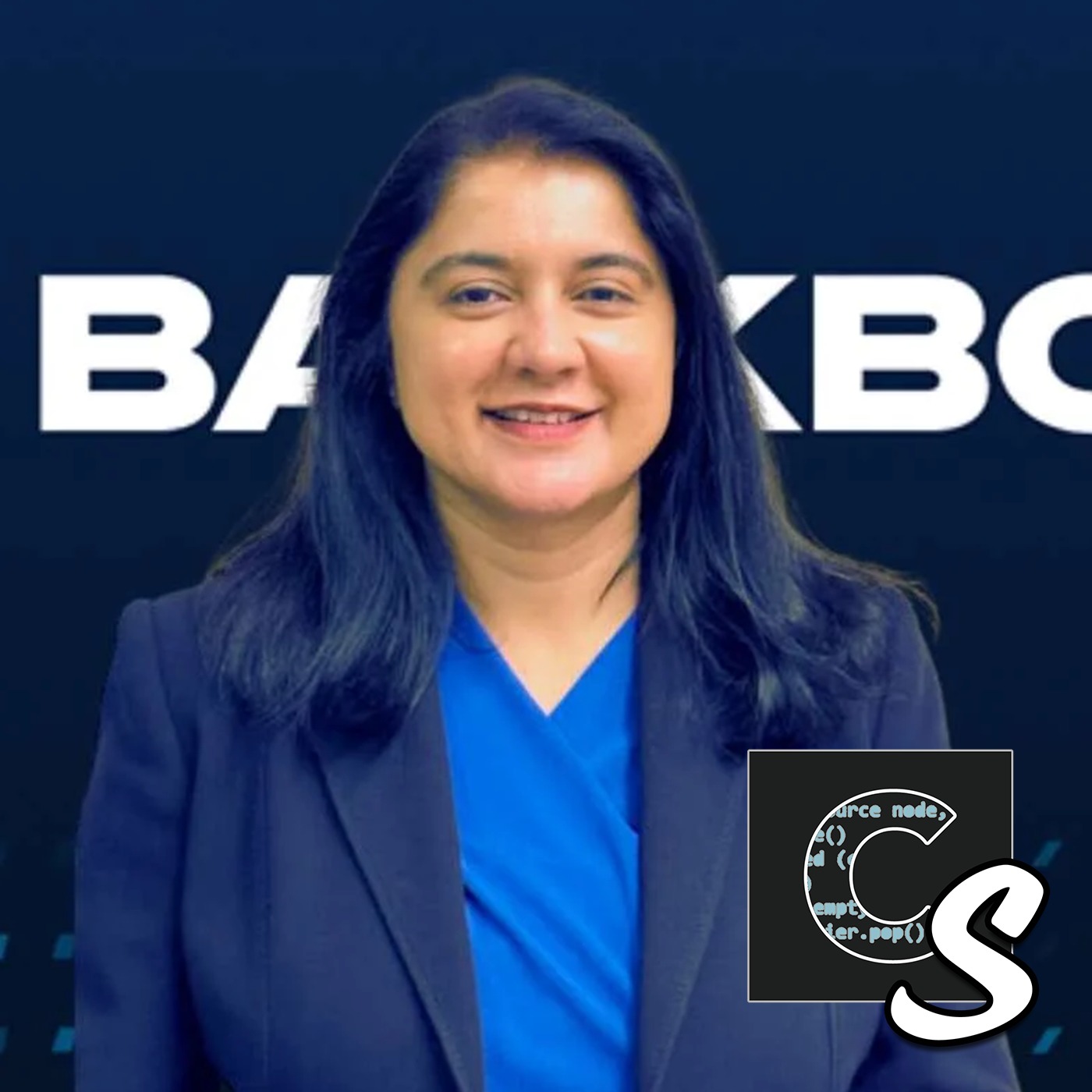
Today, we have a special return episode from our friends at Backbox, who we heard the creation story of the company back in Season 8. In this episode, we talk with Rekha Shenoy, CEO of Backbox. Since Rekha took the helm as CEO in May 2024, the company has expanded beyond traditional security automation to launch its major BackBox 8.0 platform, unifying cloud and on-prem infrastructure visibility. They’ve also integrated human-in-the-loop, advisor-focused AI capabilities - and are back to let us know some even more "big things" happening with platform, around agentic .
Questions:
- Tell me about yourself—your path into tech and what shapes how you lead (background, influences, hobbies, family).
- Tell me about BackBox. What does the company do, and what drew you in to take the CEO seat in 2024?
- How has the product matured? How do you build your roadmap?
- Zoom out — what are you most proud of in shaping BackBox?
- What does the future look like for your product and team?
- BackBox describes AI as a "trusted advisor, not an autonomous agent" — four principles: protecting infrastructure, repeatable/verifiable results, supporting (not replacing) engineers, and transparency about how AI reaches conclusions. Where did that philosophy come from, and why hold that line while competitors race toward full autonomy?
- What does "responsible AI" actually look like in the product — not as a value statement, but as a design constraint that shaped the engineering decision?
- Tell us about your recent launch and what it enables a network team to do that they couldn't before?
- How does the launch extend or test that responsible-AI philosophy?
- At what point does "AI as advisor" start to feel like a limitation rather than a safeguard?
Links
https://www.linkedin.com/in/rekha-shenoy-950b23/
Current Sponsors:
Checkout our Stacklist! https://stacks.codestory.co/
Hosted by Noah Labhart | Technical Founder & Startup Mentor.
Our Sponsors:
* Check out Granola and use my code granola.ai/CODESTORY for a great deal: https://granola.ai
* Check out Perplexity and use my code CODESTORY for a great deal: https://www.perplexity.ai
Advertising Inquiries: https://redcircle.com/brands
Privacy & Opt-Out: https://redcircle.com/privacy
[SPEAKER_01]: Hello listeners, today we have a special return episode from our friends at Backbox, who you guys heard the creation story of the company back in Season 8. [SPEAKER_01]: In this episode, we talk with Reckless Shinoi, CEO at Backbox. [SPEAKER_01]: Since Reckless took the helm as CEO and made 2024, [SPEAKER_01]: The company has expanded beyond traditional security automation. [SPEAKER_01]: To launch, it's major backbox 8.0 platform, unifying cloud and on-prem infrastructure visibility.
[SPEAKER_01]: They've also integrated human in the loop at visor-focused AI capabilities, and are back to let us know about some even more big things happening with the platform around agentic net ops. [SPEAKER_01]: Rekka, thank you for being on the show today. [SPEAKER_01]: Thank you for being on code story. [SPEAKER_01]: Thank you for having me. [SPEAKER_01]: Absolutely, excited to dive into Backbox today and all the things that are happening with the company, but before we do, tell me about you and tell me about yourself.
[SPEAKER_01]: I mean the audience about yourself. [SPEAKER_01]: You're path of the technology, what shapes how you lead background influences, hobbies, family, things like that, but really whatever you're excited to tell me. [SPEAKER_00]: It's fun to be in the company of the CEOs who speak with and just listen to their stories. [SPEAKER_00]: Code Stories are great. [SPEAKER_00]: Oh, for them for that. [SPEAKER_00]: And certainly, my path is not a lot different from what you guys hear every day. [SPEAKER_00]: I've been lucky to be in technology for the last 30 years.
[SPEAKER_00]: Start out as an engineer and realize very quickly that, [SPEAKER_00]: I love technology, but don't really care to sit in front of a desk and code it myself. [SPEAKER_00]: That has offered me a lot of good opportunity to deeply understand the markets. [SPEAKER_00]: Technology is a fun place to be over the last 30 years and watch all of the ways in which we've evolved. [SPEAKER_00]: But along the way, what we're really doing is to help businesses achieve the outcomes they need. [SPEAKER_00]: And so in that world, I've kind of managed to enterprise software, I've managed to cyber security quite a bit and network infrastructure.
[SPEAKER_00]: And now at Backbox, it couldn't be a more exciting time to watch one more wave of evolution. [SPEAKER_00]: So, [SPEAKER_00]: I'm certainly dating myself when I say I've seen myself from mainframe to open systems as it was called back then through cloud computing and now and of course smartphones and mobile technology and now being in the AI world. [SPEAKER_00]: The only thing different about this change, of course, is a lot of different things, but the one thing that is very different from the others is the pace at which AI is transforming businesses in all of that.
[SPEAKER_00]: So, other than the pace, it's still so interesting to see how this market is evolving and to have a very cool technology in the agentic net up space. [SPEAKER_00]: with back blocks is couldn't be more excited about where we are in the market right now. [SPEAKER_00]: But for me personally, I've run products, I've managed marketing up managed sales, I've done a lot of different things, and setting myself up to really support transformational businesses at a time like this is bringing a lot of experience, but also very excited to see where this goes.
[SPEAKER_01]: Fantastic. [SPEAKER_01]: Okay, let's move into backbox, then, [SPEAKER_01]: We've talked about backbox on the show, but I think just as a refresher and a reminder in an update, what does the company do and what drew you in to take the CEO seat in 2024? [SPEAKER_00]: Yes, backbox is really in the network cyber-resilience space. [SPEAKER_00]: So it started out as a backup recovery solution, but has had huge leaps and bounds of evolution since then. [SPEAKER_00]: What got me excited about backbox is having seen so many technologies out there in all of that.
[SPEAKER_00]: And, [SPEAKER_00]: Really being more like a growth CEO. [SPEAKER_00]: That is really what I do. [SPEAKER_00]: I'm not the founder type of CEO with great ideas I'm really the person who takes great ideas and gives it sort of exponential growth. [SPEAKER_00]: You'll see problems in every business, right? [SPEAKER_00]: So you come in and you say, hey, what do I need to fix? [SPEAKER_00]: What is the thing to go fix? [SPEAKER_00]: Very rarely do you find a jewel like backbox where the thing to fix is not technology.
[SPEAKER_00]: Usually you see 60% of the vision has been built into the product and there's a long technology. [SPEAKER_00]: Roadmap in front of us, which is not a problem, it's a nice thing to have, too. [SPEAKER_00]: But very rarely do you see a product that's 120% of the promise and the real opportunity is to improve go to market. [SPEAKER_00]: And so that's what drove me to backbox and two years later I would say it's still very true that we have technology ahead of our go to market. [SPEAKER_00]: And when I think about that, I think about what our customers tell us.
[SPEAKER_00]: So first of all, having a product that has such Arabing fans is unusual. [SPEAKER_00]: And we've had, you look at our G2 reviews, you look at our Gartner analyst conversations and so on. [SPEAKER_00]: People are super excited about what they have in hand. [SPEAKER_00]: When we go into prospect conversations, the most obvious thing that I hear every time is like, I didn't know there was a solution like this. [SPEAKER_00]: which is our go-to-market problem. [SPEAKER_00]: How do we become more visible?
[SPEAKER_00]: How do we show people that there is a solution here in the network cyber resilience space? [SPEAKER_00]: That's what keeps me up at night. [SPEAKER_00]: Is having this dual of a product that makes customers that delivers on its promise in a way that gets customers excited, gets this concept of network cyber resilience is becoming more and more real. [SPEAKER_00]: especially in today's world with mythos and compromises just becoming much more front and center for the network infrastructure teams and actually having an automation solution that solves a real problem in today's world.
[SPEAKER_00]: It's an exciting time to be at backbox, but it's also, we need to get our message out there because people don't actually expect a product that performs like this one does. [SPEAKER_01]: That's really cool and it's a good thing to be kept up at night about because it's an interesting problem to be solving and it's a really necessary one to be digging into. [SPEAKER_01]: And that kind of aligns with my next question on maturation of the product, how has the product matured since you've been there and how do you go about building your road map for Backbox.
[SPEAKER_00]: I'm sure you've heard this before, and it sounds cliche, but it's actually true. [SPEAKER_00]: You ask your customers, and our customers have taken our roadmap in a windy road, and now we're putting it together. [SPEAKER_00]: So I mentioned that the roots of the product were in very reliable enterprise-grade backup in recovery, which is a really cool platform or foundation for what we built [SPEAKER_00]: On top of that, we built configuration compliance, and why that's important is, in today's world, when you think about all the ways in which companies worry about being hacked.
[SPEAKER_00]: It's not if you're being hacked, it's how many times an hour are you being compromised or being attacked. [SPEAKER_00]: In that world, the configuration compliance comes in as a pretty big hammer to a weapon in their arsenal that gives you a certain level of confidence and without it, you really are playing an uneven match. [SPEAKER_00]: And so we built that on top of our backup and recovery solution. [SPEAKER_00]: And then on top of that, the thing that we're really, we built a couple of years ago was vulnerability intelligence.
[SPEAKER_00]: So how do we understand the vulnerability state against this massive number of CDEs that are coming flying at our network customers? [SPEAKER_00]: And how do we put a boundary around it? [SPEAKER_00]: How do we give you some automation around remediation there? [SPEAKER_00]: But probably the coolest thing about our roadmap is the launch we are having right now, which is around artificial intelligence. [SPEAKER_00]: We find that network infrastructure owners, the piece of network infrastructure, don't think about AI the way the market's going crazy about it.
[SPEAKER_00]: Right? [SPEAKER_00]: The simplistic idea that you can use AI instead of people isn't helping. [SPEAKER_00]: It isn't helping
[SPEAKER_00]: extremely high SLAs and keep infrastructure running. [SPEAKER_00]: And in that world AI means more technology, more complexity, more scale, how do I do that better? [SPEAKER_00]: And so when your job is that level of SLAs, you need a more deterministic model and you don't need AI going bump in the night, making changes. [SPEAKER_00]: So in that world, we found some very cool new ways to solve that problem and we think about it as
[SPEAKER_00]: So responsible AI is helping very strong senior network operators who know their networks, giving them massive amounts of reduction in manual labor by doing things a smart intern would do, which is giving you the insights to make better decisions and then giving you in your hand the control to write really great automations that solve that problem. [SPEAKER_00]: But throughout that entire process gives you control, right? [SPEAKER_00]: So if you think about back to the customer who is looking to do things better and faster, but not lose control, have accountability, we built the AI to kind of solve that problem.
[SPEAKER_00]: And that's getting us into this new space that Gardner is talking about, which is agentic net ops. [SPEAKER_00]: And we certainly feel like our version of agentic net ops is more in line with what large enterprises are looking for. [SPEAKER_01]: That's super exciting with the Agintic NetOps category there coming around and where you're positioning backbox as you look at backbox and what you've shaped while you've been there zoom out a bit, what you most proud of. [SPEAKER_00]: Honestly, I'm most proud of the team.
[SPEAKER_00]: It's easy to come up with good ideas, right? [SPEAKER_00]: I say that it's facetious. [SPEAKER_00]: It's not easy to get good ideas either. [SPEAKER_00]: But I've always felt great ideas are no match for mediocre ideas executed exceptionally well. [SPEAKER_00]: great idea sitting on the shelf didn't do anything. [SPEAKER_00]: And so when we're able to have this sort of flawless execution, both on the engineering and sales sides, it's magic. [SPEAKER_00]: And so I'm really proud of the team that we have put together that is able to transform the market to drive opportunities and really just excite customers the way we have over the last two years.
[SPEAKER_01]: definitely a lot to be proud of there. [SPEAKER_01]: Okay, this will be interesting. [SPEAKER_01]: I think that this falls into what you're talking about with the agintic net ops topic. [SPEAKER_01]: What is the future look like for Backbox? [SPEAKER_01]: For the product, for how you're approaching the industry, all those sorts of things and you touched on it on a high level, but wouldn't give proper space for that specific thing. [SPEAKER_00]: We think that this is a emerging market.
[SPEAKER_00]: So, [SPEAKER_00]: Yes, there are, there's been network automation for a while, but the interesting thing about network automation is the vast majority of the market really has an embrace it because we as vendors have made it hard for companies to embrace. [SPEAKER_00]: And what I mean by that is traditionally network automation is obviously very deeply embedded inside of telcos and ISPs and places like that. [SPEAKER_00]: Where you've got the network is a revenue source, so you've got sort of that to focus around the network.
[SPEAKER_00]: And you've got what I call superstar network operators who are exceptional coders and automations experts. [SPEAKER_00]: But the vast majority of the market, the network operators are network experts. [SPEAKER_00]: They know how. [SPEAKER_00]: Cisco's behave, they know how checkpoint behaves, they know how palo behaves, they know those things, but they don't necessarily choose to be Python coders. [SPEAKER_00]: And so in that world automation is really not been a transformational agent within networking.
[SPEAKER_00]: And I'm thinking of large banks, I'm thinking of large health care texts, large retail, retail may be a little bit different, but the challenge is that we need to meet them where they are, and how do we give network experts the tools they need to have massive gains in automation? [SPEAKER_00]: and what's interesting about why now after all these years is because AI is also the bad guy making it a problem today. [SPEAKER_00]: With mythos, with project glass wing, what you are seeing is the ability to hack into networking for structure faster than there was ever before.
[SPEAKER_00]: the ability to create compromises based on the latest vulnerability in hours or days, and the need for network teams to automate their basic maintenance upgrade patching cycles at a pace that they've never done before. [SPEAKER_00]: And they're doing it on infrastructure that's never been [SPEAKER_00]: larger in their history. [SPEAKER_00]: So we're talking about scale, we're talking about complexity. [SPEAKER_00]: And what we're seeing is that this market's just transforming as in front of us, where more companies that have done nothing more than they've hit that point where they can't hire more engineers to solve the problem.
[SPEAKER_00]: Looking for automation, but looking for a different kind of automation, one that doesn't require [SPEAKER_00]: you know, coding skills and network infrastructure and network expertise. [SPEAKER_00]: So we think that the markets just now exploding. [SPEAKER_00]: We think that's an interesting space to be. [SPEAKER_00]: And we think there's an opportunity to build a more responsible AI solution for that part of the market that's really not looking for is actually, it's not about what they're not looking for.
[SPEAKER_00]: It's really about how do we maintain their uptime and their SLAs while we introduce some some AI that they can actually trust. [SPEAKER_01]: That's fascinating and it is meeting them where they are with the tools that they need. [SPEAKER_01]: And I really like what you said about AI is advancing this technology. [SPEAKER_01]: But it's AI is also becoming the quote unquote bad guy. [SPEAKER_01]: It's a part of the bad guy, right? [SPEAKER_01]: And that's a really interesting thing and important thing.
[SPEAKER_01]: I think to point out, [SPEAKER_01]: Backbox describes AI as a trusted advisor, not an autonomous agent, right? [SPEAKER_01]: And then within that, there's four principles, protecting infrastructure, repeatable, verifiable results, supporting, not replacing engineers, which are important to note today, and transparency about how AI reaches conclusions. [SPEAKER_01]: Where did that philosophy come from for the company? [SPEAKER_01]: And why hold the line while competitors race towards the full picture of autonomy?
[SPEAKER_00]: Yeah, that is so cool for us, that is the core of who we are as a company. [SPEAKER_00]: I would say this path was paved by our customers, based on everything we've learned from them. [SPEAKER_00]: Nothing is more scary to our customers than AI being fully autonomous, taking out an piece of infrastructure. [SPEAKER_00]: it's an interesting idea to think about. [SPEAKER_00]: They would say, over the last 30 years, if a piece of infrastructure goes down, there's someone who's accountable for it.
[SPEAKER_00]: The question is, I can do a lot of things. [SPEAKER_00]: It doesn't hold itself accountable to anything. [SPEAKER_00]: If it hallucinates, if it makes a mistake and you point that out to it, it'll say, oh yeah, and then it'll move in the exact opposite direction, just quite fine. [SPEAKER_00]: And that's not accountability. [SPEAKER_00]: So that's what we're seeing when our customers think about it. [SPEAKER_00]: It's like, where's the accountability? [SPEAKER_00]: So when we talk about transparency about how AI reaches conclusions, it's not a CYA at all.
[SPEAKER_00]: It's the exact opposite. [SPEAKER_00]: It's the accountability
[SPEAKER_00]: And so we're trying to build sort of the type of AI that teams would trust when we started under this journey a year ago. [SPEAKER_00]: We've talked a lot of our customers and many of them said, don't even say the word AI in front of us. [SPEAKER_00]: It's such a bad word. [SPEAKER_00]: What's interesting and I mentioned that the pace of AI is changing dramatically. [SPEAKER_00]: That world has moved even for them. [SPEAKER_00]: So they're being pushed in that direction and they're pulling themselves into it,
[SPEAKER_00]: But now we're jumping into the more salient problem, which is everyone understands it. [SPEAKER_00]: There's a concern around accountability, which is absolutely true. [SPEAKER_00]: Think about what you don't want an operating theater to shut down while an operation is in progress. [SPEAKER_00]: that is SLA and that is accountability for some of these people. [SPEAKER_00]: So taking that level of reliability and responsibility, you get a sense of what would we need to build in that world.
[SPEAKER_00]: And so for us, the point around protecting infrastructure, reliable results comes from that place of what are we protecting, what are we making resilient while back to that story of the operating theater. [SPEAKER_00]: a hack is also a likely scenario. [SPEAKER_00]: How do we prevent that from happening in that world? [SPEAKER_00]: So in our ultra connected world, building resilience is a hard problem, but we're excited to solve that. [SPEAKER_01]: Yeah, no doubt it's exciting. [SPEAKER_01]: That philosophy makes sense and I appreciate walking through it.
[SPEAKER_01]: It kind of moves into my next aim. [SPEAKER_01]: You see, you have this philosophy, these value statements, but I want to know what this responsible AI actually look like in the product, right? [SPEAKER_01]: Not as the value statement, but as a design constraint that has shaped how the product and platform has been engineered. [SPEAKER_00]: I think of it as two parts to that puzzle. [SPEAKER_00]: So there's a handful of design constraints for sure. [SPEAKER_00]: I mentioned the whole transparency, which is what our customers have been pushing us towards, but I also think about it as control.
[SPEAKER_00]: Is the feature we're building, continuing to give our stakeholder control of their infrastructure, or are they now losing control? [SPEAKER_00]: I think that's not a nice to have, that is a hard line in the way we're building it. [SPEAKER_00]: And we do believe that there is a way to continue to build around that, to give them more of that. [SPEAKER_00]: But responsibly, I, interestingly, is not the easiest thing to build. [SPEAKER_00]: So I'll give you another example of very, very long internal conversations we have around this.
[SPEAKER_00]: Hey, we could do this. [SPEAKER_00]: But in that process, are we taking mission critical data that this customer owns now out of their purview? [SPEAKER_00]: And yes, could we build something cool if we did that? [SPEAKER_00]: Yes, but should we do that? [SPEAKER_00]: And we would not. [SPEAKER_00]: So it's an example of we go down to that level of detail to think about what we own, what is responsible AI and what is this customer need. [SPEAKER_00]: How do we protect their interests while we build AI?
[SPEAKER_00]: Sometimes it keeps us from building something that we think is really cool and that's okay because if we can on that piece around responsibility, we know that we may lose in the short term, but we will win in the long term in terms of being a viable solution for large enterprises for the next 5, 10, 15 years. [SPEAKER_01]: Tell us about your recent launch, right? [SPEAKER_01]: There's lots of exciting things that backboxes as Bill's participated in and tell me about that launch and what it enables
[SPEAKER_00]: Yeah, so very excited about Kiltar. [SPEAKER_00]: First of all, it's the launch of our new AI platform. [SPEAKER_00]: It's called Kiltar AI. [SPEAKER_00]: And the name itself bears a couple minutes of conversation. [SPEAKER_00]: So it came from the way we see our customers. [SPEAKER_00]: We think of network operators as being those warriors out there working long hours and always struggling with the network being a little bit off balance. [SPEAKER_00]: and trying really hard with all of the changes going on to keep this imbalance.
[SPEAKER_00]: So we thought of them and we said, okay, life is always off-kilter. [SPEAKER_00]: If we can bring some kilter, some balance to them, that's what we want to be and what we aspire to be. [SPEAKER_00]: So really excited to launch kilter and kilter AI to solve that for them. [SPEAKER_00]: the the way in which we built this AI is really also about ROI. [SPEAKER_00]: We take away hundreds and hundreds of hours of manual work involved in backing up systems, recovering systems, keeping them compliant, upgrading them, patching them and so on.
[SPEAKER_00]: With with our AI product, we have exponentially increased the number of man hours we can remove off of their plates. [SPEAKER_00]: So we do that in two ways. [SPEAKER_00]: The first thing we do is we give you AI insights and recommendations which are about helping a networking infrastructure engineer get insights to solve and get make better decisions. [SPEAKER_00]: So give you an example of better decisions. [SPEAKER_00]: Having at your fingertips which vulnerabilities matter which ones don't, that's a seems like an easy problem.
[SPEAKER_00]: It's easily hundreds of hours of work for a network engineer on a multi-bender network across hundreds and hundreds of device types. [SPEAKER_00]: We make that, we put that at their fingertips. [SPEAKER_00]: We help them with that. [SPEAKER_00]: We give you insights on what can be mitigated with the work around. [SPEAKER_00]: We give you insights on what's the latest patch that you would need for that. [SPEAKER_00]: And what do you recommend or what you don't? [SPEAKER_00]: And that problem only got worse last year.
[SPEAKER_00]: For context, last year, 49,000 CVEs were released. [SPEAKER_00]: That's 20-25% more than the previous year. [SPEAKER_00]: And we don't expect that number to go down. [SPEAKER_00]: We think this year will just break that record. [SPEAKER_00]: It's probably broken it right now. [SPEAKER_00]: And with that pace of CVEs coming at our network engineers across so many different vendors, the problem got worse. [SPEAKER_00]: And our ability to use AI to give them smarter decisions is not small.
[SPEAKER_00]: It's transformational. [SPEAKER_00]: And the second thing we do with AI is make your life better. [SPEAKER_00]: So we very quickly can turn those insights into automations without the need to code that they can test and run and still have control over their environments. [SPEAKER_00]: You think of it as the smart intern who's doing massive amounts of grant work that gives our network engineers time to do more strategic things while their network resilience is being managed and still in their control.
[SPEAKER_00]: That's our strategy with the responsibility I go build those things that can continue to massively reduce manual labor, which we still think is the biggest gap from a cybersecurity perspective today. [SPEAKER_01]: Certainly, yeah, that gap makes a lot of sense and I want to give space for you to answer this a bit because I think you touched on some of it, but the responsible AI philosophy, how does this launch extended test that and again, I think you started to touch on it, but I'd like to like you to dive into that a little bit.
[SPEAKER_00]: I do hear the market, right? [SPEAKER_00]: There is this idea that at some point AI will become as reliable as a human and a shirt. [SPEAKER_00]: Let's walk, crawl, walk run our way there and maybe one day that does happen. [SPEAKER_00]: But I think the world is right now is we've gone through the excitement phase and we're seeing a lot of disillusionment around what would I trust AI to do or what would I not? [SPEAKER_00]: But I don't think we've actually seen the worst of it yet.
[SPEAKER_00]: We hear stories of hallucinations, we hear stories of all of those things, but we're also seeing massive improvements where AI is a really trusted advisor, right? [SPEAKER_00]: And so I think the improvements we need to see in continuing to be build responsibly AI is what's going to give us more reliable AI going into the future. [SPEAKER_00]: So today, our customers trust us to use AI to make better decisions, then they trust us to make their life a little bit better by giving them automations that they could just go run, where they might have had to write code before.
[SPEAKER_00]: But then I think you're right, there is a more and more steps we can build around, while keeping the AI responsibly, I feel ossophy. [SPEAKER_00]: And more and more things we can take from humans. [SPEAKER_00]: We still need humans to know the network. [SPEAKER_00]: We still need humans to understand the business context. [SPEAKER_00]: We still need them to drive it. [SPEAKER_00]: But only because this is their infrastructure in their last stop. [SPEAKER_00]: But the more things we can take off their plates, the more we allow businesses to scale.
[SPEAKER_00]: And so that's where we see the, I don't see it as a limitation right now. [SPEAKER_00]: And I also think that, [SPEAKER_00]: is not going to change our philosophy going forward around and build it responsibly. [SPEAKER_00]: That's where you see the growth in the market. [SPEAKER_01]: Thanks, Alan. [SPEAKER_01]: Okay. [SPEAKER_01]: That's interesting. [SPEAKER_01]: Where the industry is going? [SPEAKER_01]: You're building kielter. [SPEAKER_01]: You've launched kielter and you've got it out in the wild.
[SPEAKER_01]: And I think that you're meeting enterprises where they are to keep them on kielter. [SPEAKER_01]: And at what point does AI as advisor quote unquote start to feel like a limitation rather than a safeguard. [SPEAKER_01]: Is there a point where it starts to limit [SPEAKER_01]: Folks, as far as how fast they can move, how fast they can innovate in the process or do support for these net ops people, is there a point where it starts to feel like it's limiting? [SPEAKER_00]: good question.
[SPEAKER_00]: I don't see that yet. [SPEAKER_00]: I think at all point if you flip it, the question I think the Holy Grail is, how do you build accountability into AI? [SPEAKER_00]: Because I think that's the next generation of AI as advisor. [SPEAKER_00]: Because right now the reason it's an advisor is because it's doing what it needs to do in a relatively non-deterministic way so it can make some mistakes [SPEAKER_00]: So, the being an advisor gives us the ability to continue to build that resilience right, make it more accurate, make it more right, take care of all the edge cases and so on.
[SPEAKER_00]: You've got Tesla, for example, it's an AI, but it's actually truly autonomous, and you trusted to not go crashing into a wall, for example. [SPEAKER_00]: So there's a lot more built into it to build that sort of reliance on it in that way. [SPEAKER_00]: I think in the network side, we've got a long way to go. [SPEAKER_00]: So the advisor strategy gives us a lot of an opportunity to continue to build a better, [SPEAKER_00]: automation tool that does a lot more. [SPEAKER_00]: But I think over time the story doesn't change, even as it takes on more and more functions that network operators do today.
[SPEAKER_00]: At the end of the day, when something fails, and it may be internal, it may be external and so on. [SPEAKER_00]: A tool that can actually predict these failures before they happen and actually gives you advice on where the challenges are. [SPEAKER_00]: I think he gets smarter and smarter giving you more interesting advice. [SPEAKER_00]: I don't think it goes away. [SPEAKER_00]: So to me, I feel like you can envision that strategy in a lot of different ways while they continue to automate.
[SPEAKER_01]: That makes total sense, and it's just going to get better and be able to offer folks a different thing, and newer understanding of the problems that they're having to solve. [SPEAKER_01]: That makes a lot of sense. [SPEAKER_01]: Rekka, I appreciate you being on the show today. [SPEAKER_01]: It's clear that backboxes [SPEAKER_01]: Moving into this new era of autonomous agents with kilter and stepping into this emerging category around agentic net ops. [SPEAKER_01]: Backbox is positioned to really solve these problems for for net up folks and for folks that are wanting to stay on the bleeding edge of supporting their enterprise networks, but doing so in a smart way.
[SPEAKER_01]: And I really like the philosophy that Backbox has adopted. [SPEAKER_01]: With the trusted advisor, not an autonomous agent, I think that really keeps the hands on the helm for these folks that are supporting these enterprise networks, but gives them the tooling to respond to the AI out there that is a part of the problem, not the solution. [SPEAKER_01]: So really appreciate you walking us through that today and thanks again for being on the show. [SPEAKER_00]: Thank you for having me.
[SPEAKER_01]: Exciting times a Backbox with deep integration into AI in this emerging category of agentic net-ups. [SPEAKER_01]: In positioning their platform towards AI agents to monitor and manage enterprise networks, Reca illustrates that Backbox is meeting enterprises where they are with tools like kilter, that meet businesses and technicians where they are, with the tools they need to protect their networks. [SPEAKER_01]: If you'd like to learn more about Backbox, go to Backbox.com. [SPEAKER_01]: and thanks again for listening.
Latest Season of the Podcast is Sponsored By








 Apple Podcasts
 Spotify
 Pocket Casts
 Castbox
 YouTube
 Player FM
 Overcast
 Castro
 Goodpods
 Moon FM
 Podbean
 Podcast Addict
 Podcast Republic