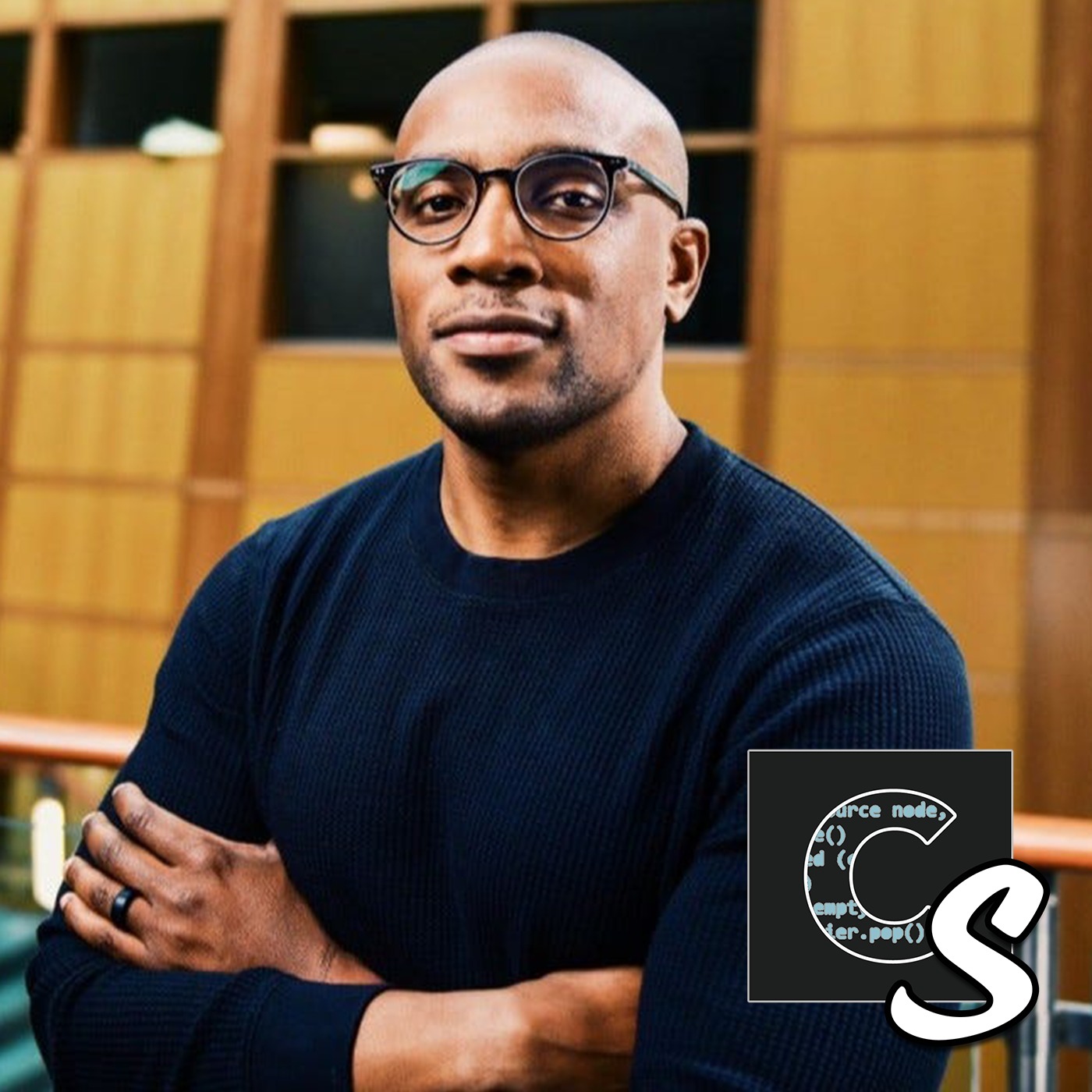
S13 E3: Architecting Frictionless Creator Infrastructure & Social Commerce with Dumi Mabhena, CEO of Hilite
In this episode
Dumi Mabhena is originally from Zimbabwe, and has lived in 5 different countries. He now lives in Washington, DC, as he came to the states to attend Georgetown. Prior to that, he has been a podcast host and producer for several years, as well as starting businesses and taking part in the startup world in multiple different places. Outside of tech, he married to his wife, who he met while in South Africa. They love to travel, especially Europe in the summer, and are big into fitness and running.
Previously, Dumi started a podcast, to tell about positive experiences in Zimbabwe. As he went through the process of recording, editing, and publishing a podcast - he realized that the tools and platforms were incredibly fragmented... so much so, that it created friction in the process of telling stories. Dumi wanted to figure out a way to remove this friction from the entire process.
This is the creation story of Hilite.
Links
https://www.linkedin.com/in/dumi-mabhena
Current Sponsors:
Checkout our Stacklist! https://stacks.codestory.co/
Check out our Patreon!
Hosted by Noah Labhart | Technical Founder & Startup Mentor.
Our Sponsors:
* Check out Granola and use my code granola.ai/CODESTORY for a great deal: https://granola.ai
* Check out Perplexity and use my code pplx.ai/codestory for a great deal: https://www.perplexity.ai
Advertising Inquiries: https://redcircle.com/brands
Privacy & Opt-Out: https://redcircle.com/privacy
[SPEAKER_01]: So, before we even wrote in a line of code, I actually went to Wix and I just stood up a template and then in the template, I would write certain things like streamline workflow, record edit publish, monetize in one place, so I almost had a what I'll say with the of R's MVP and then I would just test it by running some more experiments of Facebook ads. [SPEAKER_01]: And then in the bottom of the form it would say, hey, which of these features is most important for you? [SPEAKER_01]: Is it recording?
[SPEAKER_01]: Is it editing? [SPEAKER_01]: Is it the old-and-one workflow, all the etc? [SPEAKER_01]: And when I'd run the ads, I would see people signing up and then choosing the specific elements of this MVP on Wix that they found most relevant to them. [SPEAKER_01]: My name is Dumi Mabena, and I'm the co-founder and CEO of Highlight.
[SPEAKER_02]: This is Code Story. [SPEAKER_02]: a podcast bringing you interviews with tech visionaries. [SPEAKER_02]: Six, six months moonlighting goes. [SPEAKER_02]: It's the last and all of the backgrounds who share what it takes to change an industry. [SPEAKER_00]: I don't exactly know what to do. [SPEAKER_02]: It doesn't go as to get right. [SPEAKER_03]: who built the teams that have their bad company is its team's help each other, which is proud of our team. [SPEAKER_02]: Keeping scalability top of mind, all that infrastructure was up there.
[SPEAKER_02]: Yes, we've been fighting it as we grew up. [SPEAKER_02]: Total waste of time. [SPEAKER_03]: The stories you don't read in the headlines. [SPEAKER_03]: It's not an easy thing to achieve. [SPEAKER_02]: To get yourself a deficit of off, try to begin to ride the ups and downs of the start-up line. [SPEAKER_02]: Need to really want it, not just about technology. [SPEAKER_02]: All this and more, on code story. [SPEAKER_02]: I'm your host, Newell Appart. [SPEAKER_02]: And today, how do me, Mabina, is built the simplest, most powerful way for you to share your stories via podcast.
[SPEAKER_02]: Dumimabina is originally from Zimbabwe, and has lived in five different countries. [SPEAKER_02]: The now lives in Washington, D.C. as he came to the States to attend Georgetown. [SPEAKER_02]: Prior to that, he's been a podcast host and producer for several years, as well as starting businesses and taking part in the startup world in multiple different places. [SPEAKER_02]: But outside of tech, he's married to his wife, who he met in South Africa. [SPEAKER_02]: They love to travel, especially to Europe and the summer, and are big into fitness and running.
[SPEAKER_02]: Previously, Dumi started a podcast to tell about positive experiences in Zimbabwe. [SPEAKER_02]: As he went through the process for recording, editing, and publishing a podcast, he realized that the tools and platforms were incredibly fragmented, so much so that it created friction and the process of telling stories. [SPEAKER_02]: Dumi wanted to figure out a way to remove this friction from the entire process.
[SPEAKER_02]: This is the creation story of Highlight.
[SPEAKER_01]: So, what highlight is, it's a SaaS product that helps you record, edit, and publish a podcast in an audio podcast in one place. [SPEAKER_01]: During COVID, I started a podcast called Zimbabwe and Voices where I would interview people from my community that were doing positive things from the place where I grew up and come from. [SPEAKER_01]: Because a lot of the news that came out of Zimbabwe was very negative and it's focused more on the economy or let's say corruption and things of that nature.
[SPEAKER_01]: So I wanted to tell stories that are positive about people doing good things and it's a business philanthropy comedy and all works of different life. [SPEAKER_01]: And it was incredibly fulfilling and very meaningful. [SPEAKER_01]: But what I found was when I was doing remote recordings from across the world, it was just the fragment at the time when I started. [SPEAKER_01]: So this was on 2021, when you two out say, and I'll be, let's say, recording one Zoom or try a riverside, and then I would have to realize, I have to edit record over here or edit maybe it in.
[SPEAKER_01]: The different product, and then I'll have to remove the background always in another product, and instead I'm
[SPEAKER_01]: the podcast and a different product. [SPEAKER_01]: So at the time, all of these tools were very fragmented, and what it meant was felt very cumbersome for a person that was, let's say, non-technical in the audio sets. [SPEAKER_01]: I had no audio engineering background. [SPEAKER_01]: But what I wanted to do was just tell a story about people that are doing good things from where I came from. [SPEAKER_01]: So, when I got to grad school in Washington, D.C., [SPEAKER_01]: I just come out at that time and I thought it could be a really powerful technology to help streamline workflows and yeah and then at the time I thought looking at something to study and looking into how I could do that and then over time that became a thesis and the more and more lent into that interview the bunch of people who weren't making podcasts much like yourself and they were juggling multiple tools as well and part of the friction they thought was that juggling and then the cost of producing that.
[SPEAKER_01]: then highlight the idea behind the highlight became just putting one of these workflows into one place to receive this and intuitive product out of that highlight was born.
[SPEAKER_02]: Tell me about the MVP for highlight that first version of the product he built, I don't want to take to build and what sort of tools were you and your team using to bring to life. [SPEAKER_01]: So before we even wrote in a line of code, we interviewed a bunch of obviously add some podcasting experience, but what I did was I actually went to Wix and I went to Wix and I just stood up a template and then in the template, I would write certain things like streamlined workflow, record-edited publish, monetize in one place.
[SPEAKER_01]: So I almost had a what I'll say with
[SPEAKER_01]: and then I would just test it by running small experiments of Facebook ads at that particular site. [SPEAKER_01]: So I'll put 50 bucks at the site and then I'll at the bottom of the site to be a fall. [SPEAKER_01]: And then in the bottom of the fall, I would say, hey, which of these features is most important for you? [SPEAKER_01]: Is it recording? [SPEAKER_01]: Is it editing? [SPEAKER_01]: Is it the old and one workflow? [SPEAKER_01]: Or the etc? [SPEAKER_01]: And when I run the ads, I would see people signing up and then choosing the specific elements of this MVP on Wix that they found most relevant to them.
[SPEAKER_01]: Then I'll stop that experiment, then I'll change the variables on the site, and I'll tweak the variables. [SPEAKER_01]: And then I did a thing three or four experiments, then I went back to the one that had the best result. [SPEAKER_01]: And off the back of that, I then knew, okay, I think there's a demand. [SPEAKER_01]: So I think the idea was first let's validate market demand to see if there's an actual need here. [SPEAKER_01]: And that was the initial MVP that I can get into maybe a little bit later but I went into building the first version of the product which features other with first but from a straight MVP perspective that was the first thing that we did before writing a landup code.
[SPEAKER_02]: You kind of touched on some of this while you were talking, but I maybe want to dive into a decision or trade off you had to make in a, how you approached that MVP. [SPEAKER_02]: And that's even in what you've told, that's a, that's chock full of really cool stories. [SPEAKER_02]: Tell me about a decision or trade off you had to make and how you cope with it. [SPEAKER_01]: The initial choice was, okay, we are seeing a bunch of tasks or jobs we've done that we are trying to do in the podcast making workflow and the key thing is it's very dangerous to start to build a whole all these various things at once at one time.
[SPEAKER_01]: So I think the key decision was okay, where do we find the highest amount of friction? [SPEAKER_01]: and then maybe we start from that entry point and then the trail of that we're making is beyond and the friction was the editing. [SPEAKER_01]: So if I editing is cutting words, removing background noise. [SPEAKER_01]: If the key elements that we saw as a recurring issue, but the trail of that is okay. [SPEAKER_01]: If I want to do that, then it means we aren't doing anything about hosting and we aren't doing anything about recording.
[SPEAKER_01]: We're just starting out building the editing part of the particular product. [SPEAKER_01]: And that had just helped some people who had that core problem, which I guess was a good start, but of course they created other challenges in terms of drop-off for people that were starting one-stutter podcast from scratch. [SPEAKER_01]: So only ended up really working for some people that maybe had a podcast already in their way in motion and were in the journey of producing already. [SPEAKER_01]: But for people that wanted to maybe start a podcast from zero, they became a big challenge in because they had a question about where do I record?
[SPEAKER_01]: And if they're recording on a different product and then switching to your product, we want really solving the core problem that we started out with in the beginning that makes sense. [SPEAKER_01]: So, that's one small example of having a whole thing where you want to build, but then having to focus on one particular niche or least vertical of that particular product. [SPEAKER_01]: And then, conscious is making a trend of this, okay, I can do this first, get some validation, and if that works, I get more feedback, and I can then get learn from the customer, or the users where is the next thing that I can of course build to help solve their problem.
[SPEAKER_02]: Okay, let's move forward then. [SPEAKER_02]: I'm curious about what you mentioned, telling more about how you progressed and mature the product, and to grab that little box of how I'm positioning that question, I'm curious about how you build your roadmap. [SPEAKER_02]: How you go about deciding that, okay, this is the next most important thing to build or to address with highlight. [SPEAKER_01]: I, of course, had my podcast in the beginning, but I'm not as technical as my co-founder whose name is Paul.
[SPEAKER_01]: So, well, I quickly knew, of course, as when I started doing some, when I started doing a lot of the customer discovery, was that I needed someone who's, yeah, I think great teams are what makes startups successful. [SPEAKER_01]: And I knew the idea of the counterpart to help offset my gaps. [SPEAKER_01]: So I was getting information identifying the pain point, but then needed a more technical, I would say, product co-founder who could help me, of course, take all the dates that we had with those MVPs and so on, and then building something out.
[SPEAKER_01]: When I was at grad school at a good friend of mine, Paul, who's my co-founder, he did a lot of keys that with me, and he said, okay, let's look at all the dates that you do have from all of these interviews that you have. [SPEAKER_01]: And then let's do honestly a mirror session, let's extract the key elements in the user stories from one of the data that you have. [SPEAKER_01]: And then from there, let's do a mirror session and then over a couple of weeks we then took all that information and then we passed that data into clusters, I would say.
[SPEAKER_01]: So clusters of user stories and pain points. [SPEAKER_01]: In front of the user stories and pain points, we then highlight, we then broke down a specific product roadmap,
[SPEAKER_01]: Let's say user stories and pain points, then we fleshed out documentation requirements for those particular elements. [SPEAKER_01]: So thankfully we had one with a little bit of funding from, winning pitch competitions. [SPEAKER_01]: But you're always trying to say, okay, here's the clear product roadmap. [SPEAKER_01]: It's editing, then we could think of publishing. [SPEAKER_01]: We might bring in record, but we had three or four core elements of the product that we had to build out.
[SPEAKER_01]: But the main thing was what could be built with the resources that we had, whilst we of course raise money to fresh others at the product, and try to grow our user base. [SPEAKER_01]: Don't you question, I had all of the data, but I knew I needed some more technical with the product, mind, to help refine some of my skills. [SPEAKER_01]: This was like a year ago enough, of course, have become a lot more product-oriented. [SPEAKER_01]: But at a co-founded to help flesh out, the user story is into a clear roadmap with clear reprimants, then off the back of that within, of course, launched what we could with the resources that we had, and as we got more resources within fleshed out the product, [SPEAKER_01]: from what users told us they wanted, but then it also found some of the initiatives that we had from the roadmap that we said.
[SPEAKER_02]: Okay, that's actually really interesting segue into teams. [SPEAKER_02]: You mentioned how you brought on your co-founder and someone who was more technical than you. [SPEAKER_02]: I think moving that forward to how do you go about building your team? [SPEAKER_02]: How have you gone about building your team? [SPEAKER_02]: What do you look for in those people to indicate that they are the winning horses to join you? [SPEAKER_01]: What have come down to it's about trust? [SPEAKER_01]: I think trust is like the core element of outside great teams.
[SPEAKER_01]: So I would say I was lucky in that my current co-founder admit during my undergrad when I was living in the UK in Scotland. [SPEAKER_01]: And through serendipity and chance, we are end up both being at the same rails who need other states six, seven years later. [SPEAKER_01]: So we really had a friendship. [SPEAKER_01]: Obviously I went back to Africa and he was living in London, but we both converged again in Washington to see. [SPEAKER_01]: So there's trust, so a trust number one is the most important thing, but it also I think complementary skillsets became a secondary thing.
[SPEAKER_01]: But the foundation was trust and secondary, it was complementary skillset, and on one hand it's like who's doing out of the sales marketing, talking to the customers in an information at the secondary, who is doing a lot of the product, the product defining, like defining the problem, defining the what the product should be, [SPEAKER_01]: Then, on top of that, we then, we, on the technique, of course, on the engineering side, we, we had a front end and back end engineers, and we spent months looking, looking for the right people to do in our team.
[SPEAKER_01]: And we eventually found a really brilliant gentleman called Abdullah Huizan, who's actually in Egypt, who's been working with us for the past two years. [SPEAKER_01]: And but similarly, it was giving small micro projects. [SPEAKER_01]: So okay, this is the first thing that we need to build. [SPEAKER_01]: Let's date. [SPEAKER_01]: Let's date and work on a small element of this product together. [SPEAKER_01]: And we see what our work relationship was like. [SPEAKER_01]: And over the part of small projects, you build trust.
[SPEAKER_01]: And then you can gauge for competence. [SPEAKER_01]: And I think that's the way in which we've run about doing it. [SPEAKER_01]: Would we trust what needs to be done? [SPEAKER_01]: Is the person competent and do we trust each other? [SPEAKER_01]: And that becomes the way in which we've built our team over time.
[SPEAKER_02]: Okay, let's flip into scalability. [SPEAKER_02]: Fairly early days for big scale questions, but my think what's really interesting is, have you had any areas where you've had to fight scale as you've crowned? [SPEAKER_01]: In the beginning, of course, you wanna just build a product. [SPEAKER_01]: Well, for in the beginning, you want to first know who your customers, then you want to know who you're building this product for. [SPEAKER_01]: Then, of course, you have a product and you're like, okay, I get my first plane customer.
[SPEAKER_01]: Oh, gosh, this isn't desktop MVP anymore. [SPEAKER_01]: This is something that someone is using and that is paying you for. [SPEAKER_01]: Then you get something like, how do I get more people? [SPEAKER_01]: Of course, to start serving this solution too. [SPEAKER_01]: I think that's the part of the tension has been like, okay, how do you go about scaling? [SPEAKER_01]: Is there in a cost effective way in a boost as a boost step starter? [SPEAKER_01]: So earlier on what we found was offered spin customers, we came through a very like manual face-to-face sales and that was like initial, do we do things that didn't scale in the beginning, which was a good way to get?
[SPEAKER_01]: close to our customer and say what their needs are and build out the product. [SPEAKER_01]: But over time, it's hard to see that we need to serve more people. [SPEAKER_01]: And then there was this tension between okay your bootstrap, but what works quickly? [SPEAKER_01]: Then we started doing certain things like, let's say, a small paid ad experiments to see what would work and that worked. [SPEAKER_01]: But you quickly realized as a bootstrap started as the early stage, paid ads isn't always the best way to scale up a product.
[SPEAKER_01]: And then sometimes what you also read is, [SPEAKER_01]: when you increase ads that quickly and increase setups, the quality isn't always the base, but then sometimes it also reveals other problems in the product that you haven't foreseen quicker. [SPEAKER_01]: So it's always a tension between okay, you want a scale at the right time, but then sometimes you want a scale on a smart and efficient way. [SPEAKER_01]: So where we're at right now is we found that the most efficient way for us to grow our user base has been to honestly SEO and that's been a more organic way of growing our user base.
[SPEAKER_01]: to date, to be honest. [SPEAKER_01]: So, until we're at a point where you can have much more resources than you can maybe look at paid ads and have more predictable economics, but for now SEO has been a much more effective way, which we've scaled more gradually rather than like, exponentially, that makes sense.
[SPEAKER_02]: So, as you step out on the balcony, you look across all that you've built thus far, with highlight, what do you most proud of? [SPEAKER_01]: The most important thing is we've built something that has helped thousands of people, and I think that's being meaningful. [SPEAKER_01]: So a lot of the time you want to make a lot of it, but you want to help someone with this solution that you're building. [SPEAKER_01]: And even on again, you log into your mixed panel or whatever it might be, and you see someone signing in from across the world or Australia or from South Africa.
[SPEAKER_01]: or from the UK for that example, from all corners of the world logging into your product, signing up, using it, and some of them convert some of them don't, but I think the most meaningful thing is you made something that helped people tell a story in different parts of the world. [SPEAKER_01]: And that was in the beginning, that was the essence of what we wanted to do in the beginning, [SPEAKER_01]: our tagline is voices make ideas brighter. [SPEAKER_01]: And if people found our platform as a most effective way to make the voices and the ideas brighter, I think that's very meaningful.
[SPEAKER_01]: So it's building something that has touched lives in different parts of the world. [SPEAKER_01]: And yeah, that's been super meaningful for us.
[SPEAKER_02]: Okay, let's flip the script a little bit. [SPEAKER_02]: Tell me about a mistake you made and how you and your team responded to it. [SPEAKER_01]: Maybe a big mistake, no, I was a big mistake, but I probably mistake was going into paid ads or a couple of things. [SPEAKER_01]: We're going into paid growth too early, I think was one. [SPEAKER_01]: And then another thing is scope creep. [SPEAKER_01]: So what sometimes happens is if you start looking at, okay, you see it getting good interaction with your product, you wanna accelerate that traction.
[SPEAKER_01]: but you need to be mindful of the fact that where the boosts charge out of you have constrained resources. [SPEAKER_01]: So if you are looking at doing payload to soon, you end up burning three area sources, and then, for example, that's the first thing. [SPEAKER_01]: And the second thing is, if you want to build a feature as an example, and you think, okay, this is the initial scope, then as you start building an RG1, I start expanding and expanding the scope, that eats into your time and your resources.
[SPEAKER_01]: So what we found was you have to be really scrappy when you have constrained resources and when you are doing too many, when you're doing paid ads to soon and you have scope creep, it then affects the resources and your runway significantly. [SPEAKER_01]: So I think that's maybe one big mistake. [SPEAKER_01]: You got to be efficient if what it is efficient is possible and re-recorrecting that mistake meant cutting a lot of costs that you that you shouldn't have had to do in the beginning had you been more efficient
[SPEAKER_01]: So I would say those were a couple of mistakes that we made if I'm being transparent and But you don't have a lot of hard lessons through that about how to work with what you have and how to be more efficient with what you have But you're disposal Okay, let's move forward then. [SPEAKER_02]: This will be exciting. [SPEAKER_02]: What does the future look like for highlight for where the industry is going for what you're building the product all the things [SPEAKER_01]: For us, it's an interesting one because of course, we see the world in which we've built something that will help amplify people's creativity through a simple and intuitive way to tell a story through the podcast medium.
[SPEAKER_01]: What you're seeing a lot more of now in the future of industry is historically, we look at the cost of let's say production, which is of course building products like ours. [SPEAKER_01]: There was significant [SPEAKER_01]: Engineering requirements require significant labor costs that were required to produce products like ours. [SPEAKER_01]: What we found is that in many ways that cost has really significantly reduced and we've been really been we've benefited a lot from a lot of advances in AI and so on.
[SPEAKER_01]: So for us that's been an exciting part about the future in that what we can compete with [SPEAKER_01]: or at least compete with people like Riverside and so on, and this is clear because of course our cost are significantly less, but we can really make great product, of the nature that overall map that we have and what the customers are asking for. [SPEAKER_01]: The thing to be wary of is to then say, okay, if you can do it, then who else can do the same? [SPEAKER_01]: that's the first thing and then the second thing is how smart a lot of the general let's say frontier models when they get and they're right in which they're getting smarter is okay can you provide a solution that can serve your users in a way that is better than what to frontier model let's say a claw or a an open AI do in a way that's different to yourself and that's I think what the feature looks like it's both it's on one hand [SPEAKER_01]: We can provide really distinct wall position tailored feature set for specific user with a specific use case at a fraction of the cost and we can do that in a way in which we couldn't do that before which is very exciting but at the same time, that light and audience is helping us do that is also getting really smart and for me it's not yet clear in which way in which it goes I think it's probably element of both [SPEAKER_01]: They're probably going to be situations where you can, for example, use a frontier model down the road to do what it is that you want to do, but you're also going to need specific tailored solutions that are very specific to specific use cases that are presented to a user in a way that is be clear and intuitive for the particular use case.
[SPEAKER_01]: And for us, we want to make the most of. [SPEAKER_01]: that particular outcome, but it's then going to be questionable about to say, okay, what does it look like when in this multi-polar world and both are true? [SPEAKER_01]: And I don't know all the answers to that, but what I do have a view on this, when I speak to users, there's a specific combination of, I guess, a combination of features that need to be put together to provide a cohesive, delightful experience. [SPEAKER_01]: And I think that's what we're bidding on for the future.
[SPEAKER_02]: Okay, let's switch to you, doing who influences the way that you work. [SPEAKER_02]: Name a person or many persons or something you look up to and why. [SPEAKER_01]: I probably will reference a lot of the Mediosale founders that I look up to a lot, and I have yeah, but what's wanted to say is on the interview, because the person I study a lot to be honest is there's a woman called Melody Perkins who's the founder of Canberra. [SPEAKER_01]: I think she's, for me, one of the pre-eminent founders in of my generation.
[SPEAKER_01]: I don't think she gets the same gravitas that she would, that other male founders get. [SPEAKER_01]: And the reason why I think she's really inspiring is because number one, she's Australian, which she's Australian. [SPEAKER_01]: Number two, she's a woman. [SPEAKER_01]: And if you look at the challenges of what it means to have a specific identities to one race capital, build world, leave and products that serve many people in the world. [SPEAKER_01]: That is all the demographic, typically called demographic intake that goes on to build billion dollar companies.
[SPEAKER_01]: So for me and if you look at what we make with highlight, it's really a creative product. [SPEAKER_01]: It's a product that inspires creativity, expression, voice, and a lot of what I've been inspired by in terms of I would say. [SPEAKER_01]: the platforms that we're building out of the dispensified by tools like her which is these tools that collapse workflows into one simple easy to use product that are intuitive and easy and obviously the podcast and what you are meeting is the way in which we are doing it but can of course is more visual but the person I inspire and I study a lot and I really plot about the story and how they went about building their product and [SPEAKER_01]: Their business in general I think is for me is Melanie Perkins I think she's a phenomenal entrepreneur that doesn't get any enough headlines for though for the business that she's built
[SPEAKER_02]: Demi last question, so you're getting on a plane, you're sitting next to a young entrepreneur who's built the next big thing. [SPEAKER_02]: They're jazzed about it that can't wait to show it off to the world and can't wait show it off to you right there on the plane. [SPEAKER_02]: What advice to give that person having gone down this road a bit? [SPEAKER_01]: The highs are high and the lows are lows, but if you can try and stay in the middle and keep yourself mentally, emotionally, physically, just in the middle, I think you'll be well-built for the ride.
[SPEAKER_01]: So the thing I just tried and coached, what you often find is entrepreneurs and startups, at least in the United States. [SPEAKER_01]: You treat it like it's American Idol, like it's a bit of star them around it and they found this put on everything and I think and I get why. [SPEAKER_01]: But sometimes when you turn on the LinkedIn and you see all the people that are building the stuff, that the shine looks very different to what the day-to-day looks like. [SPEAKER_01]: So when I see a young [SPEAKER_01]: all this excitement and stuff.
[SPEAKER_01]: I think it's just coaching them to say, hey, there'll be even like more exciting highs, but there'll also be very low lows, but regardless of whether you're high or low, remember to just stay in the middle, regardless of what is happening. [SPEAKER_01]: And I think if you can have that temperament throughout the journey, that'll put you in good step. [SPEAKER_02]: I think that's fantastic advice. [SPEAKER_02]: We want me to thank you for being on the show today and thank you for telling the creation story of highlight.
[SPEAKER_01]: Thank you, no appreciate it. [SPEAKER_01]: And thank you for having me.
[SPEAKER_02]: Code Story is hosted and produced by Noah Labhart. [SPEAKER_02]: Be sure to subscribe on Apple Podcasts, Spotify or the podcasting app at your choice. [SPEAKER_02]: And when you get a chance, leave us a review. [SPEAKER_02]: Both things help us out tremendously.
[SPEAKER_02]: And thanks again for listening.
Latest Season of the Podcast is Sponsored By





 Apple Podcasts
 Spotify
 Castbox
 Player FM
 Pocket Casts
 YouTube
 Overcast
 Castro
 Goodpods
 Moon FM
 Podbean
 Podcast Addict
 Podcast Republic