
S13 Bonus: The GPU Bottleneck: Democratizing AI Compute Pipelines with Christian Ondaatje, Founder & CEO of Aranya.tech
In this episode
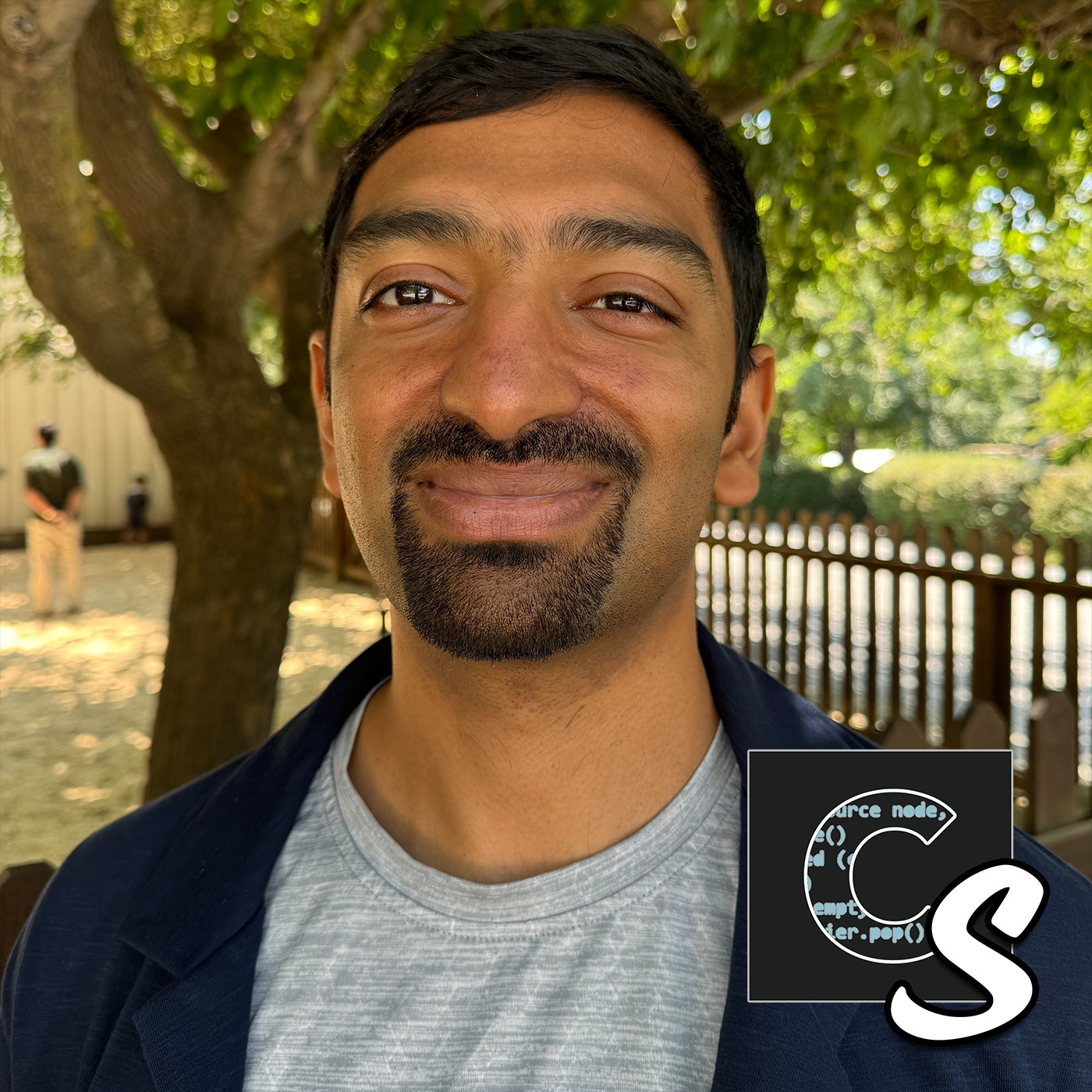
Christian Ondaatje is originally from Los Angelas, CA. He got into GPUs as an underclassmen in college, of course through gaming and VR. He ended up starting an eGPU company in his CS program @ Harvard, though it was shut down through some cease and desist from Apple. Though he learned some hard startup lessons, his love for GPUs was only fueled more. Outside of tech, he does a lot of SIM racing. In fact, he has built his own Linus VR racing simulator rig over a couple of years He finds that the formal, online competition is very fun to participate in.
As I mentioned, Christian was way into GPUs throughout many different experiences in his life. He and his team recognized that while demand door AI inference and compute was at an all-time high, setting up bare-metal GPU infra was still complex and slow... so they set out to change it.
This is the creation story of Aranya.
Links
https://www.linkedin.com/in/christianondaatje/
Current Sponsors:
Checkout our Stacklist! https://stacks.codestory.co/
Check out our Patreon!
Hosted by Noah Labhart | Technical Founder & Startup Mentor.
Our Sponsors:
* Check out Granola and use my code granola.ai/CODESTORY for a great deal: https://granola.ai
* Check out Perplexity and use my code pplx.ai/codestory for a great deal: https://www.perplexity.ai
Advertising Inquiries: https://redcircle.com/brands
Privacy & Opt-Out: https://redcircle.com/privacy
[SPEAKER_03]: The customer is the PM, right? [SPEAKER_02]: The user is the PM. [SPEAKER_02]: If someone that's using what we've built says, hey, I'm using what you've built. [SPEAKER_02]: I like it. [SPEAKER_02]: Here's one way in which could be better. [SPEAKER_02]: That to us is like our spirit planning. [SPEAKER_02]: We had originally been like building out with this roadmap of like, [SPEAKER_02]: early launch of WebDUI. [SPEAKER_02]: And then, just came to terms with the fact that 99% of compute transacts and is operated over, you know, a Slack phone, telegram, what's up.
[SPEAKER_02]: I message what have you. [SPEAKER_02]: These text channels. [SPEAKER_02]: And that all predated the L on error. [SPEAKER_02]: We made the call to embrace that. [SPEAKER_02]: My name is Christian Andachi, and I'm co-founder and CEO of Aranya.
[SPEAKER_04]: This is code story, a podcast bringing you interviews with tech visionaries, six months moonlighting goes. [SPEAKER_04]: I'm lost in all the backgrounds, who share what it takes to change an industry. [SPEAKER_00]: I don't exactly know what to do. [SPEAKER_04]: It doesn't go as to get right. [SPEAKER_01]: who built the teams that have their bad company is its team's help each other, which is proud of our team. [SPEAKER_04]: Keeping scalability top of mind, all that infrastructure was up there.
[SPEAKER_04]: Yes, we've been fighting it as we grew up. [SPEAKER_04]: Total waste of time. [SPEAKER_04]: The stories you don't read in the headlines. [SPEAKER_04]: It's not an easy thing to achieve. [SPEAKER_03]: To get yourself a deficit of off, try to begin to ride the ups and downs of the start-up line. [SPEAKER_04]: Need to really want it. [SPEAKER_03]: Not just about technology. [SPEAKER_03]: All this and more on code story. [SPEAKER_03]: I'm your host, Noel Appart, and today, how Christian I'm Dongee, is enabling you to go bare metal to production in 48 hours optimized for your GPU workflow.
[SPEAKER_03]: Christian Andochia is originally from Los Angeles, California. [SPEAKER_03]: He got into GPUs as an underclassman in college, of course, through gaming and VR. [SPEAKER_03]: He ended up starting an EGPU company in a CS program at Harvard, though it was shut down through some season to cis from Apple. [SPEAKER_03]: Though he learned some hard start-up lessons, his love for GPUs was only fueled more. [SPEAKER_03]: Outside of tech, he does a lot of sim racing. [SPEAKER_03]: In fact, he has built his own Linux VR Racing simulator rig over a couple of years.
[SPEAKER_03]: He finds that the formal online competition is very fun to participate in. [SPEAKER_03]: As I mentioned, Christian was way into GPUs throughout many different experiences in his life. [SPEAKER_03]: Being his team recognized that while demand for AI inference and compute was at an all-time high, setting up bare metal GPU infrastructure was still complex and slow.
[SPEAKER_03]: This is the creation story of Aranya.
[SPEAKER_02]: We bridge the gap from the reality of what? [SPEAKER_02]: modern private data centers offer, which is bare metal. [SPEAKER_02]: And then orchestrate that and build custom architectures on the fly so that it matches very cleanly with what AI companies need. [SPEAKER_02]: Right? [SPEAKER_02]: So you have all these AI companies buying massive amounts of compute that are coming from their testing grounds or career experience in the hyperscores, AWS, Azure, Azure, [SPEAKER_02]: and then being pushed by necessity into the world of low cost compute which is private bare metal data centers.
[SPEAKER_02]: So their architecture needs usually some kind of managed learn managed Kubernetes, some sort of pre-built orchestration layer that is able to span a massive amount of compute and make it seamless around AI on top of it, and that's not present in most of these modern data centers that are powering the AI's run up in
[SPEAKER_02]: So we drop in and our claim to fame is we can take any band metal and turn it into a production ready inference cluster in 48 hours. [SPEAKER_02]: So what that really translates to is us being able to help our customers totally outscale their competition and we've seen that play out this year already.
[SPEAKER_03]: This will be interesting to hear where you start, but I'm curious about what you would consider the MVP for Aranya at first version of what you built with the operating system, how long to take the build and what sort of tools we're using to bring it to life. [SPEAKER_02]: The core technologist, I think, I'm working on quite a long time. [SPEAKER_02]: So as far back as 10 years ago, I had been designing these systems for orchestration of heteroges compute into a cohesive whole that evolved into an open source technology I built called ClusterDost.
[SPEAKER_02]: This is when I was a founder of a company called the Tokaweer, cracking the coin log for people who had forgotten their passwords, using [SPEAKER_02]: Aside from running the company and handling all of the significant forces of the legal work, et cetera, I had to orchestrate the data centers worth of compute as a solo founder, and closer to us really arose from that necessity that that was the crucible that produced. [SPEAKER_02]: The core of the technology, which then was [SPEAKER_02]: open-source build some other distributed operations systems on top of it in layer parts of my career and then eventually transfer that IP to Aranya to form the core of our single cluster engine, right?
[SPEAKER_02]: So cluster analysis basically the tool that allows us to go multi-cluster super seamlessly because each individual cluster becomes very clean to orchestrate. [SPEAKER_02]: So I would say that's probably the what I would refer to as like the MVP [SPEAKER_02]: was when I started being able to actually co-hearingly manage that amount of compute as a solo. [SPEAKER_02]: It really clicked and was like, okay, that's the foundation of some multi-puster operating system. [SPEAKER_03]: So that's the foundation.
[SPEAKER_03]: I'm curious about, and I get prior cherry pick a couple of things from what you said, but tell me about a decision or trade off you had to make in how you approached, you know, creating it, and how you cope to that decision. [SPEAKER_02]: It was very important to us that cluster us to the open source. [SPEAKER_02]: And I know that's something that a lot of founders go back and forth with, or a lot of open source communities push against, they're being a combination between enterprise open source.
[SPEAKER_02]: It's open source is very near and dear to me. [SPEAKER_02]: It's something that's been a very big part of my life. [SPEAKER_02]: It's something that I'll much, much of my capabilities and engineer to, is to the various open source communities that I've been a part of and benefited from. [SPEAKER_02]: And so for us, I think having seen the power of adoption and open source, the [SPEAKER_02]: foundational shifts that are possible when an open-source technology is built to genuinely be useful for the community rather than just being useful for the company that stores it or even the the organization that stores it and we really hope that's the case with class class work.
[SPEAKER_02]: constantly adding new features that aren't necessarily the thing that like a Iranian needs in that moment, but it's something that we look around and see, okay, like self-hosted previous is like a really good thing to do right now if you want to run that on closer to us or like even a Minecraft server or self-hosted storage is tough and we can prepackage a lot of that and have it chip out of the box. [SPEAKER_02]: in a way that makes it feel a lot more like getting a laptop that's assembled versus getting a laptop in a thousand component parts.
[SPEAKER_02]: So I think the decision to make something so powerful, open source, and keep it open source was a date one. [SPEAKER_02]: And that's definitely the thought that comes to mind. [SPEAKER_02]: It's in our opinion though, like, a prerequisite to proper adoption, and you look at the scale out of links, the scale out of Kubernetes, right? [SPEAKER_02]: Those all came off of the back of this unique pattern of adoption that is totally specific to open source, right? [SPEAKER_02]: 99% of the feet in the world runs on the next.
[SPEAKER_02]: When you want to build a cluster, it is almost always going to be a Kubernetes cluster or a
[SPEAKER_02]: that percentage is growing rapidly. [SPEAKER_02]: It is, I would say, the only way practically in this era to create a category of color, to create a fundamental technology shift that will last, not just for the lifespan of the company, but like multiple generations, right, like you'd see in TCPIP and those kinds of early innovations. [SPEAKER_02]: I think that's something that's important to us and that was a big part of that decision was building technology that we can be proud of handing
[SPEAKER_03]: Let's move forward then, so you've got that built, the foundation of what you've built, how have you progressed and matured it with the changes in industry and with what's happening fast. [SPEAKER_03]: I think they're prepped in a box a little bit. [SPEAKER_03]: I'm curious about how you build your roadmap, how you go about deciding that, okay, this is the next most important thing to build or to address.
[SPEAKER_02]: One of the core things we say sometimes that the office is, the customer is the PM, right, the user is the PM. [SPEAKER_02]: So of course we did here, it's a good product management, sometimes not as well as we should, but keeps it fun and flexible. [SPEAKER_02]: I think the thing that really makes everyone set up and pay attention at the company is like, if someone that's using what we've built says, hey, I'm using what you've built. [SPEAKER_02]: I like it. [SPEAKER_02]: Here's one way in which you can be better.
[SPEAKER_02]: that to us is like our sprint planning, right? [SPEAKER_02]: It's like, okay, this is what clearly the ecosystem or the product needs. [SPEAKER_02]: So what we saw and where that really, where the rubber needs the road in relation to that concept is we had originally been like building out with this road map of [SPEAKER_02]: early launch a web UI, early launch a web UI, and then, just came to terms with the fact that 99% of compute, transacts, and is operated over, you know, a Slack phone, telegram, what's up, I message what have you, these text channels, and that all predated the L on error.
[SPEAKER_02]: We made the call to embrace that. [SPEAKER_02]: I think a lot of tech companies can be divided into two categories. [SPEAKER_02]: You have for the companies that C chaos and break out an iron and board and then you have companies that C chaos and break out a surf board. [SPEAKER_02]: we try to see the chaos and just go with it and not try to find it and that is what us just towards making the primary interface for the multi-cluster operating system be in Slack, in email, in the various text channels that [SPEAKER_02]: are really the way that, like, compute is operated at the human level and put RAI into that ecosystem first.
[SPEAKER_02]: And it's been a really productive decision. [SPEAKER_02]: It allows us to meet people where they're at, meet companies where they're at, and build stuff that's useful to them without pushing this adoption or behavior change. [SPEAKER_03]: I'm curious about team, right here you're saying us and we, talking about how you built that team. [SPEAKER_03]: What do you look for in those people to indicate that they are the winning horses to join you? [SPEAKER_03]: I have two amazing co-founders.
[SPEAKER_02]: Sasi is our CPO. [SPEAKER_02]: He grew a department at Jaguar Land Rover from 20 to 300 people with a 12-min dollar R&D budget. [SPEAKER_02]: It was in the process of building out this distributed car GPU busster company when we met and things just really clicked. [SPEAKER_02]: Actually, our other PoFounder by introduced us. [SPEAKER_02]: So Arya and I had known each other for a very long time. [SPEAKER_02]: We're married as well as being co-founders. [SPEAKER_02]: I have known each other for almost nine years.
[SPEAKER_02]: It's been married for six years and she's been an operator at the highest level. [SPEAKER_02]: venture capital has been in decentralized compute, has been in aberrations, and then I tagged along as she was getting her MBA at MIT. [SPEAKER_02]: That's where we met saucy and really clicked as a unit and just have been incredibly fortunate to be working with both of them. [SPEAKER_02]: The rest of the team, we really took our time, I would say. [SPEAKER_02]: We didn't make our first hire for almost, I think, four or five months, because we really wanted to focus on wanting the seed of an amazing team that was going to be full of people with that sort of.
[SPEAKER_02]: spark and curiosity and with that quality of being able to learn on the fly and adapt to new problems as they arrive live, which is a reality of what we deal with, right? [SPEAKER_02]: We work with tens of small data centers and they're going to have just by virtue of the numbers, small instance every day, right? [SPEAKER_02]: A switch port goes down. [SPEAKER_02]: Or we've actually seen this a tornado takes out a backbone router in one day to center And to figure out that happened, you need a really creative kind of brilliant individual On the line as that's going down and we were really lucky that Yofi Kwanza and I had worked together And he's an incredible engineering is our founding platform engineer.
[SPEAKER_02]: He joined over accepting an offer it together I actually [SPEAKER_02]: which was a really, really great honor for him to make that move, especially when we're so hurtly. [SPEAKER_02]: And he's been experienced in orchestrating hundreds of clusters at once and has that curious character and the on-the-fly personality that has just been really great to continue to build a team around and then Lily Joinshaley, they're actually, they're after really dynamic GTM lead with a mass background and then we just really have been building the team from there and [SPEAKER_02]: Yeah, continue to add really excellent platform engineers, SREs, and really trying to maintain that quality of that bright curiosity combined with a bit of grit that I think makes for really good automation plus on call team.
[SPEAKER_03]: So, within the last year, Aranya has grown fast, you've hit some major milestones. [SPEAKER_03]: Can you, you know, as we've talked about, you know, how you go about your roadmap and how you've built your team, I'm curious about if you can touch on how Aranya has taken shape and grown so fast over the past year. [SPEAKER_03]: This is where we really just embrace being a technology, right? [SPEAKER_02]: Even as listening to some of your podcasts, you were patting at about dot tech domains, which I really enjoyed seeing, because we're arania.tech.
[SPEAKER_02]: And we just thought, hey, we're like, you know what? [SPEAKER_02]: This is about technology, we're gonna be arania.tech and embrace that. [SPEAKER_02]: the proof in my opinion of like when you have a technology is when you make an individual become immensely more capable than they were before, right? [SPEAKER_02]: So for us the way that's expressed is that [SPEAKER_02]: Already, we're operating $120 million of GPU infrastructure questionnaire, and that number is growing, right? [SPEAKER_02]: That ratio is growing.
[SPEAKER_02]: It's something that we pride ourselves on. [SPEAKER_02]: We focus on as sort of evidence. [SPEAKER_02]: Okay, clearly we have a technology because an individual is able to... [SPEAKER_02]: orchestrate, this mass is not of compute capital that previously would have taken years and many teams and departments, and that's where we really, we set up and take notice and say, okay, we're building something, it's really effective here. [SPEAKER_02]: It's actually innovative. [SPEAKER_02]: And I think the [SPEAKER_02]: The thing that really catalyzes that is, like I mentioned earlier, embracing the chaos and just trying to surf it out, and our core innovation of being multi-cluster native, of working with scrap your data centers that are incredibly capable, but building with less resources than the hyperscalers, all of that is expressed in how high leverage our technology
[SPEAKER_02]: And then that translates to us being able to dramatically reduce the cost of inference, not through cheaper hardware, but through taking and upgrading and making these bleeding edge data centers much much more viable at scale and an accurate. [SPEAKER_02]: And that all runs through the tech of Aranya.tech.
[SPEAKER_03]: Let's move into scalability, and this is baked into your bread and butter and the speed of how you launch bare metal to ready for production money service. [SPEAKER_03]: I'm curious about scale though. [SPEAKER_03]: How did you approach it from the early days and has there been interesting areas where you've had to fight scale as you've grown? [SPEAKER_02]: Like this question, because I think it plays to one of our strengths, which is we from the get-go built in a federated architecture.
[SPEAKER_02]: So what that means is you have clusters of clusters from day one rather than individual like an individual Kubernetes cluster that your company runs on top of on a federated architecture, you have a management cluster and a lot of sub clusters. [SPEAKER_02]: So we took that step, which [SPEAKER_02]: Maybe one against sort of conventional wisdom, which is that you want to just build the default architecture at first and then solve scaling problems as they come up, which I usually would adhere to and agree with, but in our case, given that the core of our business.
[SPEAKER_02]: is tasked itself with scaling. [SPEAKER_02]: Scaling is our business. [SPEAKER_02]: That was decision we made early on that has really ended up paying dividends. [SPEAKER_02]: For us, what scaling looks like is not adding nodes or servers to a cluster, what scaling looks like is adding clusters to a Federation, which is a process that we've gotten to be almost a straightforward as adding a node to a cluster. [SPEAKER_02]: What that allows us to do is we can, like I said, in under 48 hours, we can throw in a whole new cluster of our sector and have it up and running.
[SPEAKER_02]: And that number we're able to bring down over the coming months as well. [SPEAKER_02]: So I would say scale from day one has been, [SPEAKER_02]: a very critical focus, and I think a lot of the convention wasn't the honest was developed in an era where a company would scale up over the course of the decade, but just the way things are right. [SPEAKER_02]: Now, a company will scale up over the course of the couple months, and that's something that we've seen a lot of clients come to us to help with, right, is like, because of how scale native we are, because we have multi-gluster native we are.
[SPEAKER_02]: those types of scaling problems are very natural to us and a very downstream in our architecture in a way that is a typical in the field.
[SPEAKER_03]: So, as you step out on the balcony, you look across all that you've built thus far with the Rania. [SPEAKER_03]: What do you most proud of? [SPEAKER_02]: There is this certain quality and I would even say a static that spans departments at around here that I genuinely think is the thing I feel most proud of and I think it's something that [SPEAKER_02]: If you ask the other team members, they might have a loot too as well, but I don't know if we have a clear share of language for it, but I'll try to give you some examples.
[SPEAKER_02]: So in all of our node names, most companies will give you like a hodgepodge of numbers and letters, or like UUIDs, right, and they will look like a hex code and that'll be your server. [SPEAKER_02]: And one of the things that very on we decided was, okay, we're going to have R's be human readable. [SPEAKER_02]: right we use canonical does this really well that they have this library that generates human readable names for things like this and so we might have our nodes that say you know something like leaning giraffe is like going to be a node name right and as you have this full [SPEAKER_02]: massive infrastructure but it doesn't feel impersonal and it doesn't feel unapproachable and it clicks in your memory a little bit better and in fact it clicks in AI's memory a little bit better right so just a little thing like that that it comes the way that people recognize our clusters as having had that little extra bit of work [SPEAKER_02]: And that is a quality that shows up in our company, a tire and merchandise that shows up in the plants at our office that shows up in, of course, like our aesthetic on our website, in our billboards, and in the, the little Linux test-offs that are going to give each engineer when they join, right?
[SPEAKER_02]: It, [SPEAKER_02]: is a certain quality that, and again, difficult to articulate exactly what it is, but I will say credit where credit's due. [SPEAKER_02]: I think the well-spring of this at the company would be Arya, Arceo, it's something that she really throughout all her career that I've seen has brought to every company she's worked with, and it changes the way everything gets built. [SPEAKER_02]: Right, if you just put in that extra little thing where it just feels like a quality designer product anytime you use it.
[SPEAKER_03]: let's flip the script a little bit. [SPEAKER_03]: Tell me about a mistake you made and how you and your team responded to it. [SPEAKER_02]: This kind of goes back to what I was talking about where I had originally been hard charging for shipping the multi-cluster UI very early. [SPEAKER_02]: That was the vision that I had in my head of, okay, this is what it's going to be to look like and it's going to have this totally [SPEAKER_02]: on the fly generated interface that is custom to every user that has an LM in the loop of the way the actual experience is expressed visually.
[SPEAKER_02]: And ultimately I think the pace at which I had wanted to ship that was a mistake, right? [SPEAKER_02]: It's something that is definitely still very much like on the road map, but I tend to find myself living in maybe an over-optimistic world where
[SPEAKER_02]: maybe ten years, maybe five years, but where the people that are going to be new to the stuff or are going to be in their daily lives are currently at is maybe a few months or a year behind where the technology is that we could build, that isn't necessarily those like that two three steps ahead vision, but is that immediate next step, that's very [SPEAKER_02]: practical approach to hate, exactly where are people at and how can we level them up now? [SPEAKER_02]: And that was, like I said earlier, the reason why we shipped first on text interfaces.
[SPEAKER_02]: Just meaning people were there at. [SPEAKER_02]: And that, I think, again, like big credit to the team, you'll feel was big on text interfaces from day one. [SPEAKER_02]: And I'm very lucky that there's many people that talents me out in that regard. [SPEAKER_02]: Hey, here's, [SPEAKER_02]: We all know where the tech is going or we're going to build this going to be mind boggling, but here's where the immediate next step is taking people along that path up to what the world looks like in 10 years, one step at a time.
[SPEAKER_03]: Okay. [SPEAKER_03]: Let's move forward then. [SPEAKER_03]: This is an exciting time. [SPEAKER_03]: Things are booming with AI, compute, GPUs and all the things. [SPEAKER_03]: What does the future look like for Iran? [SPEAKER_03]: What you offer for the products you offer for how you build things, how you keep up with the industry, all the things. [SPEAKER_02]: the main mission I would say is that, and we have the capability to do this, we want to make multi-cluster compute just as accessible and usable as like a laptop, right?
[SPEAKER_02]: And it's tough to imagine right now, if you haven't experienced it, if you haven't used our multi-cluster operating system, to be able to sit down and say, [SPEAKER_02]: in English. [SPEAKER_02]: Okay, I want to scale down this cluster in Delaware and we've all the work loads to Iceland, right? [SPEAKER_02]: And you can say that in English and the Iranian multiple strawberries, it does that for you, right? [SPEAKER_02]: That is something that is pretty surreal to experience it working.
[SPEAKER_02]: And that's a simple example, right? [SPEAKER_02]: There's so much more complicated stuff that it can do. [SPEAKER_02]: But to bring that power, [SPEAKER_02]: The power of being able to orchestrate not just an individual cluster, which of course it's more than capable of doing, but multiple clusters So seamlessly is a really big part of what gets each of us excited and I think that is something that They're aspects of that like I said that are already working and in some ways I would say like [SPEAKER_02]: Honestly, easier than working with laptops.
[SPEAKER_02]: At least working with like macer windows and a Linux desktop Evangelist, but their aspects of the like definitely feel on the level of like personal competing, right? [SPEAKER_02]: We draw this comparison constantly at the office where you think about the rule out of personal computers in the 80s and 90s in the workplace and like that is happening right now [SPEAKER_02]: and all the companies that we work with and we're a part of that rollout for what we're going like personal clusters, right?
[SPEAKER_02]: Not necessarily because they're used for personal workloads, but because an individual can feel very capable regardless of their technical background of working with a cluster with a computer or multiple clusters with a computer. [SPEAKER_02]: We have our office cluster in the mission that our office, we've all all the engineers are running Linux desktop that can be Kubernetes nodes and all that fun stuff. [SPEAKER_02]: It's just a really core part of what we do and what we build towards and the way that sort of looks and the way that we get there really goes through this this open source technology cluster to us, right?
[SPEAKER_02]: The OS engine that we think. [SPEAKER_02]: can be under all AI infrastructure. [SPEAKER_02]: If we apply our cards, right? [SPEAKER_02]: Just has a really great moment. [SPEAKER_02]: Like Linux has, like Kubernetes has to be the thing that everyone in this enterprise community needs at the right moment. [SPEAKER_02]: And then, of course, we got to be good open source stewards to make sure that goes out. [SPEAKER_02]: And it's useful to everyone and stable. [SPEAKER_02]: And we do a best there.
[SPEAKER_02]: So I think the main goal, I would say, is access to compute useful compute in a custom form factor, right, which is more and more possible now with the tools that we're building. [SPEAKER_02]: And all that happening on a day-to-day timeframe, not necessarily the year-to-year timeframe that you see it with large scale cluster builds up currently. [SPEAKER_03]: Okay, Christian, let's dive into another angle here. [SPEAKER_03]: I'm really curious about for Irania. [SPEAKER_03]: You know, this amazing technology that you guys are building, why is this the right time for this?
[SPEAKER_03]: You know, the industry is moving fast, changing data day, but why is the way that you're approaching this? [SPEAKER_03]: The best way to approach it and the right time to do it. [SPEAKER_02]: You have these single biggest scale up in infrastructure since the oil and gas boom. [SPEAKER_02]: I was there in the mining boom, CryptoMining boom, Echris O and saw the way massive amounts of compute and energy could move with the right macroeconomic moment. [SPEAKER_02]: And this is the macroeconomic moment that completely dwarfs even that scale of compute movement
[SPEAKER_02]: So you have this huge accident from the hyperscalers where, you know, through speed and availability, they're just not able to serve at a reasonable cost, the explosion of inference specifically. [SPEAKER_02]: This large amounts of training workloads and CPU and VM workloads, but by and large, the vast majority of the compute expansion that we see is GPU based inference. [SPEAKER_02]: And it's by necessity become multi-cluster because you have this sort of calf. [SPEAKER_02]: practically at least in U.S., some other jurisdictions of around 20 megawatts, where it's very difficult to build a data center quickly over 20 megawatts, which puts this fragmentation force on the topology of compute.
[SPEAKER_02]: So the way that expresses itself is that you have large companies that need to stay alive and to scale at the pace that their customers are deserving much demanding
[SPEAKER_02]: a gigawatts worth of compute and span it over multiple 20 megawatts or below data centers. [SPEAKER_02]: That's where basically, like, that's our bread and butter, right? [SPEAKER_02]: Multi-cluster operating system means that you can address [SPEAKER_02]: Multiple data centers worth of compute as if you were addressing a single computer right and again We do that in natural language by default where you can say two that entire fleet of clusters Hey, do x y i see. [SPEAKER_02]: I need you to scale up kidney k3 this week because like just came out and everyone's using it or I need you to [SPEAKER_02]: shift the workloads from Texas, North Dakota because there's a heat wave in the cooling price is going to be outrageous.
[SPEAKER_02]: Like that kind of thing that is very difficult to do even with a large team. [SPEAKER_02]: We've got it down to the point where an individual CTO or even our operators in certain enterprise tiers are able to jump in and do that kind of stuff on the fly in English. [SPEAKER_02]: The multicoloring system is powering that engine under the hood. [SPEAKER_02]: that is like the critical factor to being able to expand compute the way that compute expansion is happening realistically in the modern era.
[SPEAKER_03]: Okay let's switch to you Christian who influences the way that you work. [SPEAKER_03]: In a person or many persons or something you look up to and why. [SPEAKER_02]: So I joined Crusoe pretty early as the third engineer and worked with Charlie and Nathan. [SPEAKER_02]: I would say both in Kremlin years, I learned a ton off of Nathan, specifically when it comes to... [SPEAKER_02]: really being a good crafts person in working with. [SPEAKER_02]: He was the one that introduced me to using a Linux laptop, using a split keyboard being able to program your own keyboard, doing e-max, mash up of them and e-max, tail scale, a ton of technologies that I saw him taking, and sharing, and elevating his craft.
[SPEAKER_02]: I definitely got a lot of insight and had a lot of his technological world you rubbed off on me in that time that we worked together. [SPEAKER_02]: And it's definitely continued to affect the way I approach the way I work with technology the way I think about picking up and using new tools to build bigger things. [SPEAKER_02]: So I would say, yeah, one person in the name, I would say nothing. [SPEAKER_03]: Okay, last question, Christian, so you're getting on a plane. [SPEAKER_03]: And you're sitting next to a young entrepreneur who's built the next big thing.
[SPEAKER_03]: They're jazzed about it. [SPEAKER_03]: I can't wait to show it off to the world and can we show off to you right there on a plane? [SPEAKER_03]: What advice do you give that person having gone down this road a bit? [SPEAKER_03]: It's a couple different ways. [SPEAKER_02]: This one might be slightly non-concensus these days. [SPEAKER_02]: I'm sorry to say, but this is my forest time being a founder six startup, the times have been early engineers. [SPEAKER_02]: I would say, especially to a lot of these young founders, don't talk about 996, don't go around telling people your companies 996 and they should expect to be working in those kinds of hours.
[SPEAKER_02]: because, first of all, you're just not going to get a callback from the best talent in the Valley or wherever you are, the best talent in the Valley that could put out a nine, nine, six levels of work in a single three hour session, right? [SPEAKER_02]: And they're just not going to call you back. [SPEAKER_02]: They're not going to be interested in joining your company. [SPEAKER_02]: They're not going to have [SPEAKER_02]: the respect that you're not showing them in terms of here is how to make this a good place to work.
[SPEAKER_02]: Here's how to have respect for each other's time. [SPEAKER_02]: The 996 of the founder for a shirt, like that's for better words, that's the expectation, that's what it takes most of the time. [SPEAKER_02]: But yeah, a lot of these young founders, especially are going up throwing that term around and expecting to collect talent and it's just not going to happen. [SPEAKER_02]: I'm sorry to say. [SPEAKER_03]: couldn't agree more with that, it's fantastic advice. [SPEAKER_03]: Well Christian, thank you for being on the show today and thank you for telling the creation story of Aranya.
[SPEAKER_03]: Appreciate it. [SPEAKER_03]: Yeah, I really enjoyed being on the podcast, thank you for having me.
[SPEAKER_03]: And this concludes another chapter of Coat Story.
[SPEAKER_03]: Code Story is hosted and produced by Noah Labhart. [SPEAKER_03]: Be sure to subscribe on Apple podcast, Spotify, or the podcasting app at your choice. [SPEAKER_03]: And when you get a chance, leave us a review. [SPEAKER_03]: Both things help us out tremendously.
[SPEAKER_03]: And thanks again for listening.
Latest Season of the Podcast is Sponsored By

 Apple Podcasts
 Spotify
 Castbox
 Player FM
 Pocket Casts
 YouTube
 Overcast
 Castro
 Goodpods
 Moon FM
 Podbean
 Podcast Addict
 Podcast Republic