S13 E7: The AI Legal Shift: Giving SME Law Firms BigLaw Leverage with Dave Berner, Co-Founder & CEO of Parachute
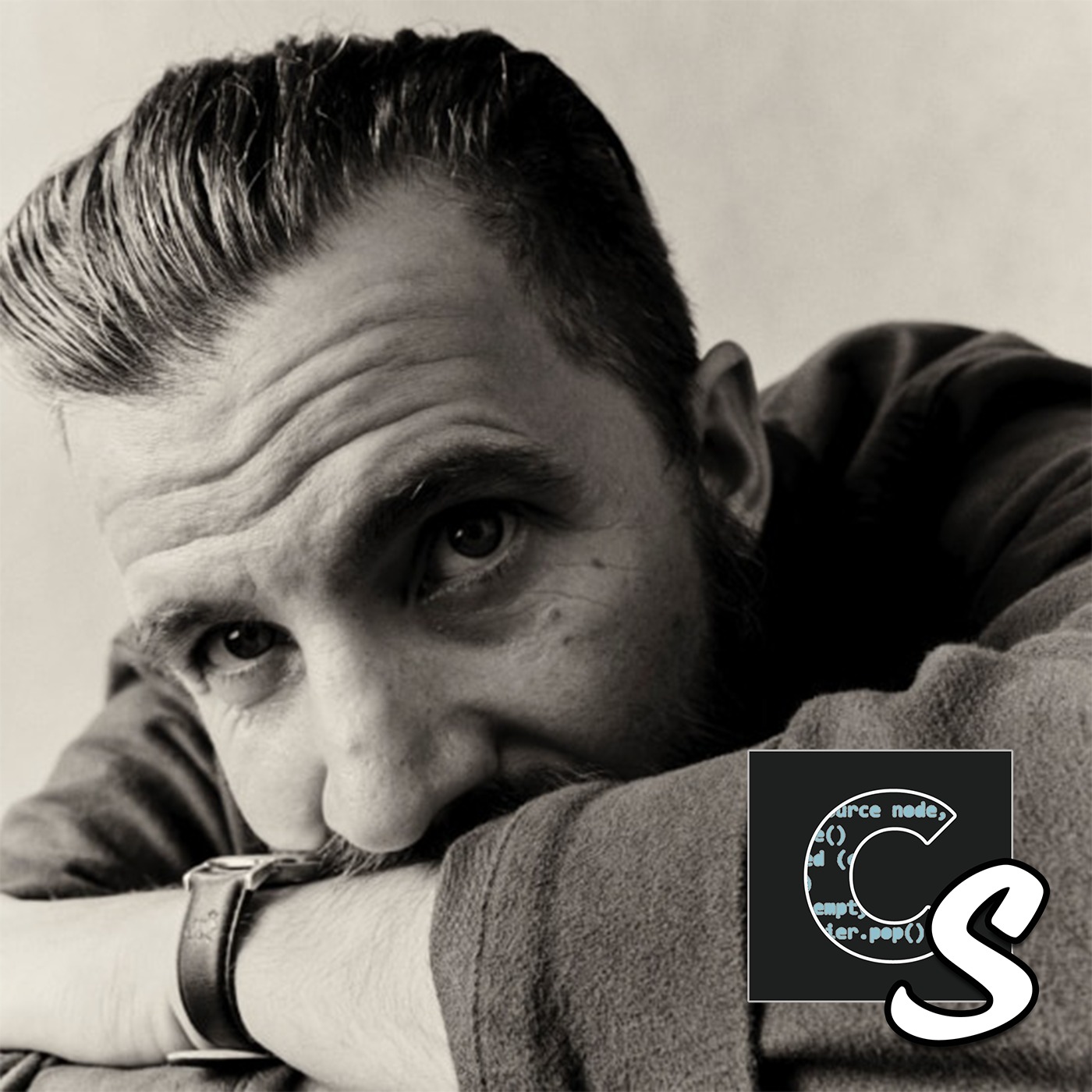
Back in August of 2025, Dave Berner joined the podcast previously in Season 11, episode 11, as the co-founder and CTO of Kinde. A past musician, he took up web development to make his bands websites and his friend's myspace profiles. Fast forward, he has started multiple startups, been the host of several podcasts, and is married with 3 kids.
Dave's co-founder Ryan experienced firsthand that legal AI tools were built for massive law forms. SMB's or boutiques were forced to retrofit expensive, enterprise heavy software to their workflows (and of course, budgets). Alongside their third co-founder, Vivienne, they set out to build an AI-powered legal OS designed for firms with 1 to 200 lawyers.
This is the creation story of Parachute.
Links
https://www.linkedin.com/in/daveberner
Current Sponsors:
Checkout our Stacklist! https://stacks.codestory.co/
Hosted by Noah Labhart | Technical Founder & Startup Mentor.
Our Sponsors:
* Check out Granola and use my code granola.ai/CODESTORY for a great deal: https://granola.ai
* Check out Perplexity and use my code pplx.ai/codestory for a great deal: https://www.perplexity.ai
Advertising Inquiries: https://redcircle.com/brands
Privacy & Opt-Out: https://redcircle.com/privacy
[SPEAKER_00]: So one of the things we decided to do early was lean into our strengths, which is that we are based in Australia, we're servicing Australian law firms, and we decided we wanted to do as much as possible here, including AI inference, and we turned this on. [SPEAKER_00]: And it just went south really quickly, like some of the responses that were coming back from the Australian hosted versions of the models just weren't in the same shape. [SPEAKER_00]: We tested it locally, we tested it in staging and everything was fine.
[SPEAKER_00]: And then when it went to production, we had more people hitting it harder and the throughput was actually restricted in a way that we were assured that it wasn't going to be. [SPEAKER_00]: I'm Dave Burner, both founder and CTO of parachute.
[SPEAKER_03]: This is code story. [SPEAKER_03]: A podcast bringing you interviews with tech visionaries. [SPEAKER_03]: Six months moonlighting goes. [SPEAKER_01]: It's the last and all the badcats. [SPEAKER_03]: Who share what it takes to change an industry? [SPEAKER_01]: I don't exactly know what to do. [SPEAKER_03]: What do many girls to get right? [SPEAKER_03]: Who built the teams that have their bad company is it's people? [SPEAKER_01]: The teams help each other achieve. [SPEAKER_01]: It was proud of our team.
[SPEAKER_03]: Keeping scalability top of mind. [SPEAKER_03]: All that infrastructure was up there. [SPEAKER_03]: Yes, they've been fighting it as we grow. [SPEAKER_03]: Total waste of time. [SPEAKER_02]: The stories you don't read in the headlines. [SPEAKER_03]: It's not an easy thing to achieve, but you have to self-invest it off and try to begin to ride the ups and downs of the startup line. [SPEAKER_03]: You need to really want it. [SPEAKER_02]: Not just about technology. [SPEAKER_02]: All this and more on code story.
[SPEAKER_02]: I'm your host, Noah Labpart. [SPEAKER_02]: And today, how Dave Burner has built the connected workspace for high-growth law firms. [SPEAKER_02]: So you can focus on what matters in every matter.
[SPEAKER_02]: Back in August of 2025, Dave Burner joined the podcast, previously in season 11, episode 11, as the co-founder and CTO of Kind. [SPEAKER_02]: A past musician he took up web development to make his band's websites and his friends my space profiles. [SPEAKER_02]: Fast forward, he has started multiple startups been the host of several podcasts and is married with three children.
[SPEAKER_02]: Dave's co-founder Ryan experienced first hand at Legal AI tools were built for massive law firms. [SPEAKER_02]: SMB's or boutiques were forced to retrofit expensive, enterprise heavy software to their workflows, and of course budgets. [SPEAKER_02]: Alongside their third co-founder of Vivian, they set out to build an AI-powered legal operating system, designed for firms with one to 200 lawyers.
[SPEAKER_02]: This is the creation story of Parashoot.
[SPEAKER_00]: parachute is an AI platform for SME law firms and all their clients that they serve. [SPEAKER_00]: We handle that first 80% of legal work, so drafting, document review, advising, there's a note take care for their client meetings, it will intake your emails, so kind of everything from the beginning of a matter through to do in the work and then continuing with it. [SPEAKER_00]: Law definitely isn't my bread and butter. [SPEAKER_00]: Actually did law study law back in the UK and failed.
[SPEAKER_00]: There's a reason I'm doing the code side and not the legal side. [SPEAKER_00]: My co-founder Ryan is an ex-law here. [SPEAKER_00]: He was at a big law firm in Australia for many years as well as being the [SPEAKER_00]: Head of legal eucalyptus started here and started his own law firm so I was had that experience across all facets of law and we kind of came together and realised this is a really good time to build and where he's got that legal background and yeah obviously got that code in background it was a good partnership and then the cup third co-founder of VIV has a deep data science background and where we're going into that AI space just makes it a ton of sense as a trifecta
[SPEAKER_02]: Let's dive into the MVP for parachute dance that first version of parachute you build. [SPEAKER_02]: How long take to build and what's sort of tools we're using to bring to life? [SPEAKER_00]: It's a very different from previous startups. [SPEAKER_00]: So we are AI native and that the whole intention from day one has been to be as lean as possible and lean into what AI is making possible for us now. [SPEAKER_00]: It's a very small engineering team at say two and a half because I'm probably half an engineer at this point.
[SPEAKER_00]: So we're leaning heavily on Claude Code at the moment using a range of models. [SPEAKER_00]: and then using codex for sort of an adversarial review for code as it's written. [SPEAKER_02]: Let's center in on that MVP and how you're building it. [SPEAKER_02]: I'm curious about a decisionary trade-off you had to make. [SPEAKER_02]: And I hear maybe a couple in there around keeping the team small or approaching building this using purely native AI stuff. [SPEAKER_02]: And maybe there's some there.
[SPEAKER_02]: Maybe there's also something in how you built the product. [SPEAKER_02]: I'm curious about a decisioner trade-off you had to make. [SPEAKER_02]: And how you cope with it? [SPEAKER_00]: Early trade-off was so we did a small race just before Christmas last year. [SPEAKER_00]: I think it was 1.8 million AUD.
[SPEAKER_00]: So we're kind of new, we're not going to be able to go out and hire a huge team of engineers at this point. [SPEAKER_00]: So a very deliberate decision was to keep the team as lean as possible. [SPEAKER_00]: It also meant that as you've got that small team, you really want to hire people that are, I guess, leaning into that AI world. [SPEAKER_00]: I built products before which [SPEAKER_00]: maybe over indexed on the infrastructure side of things and this time round we decide to lean more on the V versus build instead of following our own for everything whereas just the engineer in me always just kind of wants to build all the things and that was one like in order to be able to keep the team lean and get an MVP to market as quickly as possible [SPEAKER_00]: We did lean on a lot of other tooling for authentication and real-time collaboration and that's always a trade-off because you are including other people's libraries and means when you are going through the compliance audits that we've just completed our ISO 27,000, one you have to be able to justify all these additions, but it did enable us to speed up and get to market much quicker.
[SPEAKER_02]: Okay, let's move forward then. [SPEAKER_02]: I'm curious about how you're building your roadmap for parachute. [SPEAKER_02]: Right? [SPEAKER_02]: How do you put together your roadmap? [SPEAKER_02]: How do you decide that, okay, this is the next most important thing to build or to address with parachute? [SPEAKER_00]: We're definitely very fortunate in that we have three lawyers on the team so we decided it's going to be easier to hire lawyers to do sales than it is to buy sales people and teach them about law.
[SPEAKER_00]: So we have access to three subject matter experts on the team that we can find out about all the real pain points that they lived day to day and make sure that [SPEAKER_00]: We fully understand the problem that we're solving, let's say they've come from all facets of law from big law through to boutique law firms through to in-house legal. [SPEAKER_00]: So that's dictated a lot and then a lot of it comes from speaking to customers. [SPEAKER_00]: So we run in-person events probably every couple of months, so we'll do the big one in Sydney and then Brisbane and then Melbourne.
[SPEAKER_00]: an invite of 40 to 50 law firms to that not as a product pitch but purely to just have a discussion around what is happening in legal and and I am bringing those parts together and there's like an education piece there and learning more about their pain points at that moment in time.
[SPEAKER_02]: You mentioned it to small team right now. [SPEAKER_02]: How are you going about finding the people that you need on this team and what you look for in those people that indicate that they're the winning horses to join [SPEAKER_00]: Yeah, we're definitely looking for people that are, at least on the engineering side, which is my background, it's looking for people that are, A.I.N.A.T, if you do seem to get a bit of a mix in engineering, which I totally empathize with. [SPEAKER_00]: So, either the people that have gone all in, and I kind of...
[SPEAKER_00]: on top of the tooling and trying to turn it or 100x or whatever the insane x number is, the people are throwing around at the moment. [SPEAKER_00]: Because there are like a whole trance, I suppose, of engineers just push back on it completely and so it's just glorified or to complete or I'm not interested in. [SPEAKER_00]: These can be among some of the most experienced engineers so it does make, it can make some of those decisions tricky when people approach you and you are well. [SPEAKER_00]: You're not going to be quite right for this, unfortunately, but we do want people that are going to be open-minded to that.
[SPEAKER_00]: And then on the sales side, as I said, we've definitely leaned a time more experts into the team that we can remain as lean as possible.
[SPEAKER_02]: I'm curious about where scale comes into play here with parachute, how you have to think about it from the beginning and the way you're building the product, but also even on this shorter time frame, I have there been interesting years we've had to fight scale as you've grown. [SPEAKER_00]: We are predominantly at the minute 8B to the product, which, when we're targeting, I also sweet spikes in that kind of, probably 25 to 50 person law firm. [SPEAKER_00]: So we actually, we don't have to worry about in the way that some of my previous startups where you'd have like millions and millions of users and you have to think about how you're going to scale that out.
[SPEAKER_00]: So there's a scaling issues that we're thinking around mostly at the moment. [SPEAKER_00]: It's token usage and how that doesn't blow out and our costs don't blow out as we get more users on board. [SPEAKER_00]: And actually what we find is, [SPEAKER_00]: It's not the big law firms that hearse the hardest. [SPEAKER_00]: It's the solo practitioner who comes in and tries to use us. [SPEAKER_00]: But instead of hiring an entire team of legal's and we definitely hit some teething issues with that earlier on when people were suddenly started uploading like 10,000 page documents.
[SPEAKER_00]: Like PDFs with tons of stuff that need OCR recognition and all this kind of stuff and how we keep that down and are actually able to manage it. [SPEAKER_00]: There were definitely some times with some early customers that hit us a lot harder than we thought, one after taking step back and rethink how we architect some of that stuff. [SPEAKER_00]: And the whole space is moving so quickly that we're building mostly for being able to adapt and learn rather than thinking about massive scale in that same way.
[SPEAKER_02]: Even in these early days, Dave, [SPEAKER_02]: as you step out on the balcony and look across what you've built thus far, what are you most proud of?
[SPEAKER_00]: I wasn't expecting to have a horse in the race quite so early as I say we started, are we just before Christmas? [SPEAKER_00]: And within six months we were running pilots and in the same room as some of the biggest players in this industry that have been around like really heavily funded companies that have been [SPEAKER_00]: in the space for years and have that trust and suddenly we're in there kind of pitching against side alongside the modern pilots alongside them and so for such a young young and small company that was just absolutely huge for us.
[SPEAKER_02]: Let's flip the script a little bit, tell me about a mistake you made and how you and your team responded to it. [SPEAKER_00]: So one of the things we decided to do [SPEAKER_00]: early was lean into our strengths, which is that we are based in Australia, we're servicing Australian law firms and we just sort of want to do as much as possible here, including AI inference. [SPEAKER_00]: So, we're now of our way to be able to do that, like to start with, as we've adapted as we went, so we were just using USM points, which were very reliable, but we'll see it does mean that some of the conversations and prompts are leaving Australia for [SPEAKER_00]: And we turned this on and it just went south really quickly like some of the responses that were coming back from the Australian hosted versions of the models just weren't in the same shape as they came back and then the throughput as well like we've spoken to the providers that AI providers in this case and had assurances from them that everything was going to be fine.
[SPEAKER_00]: We tested it locally, we tested it in staging, and everything was fine, and then when it went to production, I guess we had more people heading it harder, and the throughput was actually restricted in a way that we were assured that it wasn't going to be by that provider. [SPEAKER_00]: We ended up losing one of our biggest pilots today on that, and I felt horrendous for the sales team who had been through kind of bringing this decent-sized fish in. [SPEAKER_00]: And they just didn't have the reliability there, because the AI would just keep bombing out, because it couldn't be handled.
[SPEAKER_00]: And there's definitely a regret there where I think, I noticed the move fast and break things in hindsight, the confidence that we got from being told by the providers, it's going to be fine and testing it in those environments. [SPEAKER_00]: Roll it out slower, tested it with a few of our harder hitting but trusted firms, especially not rolled it out to people that were on a pilot with us. [SPEAKER_00]: But that stage in our journey, there was some things that we just had to do to try and get things across the line that was one that unfortunately, backfired, but then the following week after that, you know, we landed another big customer and everything kind of went back to normal.
[SPEAKER_00]: and we were able to celebrate again, like I said, the roller coaster of start-up life.
[SPEAKER_02]: Okay Dave, let's move forward then. [SPEAKER_02]: This will be exciting. [SPEAKER_02]: It's early days and you always say have a fun and aggressive mission here with parachute. [SPEAKER_02]: What does the future look like for the product and for the team where the industry is going all the things? [SPEAKER_00]: So there's a big move at the moment in the space towards the AI native law firms. [SPEAKER_00]: There's a few out of the US. [SPEAKER_00]: You might be familiar with it just laughing, I think it's like Merit.
[SPEAKER_00]: And a couple of others landed quite large funding rounds, where the firms themselves are becoming more AI native as sort of a service is let. [SPEAKER_00]: And we do have this built into parachute at the moment where we can enable law firms to
[SPEAKER_00]: but we haven't done the best job of kind of advertising that features there. [SPEAKER_00]: So what I mean by that is, if you had a legal matter, you might go to Claude or CHBT and generate what you think of the right things and you send it to a lawyer and say, hey, I've done eight years in the work for you, can you give me a cheaper rate and just finish this off? [SPEAKER_00]: And then what you're finding is the law firms are saying, this is garbage, I've got to start from scratch anyway.
[SPEAKER_00]: So what we're enabling is, [SPEAKER_00]: The law firm can then instead say you can use parachute, you can draft everything there, and then I'm a clicker of a button, but it shares it with the lawyer, so they've got prompts, you use the documents you've uploaded, all that context, rather than just a final output, and can see how you arrived there. [SPEAKER_00]: People are gonna use AI tooling one way or the others. [SPEAKER_00]: There's no point in just asking them not to. [SPEAKER_00]: It's more just kind of redirecting them to using something that is actually grounded in law and where the lawyer then has that full context.
[SPEAKER_00]: And then they could add that client then to say, like in a more of a recurring revenue type situation. [SPEAKER_00]: So we do have a few customers that are trying that with us at the moment. [SPEAKER_00]: And I think a big push on that is going to be more like in how we kind of brand it and take it to market in a way to have people understand where the market's heading to. [SPEAKER_02]: Dave, let's switch to you, and maybe this has changed since we last talked, but I'm curious who influences the way that you work.
[SPEAKER_02]: Name a person or many persons or something you look up to, and why. [SPEAKER_00]: I've been listening to a range of people at the moment. [SPEAKER_00]: I've been listening to a British guy called James Smith. [SPEAKER_00]: He's probably unorthodoxy like a personal trainer that does a bit of business coaching as well, but he's kind of a no-nonsense, just tell us things as it is. [SPEAKER_00]: I've been quite enjoying his ethos at the moment. [SPEAKER_00]: People, I guess, you've got like, Navarrava Kant and some of the more classics that are out there, I still fall back a lot too.
[SPEAKER_00]: the work of the guys over at 37 signals, like the shape up is kind of an engineering philosophy. [SPEAKER_00]: It's got kind of fundamental overframe works, type of thing. [SPEAKER_00]: And then there's a great article that came out, and maybe 20 years ago, called Give It Five Minutes, where I guess the idea is that when somebody pitches you an idea, or thought, we're a way of doing things, it's quite easy to [SPEAKER_00]: just shoot it down instantly or like people do often often do that and the idea is like just let it reminate for five minutes.
[SPEAKER_00]: It's likely the thing that they're sharing with you does have some merit or whether yeah if it's something that you really disagree with just letting it reminate with that little bit. [SPEAKER_00]: Could you might find that you end up agreeing with them on the long
[SPEAKER_02]: Dave, last question, so you're getting on a plane and you're sitting next to a young entrepreneur who's built the next big thing. [SPEAKER_02]: They're jazzed about it. [SPEAKER_02]: They can't wait to show it off to the world and can't wait to show it off to you right down the plane. [SPEAKER_02]: What advice do you give that person having gone down this road a bit? [SPEAKER_02]: Several times. [SPEAKER_00]: I think one of the things that's become really clear. [SPEAKER_00]: I mean, it's always been fairly clear to me because I'm an engineer and can build things that coding and building the product was never really the hardest part of it all.
[SPEAKER_00]: Like, it's always been taking it to market and selling it and actually getting people to engage in what you're in what you've built. [SPEAKER_00]: And yeah, it's just definitely become more apparent now that anyone can become a builder and take things. [SPEAKER_00]: To market, we talked about this last time how I used to be in bands and that kind of thing and yourself as well. [SPEAKER_00]: And the strategy that I used to take them was [SPEAKER_00]: I'd book the show before we were even ready to play it, because they need be forced to be good by that date.
[SPEAKER_00]: And I try and take that same philosophy into the start-ups as well. [SPEAKER_00]: Like the product is never going to be ready enough. [SPEAKER_00]: Book that date, book that I don't know whether it's an in-person event, or however you're going to launch it. [SPEAKER_00]: and then you'll be forced to do it by that and all commit on social media, so I'm like on LinkedIn, put a release date out there, something that you're publicly committing to, which will help you to hit that. [SPEAKER_02]: I think that's fantastic advice and I really like the way you set it, book the gig so that you'll be good enough by the time it starts.
[SPEAKER_02]: I think that's fantastic advice, Dave. [SPEAKER_02]: Thanks for being on the show. [SPEAKER_02]: Again, it was great to have you back and telling the creation story of parachute. [SPEAKER_00]: Thank you so much for having me.
[SPEAKER_02]: and this concludes another chapter of Coat Story.
[SPEAKER_02]: Coat Story is hosted and produced by Noah Labhart. [SPEAKER_02]: Be sure to subscribe on Apple Podcast, Spotify, or the podcasting app at your choice. [SPEAKER_02]: And when you get a chance, leave us a review, both things help us out tremendously.
[SPEAKER_02]: And thanks again for listening.
Latest Season of the Podcast is Sponsored By




 Apple Podcasts
 Spotify
 Pocket Casts
 Castbox
 YouTube
 Player FM
 Overcast
 Castro
 Goodpods
 Moon FM
 Podbean
 Podcast Addict
 Podcast Republic