
In this episode
Today, we are dropping another episode in our "chats" series, specifically on the Founder side, - hearing from those scaling the companies themselves.
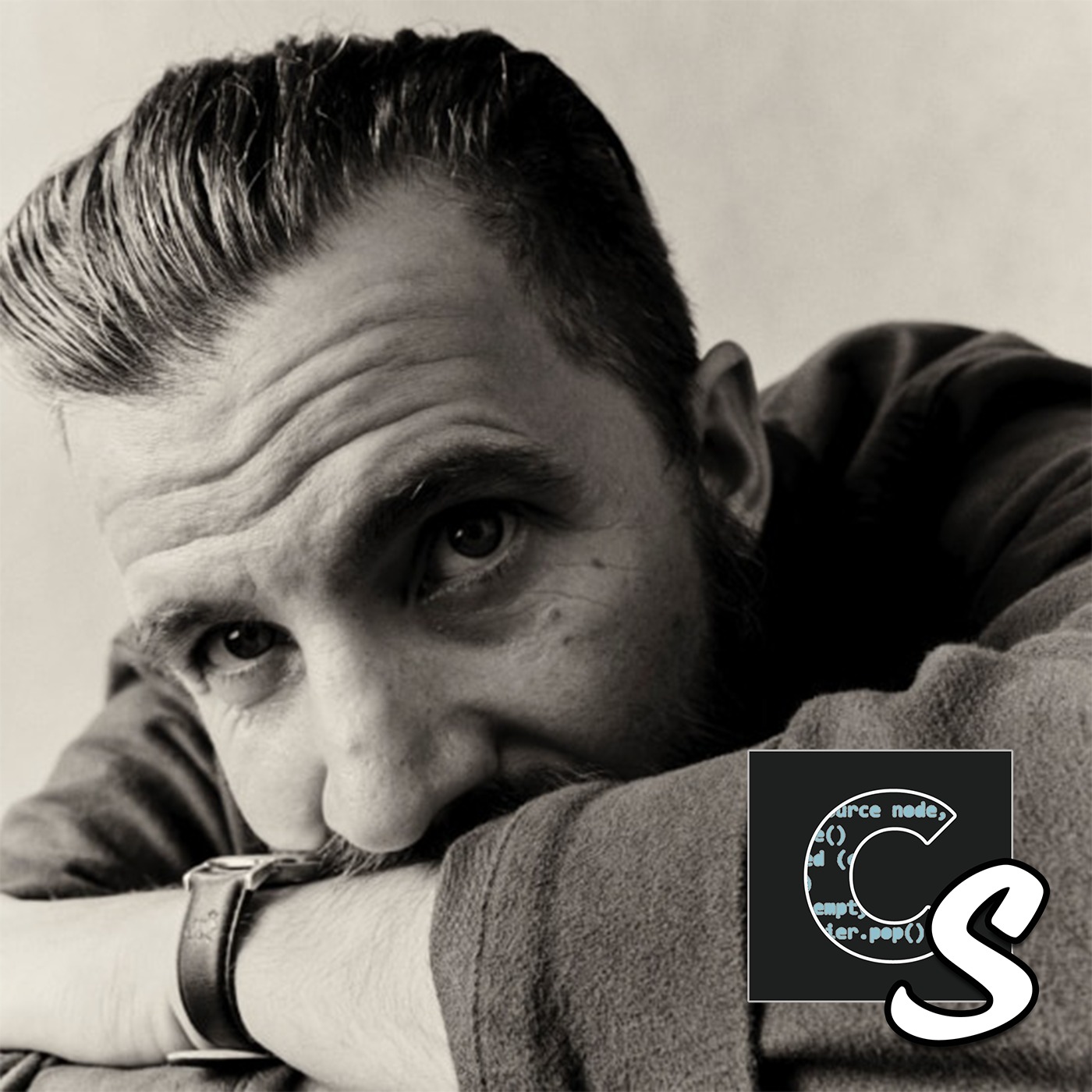
In this episode, we are talking with Vadim Dedov, CEO at Catchers. Vadim is going to walk us through what problem he wanted to solve with Catchers, and how his product development journey took him through architectural decisions, product optimization, team building and more.
Questions
- Before we talk about Catchers, I’d love to understand you a bit better.
- What experiences or responsibilities earlier in your life shaped how you think about work, systems, and accountability today?
- What problem were you dealing with before Catchers existed? Not as a product idea yet, but as a real operational pain you kept running into.
- At what point did you realise this couldn’t be solved with people, spreadsheets, or manual coordination anymore and that technology was the only way forward?
- How did Catchers actually start taking shape as a product? What was the very first version you built, and what did “good enough” mean in a business where mistakes affect people’s income and compliance?
- How long did it take to get to something usable, and what constraints defined your MVP?
- Looking back, what were the most important trade-offs you made early on?
- Things you consciously postponed or simplified, knowing they might come back later.
- Let’s zoom in on the product itself. What is the core product insight behind Catchers — the thing you believe differentiates it from a typical HR or staffing platform?
- How did your thinking about architecture evolve as scale increased? Was there a moment when you had to stop moving fast and redesign parts of the system properly?
- How did you approach building your core team around such a complex, operations-heavy product? What qualities mattered most in the people you trusted with this system?
- Can you share a decision that didn’t go as planned and how you and your team dealt with the consequences?
- When you step back and look at what you’ve built today, what are you most proud of not in terms of features, but in terms of reliability, impact, or how the system holds under pressure?
- As you look ahead, how do automation and AI change the way you think about workforce platforms — and what advice would you give to someone building infrastructure-heavy products today?
Sponsors
- Unblocked (https://getunblocked.com/codestory)
- TECH Domains (https://get.tech/codestory)
- Mezmo (https://mezmo.com/codestory)
- Braingrid.ai (https://braingrid.link/code-story)
Links
Current Sponsors:
Checkout our Stacklist! https://stacks.codestory.co/
Check out our Patreon!
Hosted by Noah Labhart | Technical Founder & Startup Mentor.
Our Sponsors:
* Check out Granola and use my code granola.ai/CODESTORY for a great deal: https://granola.ai
* Check out Perplexity and use my code pplx.ai/codestory for a great deal: https://www.perplexity.ai
Advertising Inquiries: https://redcircle.com/brands
Privacy & Opt-Out: https://redcircle.com/privacy
[SPEAKER_01]: Hello listeners, today we are dropping another episode in our chats series, specifically on the founder side, hearing from those scaling the companies themselves. [SPEAKER_01]: In this episode we are talking with Vatum D-Dov, CEO at Ketchers. [SPEAKER_01]: Vatum is going to walk us through what problem he wanted to solve with Ketchers, and how his product development journey took him through architectural decisions, product optimization, team building, and more. [SPEAKER_01]: A lot of them.
[SPEAKER_01]: Thanks for being on the show today. [SPEAKER_01]: Thank you for being on code story. [SPEAKER_01]: Thank you, Noah. [SPEAKER_01]: I appreciate it. [SPEAKER_01]: Absolutely. [SPEAKER_01]: Before we jump into catchers, I'd love to understand you a bit better. [SPEAKER_01]: What sort of experiences or responsibilities earlier in your life shaped how you think about work? [SPEAKER_01]: Systems and accountability today. [SPEAKER_00]: Family shit melod, I lost my father early, so from my young age, I felt responsible for my arms and my sister and that I created certain mindset that you don't wait for someone else to fix things I used to happen.
[SPEAKER_00]: And I also always knew I wanted to build things with people, [SPEAKER_00]: I enjoy bringing things together, organizing, creating something from scratch. [SPEAKER_00]: And as a teenager, I read a lot of books about young founders in the US, and there wasn't one role model. [SPEAKER_00]: It was more collective image, packed ideas, approaches, ways of thinking from different people. [SPEAKER_00]: some ideas, so I'm a unrealistic, but as I pushed me toward an interpeneurship and eventually there to let me and my two partners to start an HR agency.
[SPEAKER_01]: Excellent, I appreciate you walking through that. [SPEAKER_01]: So what problem were you dealing with before catchers existed? [SPEAKER_01]: Not as a product idea, but as a real operational pain, you kept running into it. [SPEAKER_00]: Yeah, in the early days, we had no tech, except for our operations system for everything. [SPEAKER_00]: It worked until it did. [SPEAKER_00]: As we grew, our clients increased and the number of workers went into the thousand. [SPEAKER_00]: Every client had a different requirement.
[SPEAKER_00]: You had to, much people to shift, and member detail, track attendance, and manage documents. [SPEAKER_00]: And the pepper work was massive, a lot of contacts, the compliance, worked date. [SPEAKER_00]: And you, team members, couldn't even navigate the spreadsheet properly. [SPEAKER_00]: This wasn't a product I did yet. [SPEAKER_00]: It was just a daily operation pain. [SPEAKER_01]: that makes sense. [SPEAKER_01]: But at what point did you realize this couldn't be solved with people, spreadsheets or manual coordination anymore?
[SPEAKER_01]: You know, and that technology was the only way forward. [SPEAKER_00]: Yeah, to some point, I realized this is simply good in scale with people and spreadsheets. [SPEAKER_00]: I look for exciting CRM or workforce tool, but each system is often the one [SPEAKER_00]: we would have for needed three or four platform stage together. [SPEAKER_00]: That's when I decided to build our own system. [SPEAKER_00]: Initially it was just for internal use. [SPEAKER_01]: So how long did it take to get to something usable and what constraints to find your MVP?
[SPEAKER_00]: Yeah, it took about eight months to build it for us to use a build version. [SPEAKER_00]: Integration was the hardest part. [SPEAKER_00]: Our coaching system didn't really have to open an APIs like them, so we had to build a lot of work rounds. [SPEAKER_00]: It was also legal uncertainty, due to the contact sign via SMS code were on the common parties and there was no court precedent. [SPEAKER_00]: Not simply restricted it explicitly, but there were no clear rules either. [SPEAKER_00]: We received some legal advice and eventually made the call move forward and take the risk as it's how our MVP was born.
[SPEAKER_01]: That makes sense. [SPEAKER_01]: Okay, looking back into that, what were the most important trade-offs you made early on? [SPEAKER_01]: Things that you consciously postpone, they're simplified, knowing that they may come back later. [SPEAKER_00]: I wanted to build everything at once in the beginning, but we decided to focus on the core business, document flow, and compliance, postponed additional futures like marketplace, or of task, [SPEAKER_00]: Throw things to saving car sources for the crucial business process.
[SPEAKER_01]: Let's zoom in on the product itself then. [SPEAKER_01]: What is the core product inside behind catchers and you've alluded to that at a high level? [SPEAKER_01]: I brought your answers but I'm curious about that and the thing that you believe differentiates it from a typical HR or staffing platform. [SPEAKER_00]: Catch was designed around the worker, not HR department. [SPEAKER_00]: Worker can picture it for a few hours or several weeks. [SPEAKER_00]: Apply whenever they were available, upload documents in the minutes, pass, automate, checks, start working almost immediately.
[SPEAKER_00]: By the moment there are fast, not weakly, not monthly, if it works, it's already a very fight. [SPEAKER_00]: It's a time-form application to shift can literally be minutes, but just respond to goal. [SPEAKER_01]: That's fantastic. [SPEAKER_01]: Super valuable and super convenient. [SPEAKER_01]: How did you think about architecture evolve as scale increase, right? [SPEAKER_01]: Was there a moment when you had to stop moving fast and redesign parts of the system properly? [SPEAKER_00]: As we scaled, the system became ever and more complex to meet a lot of features, not initially enough, we deliberately slowed down and focused on architecture.
[SPEAKER_00]: We rolled a part of the code base, we designed the UXUI, made the system clearly for new managers and now we're proof for the mobile experience and this is [SPEAKER_00]: But we still being going about our focus shifted from our speed to stability. [SPEAKER_01]: That makes sense. [SPEAKER_01]: So it's a positive shift there. [SPEAKER_01]: How did you approach building your core team around such a complex operations heavy product? [SPEAKER_01]: And what call on these matters most in the people you trusted with the system?
[SPEAKER_00]: Yeah, and there's not only experience and the CV method for me, but there's a capacity of where I can did that to sync globally to approach a complicated task directly to adopt a quickly. [SPEAKER_00]: And if you all know people on the market who had built something exactly like this before. [SPEAKER_00]: And so I look for those who could break down a complex task and execute them step by step. [SPEAKER_00]: People who were ready to take responsibility and to risk and the most importantly, shared my views and values and the confidence in the future success.
[SPEAKER_00]: But it was limited, the team was small and the people worked incredibly hard and not because they were told to, but because they were generally excited. [SPEAKER_00]: I'm proud that the many of them are still on the board today. [SPEAKER_01]: That's fantastic. [SPEAKER_01]: Can you share a decision that didn't go as planned and how you and your team dealt with consequences? [SPEAKER_00]: One of the biggest setbacks was our system, a chicken and a chicken system. [SPEAKER_00]: We had to develop a sophisticated innovation system for automatic recognition to verify the worker's idea.
[SPEAKER_00]: To try to attend this automatically, no more by per sheet that take a couple of days, sometimes week, to confirm the least clients, to calculate the working cars and make payments instantly. [SPEAKER_00]: The initial idea is based on a magnetic solution, so call to the Face ID system. [SPEAKER_00]: Continue to scan to their place while checking in and out. [SPEAKER_00]: And then, Bums, here are the hours, here are your money. [SPEAKER_00]: You're a nice evening, bye. [SPEAKER_00]: plans, loves this idea and we were excited about this system and we were close to launch and when the new Bermetic Data Regulation came out and they all approached the game to risk and complex and the expensive to maintain and we had to pivot.
[SPEAKER_00]: Nowadays we use to [SPEAKER_00]: It's, at the end of the office day, it's a much simple, much faster to install. [SPEAKER_01]: I appreciate you walking through that, Sanci, like you learned from it, and then became better. [SPEAKER_01]: When you step back and look at what you've built today, what you must proud of, and maybe not in terms of features, or things like that, but in terms of reliability impact, or how the system holds under pressure. [SPEAKER_00]: Yeah, generally, for our security system, every day we possess a huge amount of personal data, candidates, personal information, their documents, their beliefs, task, or working cars, etc. [SPEAKER_00]: The system stays under pressure constantly, and it's called it stays stable and don't do to, [SPEAKER_00]: You've tried the LiveWarkleZo all team.
[SPEAKER_00]: Very good. [SPEAKER_01]: So as you look ahead, how do automation and AI change the way you think about workforce platforms? [SPEAKER_01]: Change the way about what you're going to do and what advice would you give someone building infrastructure heavy products today? [SPEAKER_00]: Automation is a net but positive. [SPEAKER_00]: It removes repeated work and let's people focus on higher valued tasks. [SPEAKER_00]: We actively use AI to streamline operation, reduce cost and speed up our workforce.
[SPEAKER_00]: My advice for anyone building infrastructure had products. [SPEAKER_00]: Start with the structure and the fundamentals, clear architecture, clear priorities, clear core. [SPEAKER_00]: A common mistake is trying to build every single one. [SPEAKER_00]: That's when system break, logical collapses and problem multiple. [SPEAKER_00]: Build the bait by balling thrills, then let's count. [SPEAKER_01]: That's fantastic advice. [SPEAKER_01]: Well, I'm thank you for being on the show today.
[SPEAKER_01]: It's clear that you've worked through some things and really solved a problem with catchers and you know how you've approached architecture, how you've evolved it, and the things that you're going and solved with the solution, I think are fantastic and are you really highlighted the journey you've gone on as a founder throughout the throughout our conversations, I really appreciate you being on the show. [SPEAKER_00]: Yeah, thank you. [SPEAKER_00]: I had a brilliant conversation with you, and thank you to invite me as his show.
[SPEAKER_01]: There you have it. [SPEAKER_01]: Bottom is done a fantastic job walking us through the journey and arc of catchers. [SPEAKER_01]: Illustrating critical decision points architecture, scaling, and how the platform is moving forward today. [SPEAKER_01]: If you'd like to connect with bottom, check the show notes for all the appropriate links.
Latest Season of the Podcast is Sponsored By





 Apple Podcasts
 Spotify
 Castbox
 Player FM
 Pocket Casts
 YouTube
 Overcast
 Castro
 Goodpods
 Moon FM
 Podbean
 Podcast Addict
 Podcast Republic