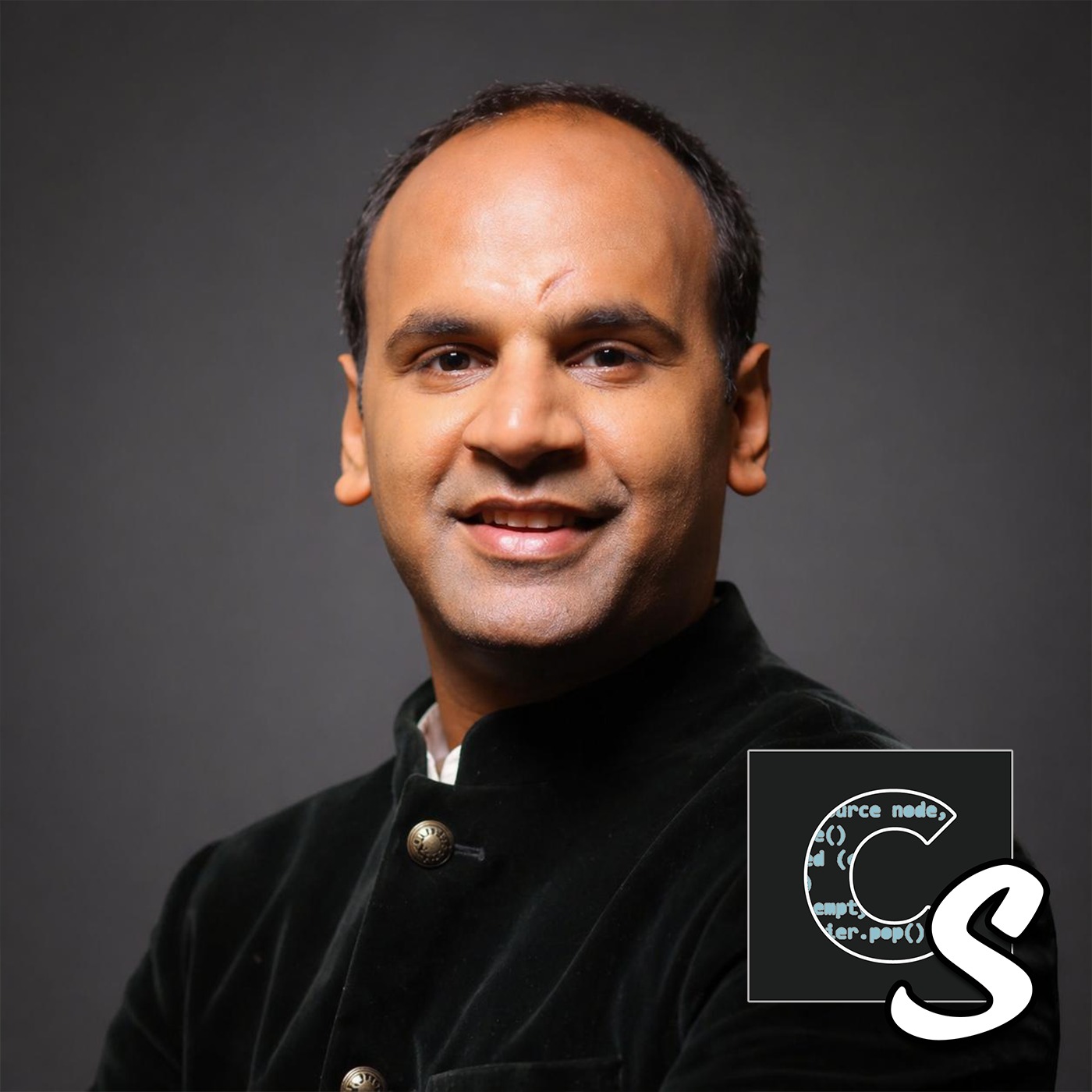
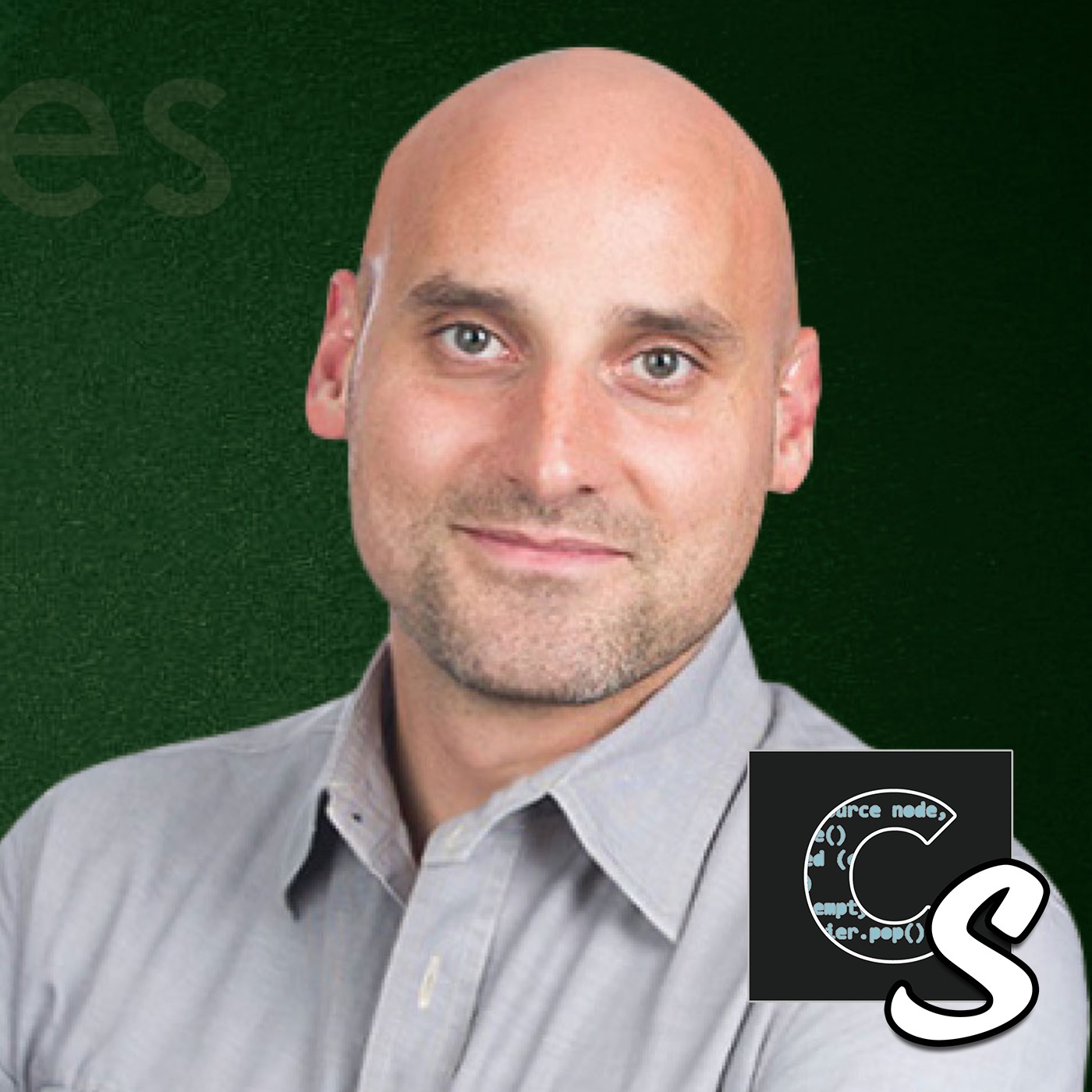
S12 E16: The LLM Wild West: Moving Beyond Fragile Notebook Prompts to Build a Multi-Model Enterprise AI Control Plane with Nikunj Bajaj, Co-Founder & CEO of TrueFoundry
In this episode
Nikunj Bajaj was born in India, and completed his undergraduate studies there. The intrigue of Silcon Valley in 2013 brought him to the Bay Area, where he got his masters degree from Berkeley. His studies and his time after school supremely informed what he is building now, at his current venture. But outside of tech, he is an outdoorsey person, enjoying running, biking and scuba diving, with his favorite place to dive being Bali. He enjoys playing board games with his friends, and listens to a lot of audiobooks from a wide range of genres.
After joining Meta, Nikunj realized that building machine learning models for the company is different than using public ecosystems. The realized early on that machine learning models will hit an inflection point, where the stacks will need to change and adapt. He and his team decided to take on this challenge ahead of that inflection point.
This is the creation story of True Foundry.
Sponsors
Links
Current Sponsors:
Checkout our Stacklist! https://stacks.codestory.co/
Check out our Patreon!
Hosted by Noah Labhart | Technical Founder & Startup Mentor.
Our Sponsors:
* Check out Granola and use my code granola.ai/CODESTORY for a great deal: https://granola.ai
* Check out Perplexity and use my code pplx.ai/codestory for a great deal: https://www.perplexity.ai
Advertising Inquiries: https://redcircle.com/brands
Privacy & Opt-Out: https://redcircle.com/privacy
[SPEAKER_01]: True fondre provides an enterprise-grade AI gateway product. [SPEAKER_01]: And our AI gateway definition is slightly broader than the industry, so we encompass something called an LLM gateway, MCP gateway, and agent gateway. [SPEAKER_01]: Think of these three as three components, LLMs, MCPs, and subagents to build your [SPEAKER_01]: to every single API call that you're making to your LLMs and Agents. [SPEAKER_01]: And it's something, since in the critical part of your request, you want to make sure that piece of software always stays up.
[SPEAKER_01]: But we actually chose a design principle that is called a split-plane architecture. [SPEAKER_01]: My name is Nikonj Bejaj. [SPEAKER_01]: I'm co-founder CEO at TrueFondry.
[SPEAKER_00]: This is Code Story. [SPEAKER_00]: A podcast bringing you interviews with tech visionaries. [SPEAKER_00]: Six months moonlighting goes. [SPEAKER_01]: Lassin on the backhand. [SPEAKER_00]: Who share what it takes to change an industry? [SPEAKER_00]: I don't exactly know what to do. [SPEAKER_00]: It doesn't go as to get right. [SPEAKER_00]: who built the teams that have their bad company is its people. [SPEAKER_00]: The team's helped each other achieve this proud of our team. [SPEAKER_00]: Keeping scalability top of mind.
[SPEAKER_00]: All that infrastructure was up there. [SPEAKER_00]: Yes, we've been fighting it as we grow. [SPEAKER_00]: Total waste of time. [SPEAKER_00]: The stories you don't read in the headlines. [SPEAKER_00]: It's not an easy thing to achieve. [SPEAKER_00]: To get yourself the ability to often try to begin. [SPEAKER_00]: To ride the ups and downs of the start-up line. [SPEAKER_00]: Need to really want it. [SPEAKER_00]: Not just about technology. [SPEAKER_00]: All this and more on code story.
[SPEAKER_00]: I'm your host, Noah Labpart. [SPEAKER_00]: And today, how do Koon's Bajaj? [SPEAKER_00]: Has built an enterprise ready platform with the target AI gateway and agentic deployment?
[SPEAKER_00]: Nakum Shibajaj was born in India and completed his undergraduate studies there. [SPEAKER_00]: The intrigue of Silicon Valley in 2013 brought him to the Bay Area, where he got his master's degree from Berkeley. [SPEAKER_00]: His studies in his time after school, supremely informed what he is building now at his current venture. [SPEAKER_00]: But outside of tech, he is an outdoorsy person enjoying running, biking, and scuba diving, with his favorite place to die at being bali. [SPEAKER_00]: He enjoys playing board games with his friends and listens to a lot of audio books from a wide range of genres.
[SPEAKER_00]: After joining Mehta, Necunz realized that building machine learning models for the company is different than using public ecosystems. [SPEAKER_00]: He realized early on that machine learning models will hit an inflection point where the stacks will need to change and adapt. [SPEAKER_00]: He and his team decided to take on this challenge ahead of that inflection point.
[SPEAKER_00]: This is the creation story of True Foundry.
[SPEAKER_01]: True Foundry provides an enterprise-grade AI gateway product. [SPEAKER_01]: And our AI gateway definition is slightly broader than the industry, so we encompass something called an LLM gateway, MCP gateway, and agent gateway. [SPEAKER_01]: Think of these three as three components, LLMs, MCPs, and subagents to build your agentic applications. [SPEAKER_01]: We serve large enterprises, help them connect, observe, and govern all of their agents into a single control plane. [SPEAKER_01]: Besides the gateway layer, proof-on-re-offers another product that we call AI deployments, this helps enterprises to deploy and train custom LLMs on their own GPUs, host their MCP servers and even run these custom agents, all through a Kubernetes native interface are on their own on-prem or VBC Compute layer, so that's our product, basically summarizing the two major modules that you ask for AI gateway and AI deployments.
[SPEAKER_01]: The starting story of True Foundry actually goes way back and the motivation starts from our time at Meta. [SPEAKER_01]: So before joining Meta, I was actually at a startup where we were building a lot of machine learning models and ML infrastructure, but using the public cloud ecosystem. [SPEAKER_01]: When I joined Meta, a realization hit me that the way you build machine learning models, ML applications at Meta is actually foundationally different [SPEAKER_01]: from how you do it using public cloud ecosystem outside.
[SPEAKER_01]: Meta really thinks of machine learning as a special case of software engineering. [SPEAKER_01]: And generally, they are as a special case of machine learning. [SPEAKER_01]: So you can almost think of this as a stacked vertically stacked platform, software in the bottom, machine learning in the middle, and generally, they are in the top. [SPEAKER_01]: All of them running through a unified interface on some underlying infrastructure, basically. [SPEAKER_01]: what that helps me do as a machine learning developer at meta is I can take a genetic AI model or an ML application and run them on thousands of nodes without actually depending on backend engineers or infrastructure people at all.
[SPEAKER_01]: On the other hand, [SPEAKER_01]: Most of the enterprises create two completely parallel stack for running their software applications, their machine learning applications, and actually now even third stack for their generative AI applications. [SPEAKER_01]: When we started back in 2020 to beginning, like this was before chatjipity, our core hypothesis was, at some point machine learning will hit an inflection point, where more organization will want to ship large enough number of models to production, [SPEAKER_01]: to this verticalized stack like that of Meta, and that was the driving factor for us to kick start a platform like this, where we take out the inspiration from Meta and adapt it for the requirements of large enterprises.
[SPEAKER_00]: Let's dive into what you would consider the in the P, for true founders that first version of the project you build, how long it takes to build, and what sort of tools we're using to bring it to life.
[SPEAKER_01]: actually turns out that given we always aimed to build true fondry as a software that manages production workloads, the MVP of true fondry was not something like an MVP that you hear in the traditional sense of MVP that you roll something out within a few weeks and it's ready to go. [SPEAKER_01]: is one of those things where founders have started with the core belief, with a fair understanding of what needs to be built, with an opinion of how the world will evolve, and when you start countries like this, typically your MVP actually takes a fairly long amount of time to build this out.
[SPEAKER_01]: We spent more than a year head-stown developing the platform because we were building the poor infrastructure on top of which enterprises can start building their machine learning agility way applications and start launching them to production. [SPEAKER_01]: So we actually spent a lot of time building out this plumbing layer. [SPEAKER_01]: The two old technologies that the ended up taking a bet on was actually Kubernetes Lair, where we believed that at some point all of machine learning will also get orchestrated through Kubernetes Lair.
[SPEAKER_01]: And actually this is one of the other things where we took and attack informed bet in the beginning of the founding story of True Foundry, where we noticed a void getting created in the tree, where we [SPEAKER_01]: Qflow that used to be the only base of software that was meaningfully helping run organizations. [SPEAKER_01]: Machine learning on top of Kubernetes was actually seeing a decliming contribution. [SPEAKER_01]: Google was investing more and more in vertex Qflow started declining.
[SPEAKER_01]: and it actually was very in line with our bet that machine learning will run on Kubernetes. [SPEAKER_01]: So we actually took that opportunity, invested heavily into Kubernetes and built our entire software ML Genia stack to be run on top of Kubernetes, which by the way, also gave us flexibility to run on any underlying infrastructure, AWS, GCP, Azure, on-prem etc, which is extremely desirable now in the world of Genia. [SPEAKER_00]: Okay, so then you've got that, you know, version, it's working, you're getting the feedback you want, how are you building your roadmap or true foundry?
[SPEAKER_00]: How are you deciding that? [SPEAKER_00]: Okay, this is the next most important thing to build or to address with the products.
[SPEAKER_01]: There are two things that have always guided our product road map and our product thinking. [SPEAKER_01]: One is the foundation, right, with think about the architecture, which stays consistent with everything that's happening in the industry, some of the core principles of building how you manage your infrastructure, how do you run your applications and workloads, that's foundational, and that stays consistent in this grounding principle that we learned at meta. [SPEAKER_01]: And then the second aspect of it is the UX layer, the Devx layer basically.
[SPEAKER_01]: which, by the way, kept adapting as the modus operandi of the day was changing. [SPEAKER_01]: Actually, if I walk you through the timeline a little bit, end of Toyota Ritu is when Chad GPD was launched and that was the aha moment of the industry that you can start sending out these amazing prompts and you start getting some very meaningful responses from these large [SPEAKER_01]: Then enterprise is realized that actually these responses are not as useful, unless they start grounding themselves in their own data sources, right?
[SPEAKER_01]: So drag became a thing, retrieval augmented generation, became the new model separately in 2023. [SPEAKER_01]: After way 24 emerged, the world started to think about agents and multi-agentic systems. [SPEAKER_01]: And in 2025, this evolved into MCPs or model context protocol, A2A, or agent agent communication. [SPEAKER_01]: We see that every single year, the modus operandi of the world kept changing. [SPEAKER_01]: And the way true form to inform its product decisions is we adapt to the modus operandi.
[SPEAKER_01]: We built out the UX layer around the motors apprendi, but we bring them always back to the same grounding foundational principle that we had started with about how you run these workloads on the same underlying infrastructure. [SPEAKER_01]: So the biggest and most meaningful shift that happened in this roadmap is how enterprises are building agentic applications. [SPEAKER_01]: and how you need to connect all these components that I talked about with the evolution, right? [SPEAKER_01]: Your actual agents, your MCPs, your NLMs, your guardrails, all of that through one unified layer or a control plane that we call as AI Gateway.
[SPEAKER_01]: I think that ended up being the most informed shift from that MVB that we talked about to the thing that literally every enterprise that we know of today is jumping towards. [SPEAKER_00]: Okay, I hear you saying, we told me about how you built your team. [SPEAKER_00]: What do you look for in those people to indicate that they are the winning horses to join you? [SPEAKER_01]: I think the theme is the most quality like our proudest room in a true foundry. [SPEAKER_01]: First of all, let me give a little bit of a bagger on my co-founders because when we started, I think that ends up becoming the right seed for the company.
[SPEAKER_01]: So my co-founders on Ragan Abhishek, they are actually my very close friends from undergrad and by then now our undergrad is approximately two decades old, so we practically grew up together. [SPEAKER_01]: Great to be building the company with whether you're close friends. [SPEAKER_01]: But also, we were fortunate at the fact that my close friends were also like bringing lots of complimentary skills that's to build the company together. [SPEAKER_01]: For example, Abhishek was also at Meta where he led the entire video's org and brings in this very deep infrastructure experience from Meta.
[SPEAKER_01]: An unrogged use to use machine learning to build trading strategies that work on and he was member of the founders office and has led a lot of expansion initiatives within work [SPEAKER_01]: So, this actually brought us from my machine learning of mistakes in infrastructure and roads, strategy and go-to market background, it palm the right team to begin with. [SPEAKER_01]: Then we started hiring and actually turns out that the first few months of the company, we actually ended up spending quite a bit of time of the founders in just hiring.
[SPEAKER_01]: We look out for, you know, of course some of the hard-skilled sets because building enterprise infrastructure, you can't teach everything from scratch, so like people should bring in some of those hard-skilled. [SPEAKER_01]: But most importantly, we focused on whether people cared about solving this problem, whether people believed in this vision that we are working towards and do the naturally aligned with what we're talking about. [SPEAKER_01]: Because that's the thing that in the early stage of building a startup, you don't want too much deviation from that vision.
[SPEAKER_01]: Like people should be aligned on the mission and your vision from the beginning. [SPEAKER_01]: So we would look out for that talent and lastly, [SPEAKER_01]: the fact that they are bringing in the kind of ownership, the founder mindset that's needed to build an early stage startup extension. [SPEAKER_01]: And fast forward today, we are approximately 90 to 100 people in the team and even today, we have every single person who joins true fondry gets through founder interviews, we are extremely deeply involved into building the team.
[SPEAKER_01]: We think that's a highest value that a founder can create in a company.
[SPEAKER_00]: Okay, let's flip to scalability and I'm curious about this, you know, given obviously the nature of what you're building and it's sort of ingrained and probably how you build a product but I'm curious about how you approach it in the beginning and then if there has been interesting areas where you've had to fight scale as you've grown.
[SPEAKER_01]: But scale has two aspects to it, right? [SPEAKER_01]: I always think about the entire business when I think about scale. [SPEAKER_01]: Now, one aspect to scale is around your platform core infrastructure, right? [SPEAKER_01]: Which lets your product scale meaning fully. [SPEAKER_01]: And the second aspect of your scale is how you think about the overall company scaling your go to market scaling. [SPEAKER_01]: And both of those are important aspects, right? [SPEAKER_01]: So I'll start with the product side.
[SPEAKER_01]: First of all, the general infrastructure scalability of our platform was heavily rooted in the right design principle that we started with, right? [SPEAKER_01]: Everything that we did not end up making it compliant with the industry standards, the enterprise stack, all running on top of Kubernetes and all getting exposed in the lowest form of Kubernetes, a language that every enterprise understands, we ended up exposing that as part of our product. [SPEAKER_01]: So that helps us leverage the entire community-based development around Kubernetes, auto-scale, horizontally-scale, our product basically.
[SPEAKER_01]: The second around the infrastructure side, which becomes even more important is the AI gateway product and let me actually throw some light into why scalability is critical here. [SPEAKER_01]: AI gateway literally sits in the middle of your traffic, to every single API call that you're making to your LLMs and Agents. [SPEAKER_01]: And it's something sits in the critical path of your request, you want to make sure that piece of software always stays up. [SPEAKER_01]: But we actually chose a design principle that is called a split plane architecture, okay?
[SPEAKER_01]: Where we have control plane, the brain of the system, sits separate from the actual gateway plane, which basically sits in the middle of the critical part of the request. [SPEAKER_01]: and the gateway plane itself, we designed this as a lightweight system that you can deploy multiple instances of it across different regions of the world. [SPEAKER_01]: Today our gateway plane runs across 17 different regions of the world as a highly available piece of software basically. [SPEAKER_01]: So that continued to help us scale and maintain our SLAs.
[SPEAKER_01]: And the fast forwarded today of sharing some metrics here, we actually have, we are actually able to achieve more than four nights on our gateway. [SPEAKER_01]: And we are running SLA of less than five milliseconds worth of latency that gateway introduces, which is remarkable compared to other gateway products that achieve in the industry. [SPEAKER_01]: and our customers are running our product today in production critical application where we have tens of thousands of requests per second that we are fielding through our gateway product so the system has to really scale from a software standpoint.
[SPEAKER_01]: The last part around scale is how do you think about scaling into our company the go to market around this thing. [SPEAKER_01]: And this is an area, like where we have followed an experiment or stay extremely lean approach, until we have proven that something works. [SPEAKER_01]: And when we realize something works, we create a machinery around this thing. [SPEAKER_01]: So what I mean by machinery around this thing, we mean that then we scale in that function aggressively. [SPEAKER_01]: We hire in that function aggressively, we run training programs, we run onboarding programs, and we programitize the entire thing that this itself can now run as a truly automated scalable piece of an organization basically.
[SPEAKER_01]: So that's a modest opportunity that we have followed from the beginning where we experiment in a lean way until we prove and then we scale aggressively. [SPEAKER_00]: I want to dig into something here. [SPEAKER_00]: Why do you think that there is a pull for AI gateway? [SPEAKER_00]: And what are enterprises realizing now that wasn't obvious before? [SPEAKER_01]: We have actually seen the entire evolution of this AI gateway not being in demand to AI gateway being in critical demand over the last three years since the chart GPT movement and let me actually walk you through this timeline a little bit.
[SPEAKER_01]: Back in 2023 enterprises were towing around the journey of the AI applications, right? [SPEAKER_01]: They were building some internal productivity applications, mostly prototypes, POC type of things. [SPEAKER_01]: In 2024, as agents started to become a reality, and to try to start realizing the value that these agents will likely be able to create over a period of time. [SPEAKER_01]: So they started becoming more and more serious about Gen AI, going to production. [SPEAKER_01]: And at that time, one of the big shifts that had happened in industry balls.
[SPEAKER_01]: every new launch of a model from different providers was better than the other ones, right? [SPEAKER_01]: So OpenAI and Tropic, Gemini and Open Source models all of them were competing and nobody was ready to take a bet that this is a winning horse, this model is a winning horse, so multi model stack became a reality in 2024. [SPEAKER_01]: But at that point, all of these models were what we call, well what we call as are OpenAI compliant API signatures. [SPEAKER_01]: So people thought that I'm [SPEAKER_01]: that will help me route these queries to any of these model providers.
[SPEAKER_01]: Great, it worked, it's set in the critical part of their model queries, and people built it internally, and nobody was looking for an AI gate for externally. [SPEAKER_01]: Okay, this is in the beginning of 2024. [SPEAKER_01]: As we started moving towards the end of 2024, these applications, the agentic applications that they started actually started going to production, which means the up time of these applications became critical. [SPEAKER_01]: But at the same time, [SPEAKER_01]: The world outside of these enterprises started changing very rapidly.
[SPEAKER_01]: Which means these model API signatures that were consistent earlier started diverging. [SPEAKER_01]: So now this AI proxy layer has to maintain this completely diverging model API signatures, but at the same time, new protocols started to emerge. [SPEAKER_01]: But like MCPs started to emerge, 8 to 8 started to emerge, and people could now see that what started as a thin LLM proxy layer, [SPEAKER_01]: will start duplicating itself in the mcp world and in the agent world. [SPEAKER_01]: So now this proxy layer has to become an over all control plane for all of the agentic or gerity way applications that are being run within the enterprise.
[SPEAKER_01]: With all the things around guardrails, compliance rules, cost, pinopslayer. [SPEAKER_01]: All of these things have to be centralized within this control plane, they had to centralize the observability, governance, layer of these agents into one single control plane. [SPEAKER_01]: And that's when enterprises started realizing that building a piece of software has complex as this. [SPEAKER_01]: While I need to maintain these applications in production is becoming too complex. [SPEAKER_01]: And that's when a natural pool for AI gateways started happening in the industry.
[SPEAKER_01]: So we started seeing this in the Q1 Q2 time frame of 2022-25 where we started seeing inbound request and by the putting it into perspective, the partner also predicts that by 20-28 we will have more than 70% of enterprises that will end up adopting an AI gateway and we are really seeing that pool coming to life right now. [SPEAKER_00]: As you step out on the balcony, you look across all that you've built, thus far with true foundry, what do you most proud of? [SPEAKER_01]: The absolute thing that I'm most proud of is the team that we are built at true foundry.
[SPEAKER_01]: The reason I believe that is the biggest win is because we see this very smart group of dozens of people who are at true foundry, who are extremely motivated to solve this problem long term. [SPEAKER_01]: Nobody is looking here for just quick wins. [SPEAKER_01]: People want to solve its foundational problem. [SPEAKER_01]: People are ready to roll up their sleeves, get into. [SPEAKER_01]: Any of the problems within the company cross-functional challenges, talk to customers, fix customer problems, build the products, right salespeople are talking to product people giving feedback, product people are jumping on customer calls.
[SPEAKER_01]: So this kind of motivation that we have within the company is the biggest win. [SPEAKER_01]: and it also shows in the rate of hiring, the rate of retention, the rate of churn of these people within the company, I think that's the massive win. [SPEAKER_01]: Outside of this, when we think about the overall product landscape, what are the biggest things that I'm proud of from a product standpoint? [SPEAKER_01]: Is this core engineering or the plumbing layer that we have built out? [SPEAKER_01]: Well, how we can run any piece of software fitting into an existing complex enterprise stack and just run this in production, right?
[SPEAKER_01]: So our stack, our foundational stack, not depending on a modus operandi, really allows us flexibility to adapt to the market. [SPEAKER_01]: That, I think, is such a massive differentiator that True Foundry has built over the years that is extremely challenging to replace for any other new player out there.
[SPEAKER_00]: Let's flip the script a little bit. [SPEAKER_00]: Tell me about a mistake you made and how you and your team responded to it. [SPEAKER_01]: Back in 2024, remember how I mentioned that all the enterprises thought that this LLM proxy layer is going to be a thin layer sitting in a critical path of the request, and people will build this in-house, right? [SPEAKER_01]: So that's what the enterprises were thinking, and actually true for Unreal while we had that product back then, like, well, we had built this out for our own internal usage, we had built this out as an external proxy layer, we also believed.
[SPEAKER_01]: that this is a layer that will be built more in-house and it's such a thin layer that people will actually not buy this. [SPEAKER_01]: That mistake made us lose some of the development that we could have made for the year between 2024 beginning to 25 beginning around the product of AI gateway. [SPEAKER_01]: Right? [SPEAKER_01]: And then they adapted to solve for this mistake by keeping our eyes and ears open to signals that we were seeing in the market. [SPEAKER_01]: how this gateway layer evolved and how this became a critical component of the overall enterprise infrastructure over a period of time and the way we saw for this mistake was actually responding to it really fast.
[SPEAKER_01]: Once we noticed that trend, once we noticed that full from our customers and we are obviously in a great vantage point where we are privy to these signals early on, we responded extremely fast like we reacted. [SPEAKER_01]: Quickly, decisively, we invested a lot of our engineering effort, product effort, go to market effort around this thing, and within six months, we actually built out so much, we covered so much ground that today we are proud to say that we actually are one of the most advanced AI gateway products out there.
[SPEAKER_01]: And this again, could also the team that they shifted so quickly and built the product out that fast.
[SPEAKER_00]: Let's look into the future then. [SPEAKER_00]: So what does the future look like for true Foundry for? [SPEAKER_00]: The products you built for the team, for the company, and as you look into the industry too, like maybe the challenges around enterprise, Gen A projects, and what that looks like moving forward. [SPEAKER_01]: The reality is that even today, by the way, with all the buzz around agents and patient applications, I think most of the enterprises are still building these agentic applications in a very low risk low reward setting and what that means is [SPEAKER_01]: People are probably building hundreds of these AI agents, which are primarily personal productivity boosters or maybe at best a small group of people, a small group of analysts, a small group of marketing people.
[SPEAKER_01]: So these are the things that are being built for small functional units. [SPEAKER_01]: And the impact of these applications are likely not as big. [SPEAKER_01]: So I think the first challenge that the industry will need to solve for is actually go from these, like, extremely micro-egentic applications to applications that have meaningful business driving impact. [SPEAKER_01]: And we have actually seen the enterprises that have done the best in the January world are the ones who have taken some of these bolder bets and put these agents in the critical path of their business as opposed to these side gates.
[SPEAKER_01]: So I think that's the first version that will start changing in the industry and we're [SPEAKER_01]: As people start putting agents in the critical part of their business, ensuring that they have complete control over these agents, it does not end up doing performing unintended behaviors, right? [SPEAKER_01]: People do not have prompt injection attacks, agents don't end up giving out these $1,000 flight tickets for free through people. [SPEAKER_01]: jail breaking and stuff, right? [SPEAKER_01]: So those are some of the things that they will really need to tear because one such big mistake will again take back all the investments around the agendic side within the enterprise.
[SPEAKER_01]: So these are a couple of things that the industry will absolutely need to solve for, which means that architecting their [SPEAKER_01]: Stack right, having this central control plane where they are able to see, meaningful applications landing in production, while they can do this with confidence. [SPEAKER_01]: So that I think is the industry-level challenge. [SPEAKER_01]: And that also very nicely shapes up in how we think about the company evolving. [SPEAKER_01]: because at this point it's fair to take the bet that the biggest type of advancement in the compute utilization will happen through the agentic applications like most of the compute in the world will start going more and more towards these agentic applications.
[SPEAKER_01]: and from a true form relance, we are actually building out the orchestration platform the control plane layer where we can manage all of this compute, flowing through a single gate window, so we have observability and governance. [SPEAKER_01]: and we can run this compute through our AI deployment layer all on top of Kubernetes, right? [SPEAKER_01]: So we start becoming this one platform where Agents are developed and orchestrated runs, okay? [SPEAKER_01]: And this I'm still talking about the next few years where Agents become a real thing, but in the long term, the vision of the company is that we want to become the central compute orchestration platform for organizations.
[SPEAKER_01]: So reasonable way of mapping true boundary is what data warehouse companies like data bricks or snowflake did for data of an organization. [SPEAKER_01]: They unleashed magic by centralizing the data of an organization. [SPEAKER_01]: Truefongry intends to do the same thing, but by centralizing compute of an organization. [SPEAKER_01]: Because once you start bringing all the compute layers in one central control plane, you will notice that a lot of the other things start falling into place.
[SPEAKER_01]: And this vision that we started with in the beginning is started to become more and more apparent with agents taking control of this compute layer through MCP layer and skill sets. [SPEAKER_01]: Skills of the day of the agents, basically. [SPEAKER_00]: Let's see you in a country who influences the way that you work. [SPEAKER_00]: Name a person or many persons or something. [SPEAKER_00]: You look up to him, why? [SPEAKER_01]: Maybe like I will mention two people here, one from my personal life, one from my family, and one from an entrepreneur that I respect a lot.
[SPEAKER_01]: So the one from my family is actually my dad, who influence a lot of how I work. [SPEAKER_01]: Maybe I'll share a story here. [SPEAKER_01]: There's one day when I was ironing my shirt and while I was ironing my shirt, I left the bottom 10% of your shirt that you [SPEAKER_01]: And my dad was like, of course, my rational was that nobody gets to see it. [SPEAKER_01]: So why do I run edge? [SPEAKER_01]: And my dad was like, it actually doesn't matter that people get to see it or not, but if you are doing something, you do it with perfection because you know, there's an un-ironed edge quite literally of what you have worked on basically.
[SPEAKER_01]: And that will never give you confidence that you executed on something perfectly. [SPEAKER_01]: That's the motors of friendly with my dad works. [SPEAKER_01]: Do whatever you take. [SPEAKER_01]: with all your heart into it and with all the perfection and that now shapes literally everything that I end up doing. [SPEAKER_01]: If I end up taking like what is known as the most meaningless task in building a company, I still do it with that complete dedication and try to execute that with perfection.
[SPEAKER_01]: So that has just shaped how I operate as an individual in life, not just in company building. [SPEAKER_01]: And then an entrepreneur that I admire a lot the way he operates is actually Elon Musk. [SPEAKER_01]: I read a lot about him. [SPEAKER_01]: Of course there's always these controversial statements that keep happening about Elon Musk in the world, but like this year dedication where the boils down everything to first principles and he takes these bold bets and he's not scared of building out the extremely large, like long term problem statements and showing that if [SPEAKER_01]: You are executing on these problems statements with a lot of dedication.
[SPEAKER_01]: You create that kind of environment like that alignment towards the vision of what you're working towards. [SPEAKER_01]: Then you have a team that follows it, right? [SPEAKER_01]: And what we have seen in our team, and this is like, and not just through with my motive of learning like my co-founders as well, that the three of us align on this vision that we are working towards long term vision, right, where we are solving a problem that really matters. [SPEAKER_01]: The team is bought into that problem statement, and now even when things are slightly rough, the team will just come together and they will work towards it, right?
[SPEAKER_01]: Like they will work through patches of the company building, and that's what you care about. [SPEAKER_01]: And the fact when they see that founders are truly driven towards working towards that mission, they are putting their heart and soul into doing that thing, the team starts emulating that behavior. [SPEAKER_01]: And that is one of the things that when I look up to the stuff that Elon Musk has done in life, like I keep taking inspiration from that.
[SPEAKER_00]: Nikon's last question, so you're getting on a plane, and you're sitting next to a young entrepreneur who's built the next big thing. [SPEAKER_00]: They're jazzed about it, they can't wait to show it off to the world, and can we show it off to you right there on the plane? [SPEAKER_00]: What advice do you give that person having gone down this road a bit? [SPEAKER_01]: Like, in any point in time, you are either earning your reputation or you are burning your reputation. [SPEAKER_01]: Okay?
[SPEAKER_01]: And repetition, I do not mean to say in the shallow sense, you know, where people know about you and they're talking about you. [SPEAKER_01]: I'm not talking about your brand. [SPEAKER_01]: I'm talking about your reputation as a person, as an entrepreneur, at a deeper fundamental level. [SPEAKER_01]: Right? [SPEAKER_01]: And what that means is that if you are a person, who is doing things with the right intent and you're communicating that thing? [SPEAKER_01]: always. [SPEAKER_01]: Every single time, clearly, honestly, to everyone around you, where you do treat your, you do not have this three different faces that you show it to your team, to your investors, and to your customers, you keep things consistent.
[SPEAKER_01]: If you make mistakes, you call that out to everyone, if you have a vision, you work towards that, if you make some changes, you call that out, you keep people aligned on what you're working towards. [SPEAKER_01]: and you're ready to own things up, that repetition keeps on building. [SPEAKER_01]: And then, even if at some point you make a mistake, people know that whatever you are saying is all there is to know and they do not have to second guess what you are doing. [SPEAKER_01]: So like your entire ecosystem that is critical for your own success, will stay aligned with you through and through.
[SPEAKER_01]: And that, I think, is the biggest piece of advice that I would give to any upcoming entrepreneur that just focus on that, do not try to game the system, keep working on the first principles, life has a way of adjusting, getting refined and working in your favor over a long horizon of time. [SPEAKER_00]: That's fantastic advice. [SPEAKER_00]: When the coach, thank you for being on the show today. [SPEAKER_00]: Thank you for telling the creation story of True Foundry. [SPEAKER_01]: I really appreciate this Noah.
[SPEAKER_01]: Thank you so much for having me on the show.
[SPEAKER_00]: and this concludes another chapter of Code Story.
[SPEAKER_00]: Code Story is hosted and produced by Noah Labhardt. [SPEAKER_00]: Be sure to subscribe on Apple Podcast, Spotify, or the podcasting app at your choice. [SPEAKER_00]: And when you get a chance, leave us a review. [SPEAKER_00]: Both things help us out tremendously.
[SPEAKER_00]: And thanks again for listening.
Latest Season of the Podcast is Sponsored By


 Apple Podcasts
 Spotify
 Castbox
 Player FM
 Pocket Casts
 YouTube
 Overcast
 Castro
 Goodpods
 Moon FM
 Podbean
 Podcast Addict
 Podcast Republic