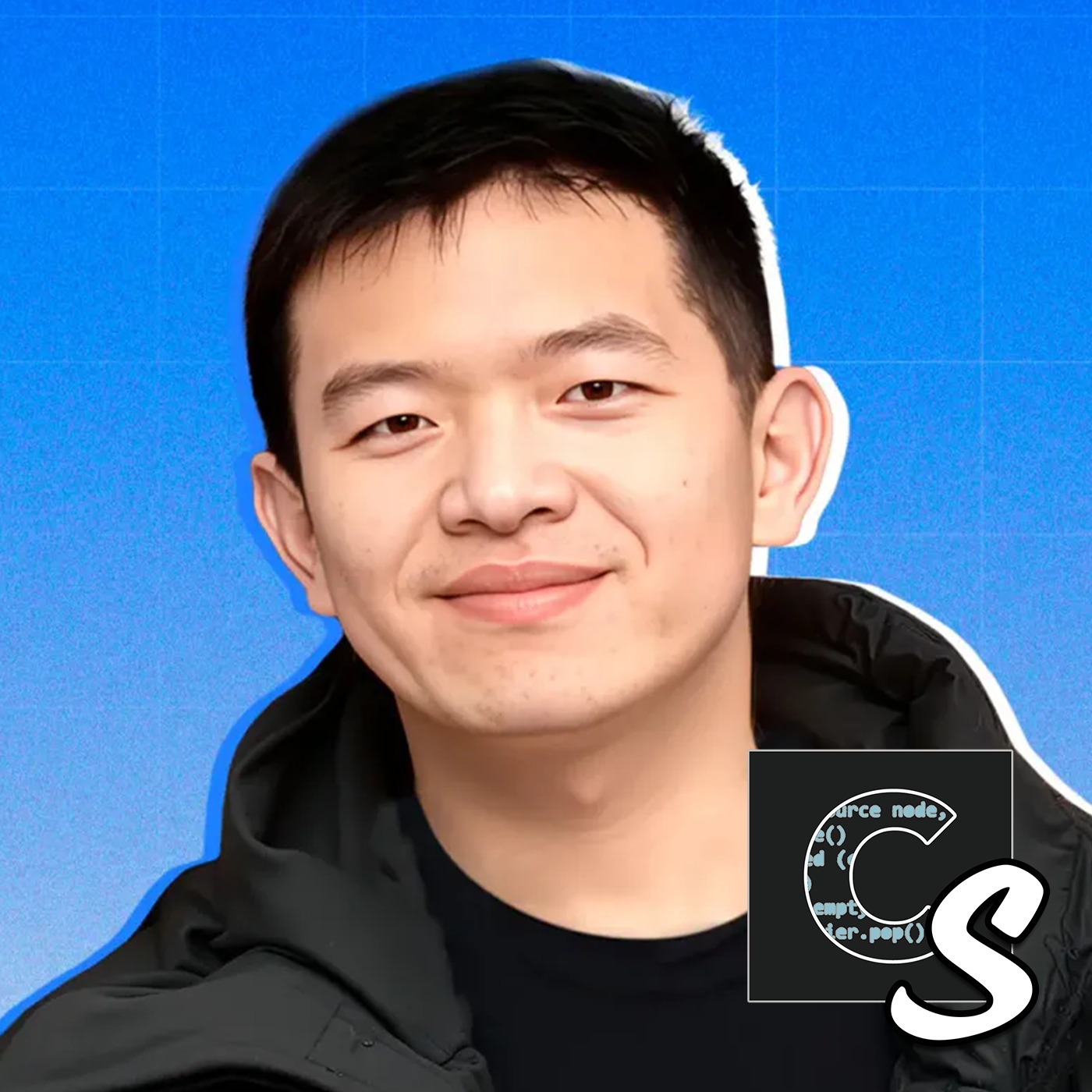
S13 Bonus: Accelerating Zero-Knowledge: Hardware-Driven ZK Proof Generation with Leo Fan, Co-Founder & CEO of Cysic
In this episode
Leo Fan grew up in China, performing his undergrad and masters within the country. Eventually, he came to the states to get his PhD from Cornell. Prior to his current venture, his experience has been in academia, and research in computer science. But outside of tech, he's a gamer. In fact, he was pretty good at it, almost entering professional eSports during his undergrad days, playing Counterstrike and Warcraft. Besides that, he enjoys playing tennis and basketball, and eating some good Chinese food or tacos.
In his engineering days, Leo discovered a very powerful system for crypto, with powerful properties to enable it to be so. Once he figured out that this type of model can scale crypto systems, he wanted to build the first full stack compute network - to own the growth of on-chain compute.
This is the creation story of Cysic.
Links
https://leofanxiong.github.io/
https://www.linkedin.com/in/leofanxiong/
Current Sponsors:
Checkout our Stacklist! https://stacks.codestory.co/
Check out our Patreon!
Hosted by Noah Labhart | Technical Founder & Startup Mentor.
Our Sponsors:
* Check out Granola and use my code granola.ai/CODESTORY for a great deal: https://granola.ai
* Check out Perplexity and use my code pplx.ai/codestory for a great deal: https://www.perplexity.ai
Advertising Inquiries: https://redcircle.com/brands
Privacy & Opt-Out: https://redcircle.com/privacy
[SPEAKER_03]: The original goal of Sai Thaik's two designs has special knives chips for the VK puff generation, but that's when like over another way. [SPEAKER_03]: We just found out like the GPUs or even FPJs, those hardware is like after share of hardware, they are good enough, they are good enough to carry out the current
[SPEAKER_03]: So, which means we don't actually don't need to spend several, several media in building, like to do the chip tip out, then improve the efficiency of our own chip, we can just deny on them or off the shelf. [SPEAKER_03]: Manet's Neo-Fan, I'm the founder and CEO of Psychic.
[SPEAKER_02]: This is Code Story. [SPEAKER_02]: a podcast bringing you interviews with tech visionaries. [SPEAKER_02]: Six, six months moonlighting goes. [SPEAKER_02]: It's the last and all of the backgrounds who share what it takes to change an industry. [SPEAKER_00]: I don't exactly know what to do. [SPEAKER_02]: It doesn't go as to get right. [SPEAKER_01]: who built the teams that have their bad company is its team's help each other, which is proud of our team. [SPEAKER_02]: Keeping scalability top of mind, all that infrastructure was up there.
[SPEAKER_01]: Yes, we've been fighting it as we grew up. [SPEAKER_02]: Total waste of time. [SPEAKER_02]: The stories you don't read in the headlines. [SPEAKER_01]: It's not an easy thing to achieve. [SPEAKER_02]: To get yourself a deficit of off, try to begin to ride the ups and downs of the start-up line. [SPEAKER_01]: Need to really want it. [SPEAKER_02]: Not just about technology. [SPEAKER_02]: All this and more on code story. [SPEAKER_02]: I'm your host, Noah Labpart, and today how Leo Fan has built the first full-statt compute network so you can own the growth of compute on-chain.
[SPEAKER_02]: Leo Fan grew up in China, performing his undergrad and masters within the country. [SPEAKER_02]: Eventually, he came to the States to get his PhD from Cornell. [SPEAKER_02]: Prior to his current venture, his experience has been an academia and research and computer science. [SPEAKER_02]: But outside of tech, he's a gamer. [SPEAKER_02]: In fact, he was pretty good at it, almost entering professional esports during his undergrad days, playing counterstrike and warcraft. [SPEAKER_02]: Besides that, he enjoys playing tennis and basketball and eating some good Chinese food or tacos.
[SPEAKER_02]: In his engineering days, Leo discovered a very powerful system for crypto, with powerful properties to enable it to be so. [SPEAKER_02]: Once he figured out that this type of model can scale crypto systems, he wanted to build the first full-statt compute network to own the growth of on-chain compute.
[SPEAKER_02]: This is the creation story of Scyc.
[SPEAKER_03]: Sci-Thake is a combination of two words, the first two, like, C-Y is from Cypher. [SPEAKER_03]: The Cypher means cryptography. [SPEAKER_03]: The second part is the S-S-S-S-S coming from an A-S-S-S-S-S-S-S-S-S-S-S-S-S-S-S-S-S-S-S-S-S-S-S-S-S-S-S-S-S-S-S-S-S-S-S-S-S-S-S-S-S-S-S-S-S-S-S-S-S-S-S-S-S-S-S-S-S-S-S-S-S-S-S-S-S-S-S-S-S-S-S-S-S-S-S-S-S-S-S-S-S-S-S-
[SPEAKER_03]: And the reason why I could be with I think is also as I just mentioned like we are like in my engineering days like I found the proof generation for their non-aggressions like to stone like by the way next their non-aggressions is a very powerful cryptocurrency instance so it has two nice properties [SPEAKER_03]: The first one is their non-H, so which means like for instance I want to transform like 10 they cash to you, but I don't need to like I only need to prove that like my balance in my wallets is like a larger than 10 which can like validate this transformation that I have like enough but coin in my wallet to pay this like transform, but I don't need to tell you like how much I [SPEAKER_03]: Yes, like very different from coin or Neck Ethereum, Neck for this two coin, like all the things they are like, public in the nature.
[SPEAKER_03]: And the second one is Neck, the succinctness. [SPEAKER_03]: We know Neck, the poor generation of the case, like, where we cost away and, like, both in terms, and also in the computing resource. [SPEAKER_03]: But, like, the very fine Neck approved, it's like, much simpler, much faster. [SPEAKER_03]: You can use your cell phone to verify how they can prove in next and say 15 milliseconds and a cell phone and also the size of them prove it's also quite smooth like runs several At most in like several hundred kilobytes and we can't compress like white theorem block So one in theorem block contains a lot of like transactions.
[SPEAKER_03]: We can't compress this like [SPEAKER_03]: the whole Ethereum block into just the one they kept proof. [SPEAKER_03]: Instead of re-executing all the things, all the transactions in that proof to the in that block to verify the validity of the block, we can just verify the they kept proof and say, since like we don't need to trust anyone, like we just need to trust the mess behind the they kept proof. [SPEAKER_03]: If this they kept proof is verified, then we can say that [SPEAKER_03]: The whole block is valid and then we can pause it so that's why like we can use the fixing as a thing left part of the people to scale up a lot of our blockchain.
[SPEAKER_03]: But the two generations where it's not so that's why like in the beginning we are building some specialness hardware for the poor generation like we are using like we built the best FPJ hardware to have the best performance in the space. [SPEAKER_03]: Yeah, so that's how the next 5-8 got started.
[SPEAKER_02]: Let's dive into the MVP for Sci-Second. [SPEAKER_02]: This is going to be interesting because you've got multiple factors here, right? [SPEAKER_02]: You've got the powerful model for crypto, you've got hardware to build, all the things I'm curious where you started. [SPEAKER_02]: Tell me about that MVP and what, how long it took to build and what sort of tools you're using to bring it to life. [SPEAKER_03]: In my opinion, like the MVP means like you. [SPEAKER_03]: Actually, there are some seem fun garlic products.
[SPEAKER_03]: You're not just showing off your power, your performance. [SPEAKER_03]: You're actually like Arlene. [SPEAKER_03]: Some buy Arlene something. [SPEAKER_03]: I mean like Arlene's unbound iPhone or customer. [SPEAKER_03]: So, for that sense, I will say we would be a son. [SPEAKER_03]: We accelerate a poor generation for a lot of black manatees. [SPEAKER_03]: We took out about more than a half a year to have a GPU performance, to have a GPU version of some like CPU co-generation. [SPEAKER_03]: So, like with CPU co-generation, it took about two hours.
[SPEAKER_03]: to generate a one-day kit proof, and that's not acceptable, since the UNA block types several seconds or more than a bit like 10 seconds. [SPEAKER_03]: But yeah, of course, like we want to shrink, we want to reduce the proof generation time for the kit proof as much as possible as a week. [SPEAKER_03]: Have some nice neck GPU version of the proof generation, I mean, we put it on just the two [SPEAKER_03]: GP motion. [SPEAKER_03]: So for here it is next. [SPEAKER_03]: The GP car we use is 14.9 GP cars.
[SPEAKER_03]: The way it is successful I would use the poor generation car from more than 2 hours to around 15 minutes. [SPEAKER_03]: and then we shoot it to our customers and who is very happy and waiting to pay for the server so we provide to them, feels like we are not only selling the machine, we are not not selling the software, we are selling the servers like we. [SPEAKER_03]: with a like saying like some demanding in this factor we build a blockchain to incentivize people to join the blockchain to contribute their idle GPU power into sites in our.
[SPEAKER_03]: The sites in our case announced a blockchain. [SPEAKER_03]: To contribute their like the computing part of sites in our work to then we can deploy our GPU software and the hardware to generate the developers to another
[SPEAKER_02]: Tell me about a decision or trade-off yet to make in that, and I can hear some in what you're describing, but maybe a key decision and how you approached the initial problem, or maybe there was acceptance of how you built the product or maybe architectural debt or things like that, or even limitation. [SPEAKER_02]: Tell me about some of those things that you had to make the hard decisions around, and how you cope with them.
[SPEAKER_03]: the original go of settings to designs and special nice chips for the VK puff generation. [SPEAKER_03]: But as the wind like move the another way. [SPEAKER_03]: Yeah, we just found out like the GPUs were even FPG's. [SPEAKER_03]: Those hardware is like after share of hardware, they are good enough. [SPEAKER_03]: They are good enough to carry out the current moving demand. [SPEAKER_03]: So, which means we don't actually, we don't need to spend several, several media building, like to do the chip tip out, then improve the efficiency of our own chip, we can just rely on them, of the shelves, hardware to 35 the demand of our customer.
[SPEAKER_03]: Yeah, and but we, in the past, the problem, more than, I mean, more than a year, we have, like, already [SPEAKER_03]: Spend a note of like a manpower and also kick up toe in the engineering efforts of neck building the chip. [SPEAKER_03]: And also making the meantime like also talk to some potential customers who probably will buy the chip CR. [SPEAKER_03]: Then that's very, since the market is not very clear, and the algorithms, like for the VK proofs, they are not converging, they are not fake yet.
[SPEAKER_03]: So those, like, potential buyers, they are reenactant to pay anything for the chip. [SPEAKER_03]: So that's, like, the problem, like, these two reasons, the market is not big enough, and also the... [SPEAKER_03]: the community haven't reached consensus about which they can persist and they are going to use. [SPEAKER_03]: So that's why when we pass the more engineering effort and build in the chip. [SPEAKER_03]: Yeah, it's a very hard decision like we need to. [SPEAKER_03]: There's some team members to go and we also need to shift some of our team members to do some like other things.
[SPEAKER_03]: And it's somehow a little bit also deviates from our original vision about how the sci-fi will be in the next few years.
[SPEAKER_02]: I'm curious about how you're going to progress in mature size 2, where you're going with it, and I think that prepping a box with it, I'm looking for is, how did you build your roadmap? [SPEAKER_02]: How do you go about deciding that? [SPEAKER_02]: Okay, this is the next most important thing to build or to address with size 3. [SPEAKER_03]: We probably close the monitor the market to see what are the trends. [SPEAKER_03]: Yeah, as you can see with builds, like the setting network to support the demand of or not of near-tooth.
[SPEAKER_03]: But the near-tooth problem is starting on and next this year. [SPEAKER_03]: The main tools they don't have too much connection for us to do the poor generation. [SPEAKER_03]: So which means we, that, like, in addition to the link-in-puff generation, we also need to expand our support to do some other competition work loads such as Celeste Wally. [SPEAKER_03]: Probably it's not a pivot, but we expand our support to also cover the demand in the AI [SPEAKER_03]: computing as well. [SPEAKER_03]: We, that unless supported in mind, we also have our own harness engineering ducts, which is quite good.
[SPEAKER_03]: Yes, we use a harness engineering product to write another code and another code right now, the performance is better than what human coders can write and take a witness time to write all this code. [SPEAKER_03]: Yes, like we just need to monitor the markets and say who is who right now can bring us some real computing demands that within how we can support them, how we can convert them from a potential paying customer to a real paying customer. [SPEAKER_00]: Yeah, so that's the crux of like how we
[SPEAKER_02]: So I hear you saying we a lot tell me about how you built your team and what you look for in those people to indicate that they're the winning horses to join you. [SPEAKER_03]: First to badge of like team members joining South Asia and like our friends or friend of our friends who got referred by the common team members. [SPEAKER_03]: I guess it's like who wait. [SPEAKER_03]: I will say like for all the team members they are all better than being like an authentic purpose. [SPEAKER_03]: the kinsang aspect like we like for each neck product we put into practice or deployed like oh it all starts with like several problems around three or four people yeah we cut we basically divide the groups we divide the team members into groups each group is like working on some exciting problems they try to
[SPEAKER_03]: I also talked to another potential customer to see their demand in how we can adapt to come up with a new product which can satisfy the the demand of the potential customers. [SPEAKER_03]: Yes, so in that way, like our teens school, like Niger and Niger, so right now we have only been like one and a third
[SPEAKER_03]: working on some like exciting projects. [SPEAKER_03]: And for almost every day problem, except for Wednesday we have 30 minutes group meeting which like everyone will present some progress of what they are working on and then let them fall down like feedback from like other team members like the [SPEAKER_03]: If the feedback is not like doing the good meeting, they've first immediately to share the progress they have made and the real essence of the product, and the people will play with the product, and then give them real feedback.
[SPEAKER_03]: So how that's how we are improving our product and also how we [SPEAKER_03]: How the team members right now are working on this product, they can re-bought to the feedbacks, yeah. [SPEAKER_03]: I believe these interactions, these internal interactions will be very good for improving the product to find out new things to do.
[SPEAKER_02]: Let's flip into scale ability, and this will be interesting, especially given you approaching this with crypto networks and hardware and all the things to be a full stack, compute network. [SPEAKER_02]: How did you think about scale in the beginning, and even at this stage, have there been interesting areas we've had to fight scale as you've grown?
[SPEAKER_03]: Skillability is always an issue, like for some product we develop public is hard to scale. [SPEAKER_03]: Yeah, so in that way we need to find that in that scenarios we need to find new ways to adapt this product to have like more demand, like for instance, [SPEAKER_03]: Earlier this year, we opened source of the KVM, so the KVM stands for the Energy Virtual Machine, which means like you don't need to write the K-circuit by hand to prevent that people need to. [SPEAKER_03]: Notice on that new language and then to use a new language to write the K-circuit.
[SPEAKER_03]: But with the KVM, you don't need to do that, you just write your normal. [SPEAKER_03]: Python, raster program, and then it will be converted to the upcode, which will be runny, and it's like virtual machine. [SPEAKER_03]: Yeah, so we open source the ZKVM, and it's run as still the one of the best performance ZKVM in the space. [SPEAKER_03]: But as I just mentioned, like the near-toes, they are demanded declining. [SPEAKER_03]: So we need to find new ways to use the VAM. [SPEAKER_03]: Like for instance, if we cannot find an external VAM, we can come up with a new product, which will use this VAM.
[SPEAKER_03]: So for instance, in this scenario, with the VAM is like backpool. [SPEAKER_03]: So that cool allows people to make transactions without seeing anything, without seeing any private information online. [SPEAKER_03]: So, on change, we can understand the hash commitment, the liquid proof which hides the details of this transaction and the testing. [SPEAKER_03]: So, this like that cool will be using this like the KVM or not, and also can create some demand for the computing resources. [SPEAKER_03]: So that's how we can scale up.
[SPEAKER_03]: how we can scale up the demand for the current product.
[SPEAKER_02]: So as you step out on the balcony, and you look across all that you've built with psysic, what you most proud of. [SPEAKER_03]: We have the best performance GPU acceleration for the K back then, and then we use this GPU with and after talking to some customers, we find out that they have the demand to use a server instead of just the software that GPU software will build like Siphon Hour. [SPEAKER_03]: To Siphon Network, we can coordinate, we can set up, we can incentivize, we can reward, [SPEAKER_03]: The participant of SISIC, so basically SISIC network can connect, connect the people together, and this SISIC network can also be expanding to support AI competition as well.
[SPEAKER_03]: So it's a very versatile product that can be used in your not-stop scenarios. [SPEAKER_03]: And yeah, so that's one thing, and that's what they keep in. [SPEAKER_03]: To the big event, with the big event ran out of skill and open source, we basically push, we release a new version every two or three weeks at most, but normalize around two weeks. [SPEAKER_03]: The Wikipedia right now is still the best performance in the space, and the Wikipedia can be used by a lot of scenarios not only in the blockchain space, but also you can use the Wikipedia in the AI inference as well, since you are using your using same GPT 6, but like the GPT openly i probably will, they will just use GPT 5.6 to
[SPEAKER_03]: To search for you, then the DK can be used to certify the result to say these results actually come in from. [SPEAKER_03]: GPT 6, instead of GPT 5.6. [SPEAKER_03]: So, yeah, so it's just that they can be in what beyond a very potential product for AI inference to certify to make people trust that they are using the model, there is no. [SPEAKER_03]: No quality model you are using, but you are paying for the high quality model. [SPEAKER_03]: In that sense, you need some real specialness, however, you really need 86 for that.
[SPEAKER_03]: The current GPU provides speed to know for people to turn on rates.
[SPEAKER_02]: Let's flip the script a little bit, Leo. [SPEAKER_02]: Tell me about a mistake you made and how you and your team responded to it.
[SPEAKER_03]: We previously, like back public enough earlier of Mexico, we invest a little bit like too much resource like on the capital-wise, in building our own FPGA server, like the FPGA server cost us around 200,000 to 300,000 US dollars to build the FPGA. [SPEAKER_03]: Yeah, we just don't, at that time we think, probably there will be just one or two customers who will likely use the key game to prove their blocks. [SPEAKER_03]: But she turned out like there are not a customer who want to do that thing.
[SPEAKER_03]: And the FPG server really cannot support too many power now competition then. [SPEAKER_03]: And also, it's not how surprising I see it. [SPEAKER_03]: the GPU acceleration for the K also both very fast in the past several years and which somehow outperformed the FPGA in terms of like performance. [SPEAKER_03]: Yeah, so that's one thing and then after we reunite the same with stopping the team, our resources into the FPGA, but still like between [SPEAKER_03]: Experimental theme that count on the FPGA sides, but we are not investing.
[SPEAKER_03]: Our resource is the image that can do FPGA servers like two or four customers.
[SPEAKER_02]: Leo, this will be fun. [SPEAKER_02]: This is exciting. [SPEAKER_02]: What you're tackling is a big project. [SPEAKER_02]: A big endeavor. [SPEAKER_02]: Tell me what the future looks like for CySik, for what you're building, for where the industry is going, for all the things. [SPEAKER_03]: the essence of size A keys can purify vision. [SPEAKER_03]: Computer-file means like people who can contribute their idol computer resources into size and effort. [SPEAKER_03]: Whether you want to contribute your servers, your laptop, or even your cell phone, you can always run some like software from size A to contribute to the community.
[SPEAKER_03]: And I will say due to the AI competition coming to like the demand or not, we can actually use a network to coordinate all these different hardware devices to realize to have some like real yields for the customers who have some, to our community members who have some idle computing power. [SPEAKER_03]: So in that sense, I would say the decentralized computing will be like more reliable than centralized building since like in the past several days, like we experience a lot of disruption in the data centers, like for a lot of decentralized players.
[SPEAKER_03]: But decentralized computation consult this issue. [SPEAKER_02]: OK, Leo, let's switch to you. [SPEAKER_02]: Who influences the way that you work? [SPEAKER_02]: A person or many persons are something you look up to and why? [SPEAKER_03]: People who influenced me on several, on like, why? [SPEAKER_03]: Like, that's most of the influence, like, happy in my graduate study, either in Chinese Academy of Science or, like, I want at Cornell and, like, [SPEAKER_03]: Like the most impact I receive on this tool, institutions, people are really working very hard.
[SPEAKER_03]: And they are very resilient to theories. [SPEAKER_03]: Yes, it's a work, whether you are actually computing, competing with a lot of very smart people. [SPEAKER_03]: So, theory is like a very common thing like two to me. [SPEAKER_03]: And you probably have like more than 10 attempts, probably I would be like surprised or like they're happy to see like even probably one or two of the attempts were worth and all the other were just a few. [SPEAKER_03]: And I'm like totally fine with that things like he might.
[SPEAKER_03]: Probably like previous academia works like for each like paper I wrote, [SPEAKER_03]: I also try a lot of different ways to attack the problem, but most of the attacks, of course. [SPEAKER_03]: Don't work? [SPEAKER_03]: But I'm fine with that, I always say, like, I can come up with some more clever ideas of what I like to. [SPEAKER_03]: How we can circle around the problem to find another solution. [SPEAKER_03]: Yeah. [SPEAKER_03]: So that's that would say my classmates or like my advisor if in my graduate study, I'm very important to me, they influenced me on that.
[SPEAKER_02]: Okay, Leo, last question. [SPEAKER_02]: So you're getting on a plane, and sitting next to a young entrepreneur who's built the next big thing. [SPEAKER_02]: They're jazzed about it. [SPEAKER_02]: They can't be showed off to the world, and can't be showed off to you right there on a plane. [SPEAKER_02]: What advice do you give that person? [SPEAKER_02]: Having gone down this road a bit now? [SPEAKER_03]: I will toast the entrepreneur to say, don't expect too much from your product of, from your first product.
[SPEAKER_03]: You need to iterate it a lot. [SPEAKER_03]: Yeah, I think right now, with a help from AI, people like all the products they iterate very fast and we need to keep up with a community, keep up with a market to iterate it. [SPEAKER_03]: you cannot basically expect too much success from your first product. [SPEAKER_03]: And also, and also, probably the second thing is like, technology is good, but technology doesn't contribute 100% to the success of the product. [SPEAKER_03]: Your product actually depends on not-of-factors and success, probably the [SPEAKER_03]: It's an important factor, but it doesn't contribute all to the success of a product.
[SPEAKER_03]: You need to develop some marketing strategy, be the strategy, and how you can't acquire customers, how people are willing to pay for all products. [SPEAKER_03]: So that's more important than developing the product. [SPEAKER_02]: That's great advice, Leo, thank you for being on the show today and thank you for telling the creation story of Sysik. [SPEAKER_03]: Thanks for nots, nice chatting with you, Noah.
[SPEAKER_02]: And this concludes another chapter of Coat Story.
[SPEAKER_02]: code story is hosted and produced by Noah Labhart. [SPEAKER_02]: Be sure to subscribe on Apple Podcasts, Spotify or the podcasting app at your choice. [SPEAKER_02]: And when you get a chance, leave us a review. [SPEAKER_02]: Both things help us out tremendously.
[SPEAKER_02]: And thanks again for listening.
Latest Season of the Podcast is Sponsored By








 Apple Podcasts
 Spotify
 Castbox
 Player FM
 Pocket Casts
 YouTube
 Overcast
 Castro
 Goodpods
 Moon FM
 Podbean
 Podcast Addict
 Podcast Republic