S13 E4: The AI GTM Engine: Turning Intent Signals into Warm Outbound Pipeline with Connor Heggie, Co-Founder & CTO of Unify

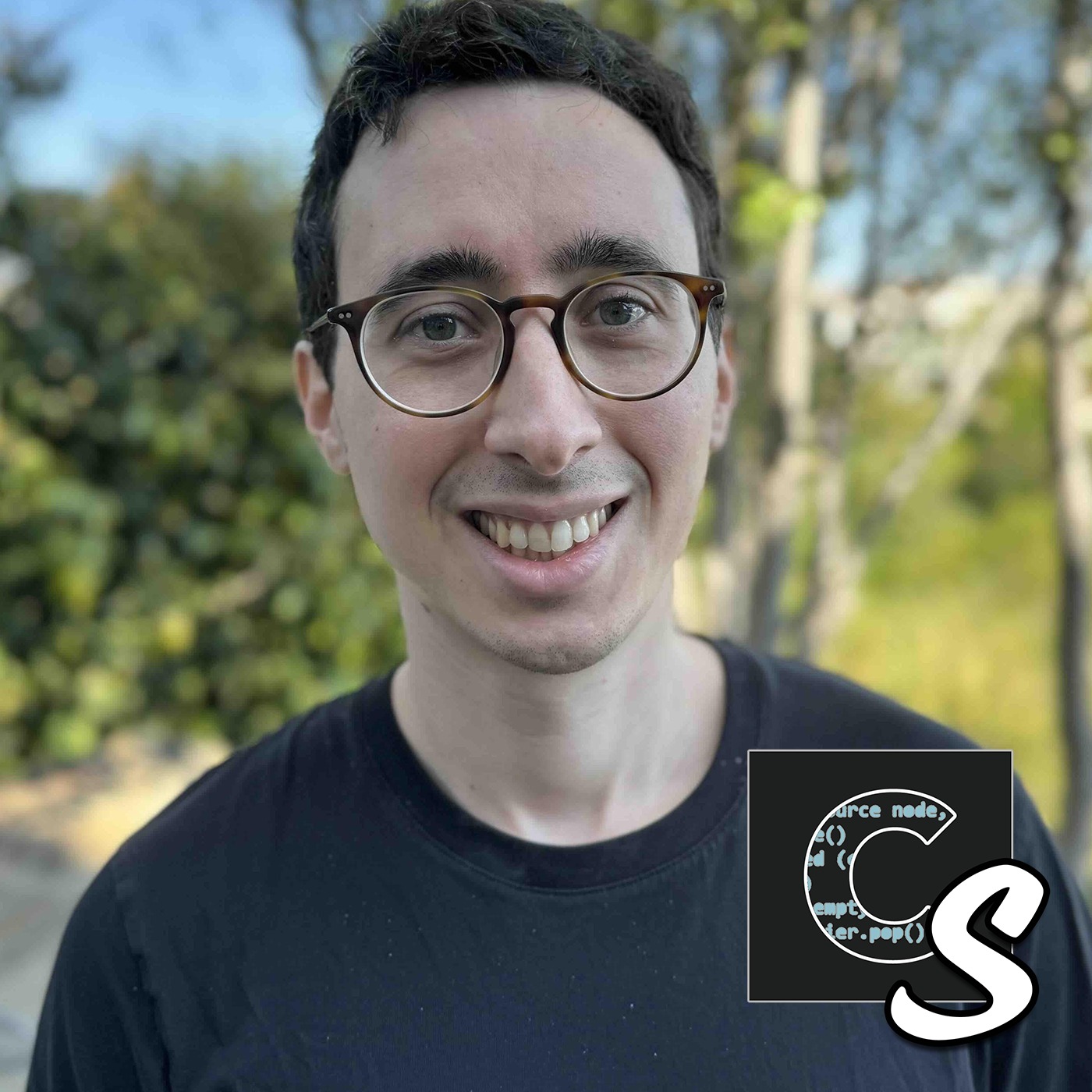
Connor Heggie grew up in Southern California, digging into technical things early on his life. He played with legos, was influence by Iron Man, and painted pictures on the back of schematics his Dad brought him from Boeing. He went to school at Rice in Texas, feeling a sense of agency and confidence from the program he was in. Eventually, he went to work for startups across computer vision, self driving cars, and AI. Outside of tech, he has a large black Labrador named Captain. He enjoys hiking, being outside, and playing fetch with Captain until he drops in exhaustion.
Post ChatGPT, Greg was working on a side project, creating listicles around products. As he built it, he fell in love with the space of mining information from unstructured data. Once he met up with his co-founder, they started to recognize they could build multi-agent systems that could re-think how Go-To-Market teams operate.
This is the creation story of Unify.
Links
https://www.linkedin.com/in/connor-heggie/
Current Sponsors:
Checkout our Stacklist! https://stacks.codestory.co/
Hosted by Noah Labhart | Technical Founder & Startup Mentor.
Our Sponsors:
* Check out Granola and use my code granola.ai/CODESTORY for a great deal: https://granola.ai
* Check out Perplexity and use my code CODESTORY for a great deal: https://www.perplexity.ai
Advertising Inquiries: https://redcircle.com/brands
Privacy & Opt-Out: https://redcircle.com/privacy
[SPEAKER_02]: When we were working on this sort of transition off of elastic search, we did a bunch of work to evaluate a different technology, which was reverse indices. [SPEAKER_02]: We kept running into small hiccup and small hiccup. [SPEAKER_02]: But we kept promising the company that our sales team, our post sales team, who had to really deal with the pain of being slowing down and feeling buggy on the platform. [SPEAKER_02]: that we were just about to solve it. [SPEAKER_02]: One more week, one more week, two more weeks.
[SPEAKER_02]: We got to this point where if we wanted to continue down, actually adopting this technology, we were going to have to run this seed stage company's technology as our primary database, self hosted on our Kubernetes cluster. [SPEAKER_02]: Very serious proposition. [SPEAKER_02]: I'm Connor Haggy, co-founder and CTO of Unified.
[SPEAKER_03]: This is Code Story. [SPEAKER_03]: a podcast bringing you interviews with tech visionaries. [SPEAKER_03]: Six, six months moonlighting goes. [SPEAKER_00]: I'm lost in all the backgrounds. [SPEAKER_03]: Who share what it takes to change an industry? [SPEAKER_00]: I don't exactly know. [SPEAKER_03]: It took many goes to get right. [SPEAKER_03]: Who built the teams that have their bad company, is it's people? [SPEAKER_01]: It teams help each other. [SPEAKER_01]: It's most proud of our team.
[SPEAKER_02]: Keeping scalability top of mind. [SPEAKER_02]: All that infrastructure was happening. [SPEAKER_02]: Yeah, they've been fighting it as we grew up. [SPEAKER_02]: Total waste of time. [SPEAKER_03]: The stories you don't read in the headlines. [SPEAKER_01]: It's not an easy thing to achieve. [SPEAKER_03]: Figure out the shelf and decide it off and try to begin. [SPEAKER_03]: To ride the ups and downs of the start-up line. [SPEAKER_03]: To really, it's not just about technology. [SPEAKER_03]: All this and more on code the story.
[SPEAKER_03]: I'm your host, Noah Leopard, and today, how Connor Hacking is enabling outbound Asians for every sales rip, so you can escape Tab Health through a unified platform.
[SPEAKER_03]: Connor Hacking grew up in Southern California, digging into technical things early on in his life. [SPEAKER_03]: He played with Legos, was influenced by Iron Man, and painted pictures on the back of
[SPEAKER_03]: He went to school at Rice in Texas feeling a sense of agency and confidence from the program he was in. [SPEAKER_03]: Eventually, he went to work for startups across computer vision, self-driving cars, and AI. [SPEAKER_03]: But outside of Tech, he is a large black laboratory named Captain. [SPEAKER_03]: He enjoys hiking, being outside, and playing fetch with Captain until he drops an exhaustion.
[SPEAKER_03]: Post chat to BT, Connor was working on a side project, creating listicles around products. [SPEAKER_03]: As he built it, he fell in love with the space of mining information from unstructured data. [SPEAKER_03]: Once he met up with his co-founder, they started to recognize they could build multi-agent systems that could rethink how go-to-market teams operate.
[SPEAKER_03]: This is the creation story of Unify.
[SPEAKER_02]: You can think of us as a cloud code for salespeople for sellers or like founders or early-stage founders that need to do go to market. [SPEAKER_02]: We started the company Jan 17th 2023 right post chat GPT but really knew we were thinking about all of this stuff before it came out. [SPEAKER_02]: I was working back before I started the company on the side project, do you know the website wire cutter, top 10 best non-stick pans, things like that? [SPEAKER_02]: My family loves these products, right?
[SPEAKER_02]: My uncle will spend 20 hours reading reviews to buy a $30 and just because it's like, it's like a hobby, it's like a thing to do. [SPEAKER_02]: So I was working on a side project back in 2022 of hyper-personalized AI-written wirecutter articles. [SPEAKER_02]: They would agonitate up all of the reviews on the internet, get talent of podcasts, but I'm very tall and six foot five. [SPEAKER_02]: It's hard to find sleeves that are long enough. [SPEAKER_02]: But that information is actually captured people who write reviews who say, oh my god, I bought the shirt from my husband, he's so tall, shirts never fit him, but this one happened to fit.
[SPEAKER_02]: And like that, that information is locked up semantically there, even though it doesn't say that the sleeves are especially long. [SPEAKER_02]: And so I was like, I, like, head built this product again as a side project. [SPEAKER_02]: Really pre-chatted with you, it's like GPT-3 codex, like, 8,000 token contracts window, and it took 15 minutes to run and create a thing. [SPEAKER_02]: It took like, it cost $50 to do one of these little listicles. [SPEAKER_02]: And honestly it was really bad, but there was a glimmer there of just this like a amazing ability to take huge amounts of unstructured, smantically rich data and pull some sort of interesting insight out of it.
[SPEAKER_02]: And I just, I fell in love with that problem space and I was looking around, one of the sort of company got connected to my now co-founder Austin and he was working at Ram doing some growth automation stuff and I was chatting with him and a lot of the stuff he was thinking about was going to be the version of what I was thinking about except instead of for buyers and for sellers. [SPEAKER_02]: And I paused and reflected, I was classic engineer, I was like, yuck, sales. [SPEAKER_02]: Before I started the company, before I had done a bunch of work in sales, I thought the job to be done on a sales person was rhetoric.
[SPEAKER_02]: I thought it was, how do I convince you to buy my product? [SPEAKER_02]: And that's totally not the case at all. [SPEAKER_02]: Actually, what a great sales person says is they say, the job you're done on sales is to find people in companies that have a problem that my product uniquely solves. [SPEAKER_02]: And then it doesn't really matter what you say to them. [SPEAKER_02]: Yes, you have to communicate credibly and communicate effective and be believable. [SPEAKER_02]: But at the end of the day, in kind of a funny way, the economy is just us solving each other's problems for money.
[SPEAKER_02]: And when you reframe it as a search problem, it just a bunch of really interesting stuff falls out of it. [SPEAKER_02]: Like, it's this search problem that historically was run by people in this sort of organization, the system was a system of people, but with LLMs and AI and really like hard-scaled data and software engineering, [SPEAKER_02]: a much much better system that gives you repeatability of observability scalability, and that was really the thesis of the company that we started with.
[SPEAKER_02]: Built a bunch of this automated outbound kind of product, immediately following, letting people do signal-based and trigger-based outbound in the scalable way, scalable repeatable observable way again, and that really took us until call it January of this year, and there was a whole Opus 4.5. [SPEAKER_02]: Moment, when December where flawed code just got so good at these long-running autonomous tasks, and it was clear that this product that we had built in all of this, like, leverage and workflow that was so valuable to more systems thinkers, like go to market engineers or marketing people, marketing ops, revops, who are predominant users historically.
[SPEAKER_02]: We could actually take a bunch of that and give that power to the sellers by not automating sales people, but by automating the go-to-market engineering work that was being done for them and actually superpowering them and giving them a go-to-market engineer a rev-opt first and in there and pocket all the time. [SPEAKER_02]: In 2025 there was this narrative that AI was going to replace sales and we just haven't seen it be the case at all. [SPEAKER_02]: Similar to software engineers, [SPEAKER_02]: Actually, with every salesperson is twice as productive because they have AI tools as one plus one equals three of human plus AI systems.
[SPEAKER_02]: We actually want more of them, right? [SPEAKER_02]: You want to grow your business fast. [SPEAKER_02]: You want to get in front of more customers, more relevant. [SPEAKER_02]: You want to have better customer service and better, more reactive customer service and be more proactive to your customers and things like that. [SPEAKER_02]: And so really, that's the thesis of the company. [SPEAKER_02]: We want to help the best products way and we want to help the best sales people get in touch with the right people at the right time, bind people who have a problem that they saw by doing this kind of long-running agentic work for them and getting them to the 90-year-old life.
[SPEAKER_03]: Okay, Connor, let's stick into the MVP. [SPEAKER_03]: So the first version of the product is built. [SPEAKER_03]: How do I take to build them? [SPEAKER_03]: What sort of tools were you using to bring it to life? [SPEAKER_03]: And I think this would be post-listicles, obviously, because there's heart in where you were inspired there, but this would be when you and your co-founder started building. [SPEAKER_02]: This is pre-clod code, pre-codax. [SPEAKER_02]: We didn't have coding tools back then, the way that we do now.
[SPEAKER_02]: We had co-pilot, which was the crazy thing of the moment back then, right? [SPEAKER_02]: And so we were very lucky. [SPEAKER_02]: I hired two of these amazing engineers that I knew, genuinely the two best engineers that I've ever worked with my life, Sam, and Solomon. [SPEAKER_02]: and we kind of sat down and enjoyed three weeks after we started the company or something like that. [SPEAKER_02]: And we kind of sat down the three of us in a room, you know, Austin might co-founder the four of us in a room and really cranked for two to half months to get out bare minimum of what we wanted to build.
[SPEAKER_02]: And everything what it was at the time we knew the long-term thing we wanted to power was [SPEAKER_02]: web intent based automated outbound. [SPEAKER_02]: So when a company comes to your website use a bunch of data vendors to do reverse IP look up to figure out what company that I key that web traffic might be coming from and then find people at that company that are relevant buyers for your product. [SPEAKER_02]: For example, us, we would sell to a revops person. [SPEAKER_02]: We might have a company land on our website.
[SPEAKER_02]: We look up that company and then we look up a revops person. [SPEAKER_02]: That company find their email. [SPEAKER_02]: And then suddenly, really thoughtful messaging, written with AI to describe how our product could be a fit for their problems. [SPEAKER_02]: That would be outside into kind of guests that they have given attributes of their business and things that we find online. [SPEAKER_02]: And we built that in, and so that was where we wanted to go long-term. [SPEAKER_02]: But the thing that we initially built,
[SPEAKER_02]: Okay, there's tools today that do that reverse IP look up. [SPEAKER_02]: Can we just download a CSV from it? [SPEAKER_02]: And then build a tool that lets you upload a CSV, do that prospecting, find the people of that company, and then write it all to the CRM, and then we'll do enablement around all of that with existing tools that our customers had to solve that end-to-end workflow, but while building them minimal scope. [SPEAKER_02]: And so that's what we launched in two and a half months after we started the company.
[SPEAKER_02]: Was a CSV would call an API to find people and do enrichment and then it would upload the sales force. [SPEAKER_03]: Let's stay on that MVP for a minute. [SPEAKER_03]: Tell me about a decision or trade off you had to make and how you approached the problem or maybe there's some acceptance of technical debt. [SPEAKER_03]: And I hear my hear some stories I could probably cherry pick, but I want you to tell me one that one that was foundational for how you approached building it and how you coped with it.
[SPEAKER_02]: We had a lot of decisions to make early on of how hacky we wanted to be or how scalable we wanted to build to start off with. [SPEAKER_02]: And we had an unusually high amount of confidence that product would work. [SPEAKER_02]: Austin had worked in growth for a couple of years at that point really had conviction that if we could build something that did, what I just described, that it would be really valuable. [SPEAKER_02]: We've gotten a couple of customers together that wanted to use some system that we built to solve that problem.
[SPEAKER_02]: And so, we added these really good early signs, but as generally the recommendation, the advice is to build something as fast and scrappy as possible. [SPEAKER_02]: Get the MVP out if you're not embarrassed by it, right? [SPEAKER_02]: You ship too late. [SPEAKER_02]: But rather than descoping, sort of tech debt wise, we actually built the deep scalable system. [SPEAKER_02]: We invest a lot of time of building the best sales force integration that we could to really deeply understand and build the scalable system that we would need for down the road and build the deep integration with the API providers to do the enrichment that we knew that we would need down the road because we had a lot of conviction that it wouldn't be through all the way work.
[SPEAKER_02]: It ended up really delaying. [SPEAKER_02]: We probably couldn't have gotten something out [SPEAKER_02]: two weeks or three weeks instead. [SPEAKER_02]: If we had maybe not two or three weeks, maybe that's my AI bias today, looking back, maybe a month instead of two months. [SPEAKER_02]: But then we would have had a rewrite a lot of it, it wouldn't have scaled and things like that. [SPEAKER_02]: And our first customer that we integrated in, we set up their Salesforce integration to our product and...
[SPEAKER_02]: They had 5 million records and we were very glad that we had built it to be a highly scalable system that could just turn on and adjust the 5 million records, be very stable, deal with that that scale and they were updated every 15 minutes, high frequency of data, ingestion. [SPEAKER_02]: But it was really not obvious call to start off with. [SPEAKER_02]: And then it's commensurate with that as well. [SPEAKER_02]: There's a lot of pieces of that of, how do we, what parts do we build or buy?
[SPEAKER_02]: Do we want to buy a sale? [SPEAKER_02]: There's a lot of these tools that are platforms that we could have just bought and stood up a salesperson in a grition through that. [SPEAKER_02]: But we knew that it would be a really important piece of our product long term to have deep expertise in. [SPEAKER_02]: CRM and integrating with that system, so even though it was more painful to start off with, we really decided that we had to own that and be experts in billing it, so we decided not to buy those solutions again, probably delay that initial launch, and we've had to rewrite that integration for five times now as we've learned a lot more, but it's allowed us to have this deep expertise to solve customer problems and to build really flexible, really flexibly every
[SPEAKER_03]: Okay, Connor, let's move forward, then you've got the MVP, you've built it, you're getting, maybe some traction you want or you're getting some validation that you want. [SPEAKER_03]: How did you progress and mature it from that point? [SPEAKER_03]: And I think to wrap in a box a little bit of looking for is, how do you build your roadmap? [SPEAKER_03]: How do you go about deciding that, okay? [SPEAKER_03]: For Unify, this is the next most important thing to build or to address. [SPEAKER_02]: We used to talk a lot in the early days, and still today, there's a balance between your thesis as a founder and what you believe needs to exist in the world, and what customers are asking for, and sometimes they will be very aligned and sometimes they want to be.
[SPEAKER_02]: And so like let me use some concrete examples right at the time it's very obvious we had to build a deep integration and provide that that reverse IP look up that web and tech solution native and unify so it was first class in so it could run automated and you didn't have to download a CSV from a different tool just to upload it in the unify and then run the automation's downstream. [SPEAKER_02]: And so that was very obvious. [SPEAKER_02]: Customers were asking for it. [SPEAKER_02]: It felt like one of those no-brainer, it lined up with our feces that we want to power this end-to-end job would be done.
[SPEAKER_02]: Okay. [SPEAKER_02]: Easy. [SPEAKER_02]: Build that one next. [SPEAKER_02]: There were a lot of quick things that were a couple of days of work that customers would ask for in a call to meet or to my co-founder Austin and then we turned it around in a day or two and it was just such a customer delight to feel like they're working in an early stage company that's high velocity and they're listening to you and that was really valuable. [SPEAKER_02]: But then there was other things. [SPEAKER_02]: For example, our sequencing product, we've built out this full sequencing product is basically the system that lets sales reps and go to market teams define a series of emails or calls or LinkedIn messages to go out over a couple of days or weeks.
[SPEAKER_02]: And so it might be on day one, sending email one that has, hey Noah, saw that you were looking at our website or you interested in buying unify. [SPEAKER_02]: five days later, email 2, hey no, just bump on my previous email, any chance that you're interested. [SPEAKER_02]: And that system is very easy to say out loud. [SPEAKER_02]: It's very simple, but it's actually quite complex in the back end because it's really high stakes. [SPEAKER_02]: If you get it wrong, right? [SPEAKER_02]: Double emailing a customer is really embarrassing.
[SPEAKER_02]: Missing emails is really embarrassing. [SPEAKER_02]: If simply replies to you, it says, yes, I'd love to meet, it's really bad if you drop that and you don't pass it through or you keep sending emails on top of it. [SPEAKER_02]: If you email a current customer with a sales email, even though they've already bought your product. [SPEAKER_02]: So, there's actually a lot of hidden complexity there. [SPEAKER_02]: And at the time, we could see pain from our customers with their existing sequencing products.
[SPEAKER_02]: But nobody was asking to buy a sequencing product for us. [SPEAKER_02]: It was this like, known thing in the industry that there's a couple of legacy players, and you just gotta use them, everybody uses them, and they're fine. [SPEAKER_02]: And we really believed that was wrong. [SPEAKER_02]: Even at our board meeting, we talked about, hey, should we build this? [SPEAKER_02]: Me and Austin really believed that we should make sense to be in one product with this signal layer that we were building out this web intent, this prospecting.
[SPEAKER_02]: And our investors were like, no, it's really hard. [SPEAKER_02]: A bunch of people mess that up, why you shouldn't do that. [SPEAKER_02]: Just double down into the thing that's working. [SPEAKER_02]: And so we made a bet and we said, hey, actually on our conviction on thesis, we're going to go build this, ended up being a great decision, having the sequencing layer, the sequencing product with all of this other orchestration work, has been incredibly valuable and a massive differentiator for us in the last three years.
[SPEAKER_02]: But it was something that we had to go out on a limb and say, no, I really believe that this is something that needs to exist in the world. [SPEAKER_02]: On thesis, on my gut, on XYZ reasons. [SPEAKER_02]: And yes, there's good reasons why it might not make sense, but I really have that conviction and I'm going to go wheel that into existence. [SPEAKER_02]: And that's something that's really important in the early days of having that perspective of what needs to exist in the world.
[SPEAKER_02]: And the why can be weak, right? [SPEAKER_02]: The why can be because it just really feels to me like this would be a 10x more valuable workflow. [SPEAKER_02]: Even if customers aren't asking for it, if you're seeing the pain points that you could solve with it, even if they don't see it, at eight times out of 10, you're probably not 10 times out of 10, but at eight times out of 10, I think it's really a great bet to go on that sounder gut and go and build that thing that you really believe is a, [SPEAKER_02]: that the net news thing that needs to exist in the world even though other people don't see it.
[SPEAKER_02]: So, early on, run mapping, really was a balance of those. [SPEAKER_02]: It's customer feedback directly with what they're saying on the phones, as well as what our thesis was for the company. [SPEAKER_02]: What we believe needed to exist.
[SPEAKER_03]: Okay, so I hear saying, we tell me about team. [SPEAKER_03]: How did you guys go about building your team? [SPEAKER_03]: And what do you look for in those people to indicate that they are the winning horses to join you? [SPEAKER_02]: We've always really focused on hiring product-minded engineers, people who are really excited to solve problems, solve customer problems, who have a ton of customer empathy. [SPEAKER_02]: I came from scale and Alex, our CEO, had a very popular blog post.
[SPEAKER_02]: I recommend folks go look up, which is hired people who give a shit. [SPEAKER_02]: And, [SPEAKER_02]: that's the thing that you can't train, at least that I found I haven't been able to see people and there's a certain engine behind folks that really want to go solve a problem and really care and care really deeply that I think is just the highest order bit for folks. [SPEAKER_02]: That was very true of our initial team. [SPEAKER_02]: I had thankfully, I'd known both of our engineers before I worked with one of them at scale, and the other one I'd known for several years.
[SPEAKER_02]: He was one of my friends who was both of them just brilliant. [SPEAKER_02]: But beyond being really brilliant, the living were all in and they cared. [SPEAKER_02]: What it's allowed me to do over the years is, I've never had to be that manager that comes in and says, we really messed this up. [SPEAKER_02]: We should feel bad about this. [SPEAKER_02]: I get to play the opposite role, which is every take, when something goes wrong, people take it really personally. [SPEAKER_02]: They feel really bad about it.
[SPEAKER_02]: Like they're like, oh man, I really wish we had just done X, Y, Z different. [SPEAKER_02]: I really wish we had seen this for that. [SPEAKER_02]: I can be like, you're right, guys, totally, we need to do xyz different, but we'll get it next time, that's okay. [SPEAKER_02]: Let's go get it. [SPEAKER_02]: And that's much more so the type of role and decision that I want to be playing and that I think fit in really well and having people who take these really personal, that has allowed us to do that.
[SPEAKER_02]: So I would say that's really what we've looked for and that's across every department. [SPEAKER_02]: That's not just engineering. [SPEAKER_02]: That's product, design, sales, marketing, post sales, every single department. [SPEAKER_02]: People that I've seen succeed best are really the ones that are all in and really care.
[SPEAKER_03]: Okay Connor, let's move into scalability. [SPEAKER_03]: This will be super interesting because baiting your bread and butter and how you're building this. [SPEAKER_03]: But I'm curious about how you approach it from the beginning, but also have there been interesting areas where you've had to fight scale as you've grown. [SPEAKER_02]: It is the curse of things going really well. [SPEAKER_02]: So let me paint that quick picture for you. [SPEAKER_02]: Early on, a core design decision that we made was the following.
[SPEAKER_02]: We integrate with our customer CRM, right? [SPEAKER_02]: They're Salesforce, and since they're HubSpot instance, it's basically where all of their customer data lives. [SPEAKER_02]: Those CRM instances are like their own database. [SPEAKER_02]: Customer A will have companies, their customers, either they're called accounts in Salesforce accounts and contacts. [SPEAKER_02]: Those records will have a schema that will be different than customer B's. [SPEAKER_02]: and they could have thousands of fields, thousands of attributes on those models that are completely custom to them, and they might have millions or tens of millions of records in their CRM that update multiple times a day, because they're running scale modemations, they're running other tools and things like that.
[SPEAKER_02]: So a core constraint that we had in the early days that we decided was a non-negotiable was that we will have up to 15 minutes of delay in our ingestion of data from your CRM. [SPEAKER_02]: And we will let you filter and query over any field on any object in your CRM, full stop. [SPEAKER_02]: So you might have 3,000 custom attributes. [SPEAKER_02]: You can use any of those anywhere in our product. [SPEAKER_02]: that becomes very challenging. [SPEAKER_02]: When you have to then join that against our other data source that we adjust for our customers, which is high-scale web traffic data similar to what a segment or an amplitude might get, where we have a web hook that will fire off for every page views on your marketing site, which again could be millions or tens of millions of views per month for our larger customers.
[SPEAKER_02]: And we let you do aggregates and filters over that data, join to that [SPEAKER_02]: high cardinality, high update load data from your Sierra. [SPEAKER_02]: So from day one, we had a pretty crazy scaling challenge where we were ingesting many millions, tens of millions for our first couple of customers, of records a day from their Sierra. [SPEAKER_02]: They updated every 15 minutes with very high cardinality that we then had to let you arbitrarily filter over and join over arbitrarily
[SPEAKER_02]: Sam, one of our founding engineers got me this amazing mug, which says on it, we do these things not because they are easy, but because we thought they would be easy. [SPEAKER_02]: That highlights our new naivete in the early days, thinking that this was a reasonable set of constraints for us to have. [SPEAKER_02]: And so we built the first system in Postgres. [SPEAKER_02]: We were like, cool, we're geniuses, we're so smart. [SPEAKER_02]: Obviously, the thing to do, you tossed all in Postgres, it's normalized out, you filter over JSON V columns on the CRM data, and then you do ads, and join over the web scale data event data, basically.
[SPEAKER_02]: not worked for our first seven months of customers and it got progressively slower and slower and our database CPU utilization got progressively higher and higher until it got to a tipping point where our database was just running at 90 plus percent CPU utilization all the time. [SPEAKER_02]: very scary place to be in. [SPEAKER_02]: Oh my god this is crazy who could have seen this coming? [SPEAKER_02]: And then you zoom the graph out over the six months and it was a very steady line up into the right and till it hit a hundred percent and a hundred hundred percent.
[SPEAKER_02]: So the answer was we could have seen it coming and we should have seen it coming.
[SPEAKER_02]: I spent six weeks writing and rewriting or we had this kind of query building engine that translated customer queries, like the UI, no SQL, no code SQL builder that they would have in the UI, into this very complex SQL query that would run against Postgres in the backend. [SPEAKER_02]: I did a bunch of optimizations for it. [SPEAKER_02]: I was really deep in the query planner and what's the optimization fences and how to get the table stats to be just right, et cetera, et cetera. [SPEAKER_02]: And that kind of kept us alive week by week, one day of two days of optimizations would buy us a couple more days at a time.
[SPEAKER_02]: While Sam was really taking a new approach at it, which was okay, if we're going to let you filter on any field on any record, why don't we use a reverse index over this, right? [SPEAKER_02]: So what's like the great classic reverse index of the last exercise? [SPEAKER_02]: And to be took all of the state and we dumped it all in a plastic search, we built a new query layer on top of it to generate these elastic queries and use that to build these very complex reports that our customers needed.
[SPEAKER_02]: That was really the core and the heart of our product to run the automations that I described earlier. [SPEAKER_02]: And I'm cranking away, getting us postgres level optimizations, Sam gets this thing out, and it works great, it works beautifully. [SPEAKER_02]: We're like, we're geniuses, we saw this. [SPEAKER_02]: Seven months later. [SPEAKER_02]: growing very quickly, 20% month of Raman things like that and more than that, many ones. [SPEAKER_02]: And our Alaska search cluster can't keep up with the indexing load coming into the cluster one.
[SPEAKER_02]: And two, there's this feature called, what's it called? [SPEAKER_02]: It's like there are equivalent joins in elastic. [SPEAKER_02]: In their docks, there's this call out block that says basically if you're using this feature, you're misusing elastic, you should probably [SPEAKER_02]: and our entire architecture relied on this one feature parent child relations in in in a last assert usually would have a big denormalized documents but we couldn't because the update load was too high and so you had to anyways so you had to have all this stuff and so we had to react to the whole thing again and so we went back to the drawing board we evaluated a bunch of technologies [SPEAKER_02]: really with this new learned requirement in mind which is we have a very high update and right load in our database because we have huge amounts of website traffic and data coming in one and two we have a ton of updates on the CRM records coming in as well and so beyond the fact that we have this very heavy duty query load we also have a heavy right load so we found the worst of [SPEAKER_02]: Okay, so what is the constraint that we're willing to give up?
[SPEAKER_02]: We're willing to give up perfect consistency. [SPEAKER_02]: So we're fine with the eventual consistency. [SPEAKER_02]: And then we're willing to pay for the compute for this. [SPEAKER_02]: And so there's another big rearchitecture to move that engine over to Polymer Store. [SPEAKER_02]: And instead now we run all of this off of a big columnar store. [SPEAKER_02]: We have a very similar kind of system that pipes it from our postgres into that database. [SPEAKER_02]: And then we run these queries over it.
[SPEAKER_02]: And the idea being instead of doing a reverse index look up. [SPEAKER_02]: If I'm the data, we do huge table stands in parallel. [SPEAKER_02]: And then I get down. [SPEAKER_02]: and then aggregated at the sort of leaf nodes and then filter it down off of that, and that's been a much more scalable architecture. [SPEAKER_02]: That's how that's now for almost almost nine months, so we're past the seven month mark, but maybe talking to me in another another seven months and we'll have to react to it again.
[SPEAKER_02]: But the beauty of this one is that there's no indexing loader right, so that concern is completely gone, and then for reading from it, it's infinitely horizontally scalable. [SPEAKER_02]: And so that was a big constraint for us was, [SPEAKER_02]: is there at least a pathway for this to scale in the future? [SPEAKER_02]: And the answer to your right now is yes.
[SPEAKER_03]: As you step up on the balcony, you look across all that you've built with unify, specifically, what do you most proud of? [SPEAKER_02]: Yeah, people will ask me sometimes, what's my favorite part of being a founder or things like that? [SPEAKER_02]: And, or like, what gets me out of bed every day, even things go hard? [SPEAKER_02]: And the answer is really the team. [SPEAKER_02]: I'm someone who's like, look, I love B2B SaaS as much as the next guy, [SPEAKER_02]: Sales, I think, is very interesting, it's very cool.
[SPEAKER_02]: I think it's really cool. [SPEAKER_02]: It's kind of the heart and blood of companies. [SPEAKER_02]: It's new business in revenue. [SPEAKER_02]: And so I love all of those, I love our mission. [SPEAKER_02]: But more than anything, the thing that gets me out of bed every day, the thing that I'm most proud of, is just like the team that we've built, I feel so incredibly lucky and grateful to get to show up to work every day and work with, not just folks that are brilliant, just some of the hardest working most brilliant people I have ever worked with.
[SPEAKER_02]: but who are also really good people. [SPEAKER_02]: Something that was important to me in Austin from day one. [SPEAKER_02]: We have talked about every day for almost four years. [SPEAKER_02]: We want to build a generational company. [SPEAKER_02]: And in order to do that, you have to not just win, but you have to win with enormous integrity. [SPEAKER_02]: And there's no get rich, quick scheme. [SPEAKER_02]: There's no hacks and tricks that get you there. [SPEAKER_02]: It's really hard work.
[SPEAKER_02]: and the company is really just people who decide to show up every day. [SPEAKER_02]: And the way that they decide to show up every day is what your company is and the experience that you will have in your company and that your customers will have in your company. [SPEAKER_02]: And it's really special to me and I feel very grateful that so many amazing people decide to show up every day and work so hard and are just really genuinely good people and win with such high integrity. [SPEAKER_03]: Let's flip the script a little bit.
[SPEAKER_03]: Tell me about a mistake you made and how you and your team responded to it. [SPEAKER_02]: When we were working on this sort of transition off of elastic search, we did a bunch of work to evaluate a different technology which was reverse indices in Postgres. [SPEAKER_02]: So our thesis was, okay, we will run a elastic search basically, a lasting search style, Lucy in reverse indices. [SPEAKER_02]: BM-25 indices, Ian Postgres, and there was this company to start up this YC startup that was doing it, brilliant team, really top-notch, great technology, and we were like awesome.
[SPEAKER_02]: This is going to be our solution to it. [SPEAKER_02]: We've doubled down into this reverse index approach. [SPEAKER_02]: That will be our solution. [SPEAKER_02]: And so we spent a couple of months getting it all ready. [SPEAKER_02]: We did a bunch of emails for it. [SPEAKER_02]: And we thought that we were going to be all ready to go and we kept running into small hiccup and small hiccup. [SPEAKER_02]: But we got promising the company that our sales team, our post sales team, who had to really deal with the pain of things slowing down and feeling buggy on the platform, that we were just about to solve it one more week, one more week, two more weeks.
[SPEAKER_02]: We're almost there. [SPEAKER_02]: We're just about to solve it. [SPEAKER_02]: We've evaluated this technology. [SPEAKER_02]: And the whole time we really felt like we were right there, we were almost there because
[SPEAKER_02]: And then we, again, this was like a seed stage company, hadn't really ever worked in a production load. [SPEAKER_02]: They had a couple of use cases that they talked us through that were other customers. [SPEAKER_02]: And none of them had anywhere close to the sort of characteristics of our very heavy right, very heavy update load. [SPEAKER_02]: And... [SPEAKER_02]: We got to this point where if we wanted to continue down actually adopting this technology, we were running Postgres on RDS on AWS RDS, and we were going to have to run it, run this seed stage company's technology as our primary database, self hosted on our Kubernetes cluster.
[SPEAKER_02]: Very scary proposition. [SPEAKER_02]: While we are coming to this realization and considering this, and it's for a bunch of reasons with how logical replication works in Postgres, the TLDR we couldn't replicate out of RDS fast enough because of how high our right and up date load was. [SPEAKER_02]: On top of this, our replicas, one time, we got a seg fault on the actual replica that we were running due to this extension, crash the database. [SPEAKER_02]: If that had been our primary database, we would have been hard down
[SPEAKER_02]: And we had spent months of effort and energy and months of telling the company, at that point probably two months of telling the company that this was about to be solved about to be solved. [SPEAKER_02]: And we had to take a really hard look at it and say we were wrong. [SPEAKER_02]: We are not about to solve it. [SPEAKER_02]: We have to take a whole holy fresh eyes to it and kill our baby. [SPEAKER_02]: of this technology that we have been so excited about that we really spent so much time invested in, great technology, great team, like I'd actually re-evaluate them in the future, but not for this use case enough for the spot that we were at and they were at.
[SPEAKER_03]: Let's move forward then. [SPEAKER_03]: Tell me about what the future looks like for Unified. [SPEAKER_03]: This is an exciting time with technology and how fast it's moving and you're right on the cusp and right on the bleeding edge of what is out there, tell me about the future for Unified. [SPEAKER_02]: So like I said, we're really like a cloud code kind of harnessed for sellers, for salespeople for technical founders or non-technical founders that really want to spin up their go-to-market notion.
[SPEAKER_02]: We built our own custom harness, agent harness, similar to what a cloud code or a codex would be, but we had a bunch of different considerations that those have because we aren't servicing engineers and we're not servicing codejet as our product. [SPEAKER_02]: And so we built from scratch our own harness, our own agentic system that runs cloud-based and needed to be durable, as well as acts as much primitives that are different than the primitives that a coding agent might need to run on.
[SPEAKER_02]: So coding agent is going to run on, of course, your local directories, your files, but the agent that we're running needs to operate over, things like LinkedIn data, things like the firm and graphics of people and companies, as well as things like scale the tabular data that it can pull in, pull into memory, operate over very flexibly, call APIs at scale, run the APIs over thousands of rows in a really durable way in a cost effective way, runs
[SPEAKER_02]: and really again durable and cost effective way. [SPEAKER_02]: And then beyond that, those are the primitives and the primitives that we've built so far. [SPEAKER_02]: And one of the things I'm really excited about, we're doing a lot of work on kind of these meta harnesses. [SPEAKER_02]: Thinking a lot about, what does it look not just for one person to be running? [SPEAKER_02]: one agent, or a couple of agents at a time, well, what does it really look like for your business to be agentic, recipe running proactive background agents for you?
[SPEAKER_02]: All the time doing the work that I really thought full employee might be doing for you when you're some of my best ideas of coming when I was in the shower thinking about something else. [SPEAKER_02]: I had to do the eureka moment just because in the back of my head it was running. [SPEAKER_02]: How do we have that kind of [SPEAKER_02]: amazing proactive insights coming out of our system by having background agents that are considering what's going well, that's going poorly inside of unify for us and the CRN, writ large as we sell more and more the go to market problem.
[SPEAKER_02]: And then how do we make that? [SPEAKER_02]: Not just an amazing product, but really cost-effective and scalable. [SPEAKER_02]: You're not paying $100,000 a month in Cloud tokens to have this thing run 24-7, but you can be a seed stage startup or a series ACage startup that gets that a really amazing scale. [SPEAKER_02]: I can get perfect knowledge of my whole tank. [SPEAKER_02]: That's the idea where we want to go and we want to give everybody that a solution to that problem of finding every person in company that has a problem that their product uniquely solves.
[SPEAKER_02]: with really thoughtful, scaled, semantic, aggregated data. [SPEAKER_03]: Let's wish you you Connor, who influences the way that you were. [SPEAKER_03]: Name a person or many persons or something, you look up to and why. [SPEAKER_02]: We have the second lead visor Jeff Quasor, he's amazing, he is brilliant, and he's one of the co-founders of box, he was there for a long time on the technical co-founders of box, built it all away from founding, they went public, he's just brilliant, and he's an advisor to the company, he's going to invite me, talk to him every week for 45 minutes or an hour, and easily the most influential person that I've had.
[SPEAKER_02]: the absolute delight of working with and learning from and not just to bounce technical ideas off of. [SPEAKER_02]: It's really hard to find an advisor that can go from all the parts of the job of a technical co-founder of architecture and technical decisions and vendor choices. [SPEAKER_02]: to team and morale and retention and sales and how to go work with the go-to-market team and how to help on with customers and how to message to the company really effectively and things like that.
[SPEAKER_02]: There's kind of this whole skill set beyond being an engineer that's an important part of [SPEAKER_02]: a co-founder of the CTO being a leader at the company and the way that you show up every day and the way that you message and talk about things and more than anyone else. [SPEAKER_02]: I've learned all of those things from Jeff. [SPEAKER_03]: Okay, Connor, last question. [SPEAKER_03]: You're getting on a plane, you're sitting next to a young entrepreneur who's built the next big thing.
[SPEAKER_03]: They're jazzed about it. [SPEAKER_03]: They can't wait to show it off to the world and can we shut up to you right down the plane? [SPEAKER_03]: What advice do you give that person having gone down this road a bit? [SPEAKER_02]: My tactical piece of advice would really be get it out into the world, touch reality. [SPEAKER_02]: With it, ship it fast, go talk to users, get the real feedback. [SPEAKER_02]: If people don't use it, they don't use it. [SPEAKER_02]: You're period, and it's your job to make them use it, and it's your job to will that into existence.
[SPEAKER_02]: And there's always a solution to the problems, but you have to go figure out the problems to be able to solve them. [SPEAKER_02]: So I would say that's some more taxable piece of advice, and then on sort of the broader piece of advice, I would say the hardest thing about startups, especially as a founder is deciding to show up every day and deciding that the future will be better than today, or than the past, and it's an innately, I've seen this again and again with every single, all of the founders that I know and I'm close with, we're very successful.
[SPEAKER_02]: I don't know how easily it comes to them, but certainly my empirical, [SPEAKER_02]: Evidence or my lived experience with them is that they really believe and they show up every single day as if tomorrow will be better than today. [SPEAKER_02]: And there are real days where you get punched in the gut and it's hard and it sucks but you really just do have to believe every day. [SPEAKER_02]: for the company, for your customers, for your product, for every single one of these things that tomorrow will be better than today, and have that deep optimism and belief of the future, and excitement for the future.
[SPEAKER_02]: That's certainly the thing that has always kept me going, and I think it's been the real Marco, all the people that I've seen that have just been really successful at the whole start of the thing. [SPEAKER_03]: I love all of that. [SPEAKER_03]: It's fantastic advice Connor. [SPEAKER_03]: Thank you for being on the show today. [SPEAKER_03]: And thank you for telling the creation story of Unify. [SPEAKER_03]: Yeah, thanks so much. [SPEAKER_02]: Now this was awesome. [SPEAKER_02]: This was super fun.
[SPEAKER_03]: And this concludes another chapter of Coat Story.
[SPEAKER_03]: code story is hosted and produced by no-alapart. [SPEAKER_03]: Be sure to subscribe on Apple podcast, Spotify, or the podcasting app at your choice. [SPEAKER_03]: And when you get a chance, leave us a review. [SPEAKER_03]: Both things help us out tremendously.
[SPEAKER_03]: And thanks again for listening.
Latest Season of the Podcast is Sponsored By





 Apple Podcasts
 Spotify
 Pocket Casts
 Castbox
 YouTube
 Player FM
 Overcast
 Castro
 Goodpods
 Moon FM
 Podbean
 Podcast Addict
 Podcast Republic