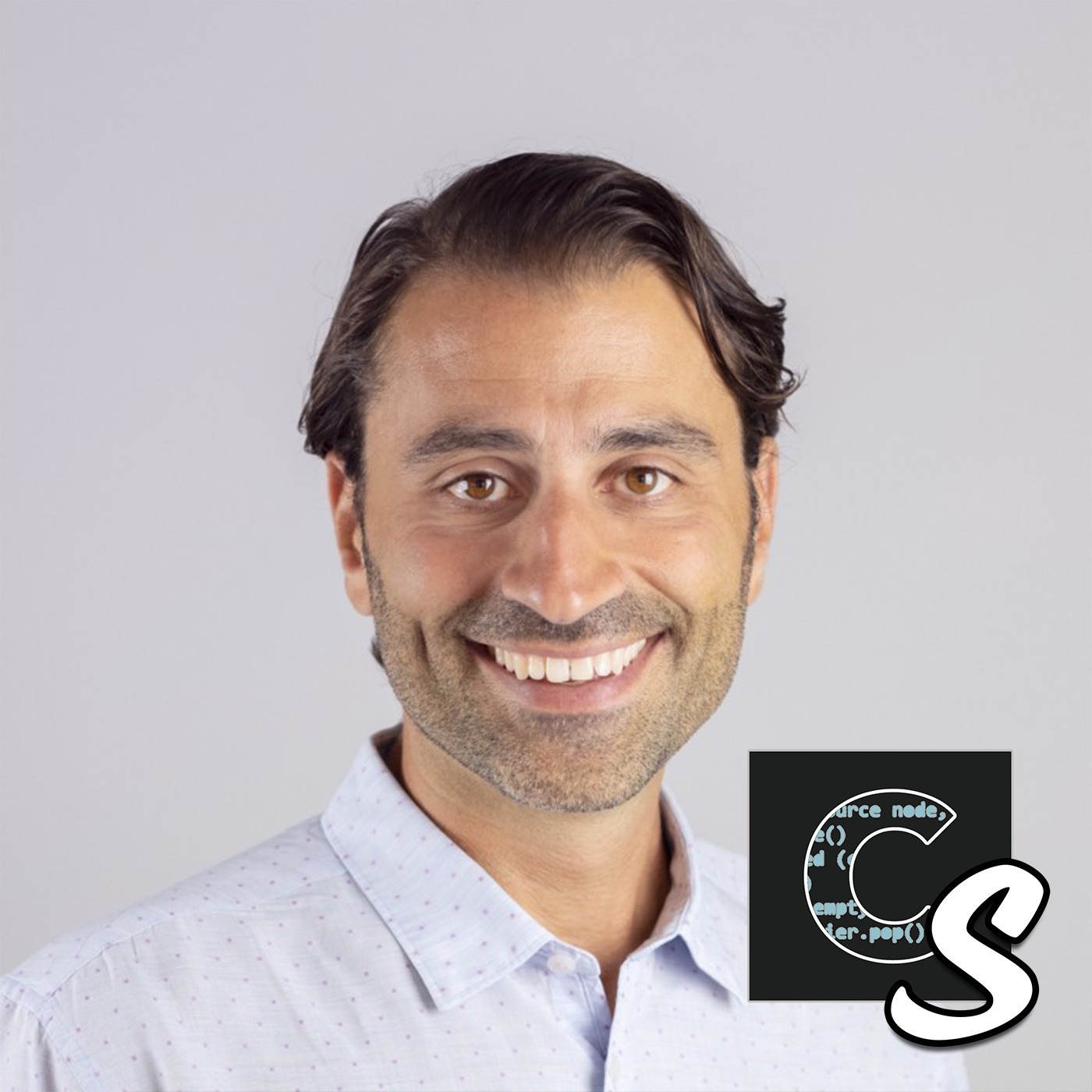
S9 E10: Breaking the AI Code Explosion and Democratizing Codebase Intent with Dennis Pilarinos, Founder & CEO of Unblocked
In this episode
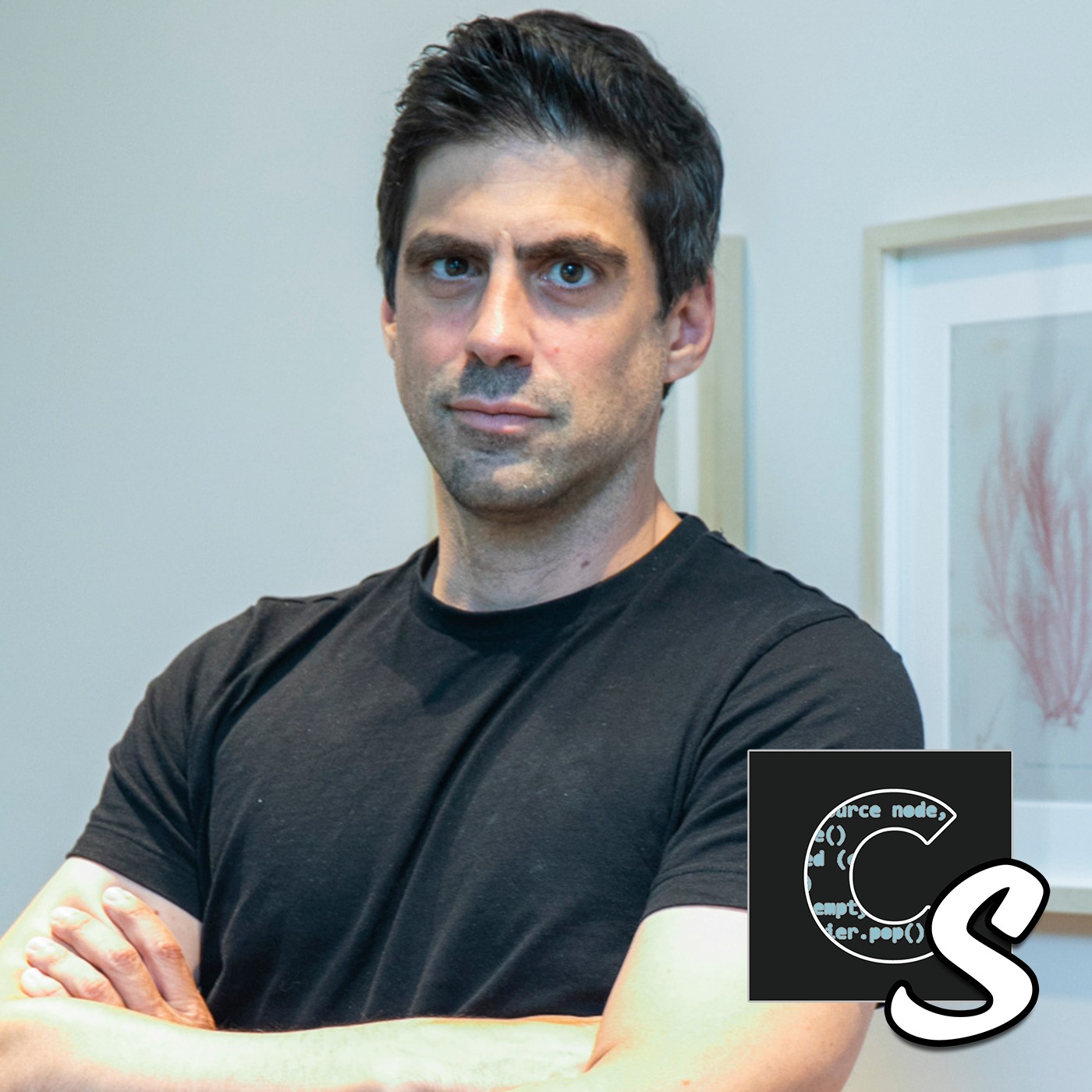
Dennis Pilarinos was tinkerer at an early age. He always found himself wanting to understand how things were put together - and as such, he would take them apart and try to reassemble them. He grew up in Canada, and is currently based in Vancouver. He is professional driven by tech curiosity and attention to detail. Previously, he founded and sold BuddyBuild, which went from inception to acquisition within 3 years. Outside of tech, he has his private pilots license, which allows him to fly a lot and take his mind off startup life.
Dennis is a self proclaimed impatient person, and a mediocre developer - which drives his building of solutions. In context of a company, there is a lot of information that exists in the context of a company, which is necessary to know when getting familiar with a codebase. When you can't find that info, you are essentially... well, blocked. So, Dennis decided to help people solve that problem.
This is the creation story of Unblocked.
Sponsors
Links
Current Sponsors:
Checkout our Stacklist! https://stacks.codestory.co/
Check out our Patreon!
Hosted by Noah Labhart | Technical Founder & Startup Mentor.
Our Sponsors:
* Check out Granola and use my code granola.ai/CODESTORY for a great deal: https://granola.ai
* Check out Perplexity and use my code pplx.ai/codestory for a great deal: https://www.perplexity.ai
Advertising Inquiries: https://redcircle.com/brands
Privacy & Opt-Out: https://redcircle.com/privacy
[SPEAKER_01]: in front of mine had this great expression, which is like there are two types of companies in the world. [SPEAKER_01]: Those were technical debt and dead ones. [SPEAKER_01]: We have this kind of polling system or a pushing system really, that pushes notifications to all these clients that we have in the thousands and thousands of them. [SPEAKER_01]: And we're running a query that worked up to a certain point, then it was good enough. [SPEAKER_01]: and then it destroyed that pusher system.
[SPEAKER_01]: And so we had to instrument it, figure out what was causing the issue, update the query, retroactively put the requirements into the scale that we need to actually use for that system. [SPEAKER_01]: I think it's actually like a very reasonable thing to do in the early stages of a company. [SPEAKER_01]: My name's Dennis Pillerinoce and I'm the founder and CEO of Unblocked.
[SPEAKER_04]: This is Code Story. [SPEAKER_04]: A podcast bringing you interviews with tech visionaries. [SPEAKER_04]: Six, six months moonlighting goes. [SPEAKER_00]: It's the last and last of the backends. [SPEAKER_04]: Who share what it takes to change an industry? [SPEAKER_00]: I don't exactly know. [SPEAKER_04]: She told me many girls to get right. [SPEAKER_02]: Who built the teams that have their back company is its teams help each other. [SPEAKER_02]: She was proud of her team. [SPEAKER_04]: Keeping scalability top of mind.
[SPEAKER_04]: All that infrastructure was that we had to even fighting it as we could. [SPEAKER_04]: Total waste of time. [SPEAKER_04]: The stories you don't read in the headlines. [SPEAKER_03]: It's not an easy thing to achieve. [SPEAKER_04]: To get yourself accustomed, try to begin. [SPEAKER_04]: To ride the ups and downs of the start-up line. [SPEAKER_03]: To really miss it. [SPEAKER_03]: Not just about technology. [SPEAKER_04]: All this and more. [SPEAKER_04]: On code story. [SPEAKER_04]: I'm your host, Snow at Labpart, and today how Dennis Pilarino's is building you a way to talk to your code, so you can minimize disruptions and maximize dev time.
[SPEAKER_04]: Denis Pilirino's was a tinkerer at an early age. [SPEAKER_04]: He always found himself wanting to understand how things were put together, and as such, he would take them apart and try to reassemble them. [SPEAKER_04]: He grew up in Canada and is currently based in Vancouver. [SPEAKER_04]: He's professionally driven by tech, curiosity, and attention to detail. [SPEAKER_04]: Previously, he founded and sold buddy-built, which went from inception to acquisition within three years. [SPEAKER_04]: But outside of tech, he has his private pilot's license,
[SPEAKER_04]: Dittis is a self-proclaimed, impatient person, and a mediocre developer, which drives his building of solutions. [SPEAKER_04]: In context of a company, there's a lot of information that exists, which is necessary to know when getting familiar with the codebase. [SPEAKER_04]: When you can't find that info, you are essentially, well, blocked. [SPEAKER_04]: So Dittis decided to help people solve that problem.
[SPEAKER_04]: This is the creation story of Unblocked.
[SPEAKER_01]: A lot of people would describe me as a relatively impatient person, and I'm self-aware enough to recognize that I'm a very kind of mediocre developer. [SPEAKER_01]: With the case of buddy build, I was really frustrated by the inability for me to get push and get it built onto my device, and so we created buddy build. [SPEAKER_01]: When I think about unblocked, again, it's very similar kind of experiences. [SPEAKER_01]: The thesis is that there's a lot of information that exists within the context of a company.
[SPEAKER_01]: and you're trying to find that information as you are trying to get up to speed on a code base. [SPEAKER_01]: It will implement a feature, fix a bug, anything that requires you to write some code. [SPEAKER_01]: There's a lot of context that you might need in order to get started. [SPEAKER_01]: In the absence of finding that information, kind of the most acute way that you experienced that is you might ask someone to question. [SPEAKER_01]: You send them a Slack message or you'll tap them on the shoulder or if you're on the receiving end, you get these Slack messages and interrupts that flow state that you're in.
[SPEAKER_01]: In fact, at one point, we were actually going to call the company father, which is, I don't want to bother other people, I don't want people to bother me. [SPEAKER_01]: It was a bit of negative connotation we decided to help people get unblocked instead. [SPEAKER_01]: And so with that, that's what the product does. [SPEAKER_01]: You can ask questions about your application, about your codebase, and get responses. [SPEAKER_01]: You can think of it as like an extended member of your team that knows every change and every discussion that's ever been made for every part of your code base, so you don't have to wait for responses and you can get contextual and nuanced answers for things that you might be looking for information on.
[SPEAKER_04]: Tell me about the MVP, so that first version of the product you built, how long it take to build and what sort of tools are you using to bring it to life?
[SPEAKER_01]: The MVP actually started about two years ago. [SPEAKER_01]: Two minute bit years ago. [SPEAKER_01]: And what we wanted to do is allow you to select a region of code, click, and ask a question. [SPEAKER_01]: And what we would allow you to do is identify who the experts were within your organization and send them a message. [SPEAKER_01]: So you can think of it as almost like a messaging app within the context of the IDE. [SPEAKER_01]: That got some relatively limited adoption, and then over the course of time, let's say over the last year or so, the advent of these LLMs, seem to be quite a transformational technology.
[SPEAKER_01]: A lot of people talk about their companies as AI companies or power by AI, or things of that nature. [SPEAKER_01]: I'm probably reluctant to say so. [SPEAKER_01]: We do use LLMs. [SPEAKER_01]: We use a bunch of them and a bunch of this technology, but in the same way that I suspect you don't care that we also use Kotlin and Postgres and TypeScript. [SPEAKER_01]: We happen to use this technology to enable really just how to solve a problem, which is I want to ask a question and get a response.
[SPEAKER_01]: So the MVP was where you would ask your coworkers and try to minimize those interruptions by colocating the questions and answers that whole conversation directly in the code base. [SPEAKER_01]: That still exists in a limited capacity in the product, but it's really about being able to ask effectively a machine that knows everything about it. [SPEAKER_04]: So in that MVP, with any MVP, right? [SPEAKER_04]: You got to make certain decisions and trade-offs, right? [SPEAKER_04]: How you're going to build it, or, you know, the approach you're going to take, or limitations on feature set, things like that.
[SPEAKER_04]: Tell me about some of those you had to work through and how you cult with those decisions. [SPEAKER_01]: There's always that trade-off of what you want to be able to do with the time from that you have to do it in. [SPEAKER_01]: We have a very specific kind of approach. [SPEAKER_01]: We call it BXT, so business experience technology. [SPEAKER_01]: The B, you have to suspend disbelief at the early stages because you're trying to figure out is something that people are going to want and hopefully if they want it, they'll pay you for it.
[SPEAKER_01]: So, I'll put that aside for a second and then we really focus on the experience, how do we build something that we think people would love? [SPEAKER_01]: Think about it like in the fullness of time, as if there were no kind of technological limitations, what would that experience look like? [SPEAKER_01]: So, the team sits together and we spend a lot of time in that design process. [SPEAKER_01]: We used tools like Figma and Sketch at the Buddy Build Days. [SPEAKER_01]: and we try to figure out exactly what's the problem that we're trying to solve and what would that experience look like.
[SPEAKER_01]: And then we start layering in the tea the technology. [SPEAKER_01]: How would we actually go and do this? [SPEAKER_01]: Sometimes the technology doesn't exist in order to create that experience. [SPEAKER_01]: And so you have to think about other creative ways to potentially develop it. [SPEAKER_01]: But we are a very customer and user-focused organization. [SPEAKER_01]: We care a lot about all the details. [SPEAKER_01]: I'm making sure that ultimately people develop specifically, have a product that they really love.
[SPEAKER_04]: Let's move forward then. [SPEAKER_04]: You've got the MVP. [SPEAKER_04]: It's working your gains from traction right that first version of the product. [SPEAKER_04]: Tell me about how you progress it and matured it. [SPEAKER_04]: And I think to wrap that question in a box a little bit, what I'm looking for is how do you build your roadmap? [SPEAKER_04]: How you win about deciding, okay, this is the next most important thing to build or to address with unblocked. [SPEAKER_01]: We're still very much in flight and I feel like that's always going to be the case.
[SPEAKER_01]: In the end, as a buddy build, the road map was stuffed full of things that we wanted to go and get done. [SPEAKER_01]: I think about the problem in a couple of different ways. [SPEAKER_01]: I think first and foremost, I think you have to prioritize customer feedback. [SPEAKER_01]: But you have to be careful, right? [SPEAKER_01]: Some customers will ask you to do things that is specific to them. [SPEAKER_01]: I'll give you a very concrete example. [SPEAKER_01]: Most of our early adopters do use GitHub and handful of them to use BitBucket, and then very sparingly, we saw some folks who would use GitLab on premise specifically.
[SPEAKER_01]: We ship the MVP with GitHub, and then we added BitBucket, and then we added GitLab. [SPEAKER_01]: It would have been foolish to go and build all the infrastructure, all of the work required to support all of those SCMs right out of the gate, because we didn't know if the actual product would work. [SPEAKER_01]: So you can have all the source code providers, but if the actual product that uses that source code doesn't create any value and people don't use the product, they waste it a whole bunch of time unnecessarily.
[SPEAKER_04]: My next question is around teet, right? [SPEAKER_04]: So you gotta get the right people on board to help you build and deliver a product, right? [SPEAKER_04]: And I'm curious about how you go about building your team. [SPEAKER_04]: What do you look for in those people to indicate that they're the winning horses to join you?
[SPEAKER_01]: Early in my career, I received this advice, which is, as you think about, I was probably in my early 20s, I was working at Microsoft, and the guy who actually started Xbox gave a talk, and he said, as you think about your career the next 20, 30, 40 years, think about the people that you work with, the product, and then the position, and wait them disproportionately. [SPEAKER_01]: So people is 85% of the decision for any kind of career change I'm going to make. [SPEAKER_01]: 10% is product and then 5% is position.
[SPEAKER_01]: If I'm working with an incredible group of people on something that I think is quite compelling, I'll sweep the floors if I can. [SPEAKER_01]: In terms of the people themselves, unblocked as unique. [SPEAKER_01]: It's the same larger the same team that started BuddyBuild started unblocked. [SPEAKER_01]: So we started the company with 10 folks. [SPEAKER_01]: We all work at BuddyBuild and built that from its inception various stages. [SPEAKER_01]: So we know the idiocincrecies of each other.
[SPEAKER_01]: The team likes to tease me. [SPEAKER_01]: If there's any decisions that need to get made, it's better to ask Dennis after lunch when his blood sugar level has stabilized. [SPEAKER_01]: There's some fun nuances there. [SPEAKER_01]: In terms of the people themselves, we have these kind of cultural underpinnings. [SPEAKER_01]: It's really helpful working at Amazon to one of the great learnings I think at that company is they're very explicit about what they call leadership principles are and those aren't just something that's written up on a website somewhere.
[SPEAKER_01]: They actually live them and refer to them on a daily basis. [SPEAKER_01]: So we definitely took a page at that book. [SPEAKER_01]: A few people that are going to be a good fit for us are those who drive to get things done. [SPEAKER_01]: Having a strong bias for action are a strong advocate for the end user, like really focused on the end user experience. [SPEAKER_01]: Can play well with others. [SPEAKER_01]: I think it's one way we describe it, which is like your team player. [SPEAKER_01]: There are no egos in the company.
[SPEAKER_01]: People fully appreciate that they all had their strengths and weaknesses and it's an opportunity I'd for us to learn from each other. [SPEAKER_01]: I've always liked this expression which is like an ambitious mal-content, someone who's effectively dissatisfied with this data's quote and constantly aware of how you could make the world better and figure out a way so that you can actually make it a better place. [SPEAKER_01]: I'll always happy never satisfied whether I like to think about it.
[SPEAKER_01]: So those are some of the cultural underpinnings that we use as we think about the team as it stands right now and how we want to grow it.
[SPEAKER_04]: Okay, so let's flip to scalability. [SPEAKER_04]: And this will be interesting, given who you're building for. [SPEAKER_04]: Very opinionated group of folks where scale is important and any sort of hiccup might turn people away. [SPEAKER_04]: So did you build this to scale efficiently from day one? [SPEAKER_04]: Or was there anywhere where you had to fight it as you grow? [SPEAKER_04]: And this is more on around technology. [SPEAKER_01]: Friend of mine had this great expression, which is like there are two types of companies in the world.
[SPEAKER_01]: Those were technical debt and dead ones.
[SPEAKER_01]: I know I can give credits to this specific person who introduced that thought to me. [SPEAKER_01]: We experienced it as recently as this week. [SPEAKER_01]: We have this kind of polling system or a pushing system really that pushes notifications to all these clients that we have. [SPEAKER_01]: We have thousands and thousands of them and we're running a query that worked up to a certain point then it was good enough and then it destroyed that pusher system. [SPEAKER_01]: And so we had to instrument it, figure out what was causing the issue, update the query, retroactively, put the requirements into the scale that we need to actually use for that system.
[SPEAKER_01]: I think it's actually like a very reasonable thing to do in the early stages of a company. [SPEAKER_01]: I think it becomes less acceptable as you mature. [SPEAKER_01]: In the early stages, I think people are kind enough to appreciate that you're still learning. [SPEAKER_01]: These are the types of things that you don't want to pre-optimize for. [SPEAKER_01]: So we definitely feel some heartburn for that stuff every once in a while. [SPEAKER_01]: We try to minimize it. [SPEAKER_01]: We know that especially for developer audience.
[SPEAKER_01]: If the product is flaky or doesn't work, it's good as dead at that point.
[SPEAKER_04]: So as you step out on the balcony, and you look across all that you've built, what do you most proud of? [SPEAKER_01]: I think one of the things we didn't talk about within the context of these cultural underpinnings, but I think is, I think just implicitly understood is there is, we're not, I'm not proud of anything. [SPEAKER_01]: I find pride, maybe just a hiccup I have, but I find pride to be a very overloaded word for me. [SPEAKER_01]: I think it's really important to be humbled no matter what you have accomplished.
[SPEAKER_01]: I don't know that I could point to a specific product or outcome or people are fascinated with what you built a company that was acquired by Apple. [SPEAKER_01]: I was a fantastic learning experience. [SPEAKER_01]: Software is interesting in that you are mixing both an art and a science, and so I think like any artist, you'd like to see your work appreciated. [SPEAKER_01]: And so on any given day when someone writes in and says something nice, especially for a developer audience, I think we take a certain level of humility but gratitude for that to say okay, we did build something that people find helpful.
[SPEAKER_01]: I don't know that's any specific accomplishment other than to to impress people who are otherwise
[SPEAKER_04]: Okay, let's flip the script a little bit. [SPEAKER_04]: Tell me about a mistake you made and how you and your team responded to it. [SPEAKER_01]: One of the things that we're trying to figure out right now is how we talk about unblocked. [SPEAKER_01]: How do people think about it? [SPEAKER_01]: How do we talk about it? [SPEAKER_01]: As we start to talk about it to larger audiences, what's the messaging that we want to use? [SPEAKER_01]: I was pretty happy with an approach that we take in.
[SPEAKER_01]: We fired off a bunch of kind of marketing efforts around that language and it converted terribly. [SPEAKER_01]: It's not on the engineering side, but it's just it's almost more painful when it's like how hard could this be. [SPEAKER_01]: It's a couple of words to describe this thing and you get pretty visceral feedback. [SPEAKER_01]: You blast it out to 2,000 people and you see how many of them click on a link. [SPEAKER_01]: there's a bunch of variables there, but it was unquestionably, and we were able to test it with a different set of messaging, subsequently, but it's unquestionably, I mistake that's easy to make.
[SPEAKER_01]: I think it's very easy as a creator to see it and think about it in a specific way, and so you really do have to take yourself out of those shoes and put yourself into the position of someone who's reading it for the first time. [SPEAKER_04]: This will be super fun. [SPEAKER_04]: What is the future look like for the product
[SPEAKER_01]: I think it's pretty interesting. [SPEAKER_01]: I think these are these transformational shifts in computing. [SPEAKER_01]: I remember the transition from selling software on premise to cloud. [SPEAKER_01]: I remember developers using a client-side library to consume APIs that were in the cloud. [SPEAKER_01]: I think the advent of mobile and its ability to capture a bunch of free time is super fascinating. [SPEAKER_01]: It's unclear to me, certainly at this point in time, where AI will have a role.
[SPEAKER_01]: To what degree it will have the same impact of these previous title ways of computing as it were. [SPEAKER_01]: The one thing that is clear to me is the rate at which it improves is I've never seen anything like it. [SPEAKER_01]: Month over month, week over week improvements where you get better performance at lower cost at a rate that would make CPU improvements back in the 90s and 2000s seem. [SPEAKER_01]: glacial by comparison. [SPEAKER_01]: So I think we're in the very kind of early stages of what that's going to look like.
[SPEAKER_01]: I love software that helps replicate what people do in the real world. [SPEAKER_01]: If you can use technology to play a more meaningful role in people's lives, I think it has a fairly far reaching impact. [SPEAKER_01]: And so for unblocked, I can see as continually benefiting from
[SPEAKER_01]: And I think as a consequence, I think the team we have a background certainly in mobile and secure distributed systems. [SPEAKER_01]: But I think we're gonna need to develop different sets of skills to really understand how to use this technology in a way that does not delight end users. [SPEAKER_01]: And it's nice to be able to kind of early stages of this because you get to see it evolve. [SPEAKER_04]: Okay, Dennis, let's switch to you. [SPEAKER_04]: Who influences the way that you work?
[SPEAKER_04]: You know, a person or many persons
[SPEAKER_01]: There's so many different aspects to my job. [SPEAKER_01]: And so I try to take little bits and pieces from various folks. [SPEAKER_01]: I was very fortunate to work with folks like Bill Gates, at Microsoft and Jeff Bezos, at Amazon. [SPEAKER_01]: I love Bill's competitive spirit. [SPEAKER_01]: He's had different stages in his life. [SPEAKER_01]: Certainly the segment that I saw, he was very clear on what he wanted and the approach that he should take. [SPEAKER_01]: by comparison, I thought Jeff was as competitive, but certainly didn't have the same level of adversarial tone or approach.
[SPEAKER_01]: I remember my first Jeff review, I think Jeff said something along the lines of, I'm so frustrated right now, I wanna blow my brains out. [SPEAKER_01]: And so we walked out of the room and debrief, and my previous experience had been at Microsoft where there's a lot more screaming and yelling and profanity. [SPEAKER_01]: And so I thought that Jeff review actually went fairly well.
[SPEAKER_01]: pretty dismayed and blown away by how bad it had gone. [SPEAKER_01]: Just seeing the different leadership styles between these two folks, I thought was certainly something I still think about, which is I like the intensity of build, but I like the way that Jeff kind of makes you feel like you've let down an uncle. [SPEAKER_01]: Someone you want to impress and try to do the best thing. [SPEAKER_01]: So I try to like certainly think about a leadership style in that capacity. [SPEAKER_01]: I'm a very pragmatic person, like fundamentals.
[SPEAKER_01]: There's a lot of folks in kind of the finance world that I would think are interesting and very principled about their thinking, so certainly the oddest examples are folks like Buffet and Munger. [SPEAKER_01]: Yeah, those are some of the kind of high level things of how I think about people that I like how they work and like how they think. [SPEAKER_04]: So, we talked about a mistake earlier. [SPEAKER_04]: This is a little different spend. [SPEAKER_04]: If you could go back to the beginning, maybe a buddy-built or unblocked, you'd choose.
[SPEAKER_04]: What would you do different? [SPEAKER_04]: Or where would you consider taking a different approach? [SPEAKER_04]: It doesn't have to be something that, you know, didn't work, could have worked even well, but maybe you tweak it a little bit. [SPEAKER_01]: Like one of the biggest mistakes I made in buddy-built and try not to replicate it in unblocked. [SPEAKER_01]: building and starting companies from scratch and thinking about the technology, the experience, the business. [SPEAKER_01]: There's a million things to think about and it can be very all-consuming.
[SPEAKER_01]: In Buddy Bill, people are like, wow, to go from inception to acquisition in three years as remarkable. [SPEAKER_01]: And it didn't feel like three years to me, it felt like 10 years, because I worked 70 plus hour work weeks every week for those three years. [SPEAKER_01]: I remember coming out of the shower after the acquisition on a Saturday and thinking, you don't go into the office in Saturday, what do you actually do? [SPEAKER_01]: The downstream consequences of that were pretty dramatic.
[SPEAKER_01]: I glossed my identity in Buddy Build. [SPEAKER_01]: And so when it ended, I blacked the sense of purpose in some capacity and felt certainly a sense of mourning and went into kind of a depressive state for [SPEAKER_01]: That was painful in many ways. [SPEAKER_01]: We're talking about champagne problems and the temperature of the champagne to be clear. [SPEAKER_01]: but it definitely did my head in. [SPEAKER_01]: So I took a little bit of time off between various projects and wrote myself a note saying that I wouldn't let myself get into that place.
[SPEAKER_01]: And the team who built Buddy Build knows what that behavior looks like and I asked them to make sure I also don't get into that place. [SPEAKER_01]: The investors who invested in Unblocked, I asked them to make sure I don't get into that place. [SPEAKER_01]: People kept telling me at the time, it's a marathon that you can't run at a sprint pace. [SPEAKER_01]: And I think my response to that, if I didn't vocalize it,
[SPEAKER_01]: and it turns out you can't. [SPEAKER_01]: I've been very disciplined and principled about this. [SPEAKER_01]: I agree that I can, but when you get distance from problems is where you get the clarity that you need to solve them most effectively. [SPEAKER_01]: There is definitely a dimension margin of return where you're just so tired or so exhausted and you just can't see the force for the trees that there is no utility in continuing forward. [SPEAKER_01]: It's better to go do something else clear ahead, go for a flight, go for a walk, whatever it might be.
[SPEAKER_01]: Because if you maintain that for an extended period of time,
[SPEAKER_01]: Things result.
[SPEAKER_01]: Make sure you're going to do a demo, you have stable Wi-Fi, and it's probably not going to be on an airplane. [SPEAKER_01]: So let's just wait until we get to the ground. [SPEAKER_01]: I think it's really important that as you try to present an idea, quote unquote, the next big thing, that you really try to set the stage for the problem that you're trying to solve. [SPEAKER_01]: Set the context, don't be rushed to get through it, and then really focus on that kind of end user experience.
[SPEAKER_01]: What is this going to be, and how do you replicate or show that end user experience in that short period of time? [SPEAKER_01]: I think that's one of the things you're just like, if you use those as Norst stars, you end up building products that make a difference. [SPEAKER_01]: And I guess one last thing, as you build your team, make sure that you build it with that kind of 85, 10, 5. [SPEAKER_01]: Go find the people that you feel like you can learn a lot from and that share that same kind of cultural underpinnings.
[SPEAKER_04]: It's fantastic advice. [SPEAKER_04]: Well, Dennis, thank you for being on the show today. [SPEAKER_04]: Thank you for telling the creation story of Unblocked. [SPEAKER_01]: Thanks so much for having me. [SPEAKER_01]: I really appreciate the conversation.
[SPEAKER_04]: And this concludes another chapter of Coat Story.
[SPEAKER_04]: Code Story is hosted and produced by Noah Labhart. [SPEAKER_04]: Be sure to subscribe on Apple Podcasts, Spotify or the podcasting app at your choice. [SPEAKER_04]: And when you get a chance, leave us a review. [SPEAKER_04]: Both things help us out tremendously.
[SPEAKER_04]: And thanks again for listening.
Latest Season of the Podcast is Sponsored By




 Apple Podcasts
 Spotify
 Castbox
 Player FM
 Pocket Casts
 YouTube
 Overcast
 Castro
 Goodpods
 Moon FM
 Podbean
 Podcast Addict
 Podcast Republic