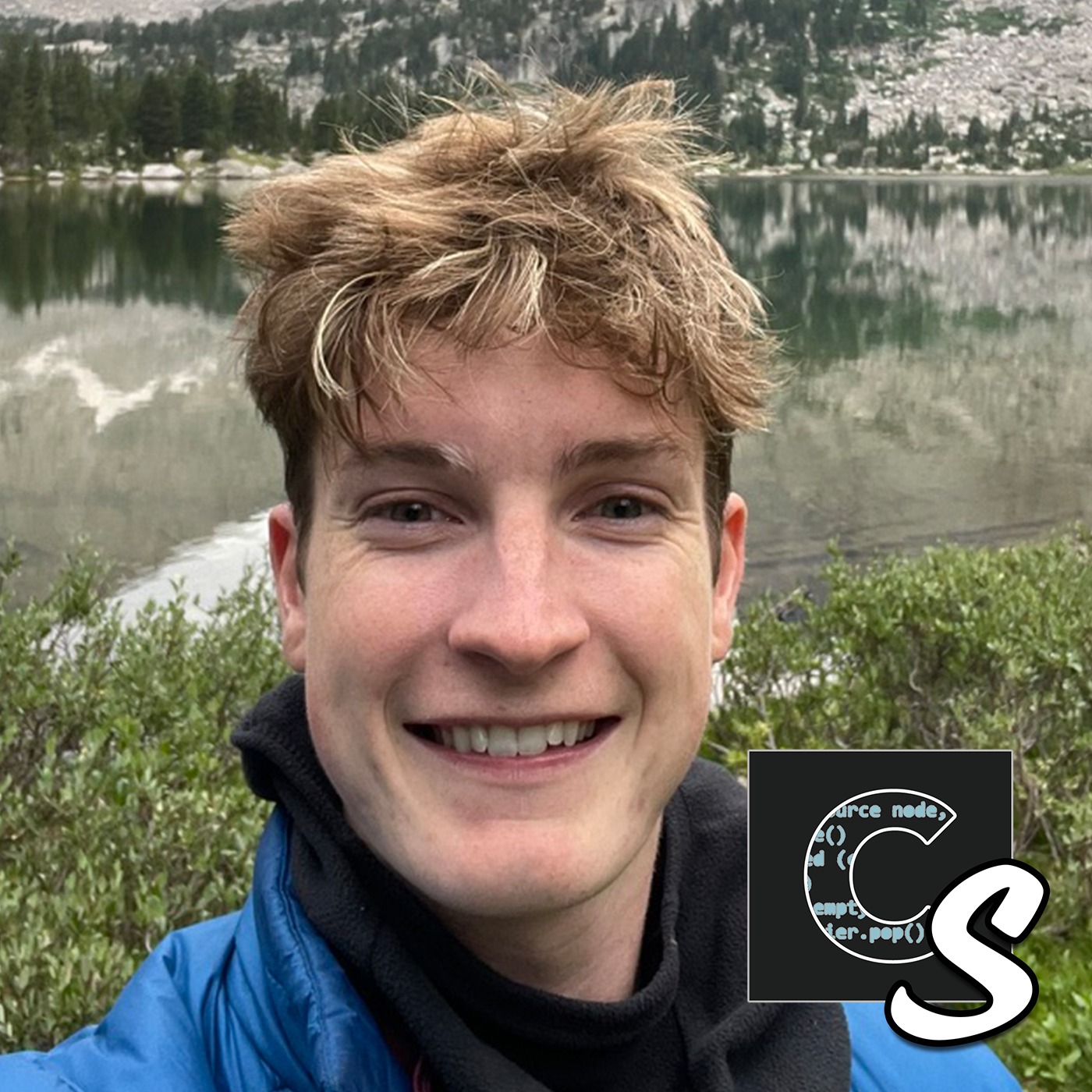
S13 Bonus: Eliminating Paperwork & Manual Data Entry in Manufacturing with Brian McKeown, Founding Engineer at Harmony AI
In this episode
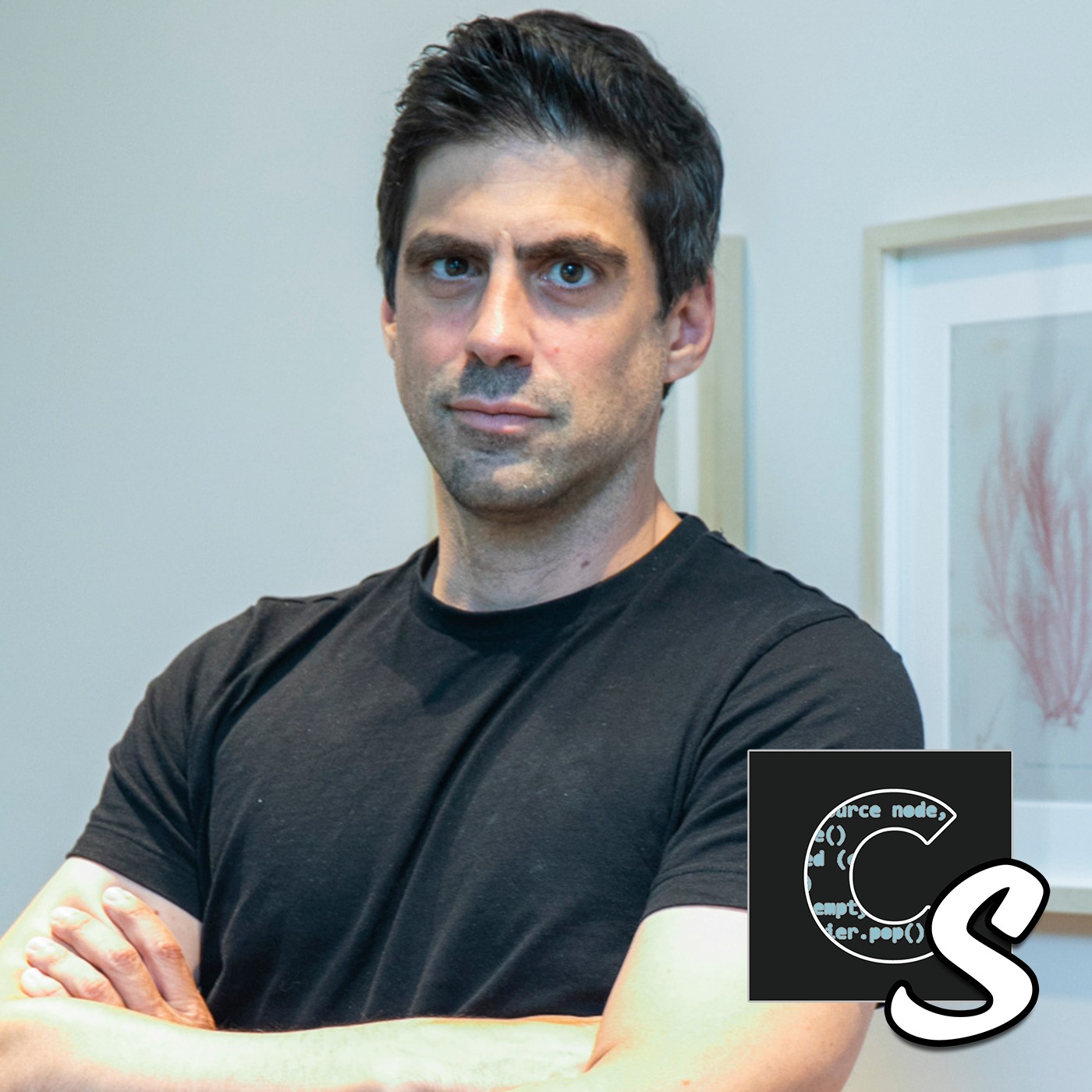
Brian McKeown is 24 years old, and was born and raised in Dallas, TX. He attended Texas A&M University in College Station, and was heavily involved in rec athletics. Post college, he worked a year or so before getting invited on the rocket ship he has been apart of in manufacturing, and moving to Chattanooga. Outside of tech, he loves being outdoors and in the mountains. He finds the Tennessee area great for hiking and community, which is a bit different than what he grew up with in Texas.
In his prior role, which was more of an old school company, Brian was referred to an opportunity by one of his mentors in college. The founders of his current venture had proven market fit for their product, but needed talented engineers to create a repeatable platform, built on top of a playbook for what works, to deploy in manufacturing plants across the US.
This is the creation story of Harmony AI.
Links
https://www.linkedin.com/in/brian-mckeown-49b225229
Current Sponsors:
Checkout our Stacklist! https://stacks.codestory.co/
Hosted by Noah Labhart | Technical Founder & Startup Mentor.
Our Sponsors:
* Check out Granola and use my code granola.ai/CODESTORY for a great deal: https://granola.ai
* Check out Perplexity and use my code pplx.ai/codestory for a great deal: https://www.perplexity.ai
Advertising Inquiries: https://redcircle.com/brands
Privacy & Opt-Out: https://redcircle.com/privacy
[SPEAKER_01]: It's constantly balancing this trade-off of speed versus quality. [SPEAKER_01]: You really want to enter these kinds of environments and move as quick as possible. [SPEAKER_01]: So basically what we do with this kind of pilot system is we go in and we [SPEAKER_01]: prove our worth by delivering on their hardest problem. [SPEAKER_01]: A bit of a sales tactic, but we say, hey, we will go into your plant for four to six weeks and we will solve your hardest problem. [SPEAKER_01]: You guys will think that we can't do that and then we'll do it anyway, then that's why you'll end up going with our software.
[SPEAKER_01]: Howdy, I'm Brian McCune, and I am a founding engineer here at Harm NIA.
[SPEAKER_03]: This is Code Story. [SPEAKER_03]: A podcast bringing you interviews with tech visionaries. [SPEAKER_03]: Six months moonlighting goes. [SPEAKER_00]: I'm lost in all the backgrounds. [SPEAKER_03]: Who share what it takes to change an industry? [SPEAKER_00]: I don't exactly know what to do. [SPEAKER_03]: It doesn't go as to get right. [SPEAKER_03]: who built the teams that have their bad company is its teams help each other achieve this proud of our team. [SPEAKER_03]: Keeping scalability top of mind, all that infrastructure was up there.
[SPEAKER_02]: Yes, we've been fighting it as we grew up. [SPEAKER_03]: Total waste of time. [SPEAKER_03]: The stories you don't read in the headlines. [SPEAKER_03]: It's not an easy thing to achieve, to get yourself interested in off and try to begin to ride the ups and downs of the start-up line. [SPEAKER_03]: Need to really want it, not just about technology. [SPEAKER_03]: All this and more, on code story. [SPEAKER_03]: find your host, Noah Labhart, and today, help Brian McHughen, is building the AIOS for American Manufacturing.
[SPEAKER_03]: IE, the native player, connecting plants to real-time data.
[SPEAKER_03]: Brian McEwen is 24 years old and was born and raised in Dallas, Texas. [SPEAKER_03]: He attended Texas A&M University in College Station, was heavily involved in REC athletics. [SPEAKER_03]: Post college, he worked a year or so before getting invited to the rocket ship, he has been a part of in manufacturing and moving to Chattanooga. [SPEAKER_03]: Outside of tech, he loves being outdoors and in the mountains. [SPEAKER_03]: He finds that Tennessee is a great area for hiking and community, which is a bit different than what he grew up with in Texas.
[SPEAKER_03]: While he was in his prior role, which was more of an old-school company, Brian was referred to an opportunity by one of his mentors in college. [SPEAKER_03]: The founders of his current venture had proven market fit for their product, but needed talented engineers to create a repeatable platform, built on top of a playbook for what works, to deploy in manufacturing plants across the U.S.
[SPEAKER_03]: This is the creation story of Harmony AI.
[SPEAKER_01]: So what harmony is, it's an AI operating system for your factory. [SPEAKER_01]: And what that looks like is we're going to send a guy into your factory for anywhere between 3 to 9 months. [SPEAKER_01]: And what that's going to look like is them digitizing any paperwork that you have on the floor, connecting machine data, any internal tools you have built. [SPEAKER_01]: The ERPs, the CMS, the MES, that whole alphabet soup of software tools that you have access to, we're going to connect that into a data layer.
[SPEAKER_01]: We call that our ontological data layer, and that's basically a data foundation for our internal product to be built on top of. [SPEAKER_01]: That's your AI production scheduling, your quality intelligence, inventory intelligence, [SPEAKER_01]: We can automate some back-office workflows with AI agents, the really tedious stuff, but you have your best brain power doing every single day, just really killing their time. [SPEAKER_01]: And yeah, AI is only as good as the data has access to.
[SPEAKER_01]: So the idea is you get everything working in harmony, and you connect everything to one data layer, so that AI can make the best decisions possible. [SPEAKER_01]: I am a founding engineer, so I am not one of the founders here. [SPEAKER_01]: I was one of the first two hires, and basically I was in the situation in Dallas where I was working in a real old school company, and it just wasn't really my speed. [SPEAKER_01]: I've always been someone who loves to build things, love to move really quick, and really like to talk to people.
[SPEAKER_01]: So I basically, one of my mentors at Texas A&M, [SPEAKER_01]: His name is Zachary Hanchui, he does some really cool stuff in the 3D streaming space. [SPEAKER_01]: He reached out to me and he was like, hey, I got this a really cool opportunity here in Chad and Nougat and you came to mind. [SPEAKER_01]: And so I was like, let's look into this. [SPEAKER_01]: Yeah, connected me with George and Vic and G. The founders here and they were saying, [SPEAKER_01]: Yeah, so we've ended up in this situation where we have proven there's market fit or what our product is But we really need to bring in some talent to help turn this into a scalable solution That can be deployed to many factories over and over and build out that [SPEAKER_01]: quality playbook of how you're going to send a guy into these factories and Deliver the solutions that are repeatable and not only repeatable, but get fast or after every implementation Let's dive into the in the piece you want to found in engineers you built the first version Tell me about that first version of the platform.
[SPEAKER_03]: How long it takes to build and what sort of tools are you using to bring it to life? [SPEAKER_01]: Building the MVP here and development is a really unique process because we deliver a semi-custom solution in terms of software where you send a guy in and he maps the workflows to what our product is and that ontological data player that I'm talking about. [SPEAKER_01]: So what that really looks like is going and getting in the weeds of things. [SPEAKER_01]: We work with a cabinet manufacturer in Alabama.
[SPEAKER_01]: And so that's one of the plants that I've had the opportunity to work with. [SPEAKER_01]: So what that looks like is you'll basically show up and you will start just talking to everyone. [SPEAKER_01]: You really just got to get as much context of the situation as possible. [SPEAKER_01]: And as you're doing this, you will uncover certain problems that they think they have. [SPEAKER_01]: that might not exactly align with what is really the solution because you're a fresh set of technical eyes.
[SPEAKER_01]: So you really go there, listen, start learning and really just throw yourself into the deep end, and then from there you can contact stop into these agentic tools to help build a kind of [SPEAKER_01]: Vision on how these things are going to connect into the platform. [SPEAKER_01]: So you can use a lot of these new AI tooling systems to really accelerate your learning of a plant. [SPEAKER_01]: And so you can go ahead and say it's using this equipment. [SPEAKER_01]: They're following this workflow.
[SPEAKER_01]: And then once you have this really solid mental model of how their factory behaves, you can basically go ahead and pitch how to deliver a solution that fits within the scope of harmony. [SPEAKER_01]: but also delivers the solutions that they need at their plant. [SPEAKER_03]: Okay, I'm curious about a decision or trade off you had to make in building that early version of the product, right? [SPEAKER_03]: And I could I could cherry pick from what you said, some things, but maybe a core decision you had to make around accepting technical debt or how you approached the problem broke it down and how you coped with that decision.
[SPEAKER_01]: It's constantly balancing this trade off of speed versus quality. [SPEAKER_01]: You really want to enter these kinds of environments and move as quick as possible. [SPEAKER_01]: So basically what we do with this kind of pilot system is we go in and we prove our worth by delivering on their hardest problem. [SPEAKER_01]: So our kind of, let's say, a bit of a sales tactic, but we say, hey, we will go into your plant for four to six weeks and we will solve your hardest problem. [SPEAKER_01]: You guys will think that we can't do that and then we'll do it anyway and that's why you'll end up going with our software.
[SPEAKER_01]: And they'll always get a gig a lot of that and there you go. [SPEAKER_01]: Oh, awfully confident. [SPEAKER_01]: And then what we say is, yeah, but at the end of the day, we're batting a thousand here. [SPEAKER_01]: So every single pilot we've done as it stands has closed. [SPEAKER_01]: So that really provides insight into the kind of quality we delivered our customers. [SPEAKER_01]: But in doing this, you have this four to six weeks go of, hey, I want to build something that's extremely useful to them, but also is not a shoddy foundation to build on once the actual contract gets closed.
[SPEAKER_01]: Because no one wants to do what they did in the pilot all over again if that makes sense. [SPEAKER_01]: So you have to move with enough speed and direction to deliver solutions while not building something that is going to create a huge mess downstream within this implementation. [SPEAKER_03]: Okay, Brian, you have some pretty cool first customers, right? [SPEAKER_03]: The Mossberg moon pie lots of really cool US brand names. [SPEAKER_03]: I'm curious if there's been any interesting stories from the shop floor from interacting with those brands.
[SPEAKER_03]: You have any wild stories from there. [SPEAKER_01]: As I said, well-born cabinets is one of our customers, and so, these guys, they're in Alabama, they're true patriots, they love guns, second amendment, it's got to be their favorite amendment, and so... [SPEAKER_01]: Basically, we show up and we're delivering on this pilot for them, and we're building this really good connection with them because that's one of the important things that you have to do as for deployed engineer. [SPEAKER_01]: You have to build those connections.
[SPEAKER_01]: And as we're talking to them, we just realize, wow, these guys love guns. [SPEAKER_01]: They have a ski shooting range at their factory that they take customers to. [SPEAKER_01]: So we're like, man, that's super, super cool. [SPEAKER_01]: How can we really get them a gift or something? [SPEAKER_01]: We love gifting our customers to make sure they feel like we value them. [SPEAKER_01]: And we get them hyper personalized custom gifts so that they almost feel like a level of connection to us, because I think gifting is a really good way to do that.
[SPEAKER_01]: It shows that you listen and I learn about the person and they get them a gift that they really like and then that really helps establish that connection. [SPEAKER_01]: So we learned that they have a, they shoot clay at their factory with the customers. [SPEAKER_01]: So us having Mossberg shotguns as one of our customers, we call them up and we basically say, hey, can y'all do us a favor? [SPEAKER_01]: And they go, yeah, we love you guys anything. [SPEAKER_01]: We say, can we get two custom Mossberg shotguns that have laser engraved well-born cabinets and freedom to 50 on them so that we can give to them to these some of our new potential clients.
[SPEAKER_01]: and they're like, yeah, we can do that for you. [SPEAKER_01]: So that was crazy. [SPEAKER_01]: We had to navigate the whole gun-gifting process in the US, but we got them to them. [SPEAKER_01]: We demoed our final product at the end of the pilot. [SPEAKER_01]: We gave them these guns. [SPEAKER_01]: They were just amazed by the product that we've delivered in both the gift and the software. [SPEAKER_01]: So we got to... [SPEAKER_01]: Immediately after finishing up this pilot, we went out to their ski shooting range, and we let those babies rip.
[SPEAKER_01]: It was just one of the most unique things that I've ever gotten to do in the workforce.
[SPEAKER_03]: Okay, I know it's early days, but I'm really curious about how you're maturing and progressing Harmony AI as a platform and as a solution, and I think to wrap that question in a box a little bit, how do you build your roadmap at Harmony AI? [SPEAKER_03]: How do you decide that, okay, this is the next most important thing, the builder to address. [SPEAKER_01]: we have a really good team here and it's really a nice situation to be in when building a product roadmap, having so many guys living in the weeds of these factors because basically every so often probably weekly we have product roadmap meetings and we basically say things like hey what are the problems you are seeing in your factory and how do we think this could translate to someone else's factory?
[SPEAKER_01]: And the nature of this is you really end up with this old large bird's eye view of how manufacturing behaves in the world. [SPEAKER_01]: So every person who has a factory really thinks it's a lot different from someone else's factory. [SPEAKER_01]: And there's some truth to that. [SPEAKER_01]: And then there's also some things that are wrong with that. [SPEAKER_01]: And [SPEAKER_01]: For example, I was at the International Woodworking Fair in Atlanta two weeks ago, and a lot of these guys would come up to me and they would say, hey, I got a saw mill up in West Virginia, and it sounds like you work with people like Mossberg, Moon Pie, and some other assortment of customers that don't really seem to behave like a woodcutter wood.
[SPEAKER_01]: And what I have to tell them is, hey, do you have machines, and then they're like, yeah, we use a machine to debark the log, we use a bunch of chop saws and a planner mill, and we cut it to size, and we do this in that. [SPEAKER_01]: I'm like, okay, you got machines, so does Mossford. [SPEAKER_01]: And then I say something like, hey, do you have material? [SPEAKER_01]: Yeah, we take a log and we turn it into wood. [SPEAKER_01]: I'm like, yeah, that's what Mossberg does. [SPEAKER_01]: They make guns and they turn parts into guns.
[SPEAKER_01]: And you realize that even though everyone does things slightly differently, they do it just similar enough for this kind of ontological data solution to work out. [SPEAKER_01]: So yeah, that's really how we've learned where the product is going to go in the future. [SPEAKER_01]: We see these commonalities.
[SPEAKER_01]: represented within our model in kind of a semi-standard way that can be represented at factory after factory. [SPEAKER_03]: I love the approach to it a ton. [SPEAKER_03]: How do you go about building your team? [SPEAKER_03]: What do you look for in those people to indicate that they are the winning horses to join you? [SPEAKER_01]: So you got to be a dog and it's one of the vetting questions every single person gets asked when joining this team. [SPEAKER_01]: How are you a dog? [SPEAKER_01]: And I'll tell you when they ask me that, I was a little taken aback a little bit because I was, it felt like a non-standard question to be asked in an interview.
[SPEAKER_01]: They were like, really, how are you dog? [SPEAKER_01]: We're going to send you to possibly the border of Texas, where you're going to live in a town that has 10,000 people, half of them's feaks vanish. [SPEAKER_01]: You're really going to be thrown in the deep end of solving something. [SPEAKER_01]: How are you going to manage there? [SPEAKER_01]: And I said one word. [SPEAKER_01]: All right, so I gave them this answer. [SPEAKER_01]: I said, [SPEAKER_01]: That sounds like some crazy dad blower, and I am all for it, and they got a laugh out of that, and then I reframed it and said, these aren't important problems to solve.
[SPEAKER_01]: Manufacturing in the US needs to come back, and this is the company to help make it happen. [SPEAKER_01]: That's a part of our mission here. [SPEAKER_01]: We really aren't branded as the AI operating system for American manufacturing. [SPEAKER_01]: It's not only a product that we're trying to deliver, but it's also an outcome and a goal and a vision, and circling back to how that helps build a team. [SPEAKER_01]: You really just got to figure out if they're that kind of go-getter. [SPEAKER_01]: There's no science to it.
[SPEAKER_01]: You just got to have this 6th sense of like, [SPEAKER_01]: who was selling you some BS and who really cares about delivering on the product, on the vision, and on the goal. [SPEAKER_01]: And then on the more technical side, really have to distinguish whether they are just an engineer or whether they're truly a builder. [SPEAKER_01]: because our employees have a lot of leash and loosely defined constraints on what they have to deliver. [SPEAKER_01]: The difference between an engineer and a builder in my opinion is really an engineer can take a ticket from Jira or something with a whole set of defined specs and they can go ahead and deliver on it.
[SPEAKER_01]: But a builder is someone who can take a lot more loosely to find constraints and deliver a solution by asking the people, like the operators, the back office, all the users, the right questions to really figure out what needs to be delivered.
[SPEAKER_03]: let's dip into scalability. [SPEAKER_03]: I know it's still early days, so some of this may be interesting or pre-built in a certain way or I'm not sure, but maybe I don't preload it there. [SPEAKER_03]: Tell me about how you are approaching scale, even in these early days, and even still have there been interesting areas where you've had to fight scale as you've grown. [SPEAKER_01]: There is a tendency at startups to really accept anyone as your customer because you're trying to grow revenue and you really want to increase your size so that you can go to San Francisco and raise a big crazy next round or something.
[SPEAKER_01]: but you have to have the wherewithal to understand that this short term influx of capital might not be worth really taking someone outside of your ICP on its a customer. [SPEAKER_01]: Even though you may end up with five, 10, 15 more customers, if each one of them don't fit your ICP and are just unique enough to make every single one extremely siloed and hard to deliver on, that really creates a mountain of maintenance that you have to handle downstream once you start growing and it becomes a real thorn in your side.
[SPEAKER_01]: So the way we've approached scalability is by targeting these mid-market high-volume family-owned manufacturers and really trying to at least in the beginning stick to that kind of market so that we can notice these repeatable trends between these factories. [SPEAKER_01]: so that these solutions can be scalable and so that we can take one solution. [SPEAKER_01]: Now we've delivered out one factory, poured it over to the other and then connect that into the data model and crow quicker.
[SPEAKER_01]: So these implementations and these deployments get faster one after another. [SPEAKER_01]: Just snowball effect. [SPEAKER_03]: Okay, Brian, as you step out on the balcony, you look across all that you've built thus far at Harmony AI. [SPEAKER_03]: What are you most proud of? [SPEAKER_01]: It's gotta be the team. [SPEAKER_01]: It's gonna sound corny, but I love everyone here. [SPEAKER_01]: It is a stellar team. [SPEAKER_01]: The quality and caliber of engineer that we have at Harmony is...
[SPEAKER_01]: Really comparable to none. [SPEAKER_01]: It's just the best. [SPEAKER_01]: We have grown so much from when I've come on board and In the beginning I was like, wow, this is a great group of guys and I am beyond confident that this is gonna turn into something amazing [SPEAKER_01]: And it's crazy the team has pretty much quadrupled in size since I have come on board and that kind of sentiment has not led off at all. [SPEAKER_01]: The talent and skill of all these guys is just unbelievable.
[SPEAKER_01]: being a forward deployed engineer really requires a unique set of skills that are hard to come by and it's why we do such thorough vetting in our hiring process because you have to be able to talk to people, you have to be able to deal with loosely defined problems, you have to have that
[SPEAKER_01]: He got to know how to code. [SPEAKER_01]: And he got to understand how AI and machine learning works in the year of 2026. [SPEAKER_01]: And he got to be able to continue to learn. [SPEAKER_01]: He got to be able to continue to deliver excellence as technology and AI advance so rapidly. [SPEAKER_01]: And there is not a single person on our team that I don't believe is capable of continuing to deliver the absurd level of quality that they [SPEAKER_01]: have shown and are continuing to deliver.
[SPEAKER_03]: Okay, Brent. [SPEAKER_03]: Let's flip the script a little bit. [SPEAKER_03]: Tell me about a mistake you made and how you and your team responded to it. [SPEAKER_01]: One of the mistakes we've made really doubles back to the trade-off that I was talking about of focusing on speed versus quality. [SPEAKER_01]: At one of our earlier deployments, we really prioritize that speed, and it's one of the early customers. [SPEAKER_01]: So it's it is hard to say that it was a mistake, but it presented a sort of situation downstream where you basically built software to behave this way, but then as you fill in those missing pieces.
[SPEAKER_01]: or gather more context on the kind of solution they want you guys to deliver. [SPEAKER_01]: You really realize that this was not the way to do it. [SPEAKER_01]: So it requires a lot of gauging, whether you can band-aid some solutions or just rewrite the whole thing to make it behave in the larger picture of what is now provided to you.
[SPEAKER_03]: Okay, this will be exciting, right? [SPEAKER_03]: It's early days, you're moving forward with a really exciting platform, you're building an ambitious platform where you're going and taking on manufacturing at a really great time in the US. [SPEAKER_03]: What does the future look like for Harmony AI for the product that you're building for the industry where it's all going, all the things. [SPEAKER_01]: Can I say the moon? [SPEAKER_01]: I have the utmost confidence in this thing. [SPEAKER_01]: Absolutely dominating the US sector for AI tech and manufacturing.
[SPEAKER_01]: We won't be content until every single factory in the US is using Harmony AI. [SPEAKER_01]: And of course we think every factory in the US should use Harmony AI. [SPEAKER_01]: We think really every factor in the world should use it on the out, but we really want to deliver on making the US manufacturing sector so much more competitive so that we can resure those jobs, bring back and re-industrialize the US because that used to be one of the strengths of our country and we have seen it disintegrate year after year, really across the last 50 years.
[SPEAKER_01]: And so the future vision of harmony is bringing all that back to the U.S. using technology and AI to leverage to increase the output and efficiency to make it competitive again. [SPEAKER_01]: We will never be able to compete with the cost of labor of some of these other countries. [SPEAKER_01]: So we have to find that way to make it more competitive. [SPEAKER_01]: and that's by delivering savvy AI forward tech-based solutions in these factory that they basically allow these industries to become competitive again.
[SPEAKER_03]: What's what's to you, Brian? [SPEAKER_03]: Who influences the way that you work? [SPEAKER_03]: Am a person or many persons or something? [SPEAKER_03]: You look up to him, why? [SPEAKER_01]: I gotta go with my dad, man. [SPEAKER_01]: Tom McEwen is a dog. [SPEAKER_01]: I am so lucky to be his son. [SPEAKER_01]: I basically got to see the playbook on how to build and tech. [SPEAKER_01]: My dad is my hero. [SPEAKER_01]: He has led multiple startups, multiple tech companies, and [SPEAKER_01]: all other, and he's an author, to successful acquisitions, accelerated growth.
[SPEAKER_01]: He basically gave me the playbook of how to succeed in tech, saying, and he was programming that into me since I was a baby. [SPEAKER_01]: He influences immensely how I work. [SPEAKER_01]: I remember growing up during COVID, I was in high school. [SPEAKER_01]: He was the founder of a company and that was a really tough time to navigate because the economy really took a nose dive and Just his ability to keep a level head in situations of chaos and navigate that boat [SPEAKER_01]: into an acquisition was really just one of the most impressive things that I have ever seen.
[SPEAKER_01]: And now having spent some time in tech, I really have learned and gained such more of an appreciation on how he was able to do that because it's not easy. [SPEAKER_01]: Running a company is really hard. [SPEAKER_01]: I have a senior role here at HarmonyOut. [SPEAKER_01]: And I can only imagine what some of these guys like George, Vic and G are going through on a day to day basis because it's a lot. [SPEAKER_01]: A lot of things get thrown at you from all across the board and the ability of some of these guys to keep the larger picture in mind, keep things moving along, keep pushing that pen is really just amazing.
[SPEAKER_01]: And I'm super happy to be a part of it. [SPEAKER_03]: Okay, Brian. [SPEAKER_03]: But last question, so you're getting on a plane and you're sitting next to a young entrepreneur who's built the next big thing. [SPEAKER_03]: They're jazzed about it. [SPEAKER_03]: They can't wait to show it off to the world and can we show it off to you right through the plane? [SPEAKER_03]: What advice do you give that person being the founding engineer of this team having gone down this road with the team of them?
[SPEAKER_01]: you got to market yourself, man. [SPEAKER_01]: You got to be visible. [SPEAKER_01]: So many people deliver such great products and they get killed in the cradle because there's no visibility to them. [SPEAKER_01]: And that's kind of something that is hard to develop, but you got to find your way to navigate 2026. [SPEAKER_01]: The way we do it a lot is with Twitter. [SPEAKER_01]: We have a ton of outreach going on LinkedIn. [SPEAKER_01]: pretty much every single person that we have going on our team is connected to our outreach engine constantly.
[SPEAKER_01]: We're using this for hiring, for sales, all sorts of things because you got to increase visibility no matter what because if no one knows you exists then how are you going to deliver this great technology to them? [SPEAKER_01]: Every single LinkedIn post, every single Twitter post, Instagram, Facebook, anywhere you're on, you got to boost it. [SPEAKER_01]: That means have a channel on your Slack or your teams and that every time you make a post you send it there and you tell every single person on your team to repost it like it, comment, do something to increase visibility.
[SPEAKER_01]: Look at your impressions. [SPEAKER_01]: See how many people saw that. [SPEAKER_01]: Tweet get. [SPEAKER_01]: Make sure more people can see it next time. [SPEAKER_01]: and really our founder George is just phenomenal at this. [SPEAKER_01]: I believe it's jobs by George on Twitter and I've learned so much from him on how to increase visibility. [SPEAKER_01]: I'm linked in in particular so much AI slopp as there that if you put your face in a post it automatically does like 10x numbers and yeah that's it that's really the [SPEAKER_01]: That's really a trick because there's a lot of technical guys out there making great products, but they don't have any way to mark in themselves, and then you can't go anywhere from there.
[SPEAKER_01]: You've got to be visible. [SPEAKER_03]: Yeah, that's fantastic advice. [SPEAKER_03]: Brian, thank you for being on the show today, and thank you for telling the creation story of Harmony AI.
[SPEAKER_03]: And this concludes another chapter of Code Story.
[SPEAKER_03]: code story is hosted and produced by no a lab part. [SPEAKER_03]: Be sure to subscribe on Apple podcast, Spotify, or the podcasting app at your choice. [SPEAKER_03]: And when you get a chance, leave us a review, both things help us out tremendously.
[SPEAKER_03]: And thanks again for listening.
Latest Season of the Podcast is Sponsored By







 Apple Podcasts
 Spotify
 Castbox
 Player FM
 Pocket Casts
 YouTube
 Overcast
 Castro
 Goodpods
 Moon FM
 Podbean
 Podcast Addict
 Podcast Republic